
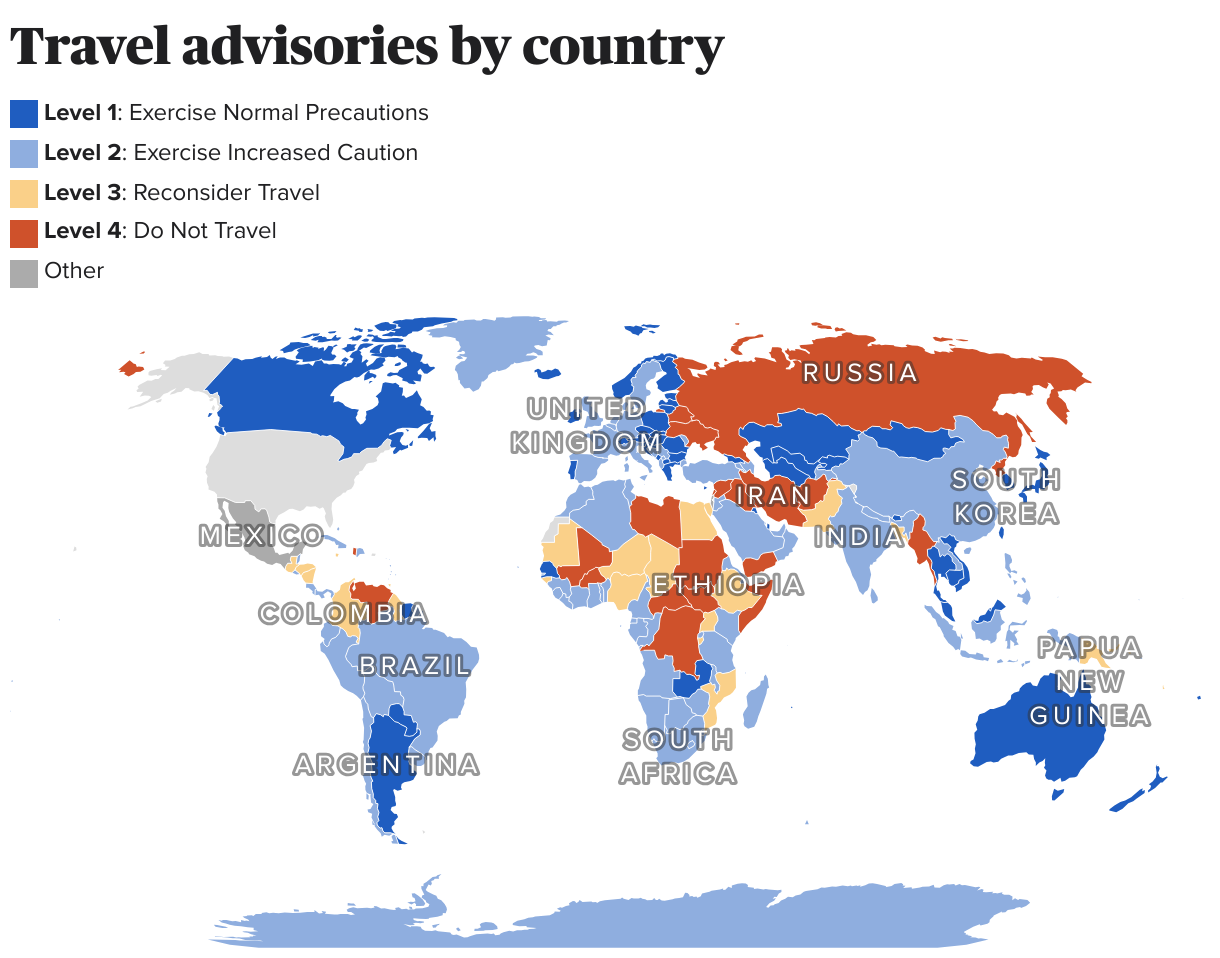
Travel advisories from the U.S. Department of State are essential tools for anyone planning to travel abroad. These advisories provide critical information about the safety, security, and health conditions in different countries, helping travelers make informed decisions before they embark on their journeys. Whether you’re planning a vacation, a business trip, or a visit to family, understanding these advisories can significantly impact your travel experience. The State Department regularly updates its travel advisories based on current events, political stability, and other factors that could affect travelers. Staying informed about these alerts is crucial for ensuring a safe and enjoyable trip.
Understanding the Different Levels of Travel Advisories
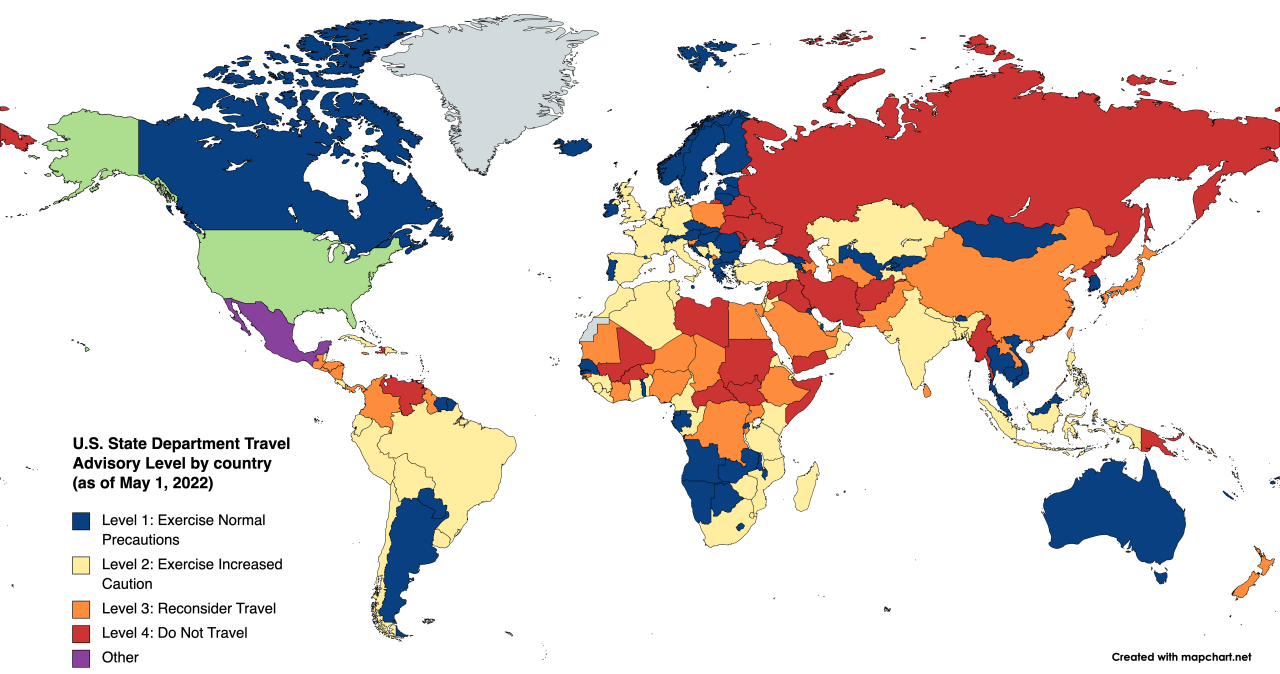
The U.S. Department of State categorizes travel advisories into four levels, each indicating the degree of risk associated with traveling to a particular country. Level 1, “Exercise Normal Caution,” suggests that while there are some risks, they are generally manageable with standard precautions. Level 2, “Exercise Increased Caution,” indicates that travelers should be more vigilant due to specific threats such as crime, civil unrest, or health concerns. Level 3, “Reconsider Travel,” advises against non-essential travel due to serious risks like terrorism, conflict, or natural disasters. Finally, Level 4, “Do Not Travel,” is the most severe warning, indicating that the situation in the country is so dangerous that it’s not advisable to travel at all.
How to Access and Use Travel Advisories
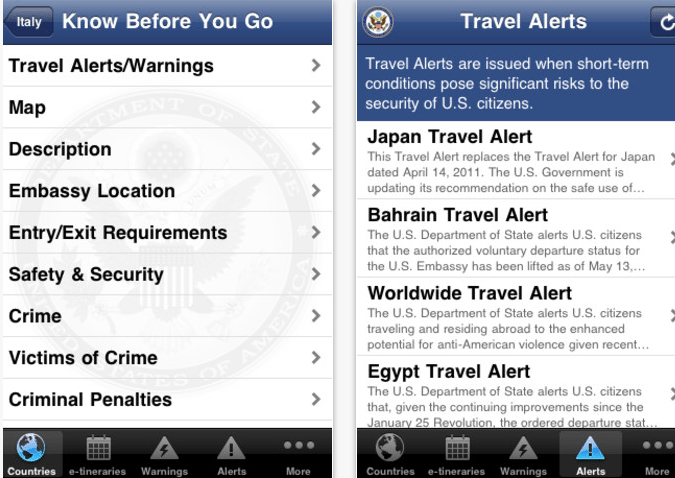
Accessing travel advisories is straightforward through the U.S. Department of State’s official website. Travelers can search for specific countries or regions to find detailed information about the current status of travel in those areas. The site also provides additional resources such as country-specific pages, which include details about entry requirements, health advisories, and local laws. In addition to the website, the State Department offers a mobile app called “Smart Traveler” that allows users to receive real-time updates and notifications about travel advisories. This tool is particularly useful for travelers who want to stay informed while on the go.
What to Do If a Country Is on a Higher Advisory Level

If a country is listed under a higher advisory level, such as Level 3 or 4, it’s important to reassess your travel plans carefully. For Level 3 advisories, travelers should consider whether their trip is truly necessary and weigh the potential risks against the benefits. If you decide to proceed, it’s crucial to take extra precautions, such as purchasing comprehensive travel insurance, keeping emergency contacts handy, and staying updated on local news. For Level 4 advisories, it’s generally recommended to avoid travel altogether unless it’s an emergency. In such cases, contacting the nearest U.S. embassy or consulate is essential for assistance and guidance.
Impact of Travel Advisories on Travel Planning
Travel advisories can have a significant impact on how and when people plan their trips. When a country is placed on a higher advisory level, it often leads to a decrease in tourism, which can affect local economies. Conversely, when advisories are lifted or downgraded, it can lead to a surge in visitors eager to explore the destination. Travel agencies and airlines also adjust their policies based on these advisories, sometimes offering refunds or rescheduling options for affected travelers. Additionally, some countries may impose their own restrictions or require additional documentation for U.S. citizens, making it even more important to check the latest information before booking a trip.
Tips for Safe and Informed Travel
To ensure a safe and informed travel experience, it’s essential to review the latest travel advisories before any international trip. Here are some key tips to keep in mind:
– Always check the U.S. Department of State’s website or use the Smart Traveler app for up-to-date information.
– Review the specific country page for details on entry requirements, health advisories, and local laws.
– Purchase travel insurance that covers medical emergencies, trip cancellations, and evacuation if needed.
– Register your trip with the U.S. Embassy or Consulate in the country you’re visiting.
– Stay informed about local news and follow the advice of local authorities.
By staying informed and taking the necessary precautions, travelers can enjoy their trips with greater confidence and peace of mind. Travel advisories are not meant to discourage travel but rather to empower individuals with the knowledge they need to make safe and responsible decisions. Whether you’re planning a short getaway or an extended journey, understanding and respecting these advisories can make all the difference in ensuring a successful and memorable trip.








![[IMAGE: Best Travel Apps for Stress-Free Adventures United States]](https://www.mathhotels.com/wp-content/uploads/2025/09/608_Best_Travel_Apps_Stress_Free_Vacation_Hero.jpg)