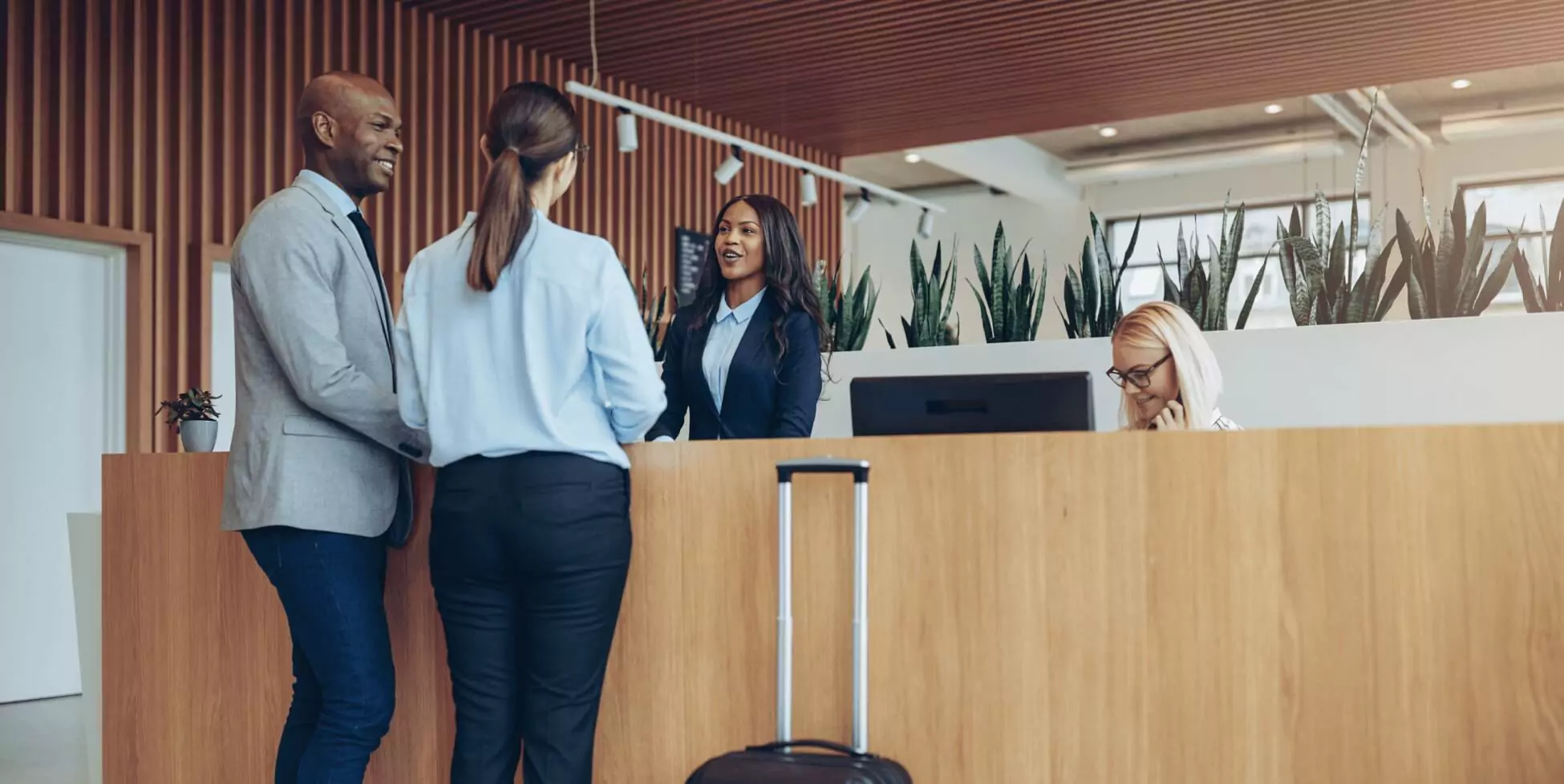
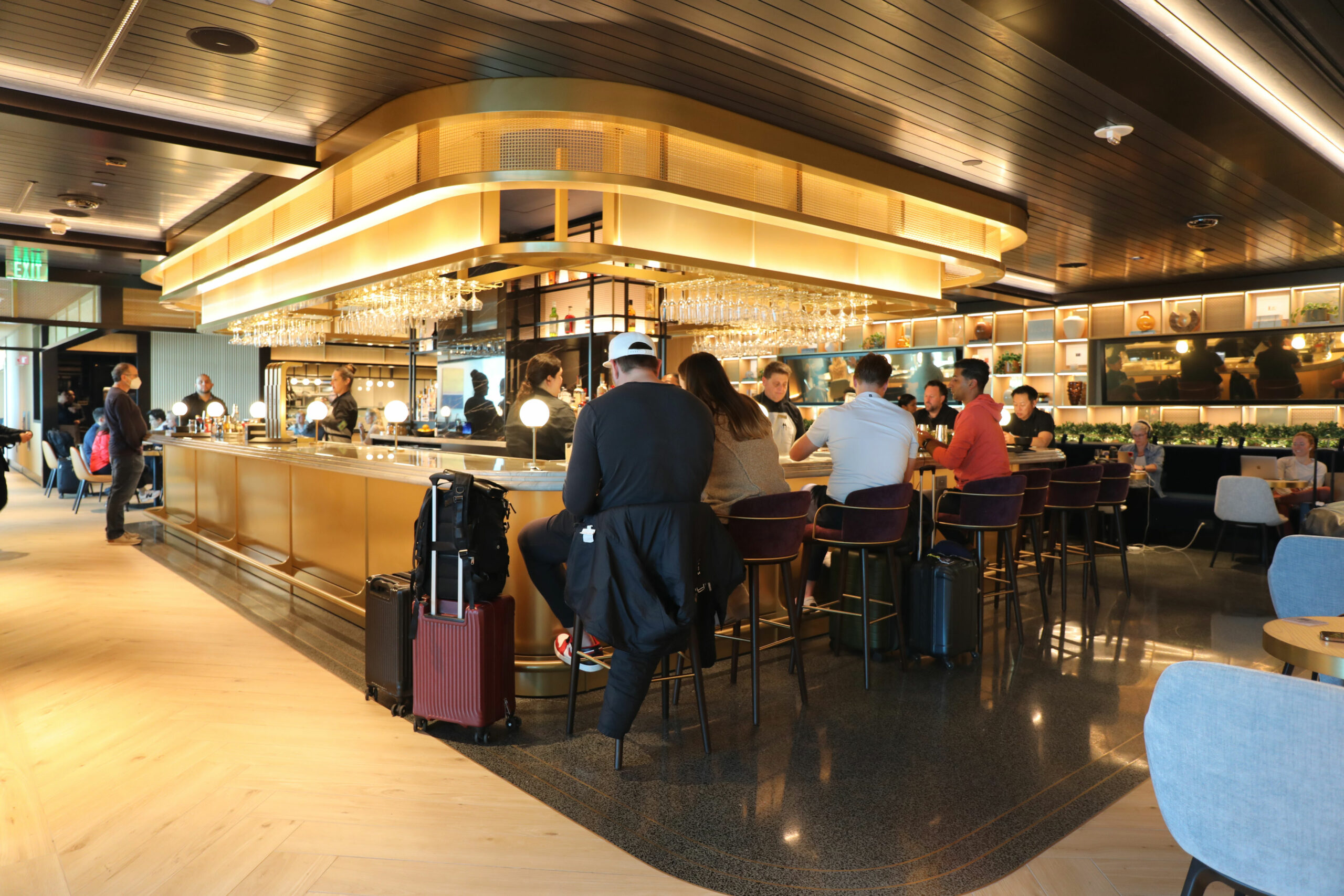
Airport lounges can be a haven for frequent travelers, offering a quiet break from chaotic airport terminals. For remote workers, they can turn travel downtime into productive work hours.
Whether you’re prepping for a meeting, catching up on email, or squeezing in some focused writing before a flight, you can use an airport lounge as a mobile office. Although airport lounges can be great for work, getting tasks done sometimes takes strategy.
We asked experienced travelers for tips on what works — and what doesn’t — when working in airport lounges. They shared how they scope out power outlets, avoid awkward video call moments, and practice etiquette to avoid irritating other lounge guests.
Here’s what they recommend.
Why Work in an Airport Lounge?
In an airport terminal, you may have to hunt for an open outlet, tune out gate announcements, and search for a seat, whereas you can expect
quiet spaces, power outlets, Wi-Fi, complimentary food and beverages
, and more at an airport lounge.
Some even offer features that cater to remote workers. Depending on the lounge, you may find high-top work tables, outlets at most seats, semiprivate pods, small meeting rooms, and dedicated phone rooms where you can take a call or video chat privately without disturbing others.
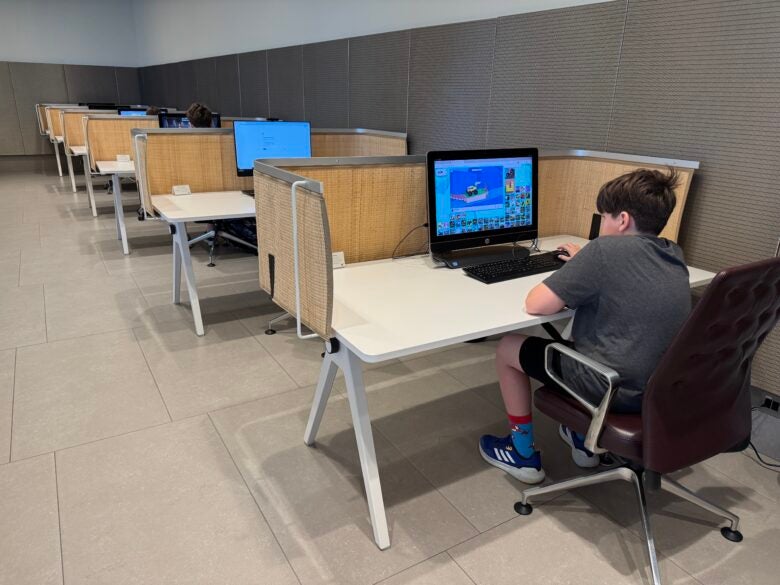
Of course, there are exceptions, such as busy, small, or poorly run lounges, but you can generally expect a
work-friendly environment at an airport lounge
.
Some frequent flyers consider lounges an extension of their office — a practical tool that can turn otherwise wasted time into productivity.
“Priority Pass is an essential baseline,” said Chris Oberman, frequent flyer and founder of the travel blog Moving Jack. “I use Priority Pass lounges for Wi-Fi, snacks, and quiet zones to prep before a meeting or catch up on client work in transit. It’s a lifesaver when there’s no Centurion or Sapphire Lounge nearby.”
Reliable Wi-Fi
Though many airports offer free Wi-Fi or you may have a mobile hot spot connection on your phone, airport lounge Wi-Fi can deliver better connectivity. They generally have high-speed connections that are stable and easy to get online with.
“Wi-Fi is nonnegotiable,” said Oberman. “If I can’t connect reliably, I’ll set up a hot spot from my phone, but that’s always a last resort when abroad.”
Power Outlets
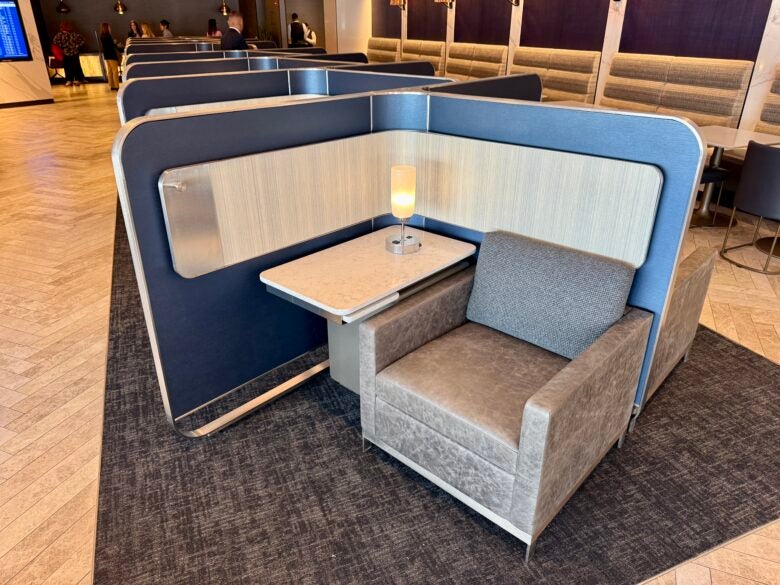
A dead laptop can quickly ruin a remote work session, and it’s always a gamble whether an airport terminal will have a good spot to plug in. At airport lounges, charging stations are often at tables and seats — sometimes every seat in the lounge.
Quiet and Privacy Zones
Some lounges offer pods, meeting areas, and semiprivate phone booths that support quiet concentration or calls on the go.
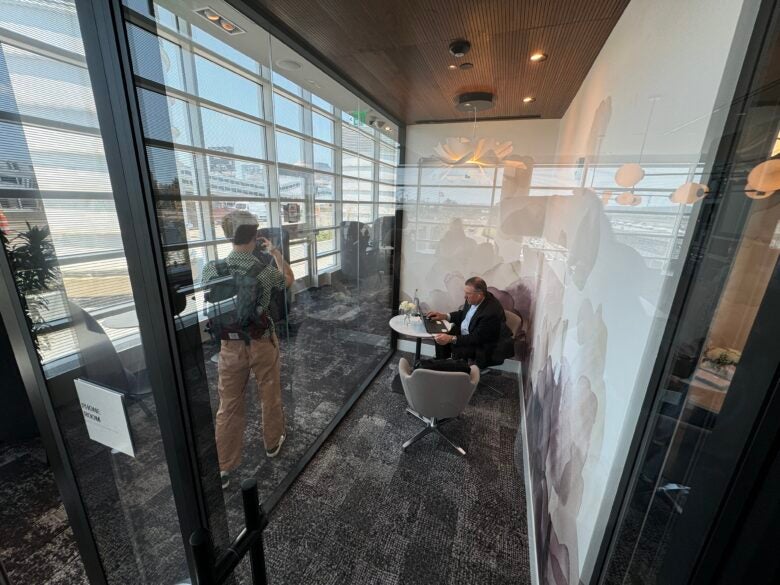
“Phone booths exist in premium lounges like Lufthansa Senator or Emirates First, but they’re rare,” said Oberman. “I always look for one if I have a sensitive or long call.”
Ergonomic Workspaces
Not all seating is equal, and your typical gate seat isn’t made for comfort while you’re working on a laptop. Airport lounges with workstations and tech-friendly seating can be a game-changer.
Oberman likes the dedicated work zones with proper desks at Singapore Changi Airport’s (SIN) Priority Pass lounges. He shared it’s one of the few places he can take a client call and feel like it’s a mini office.
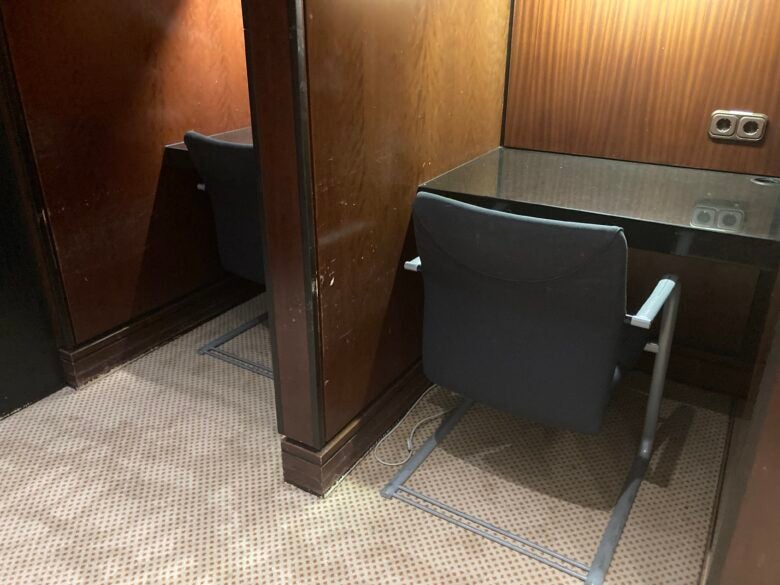
“The Dallas Centurion Lounge has good lighting and a variety of seating,” said Oberman. “I can usually find a table to spread out and work, and the Wi-Fi is strong.”
Food and Drinks
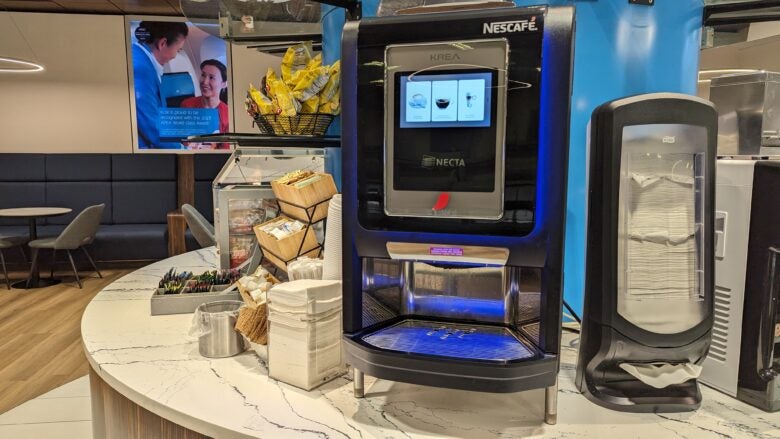
With complimentary food and drinks, an airport lounge can save you time compared to standing in line for food in the airport terminal. You can easily refuel without the expense and hassle — and fill up on all the coffee you need to get everything done.
How To Get Lounge Access
Getting lounge access is key if you plan to work before a flight or during a layover. Most airport lounges are reserved exclusively for travelers in premium fare classes, those with airline status, or with
qualifying credit cards
. Some lounges offer day passes, typically around $50.
The best lounge access cards include:
- Platinum Card® from American Express
- Capital One Venture X Rewards Credit Card
- Chase Sapphire Reserve
- The New United Club℠ Card
- Delta SkyMiles® Reserve American Express Card
- The Business Platinum Card® from American Express
- Capital One Venture X Business Card
- Delta SkyMiles® Reserve Business American Express Card
These cards offer complimentary lounge access for cardholders and may offer guest privileges depending on the lounge and card benefits.
Hot Tip:
The Amex Platinum card and the Amex Business Platinum card provide
access to more airport lounges than any other card
, with over 1,550 participating locations as of July 2025.
Real Flyer Tips for Working in Airport Lounges
Even in a great airport lounge, it might take a little strategy to stay productive. We asked frequent travelers for their routines and hacks that help them make the most of work time between flights.
- Choose the Right Spot
Shopping for a quiet work zone can help you focus on productivity. Oberman recommends looking for a corner spot or areas with curtains that can give you privacy and reduce distractions from behind. He usually faces the wall so his voice isn’t amplified and doesn’t bother anyone.
“As soon as I enter an airport lounge, I head straight to a secluded corner with a power socket nearby,” said Paul Stewart, founder of My Baggage, an international luggage delivery company. “If I can spot one near a window, even better. That provides a little more natural light and sometimes more privacy.”
Some lounges have open business centers or meeting rooms, and a little scouting can reveal good workspaces you might miss if you simply grab the first open chair you see.
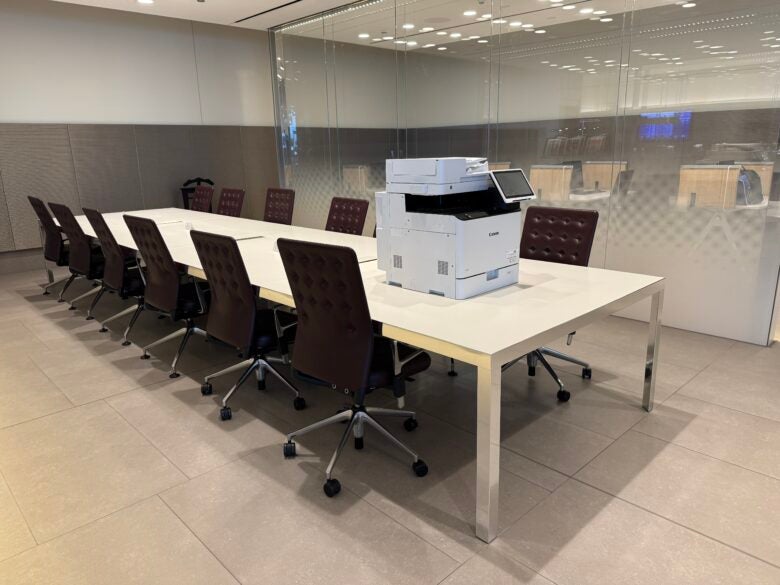
“When I visit a new lounge, I take a lap to see all the seating options before settling in,” said Steve Schwab, CEO of Casago, a vacation rental management company. “Sometimes there’s a quiet section in the back or upstairs with way fewer people and better outlets.”
- Pack Smart and Stay Powered
A noisy environment, even in a lounge, can kill productivity or make calls difficult.
Headphones top most frequent flyers’ packing lists, but mobile connections and charging capabilities are other major priorities.
“I also carry a portable charger because you simply can never guarantee you’ll get an outlet,” said Schwab.
Carrying a small power strip can make charging multiple devices at once easy. It’s even better if you have an international adapter, just in case. A power bank can help you stay charged through lengthy work sessions.
“I use a directional lapel microphone for calls and a portable power bank with 20,000 mAh capacity,” said Adam Bushell, owner and director of AB Electrical & Communications, an Australian electrician company. “It’s been a lifesaver when I can’t get to a plug.”
Public Wi-Fi can pose privacy and security risks, so
using a VPN to encrypt your data
is always smart.
“A VPN helps ensure everything on my computer stays secure,” said Schwab. “It’s a no-brainer if you’re logging in to sensitive work accounts.”
Consider a pretrip checklist and check before you head to the airport so you know your tech is ready to take on the road.
“I run a systems check before every trip,” said Tom Payne, editor of {Tech} for Travel. “That means testing my VPN, checking my headphone mic, and confirming my backup hot spot works.”
- Back Up Your Connection
If you have essential work that requires Wi-Fi, your chances of getting a good connection are pretty good at an airport lounge, but it’s always possible to run into snags.
“I never leave power and Wi-Fi to chance,” said Payne. “I always have my iPhone ready to mobile hot spot if the Wi-Fi slows down.”
Bushell recommends bringing a SIM-based hot spot as a backup. He uses his for emails or browsing when connections are bad.
- Prepare for Calls
Lounges may or may not have dedicated phone booths, and they could be full. Plan for this by using headphones with a good microphone, and tell colleagues up front about potential background noise.
“You can set the input volume of your mic on your laptop,” said Oberman. “This way you can speak less loudly while your contact on the other side can still hear you perfectly.”
- Time Your Tasks — And Decompression Time, Too
Even with the advantage of airport lounges, travel days might not be the best time for work that requires deep focus. Some flyers treat airport lounges as a space for quick wins. It can help to
block tasks in short bursts
, using timers and setting an alarm to avoid missing your boarding time. Noise-masking tools, such as earplugs and headphones, can help with concentration.
“I play music or white noise through my headphones to build my own personal sound bubble,” said My Baggage’s Stewart.
Even a short layover, like 45 minutes or an hour in a lounge, can still be productive. Consider clearing your inbox, scheduling calls, or reviewing presentations.
“On short layovers, I triage email and prep my notes for the next meeting,” said Bushell. “It’s not about deep work — it’s about staying ahead.”
It’s easy to fall into full work mode in a lounge, especially when facing a deadline. But don’t forget that travel can be stressful, and you may need time to reset before boarding.
“I always build in 15 minutes to just decompress,” said Stewart. “Even if it’s just sipping coffee and doing nothing, that moment of calm helps me arrive more focused and less frazzled.”
Consider blocking time for deep work, refreshment, a walk, or maybe even a seating change, depending on your schedule. Take advantage of the environment to get work done and recover, too.
- Respect Lounge Etiquette
Just because you can work from a lounge doesn’t mean your lounge neighbors want to hear you do it.
Respect the space and set a professional tone, especially when taking calls.
“Never take video calls on speaker,” said David Quintero, CEO of NewswireJet, a press-release distribution service. “Keep your voice down and don’t sprawl out across multiple seats.”
Look for phone rooms or quiet corners, and use headphones with a mic. Move away from the main seating area if you can.
“I’ve seen people spread out like it’s their private office — across 4 chairs with bags on 2,” said Quintero. “Especially in busy lounges, that’s inconsiderate.”
Avoid blocking outlets with unused devices, and make space if you see someone looking for a seat or a plug. Keeping your setup compact can make a lounge more inviting for everyone.
Final Thoughts
An airport lounge can be an excellent resource for working on the go. You can stay productive between flights with a strong Wi-Fi connection and a quiet corner. Bring the right gear, set realistic expectations, and be mindful of your fellow travelers.
“You learn how to make any lounge work for you with time and experience,” said Stewart. “Sometimes it’s not perfect, but it’s always better than the gate.”