Hawaii has long been a place of natural beauty and cultural richness, but it’s also faced significant challenges in maintaining a stable and growing economy. For years, thousands of residents have left the islands for the continental United States, seeking better-paying jobs and more affordable housing. While the high cost of living in Hawaii is often cited as the main issue, experts argue that the deeper problem lies in the lack of high-paying jobs outside of the tourism sector.
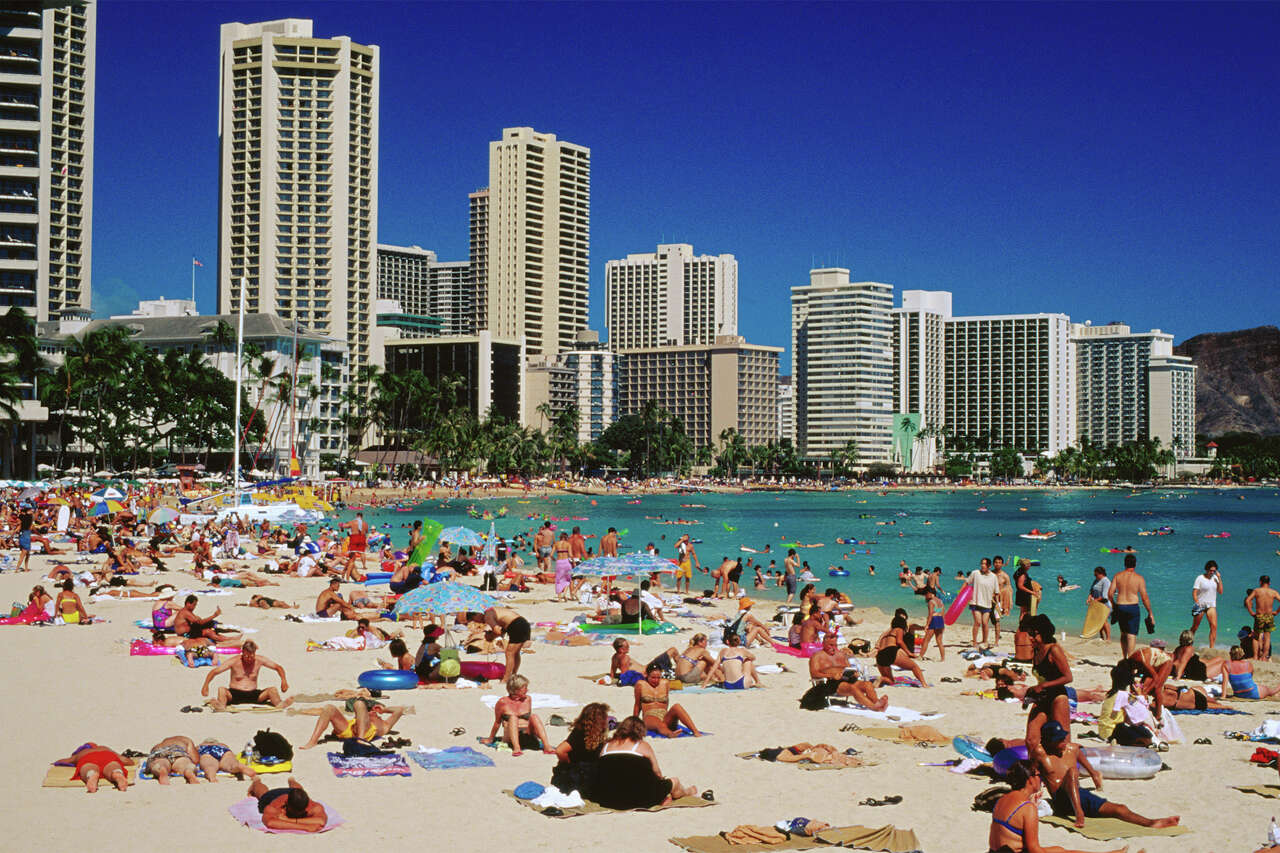
Tourism has traditionally been the backbone of Hawaii’s economy, but its reliance on this single industry has made the state vulnerable to economic shocks. According to Steven Bond-Smith, an economist at the University of Hawaii’s Economic Research Organization, while visitor numbers have continued to grow, the amount spent per person has not kept pace with inflation. In fact, spending per tourist was at its highest in 1988, meaning that visitors today are spending less than they did over three decades ago.
Bond-Smith also pointed out that the U.S. economy typically grows at an average rate of around 2% annually, but Hawaii’s growth has been significantly lower, hovering around 0.6%. This disparity has led many residents to seek opportunities elsewhere, especially in large cities where higher-value jobs in sectors like technology and biotechnology are more common.

The Need for Economic Diversification
This situation has brought renewed attention to the long-standing need for Hawaii to diversify its economy. State Rep. Greggor Ilagan emphasized that relying heavily on tourism and the military makes the state susceptible to economic downturns. The recent disruptions caused by events such as the 2018 Kilauea eruption, the COVID-19 pandemic, and the Maui wildfires have underscored the risks of depending too much on one industry. Even now, the number of tourists has not fully recovered to pre-pandemic levels.
However, diversification does not mean abandoning tourism altogether. Instead, it means expanding into other industries and enhancing the value of existing ones. Ilagan noted that diversification includes both traditional tourism and new forms of it, such as eco-tourism or cultural experiences. Bond-Smith agreed, stating that tourism will still be a key part of Hawaii’s economy, but it must evolve to provide greater value to visitors.
Why Has Diversification Been Slow?
Despite the clear need for change, efforts to diversify Hawaii’s economy have been slow and inconsistent. Kelii Akina, CEO of the Grassroot Institute of Hawaii, pointed out that discussions about economic diversification have been ongoing for decades, starting as early as the 1970s under Governor George Ariyoshi. However, he argued that these efforts have largely failed due to flawed approaches.
Akina criticized the government for continuing to support failing businesses and industries instead of allowing market forces to drive innovation. He cited examples such as attempts to develop a film industry through tax credits and a breadfruit industry, which he considered unsuccessful. Instead, he believes the best approach is for the government to reduce regulations and create a more business-friendly environment.
A New Path Forward
Recent initiatives show promise in moving Hawaii toward a more diversified economy. The Chamber of Commerce Hawaii recently released a 2030 Blueprint that outlines strategies for improving the business climate, including adjusting regulations to support small businesses and job growth. Sherry Menor, president and CEO of the Chamber, noted that Hawaii ranks poorly in CNBC’s annual list of the worst states to do business, and addressing these issues is critical for future growth.
One notable example of progress is Blue Startups, a tech accelerator based in Honolulu. Founded after the 2008 financial crisis, it has helped launch and scale several successful tech companies. Henk Rogers, co-founder of Blue Startups, explained that the goal was to create a thriving tech ecosystem in Hawaii, similar to what exists in places like Silicon Valley.
Since its inception in 2013, Blue Startups has supported 17 cohorts of startups, many of which have grown into global success stories. Companies like Turno and FareHarbor have demonstrated how Hawaii-based tech can serve local industries while reaching international markets. Farnsworth, another co-founder, highlighted the potential for growth in areas like ocean technology, which aligns with Hawaii’s unique geographic and environmental advantages.
She also noted that interest in Hawaii’s tech sector is growing, especially among younger people. The goal is to create opportunities that encourage local talent to stay or return, helping to prevent a brain drain that could further weaken the economy.
As Hawaii continues to navigate the challenges of economic diversification, the path forward remains uncertain. However, with innovative initiatives and a growing focus on creating high-value jobs, there is hope that the state can build a more resilient and prosperous future.