The first time you drive into the Australian Outback, it’s hard to grasp the scale of it. The road stretches endlessly ahead. The landscape turns red and rugged. Towns become few and far between. Phone reception disappears. The horizon feels bigger than anywhere else on earth.
Australia’s Outback isn’t just a place. It’s an experience of space, silence, and raw natural beauty. But it’s also one of the most remote regions in the world. Exploring it requires preparation, patience, and often a vehicle capable of handling whatever the terrain throws your way.
That’s why so many travelers discover that the best way to experience this remarkable part of Australia is on outback 4wd tours that take you deep into landscapes most visitors never see.
We’ve spent an extensive period traveling through the Australia Outback including around nine months on our Australian road trip (we barely saw one cloud in all that time). We also lived for six months in Broome and a remote area of the Kimberly. Before we get into why exploring via 4WD is the ultimate, it helps to understand what makes the Outback so unique.
The Vast Scale of the Australian Outback
Australia is a huge country. It’s roughly the same size as the continental United States, yet most of the population lives along the coastline. Once you head inland, everything changes. The Outback stretches across enormous parts of the Northern Territory, Western Australia, South Australia, and Queensland. Here you’ll find ancient desert landscapes, dramatic gorges, remote cattle stations, and sacred Indigenous sites that have been part of the world’s oldest living culture for tens of thousands of years.
Driving through this region means long distances between towns, limited fuel stops, and hours of open road with very little traffic.
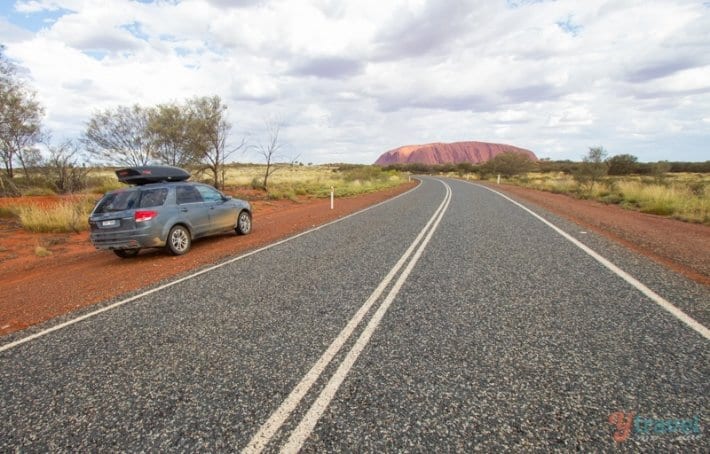
One stretch between Alice Springs and Uluru, for example, you’ll drive nearly 450 kilometers across wide open desert landscapes. In more remote regions like the Kimberley or along the Gibb River Road, distances can be far greater with even fewer services.
It’s part of what makes Outback travel so memorable. The sense of space and freedom is unlike anywhere else. (and thank goodness for a forced digital detox!) But that scale also means preparation matters.
The Reality of Outback Terrain
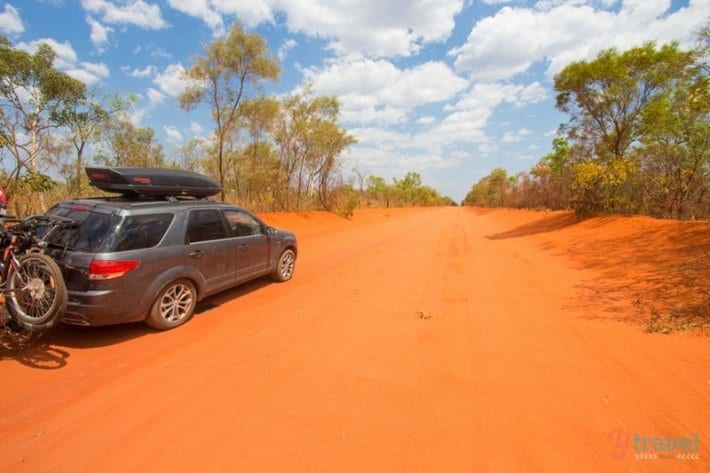
One of the biggest surprises for first-time Outback travelers is how quickly sealed highways turn into rough tracks. In many of Australia’s most beautiful regions, paved roads simply don’t exist. Instead, you’ll encounter dirt roads, gravel tracks, sand, creek crossings, and corrugated surfaces that can shake a vehicle to pieces if you’re not prepared.
Corrugations are one of the most common challenges. These ripple-like patterns form on dirt roads and can make driving uncomfortable and slow. They’re especially common in places like the Gibb River Road in Western Australia or remote national parks across the Northern Territory.
Then there’s sand. Desert areas and coastal Outback regions often require careful navigation across deep sandy tracks. We found ourselves bogged on a remote sandy track in Kakadu National Park, and I can tell you that it was quite a scary experience. Luckily, we managed to dig ourselves out.
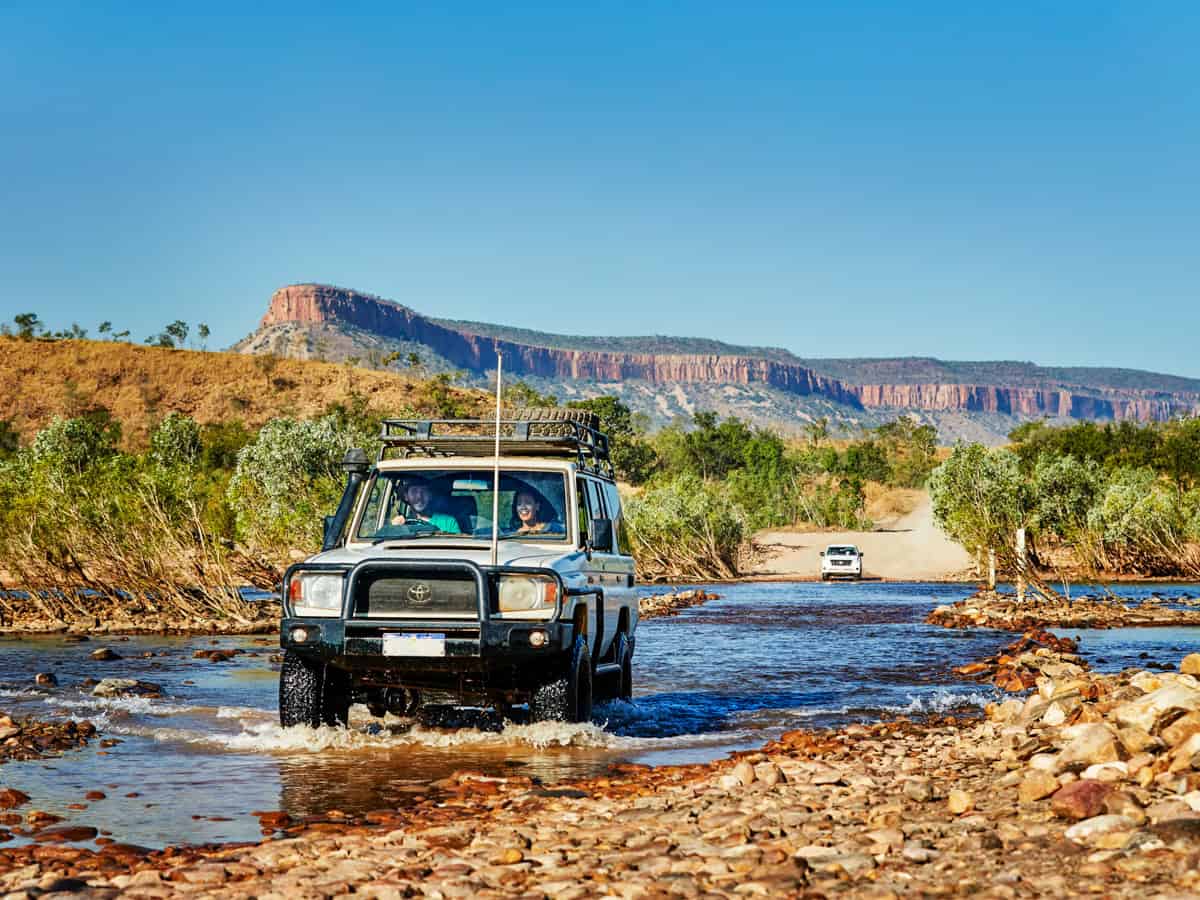
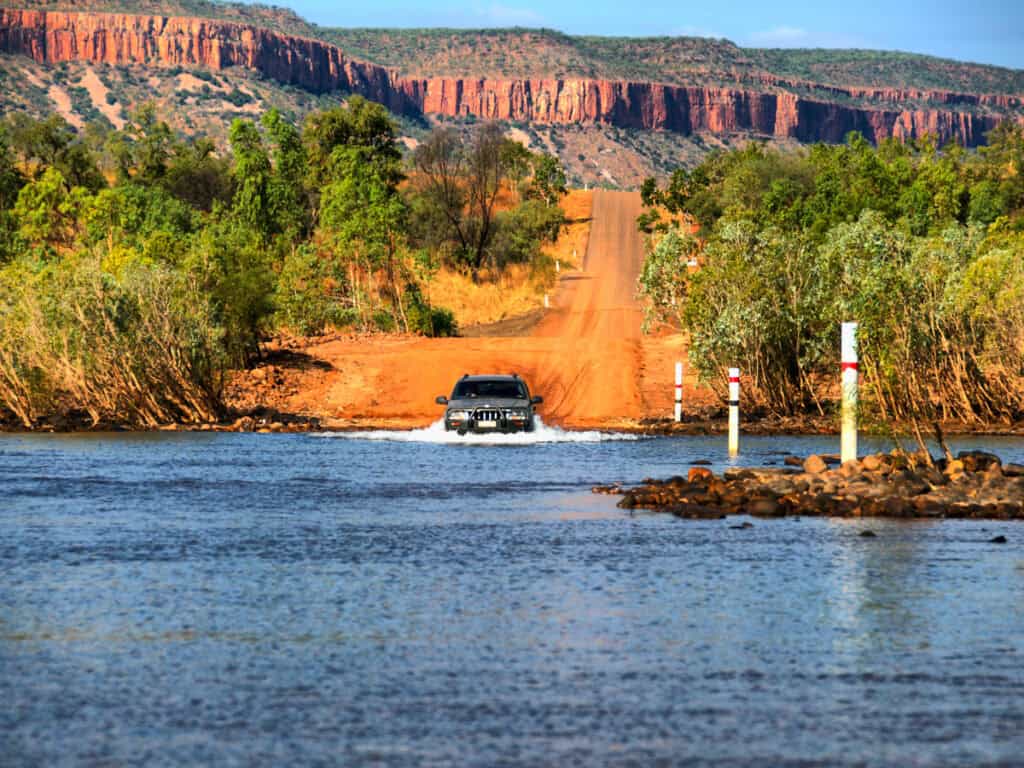
River crossings are another factor, particularly during the wet season in northern Australia when roads can flood or become impassable. A proper four-wheel-drive vehicle isn’t just helpful in these environments. It’s often essential.
Unfortunately on our Australian road trip we had to bypass a section of the Gibb River road, including the infamous Pentecost River crossing as our AWD was not equipped for the terrain. We were immensely disappointed as it’s one of the best road trips in Australia.
Long Distances Between Towns
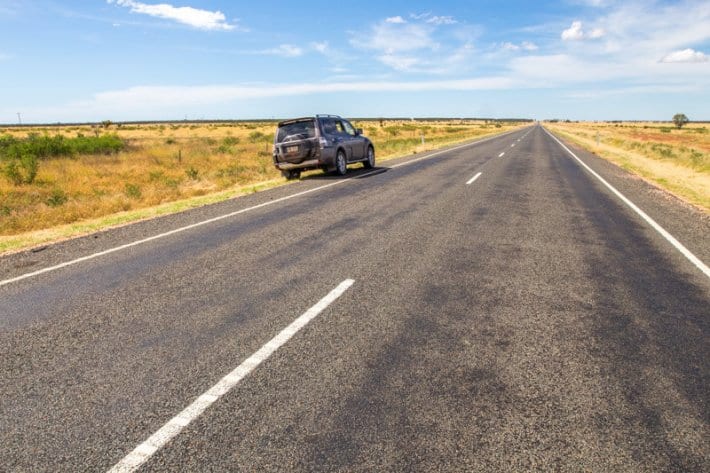
Driving across the Outback isn’t like road tripping along the Australian coast where charming towns pop up every hour. Fuel stations can be hundreds of kilometers apart. Accommodation options may be limited to small roadhouses or remote cattle stations. Some regions have only a handful of communities spread across vast distances.
This remoteness is part of the appeal. It creates a feeling of adventure and discovery that’s difficult to replicate anywhere else. But it also means travelers need to plan carefully.
Running out of fuel or breaking down in remote areas can become serious situations. Water, food supplies, spare tires, and satellite communication are often recommended when travelling deep into Outback regions. It does happen that unprepared travelers are never seen again in the Outback after a breakdown or running out of fuel. I don’t want to scare you, but the truth will help you avoid disaster.
It’s one of the reasons many travelers prefer the ease and peace of mind that comes with organized outback 4wd tours, where experienced guides handle logistics, navigation, and safety.
Wildlife and Road Conditions
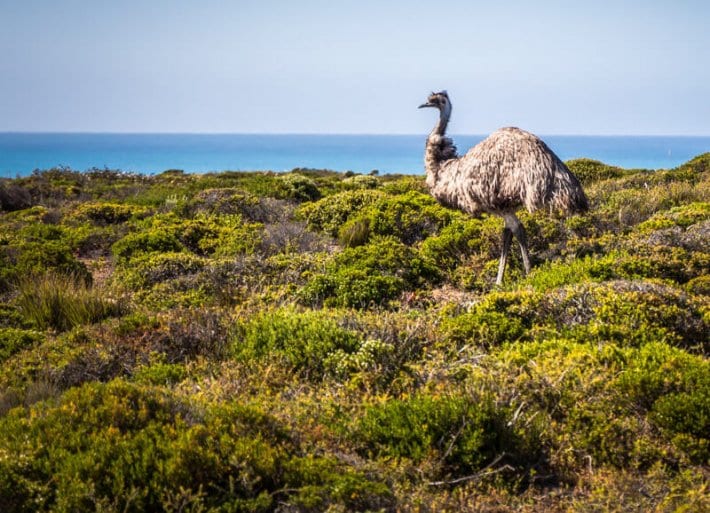
Another unique aspect of Outback driving is the wildlife. Kangaroos, emus, camels, and cattle frequently wander onto remote roads, especially around sunrise and sunset. It’s not uncommon to see animals crossing highways or grazing along the roadside. For drivers unfamiliar with Outback conditions, this can be surprising and sometimes dangerous.
Night driving is generally discouraged in many remote areas because visibility is low and wildlife activity increases dramatically after dark.
Road conditions can also change quickly due to weather. Heavy rains during the wet season can close roads for days or even weeks. Dust storms and extreme heat can create additional challenges. Understanding these conditions and adjusting your travel plans accordingly is part of travelling responsibly through these remote environments.
Self-Drive vs Guided Outback Experiences
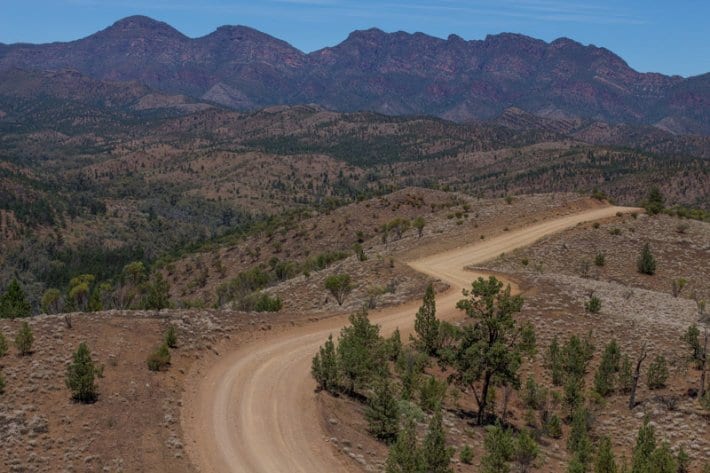
There’s no question that self-driving through the Outback can be an incredible adventure. Many Australians grow up dreaming of long road trips through the Red Centre or along iconic routes like the Savannah Way and Gibb River Road. But for international travelers or anyone unfamiliar with the region, a guided experience often makes the journey far more enjoyable. Doing it yourself can be exhausting.
Self-driving requires detailed planning. You’ll need to research fuel stops, accommodation, road conditions, seasonal closures, and vehicle requirements. You’ll also need confidence navigating remote terrain and managing long distances between services.
Guided 4WD tours remove much of that stress. Experienced drivers handle the challenging roads. Local guides share cultural knowledge, history, and wildlife insights that travelers might otherwise miss. Logistics like accommodation, meals, and route planning are organized in advance. Instead of worrying about whether the next roadhouse has fuel or if a river crossing is safe, you can focus on soaking up the incredible landscapes around you.
Access to Remote and Iconic Locations
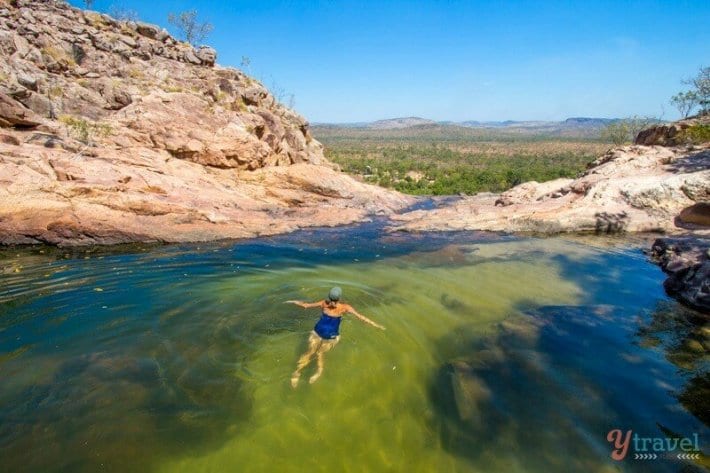
One of the greatest advantages of travelling by 4WD in the Outback is access. Some of Australia’s most spectacular landscapes sit far beyond sealed roads. Places like the Kimberley, Arnhem Land, the Simpson Desert, and remote parts of Kakadu National Park require specialized vehicles and experience to reach safely.
Many of the Outback’s most remarkable landscapes are protected within national parks managed by Parks Australia, preserving ecosystems that have existed for millions of years. These are the places where the Outback truly comes alive. Towering red cliffs rising above winding gorges. Waterfalls hidden deep within ancient rock formations. Vast desert plains glowing at sunset. Night skies so clear you can see the Milky Way stretching from horizon to horizon.
Guided 4WD tours often include access to locations that independent travelers might struggle to reach or even know about. They also frequently incorporate Indigenous cultural experiences that provide deeper insight into the land, its history, and the people who have cared for it for thousands of years.
Who Outback 4WD Tours Are Ideal For
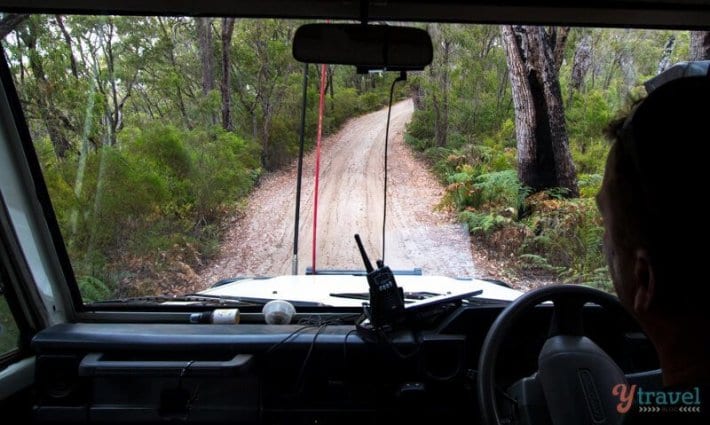
While adventurous travelers may enjoy the challenge of planning their own Outback road trip, guided 4WD tours are particularly well suited to several types of travelers. First-time visitors to Australia who want to explore beyond the coastlines often find guided Outback trips provide the perfect introduction to the country’s interior.
Travelers with limited time benefit from itineraries that maximize what you can see without spending hours researching routes and logistics. Photography enthusiasts appreciate the knowledge guides bring about the best viewpoints, lighting conditions, and hidden gems across vast landscapes. And many travelers simply enjoy the comfort of travelling in a small group where the focus can remain on the experience rather than the planning.
Experiencing the True Heart of Australia

There’s something deeply powerful about the Australian Outback. It’s one of Australia’s most unique and beautiful regions. The landscapes feel ancient. The silence is profound. Sunsets stretch across wide red horizons, and the stars at night feel impossibly bright. It’s a place that reminds you just how vast and wild our world still is. My suitcase of memories from the Outback is bursting at the seams. It’s an Australian bucket list experience that I share over and over again.
Exploring it by four-wheel drive opens up regions most visitors never see. It allows you to travel beyond the highways into the remote heart of the country where the landscapes become even more dramatic and the sense of adventure grows stronger with every kilometer. Whether you’re travelling through the Red Centre, exploring remote national parks, or venturing into the rugged Kimberley, the journey itself becomes part of the story.
And for many travelers, that story is best experienced with the support, knowledge, and access that comes from travelling on outback 4wd tours designed specifically for these extraordinary landscapes.