Although we haven’t solved the mystery of time travel yet, photos get us very close. One picture can transport you to a different period and show you how people lived, decorated, and spent time at home. If you’ve ever been curious about what homes across the United States actually looked like from the 1940s up to 2015, this is your chance to explore further.
These pictures go beyond just four walls and a ceiling—they show changing preferences, cultural impacts, and thedesign trendsthat shaped each era. From the neat, pastel kitchens of the postwar period to the daring creativity of the ’60s and ’70s, each time frame has its own signature. Prepare to encounter bold floral fabric, multiple layers of patterned wallpaper, thick shag rugs on the floor, reflective walls, brass fittings, and a lot of wooden paneling throughout.
As styles evolved, so did the layoutof the American household, showcasing shifts in family dynamics, innovation, and leisure. Whether you’re experiencing sentimentality or just interested in design, these images provide an intriguing look at the areas that influenced daily living for many years.
Even more design inspiration:
- The “60-30-10 Rule” Is the Smart Color Technique Designers Rely On for Every Room
- How to Properly Paint a Room, as Advised by Expert Painters
- 6 Locations Near Your House That Experts Recommend Organizing Every Weekend
1940
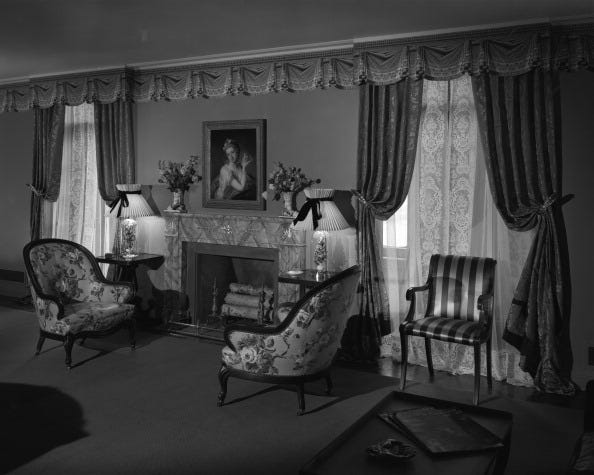
The first part of the 1940s was shaped by World War II, and due to the scarcity of many materials during the conflict, interior design remained largely unchanged. This living room from the 1940s features traditional ’30s elements, such as damask curtains.
1941
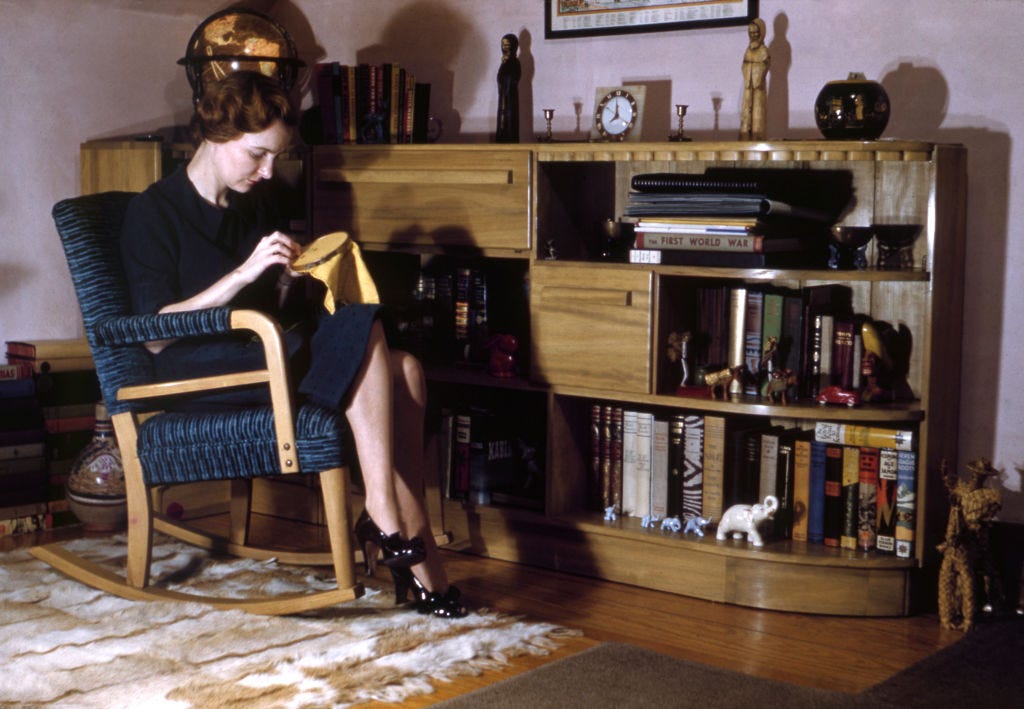
Nevertheless, signs of the technological progress from the 1930s found their way into home design. In this case, the curved shapes of the furniture exhibit a Streamline Moderne style—the architectural trend was influenced by aerodynamic principles.
1942
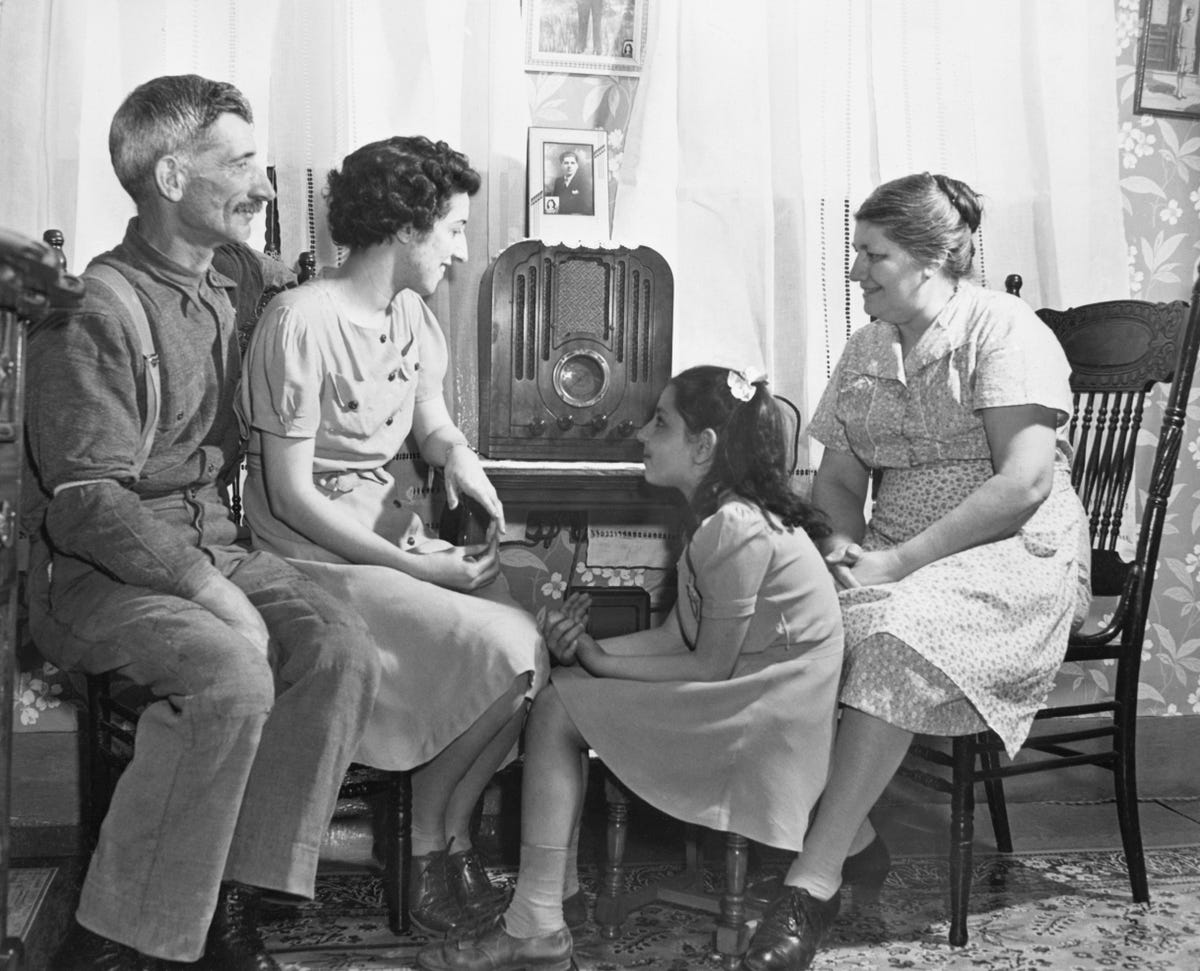
In the early 1940s, radio remained the main source of entertainment in living rooms. Although televisions had been developed, they were significantly more costly than radios, which were present in over 80 percent of American households during that period.
1943
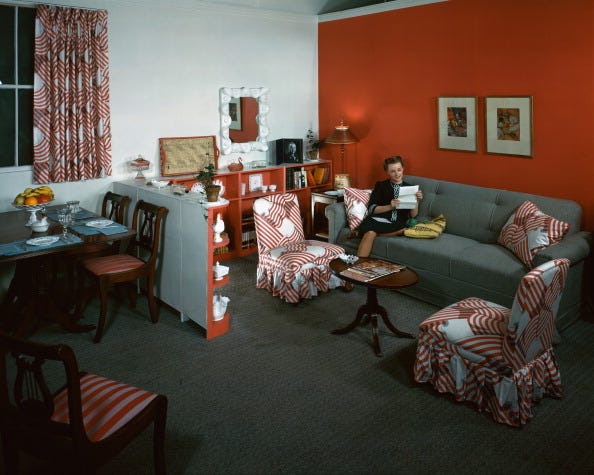
The origins of the midcentury modern design movement began in the 1940s—but it truly thrived following the conclusion of World War II.
1944
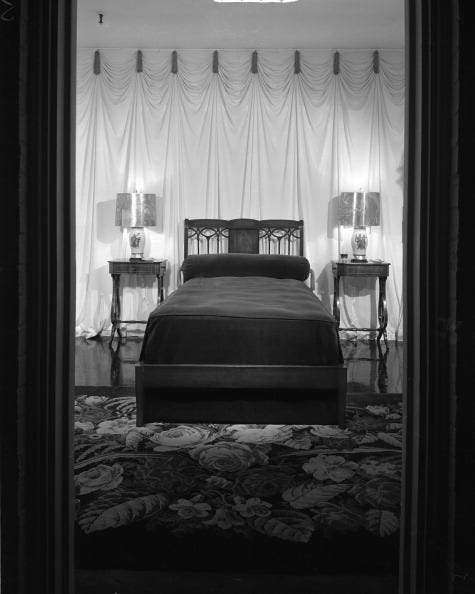
Art Deco and Art Nouveau remained popular during the first half of the 1940s. The design of the wall hanging reflects a distinctly Deco style, whereas the headboard showcases a more organic, Nouveau-inspired approach.
1945
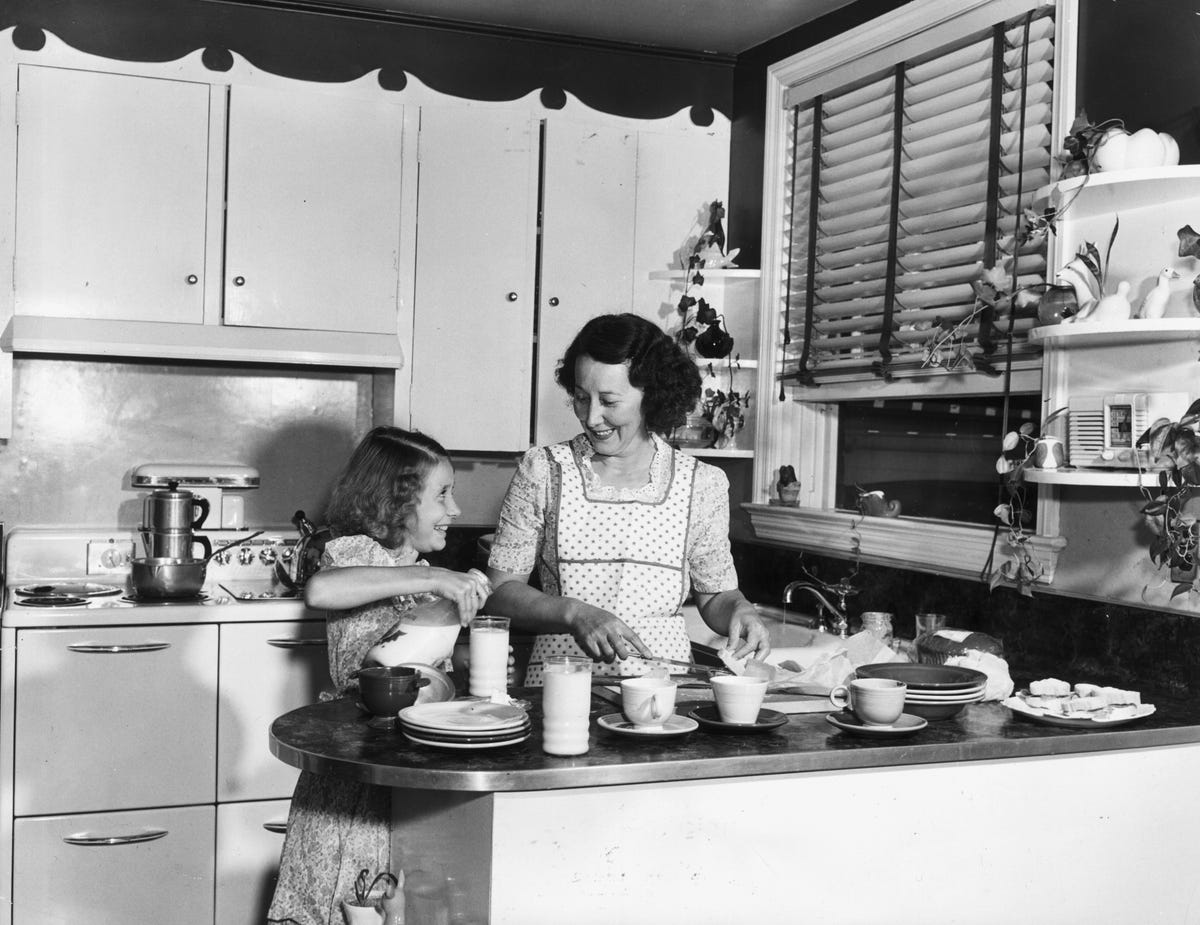
During the 1940s, kitchens were generally small in size. Nevertheless, they were equipped with contemporary appliances.
1946
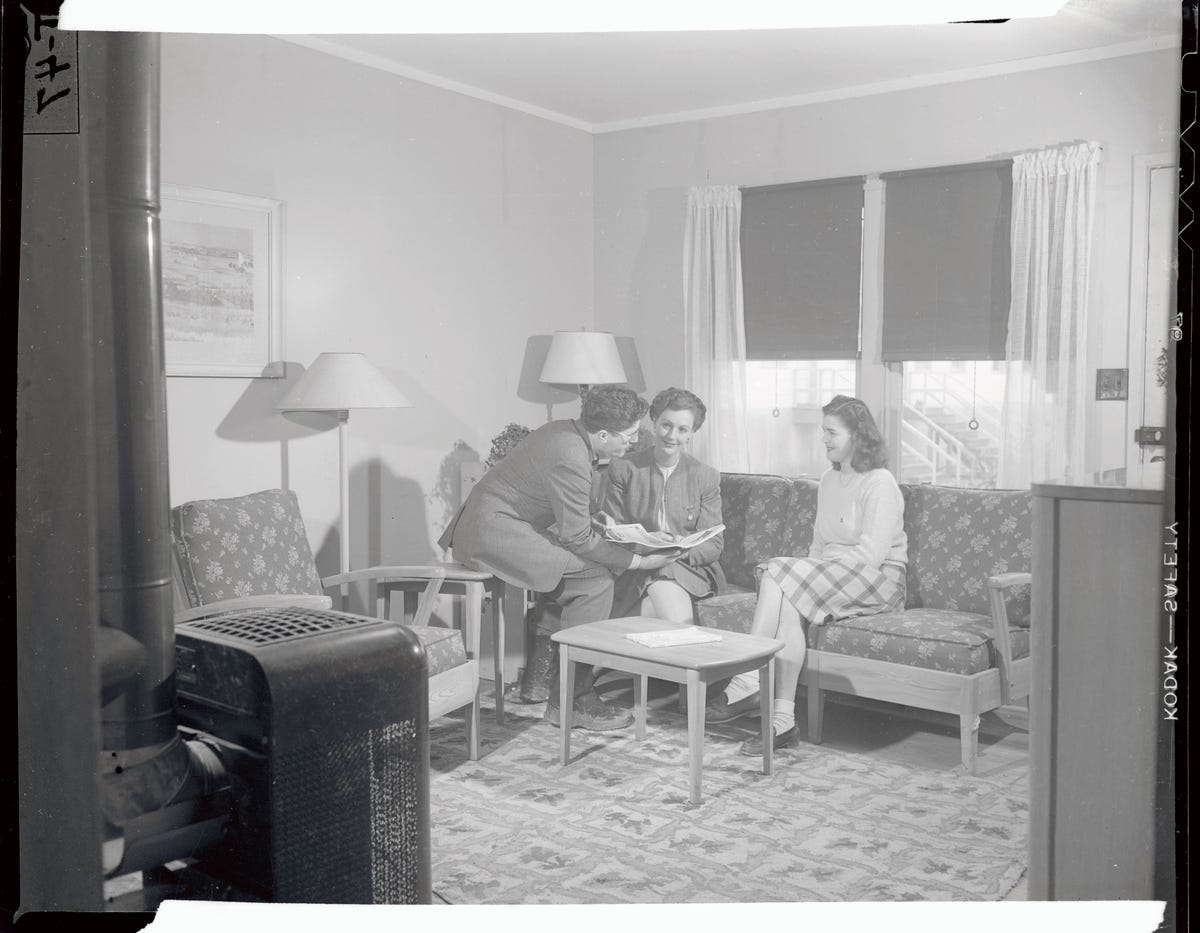
Florals were definitely in style during the 1940s, particularly in furniture covers, although they would soon be replaced by more contemporary aesthetics. However, like all design fads, they eventually made a comeback!
1947
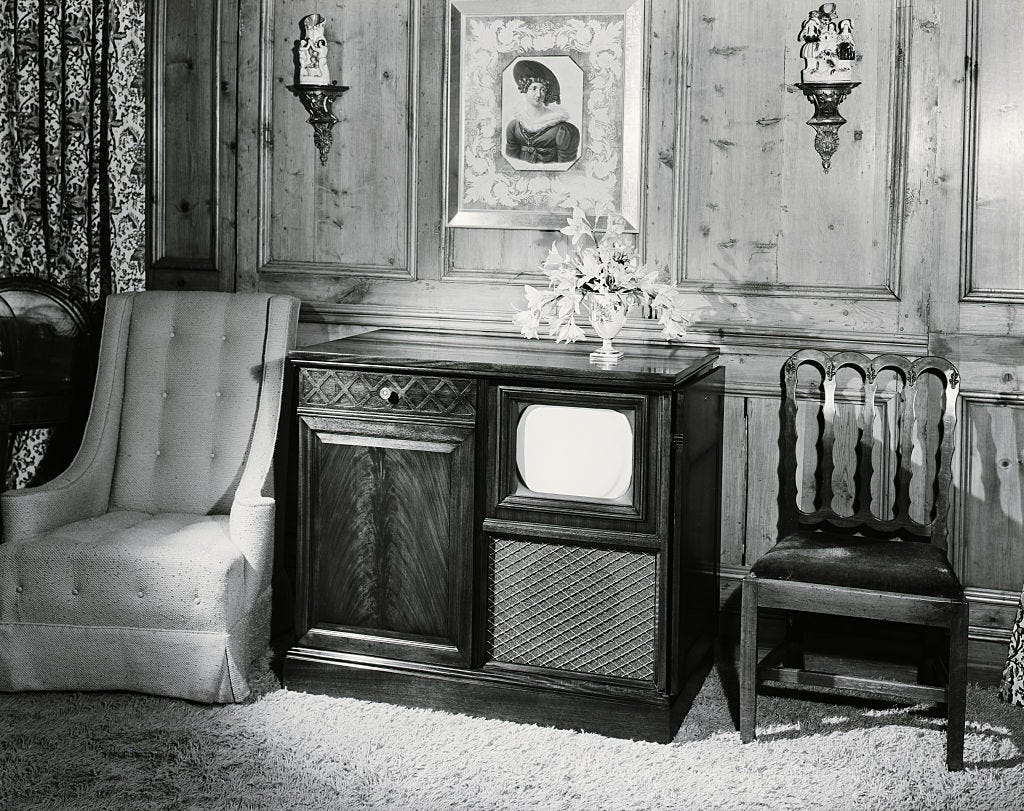
The 1940s marked a time of change. In this scene, a television is introduced into a living room that otherwise maintains a very traditional style.
1948
Chinoiserie may have been more of a 19th-century trend, but it experienced a significant revival in the 1930s. Its influence remained strong through the 1940s, particularly as global travel and commerce expanded in the postwar period.
1949
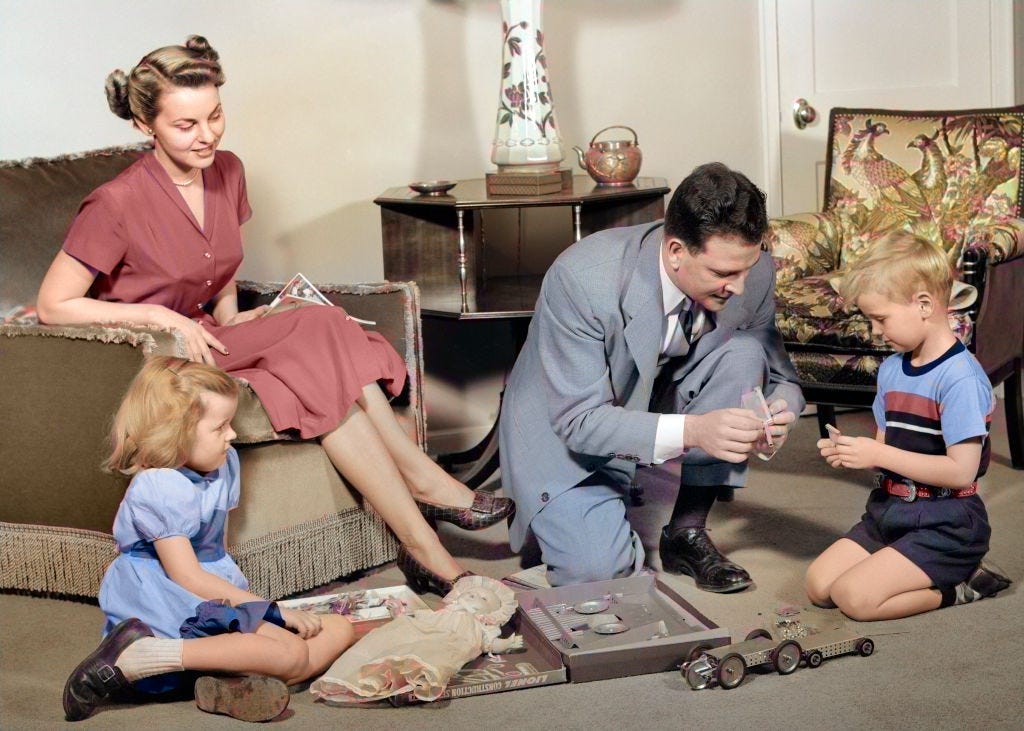
Patterned wallpaper was very common in the 1940s. Rather than a classic floral pattern, this one in a bedroom has a more modern, abstract look.
1950
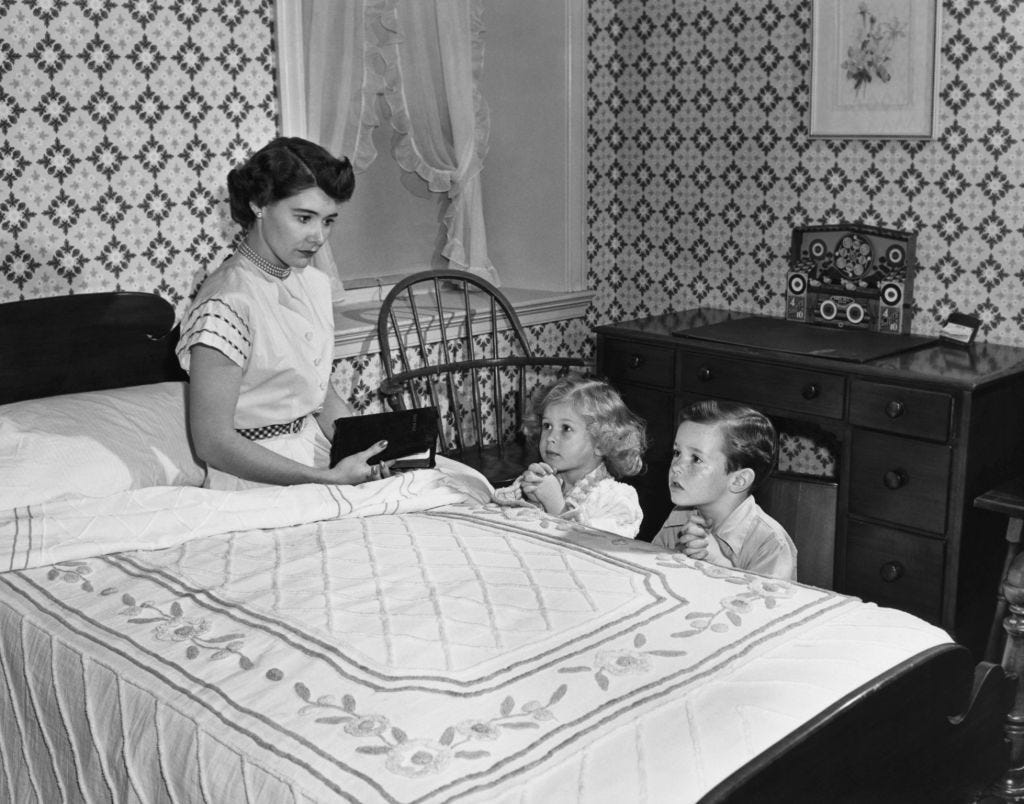
By 1950, televisions were growing more common in American households. However, this did not prevent individuals from maintaining a more countryside aesthetic in their decorations—consider, for example, this chair covered in gingham fabric.
1951
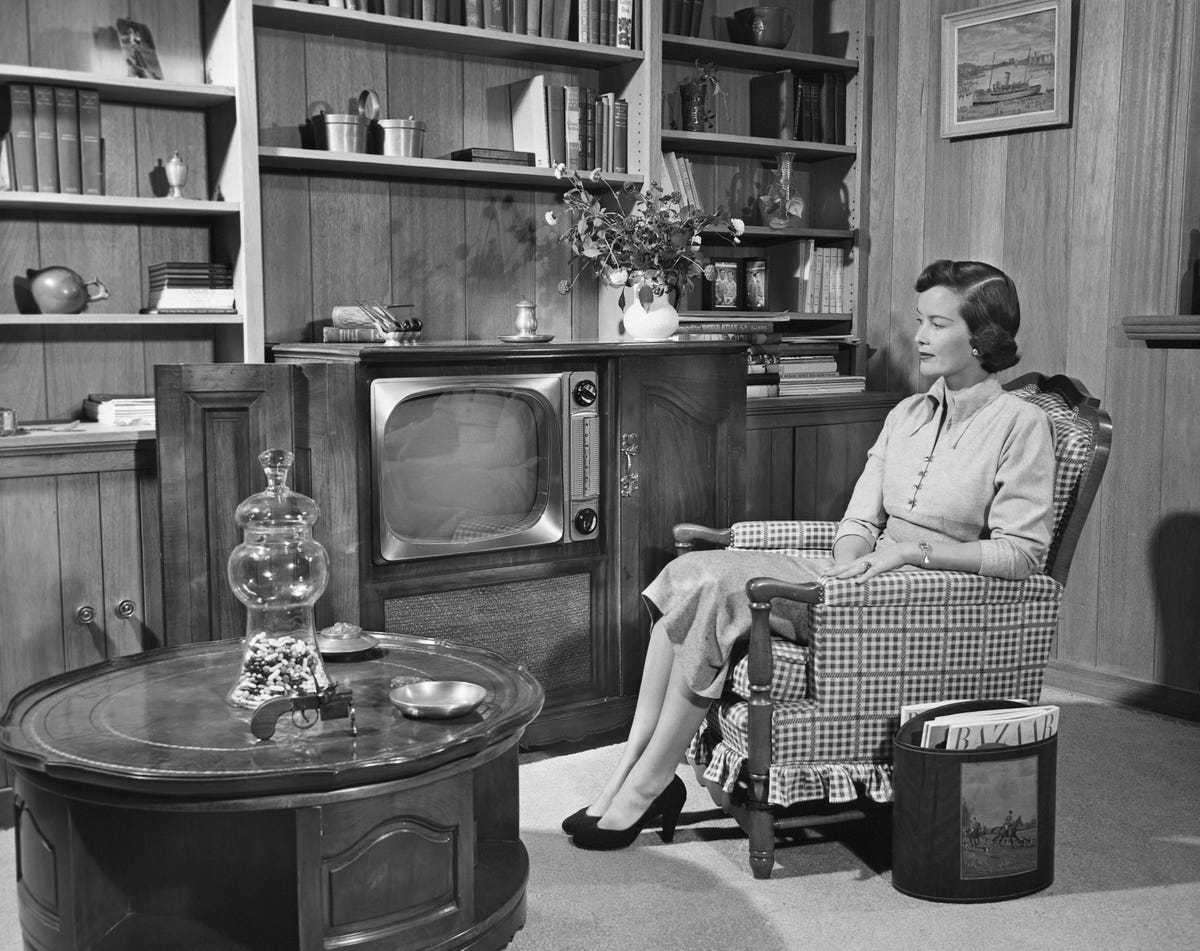
The butterfly chair, also known as the Hardoy chair or BKF chair, was created in Argentina in 1938. However, it gained significant popularity in the United States during the 1940s when Artek-Pascoe and Knoll began manufacturing it. Once the design became available in the public domain in 1951, its widespread appeal skyrocketed, leading to the production of approximately five million units within a ten-year period.
1952
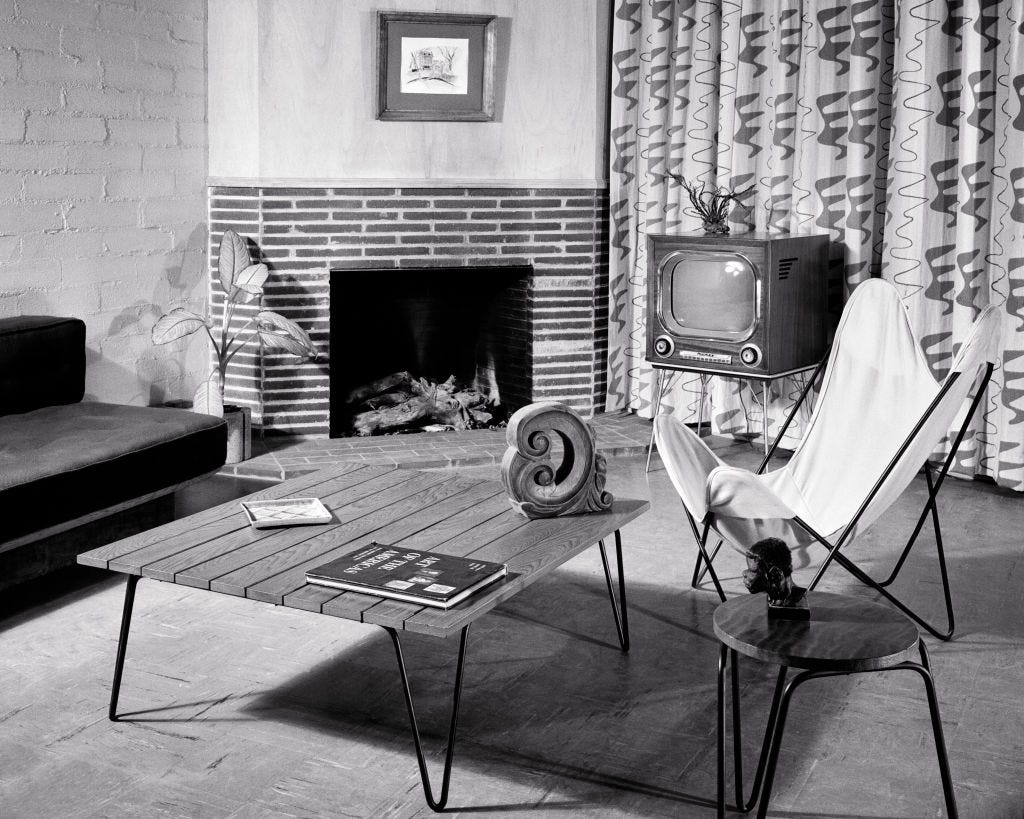
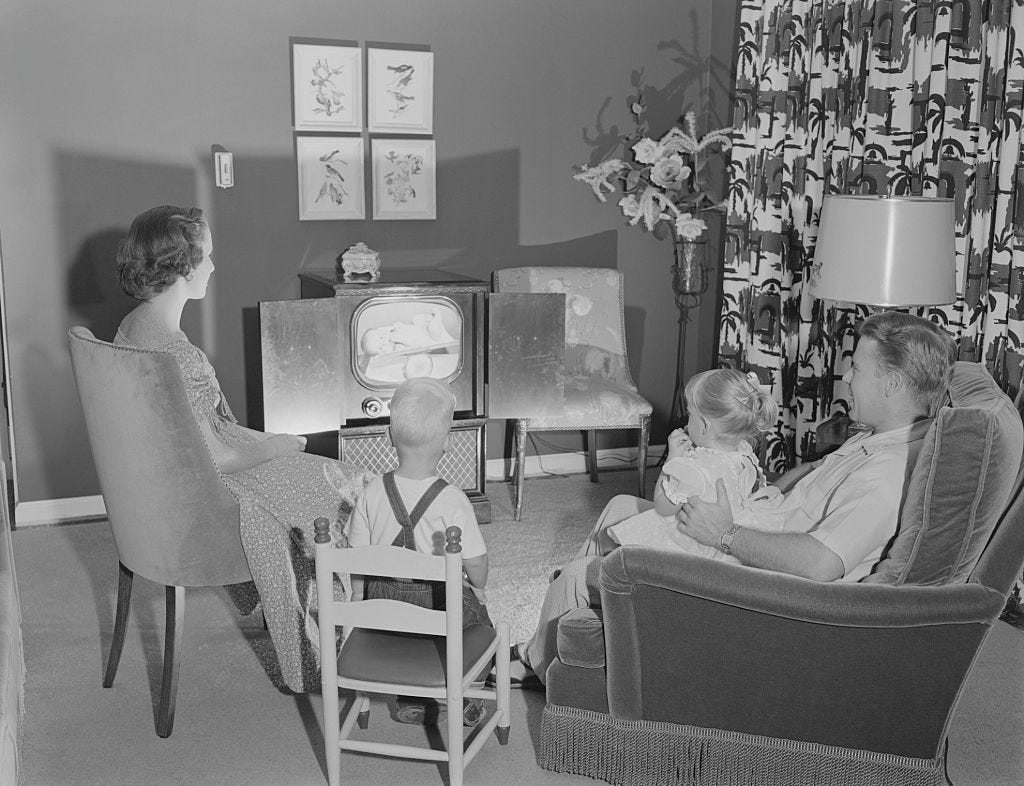
Tropical patterns, such as this curtain, were very popular in the 1950s—not just in home decoration, but also in clothing. The fringed armchair, on the other hand, dates back to the 1930s and 1940s.
1953
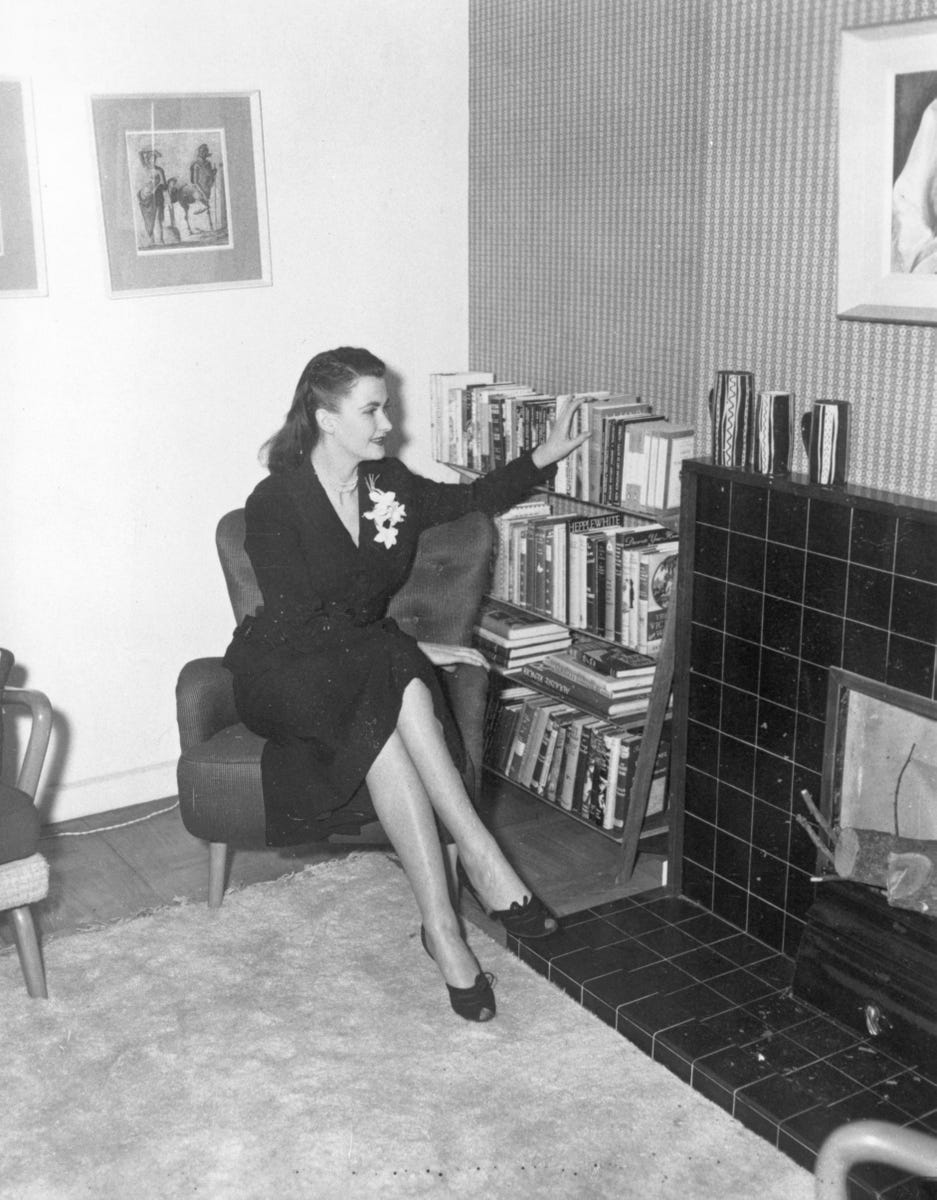
Tiled fireplaces—reviving an Art Deco design element—were popular in the 1950s. Additionally, wallpapers, particularly those with geometric patterns, remained very much in fashion.
1954
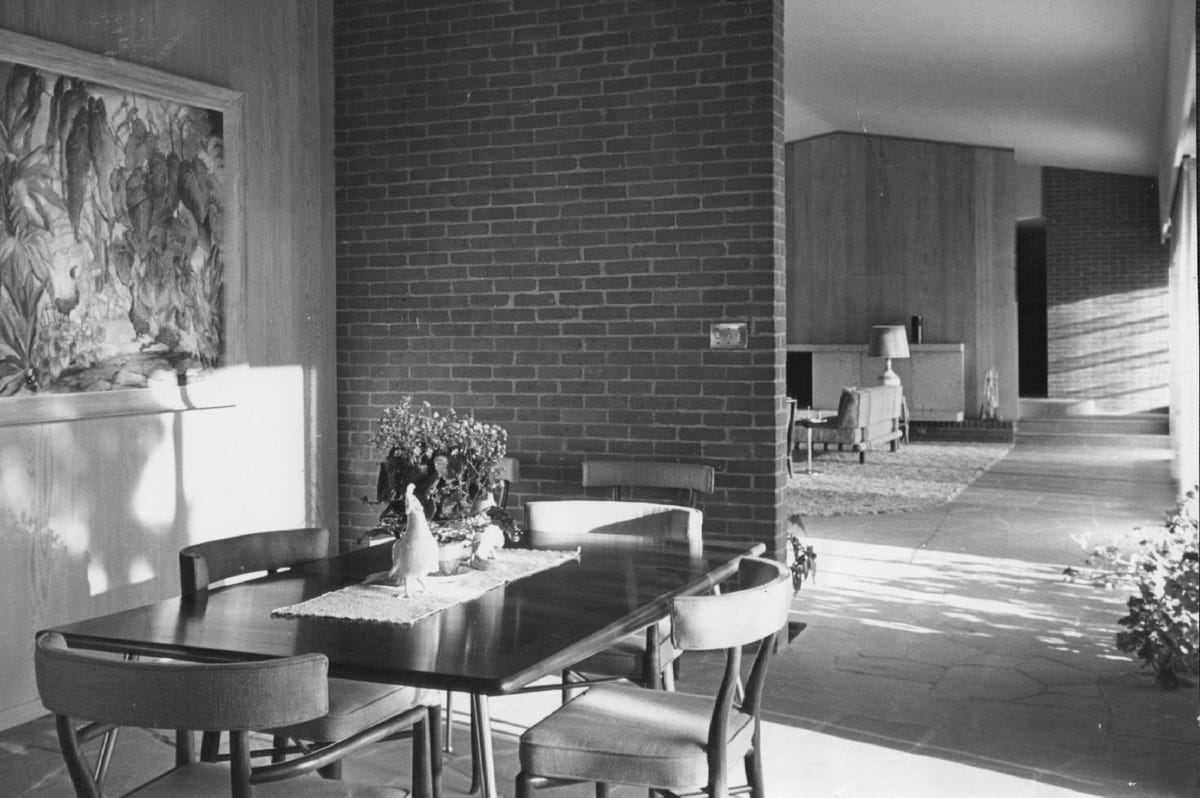
Open spaces in home designs gained popularity in the 1950s and became a defining feature of midcentury modern architecture.
1955
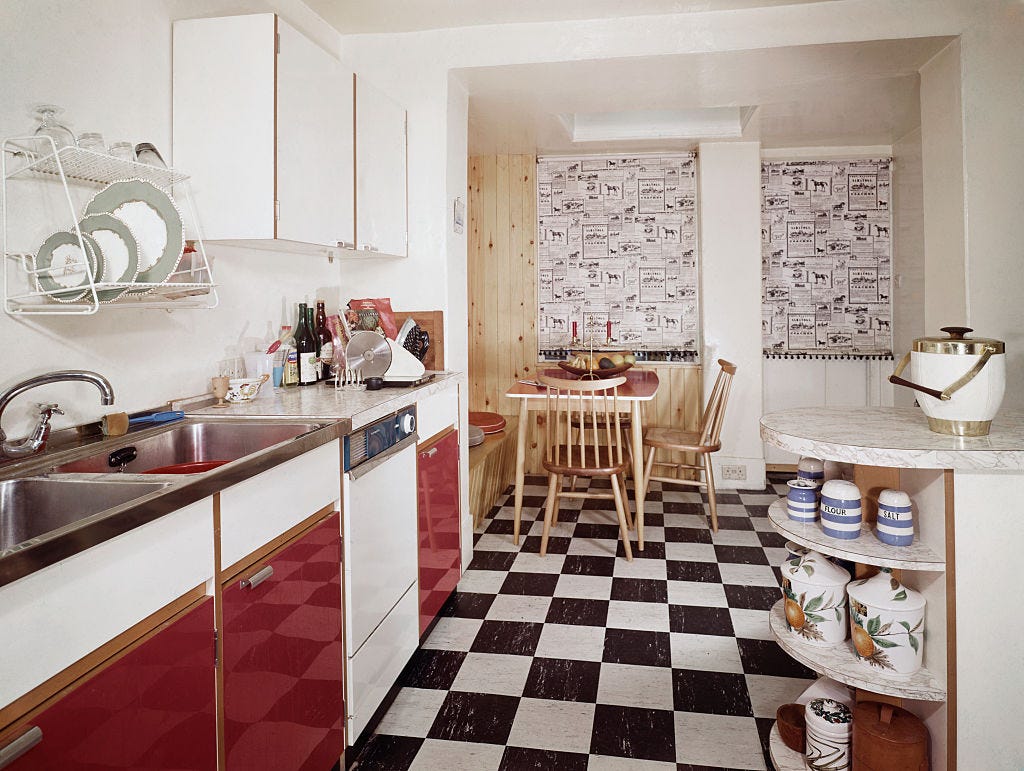
Nothing screams “1950s” more than a black-and-white, checkered linoleum floor. However, in this case, it is combined with rural elements, such as Shaker-style chairs and painted porcelain jars.
1956
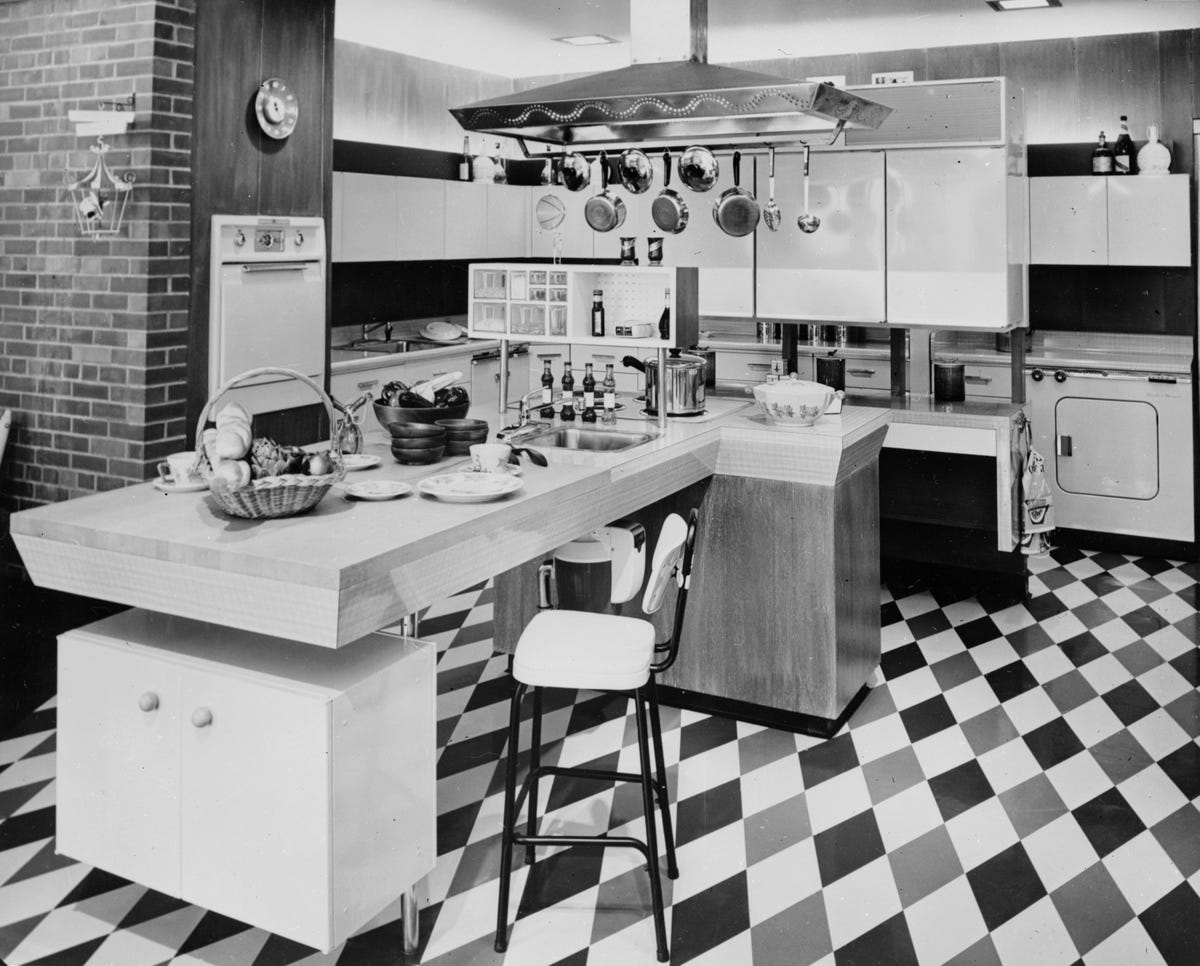
Kitchens started to become larger during the 1950s, partly due to the demand for more room to accommodate the new appliances being introduced into households. In this home, there is a dishwasher and a garbage disposal.
1957
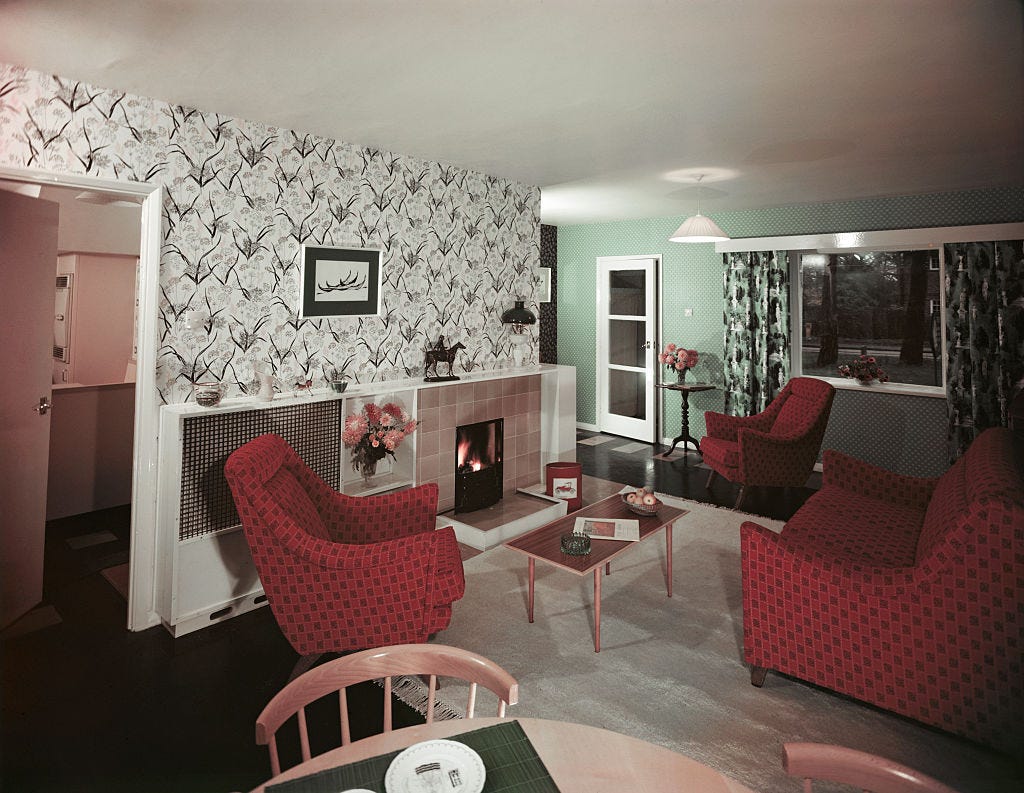
Soft hues, especially mint green and light pink, were among the top choices for home decoration. Notably, they were frequently combined with red highlights.
1958
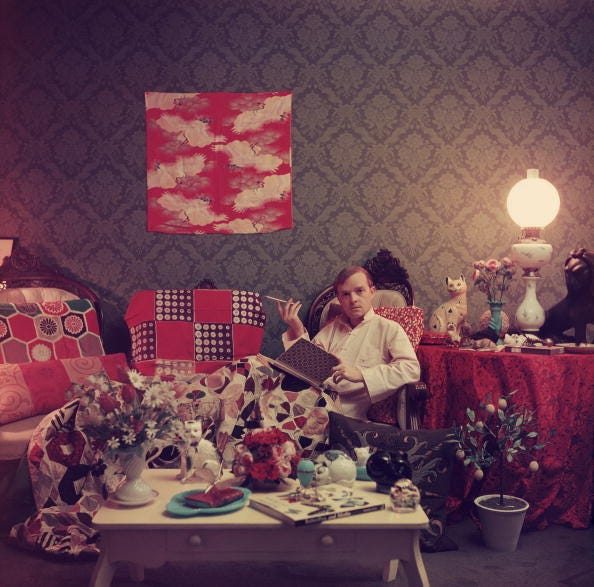
Truman Capote possessed a bold, unapologetic style of excess, which was becoming less favored compared to minimalism by the late 1950s. However, Capote’s residence includes elements of other popular ’50s styles, such as Chinoiserie, decorative wallpaper, and a red color scheme.
1959
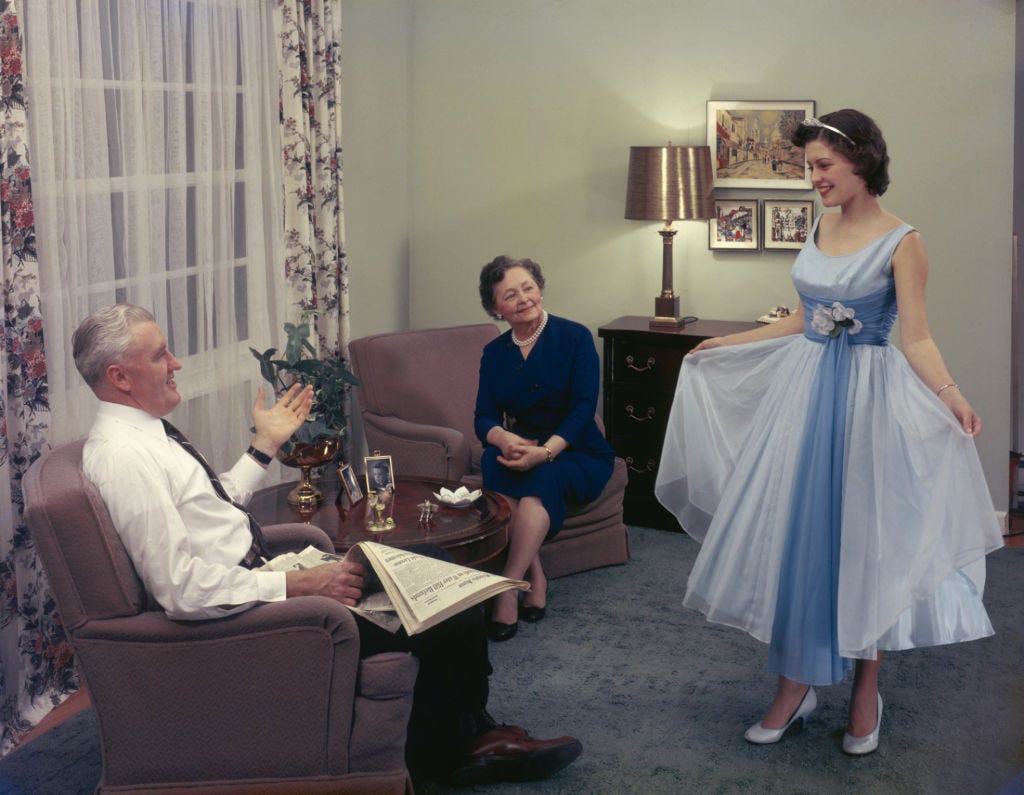
It’s not always necessary to include every new and popular trend in your home. This straightforward living room focused on the essentials for furniture, although the colors clearly reflect a 1950s style.
1960
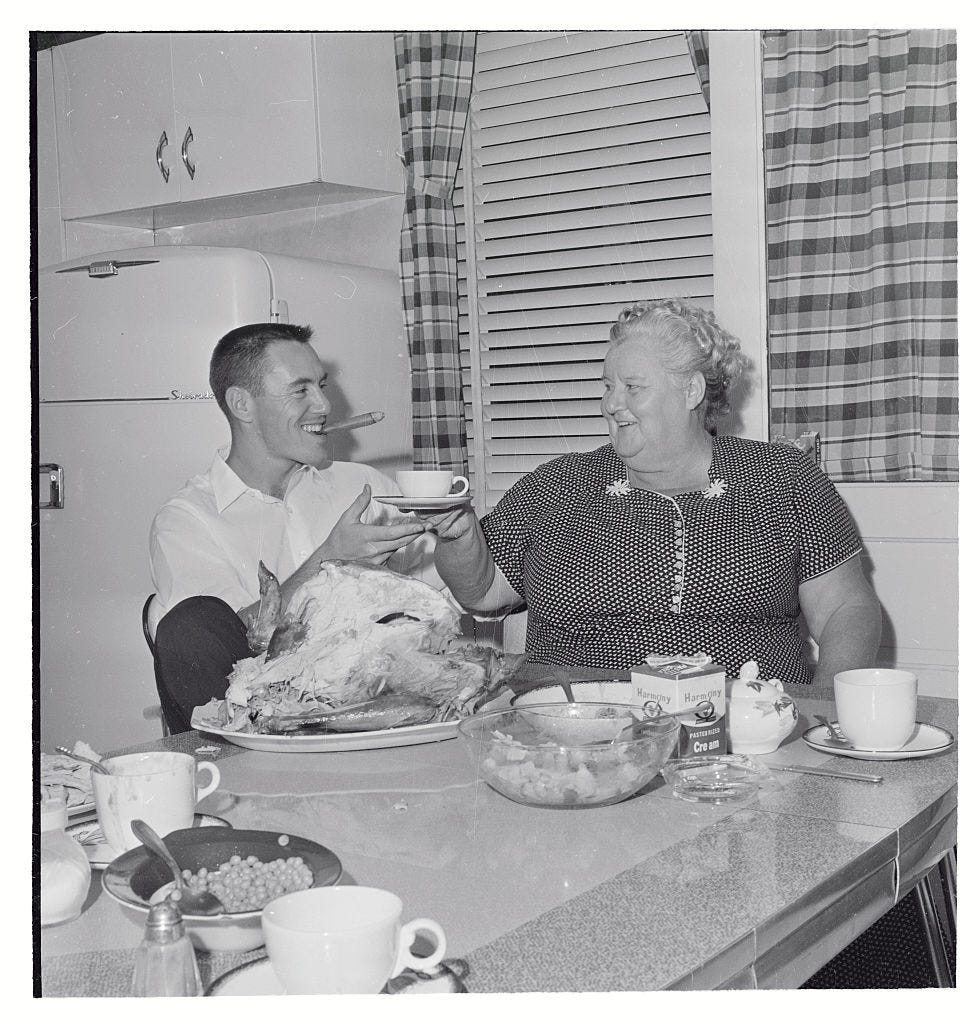
Curved refrigerators have become Smeg’s trademark in recent times—and in 1960, the appliance’s shape was seen in kitchens throughout the country. Take a look at that Formica table as well.
1961
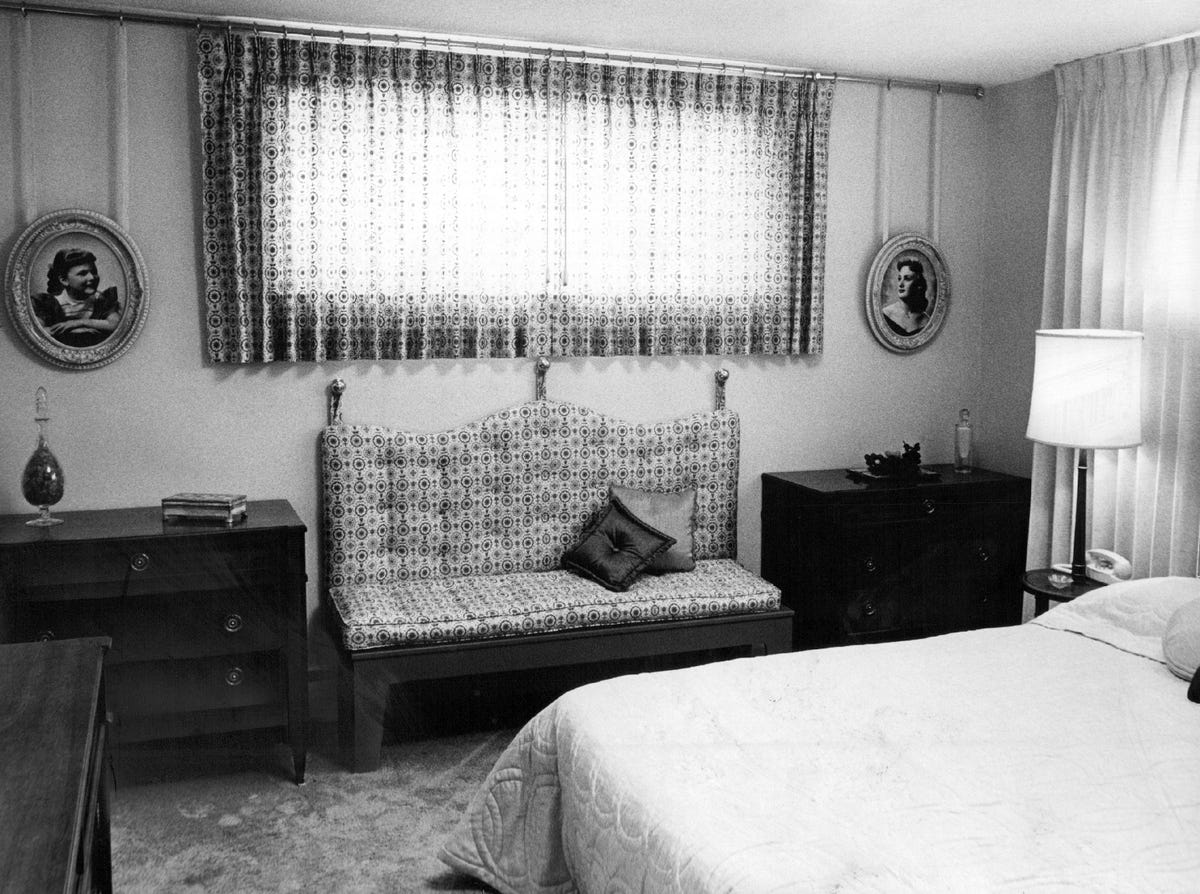
The coordinated curtains and bench fabric feature a groovy design that evokes the ’60s—yet there remains a significant amount of classic decoration, such as the two oval-picture frames.
1962
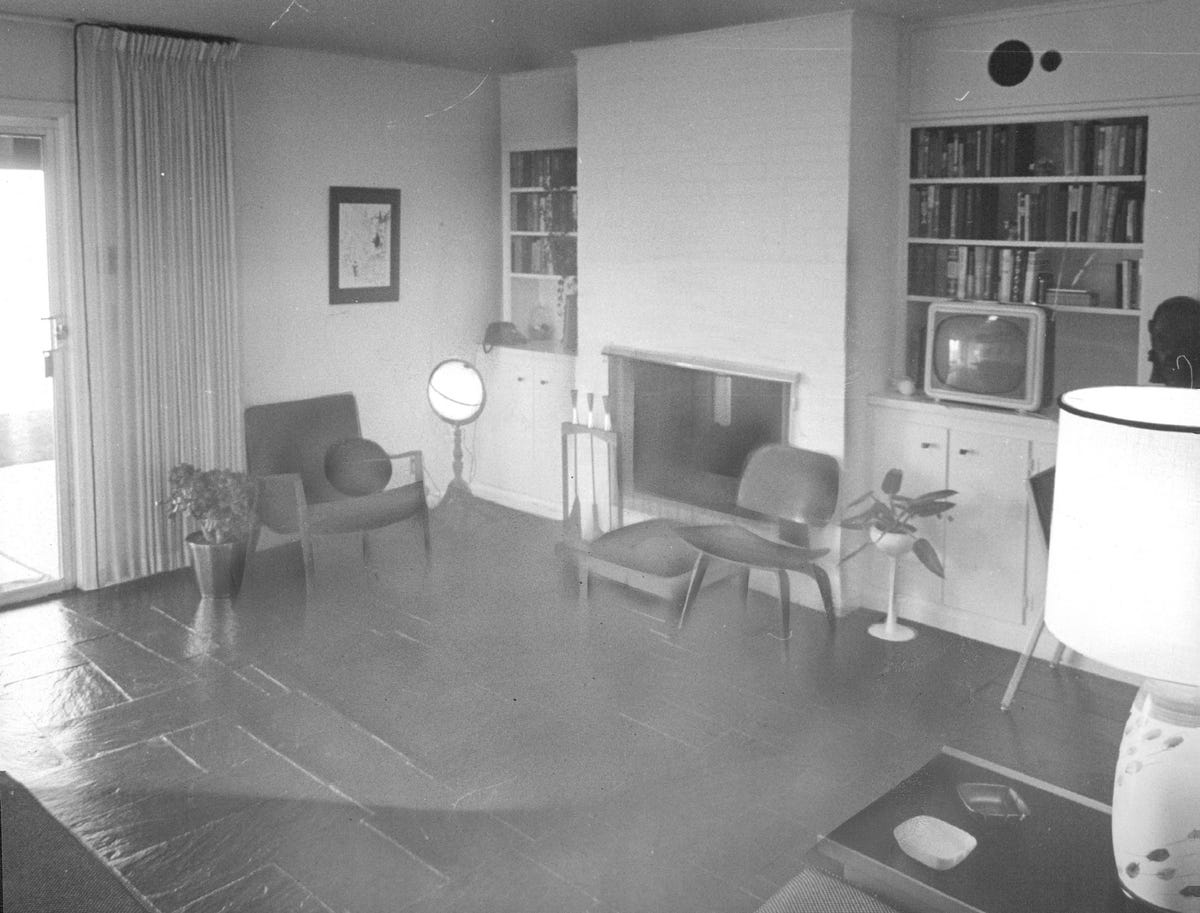
Slate floors, typically featuring a variety of colored stones, gained significant popularity in mid-century homes. The chair positioned in front of the fireplace is anEames Molded Plywood Chair, created in 1946 and called byTimemagazine titled “The Best Design of the 20th Century.”
1963
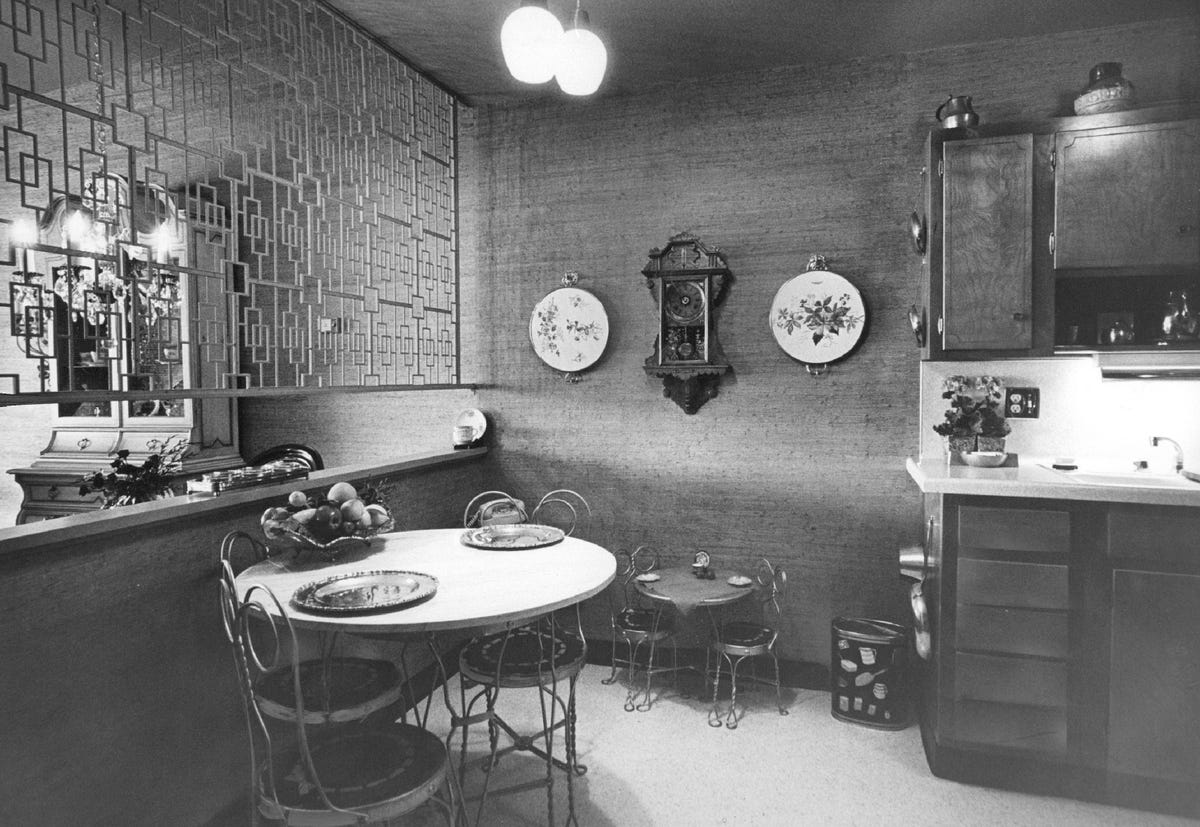
In midcentury homes with open floor plans, room dividers help create separation between areas. This particular one features a Chinese-inspired design.
1964
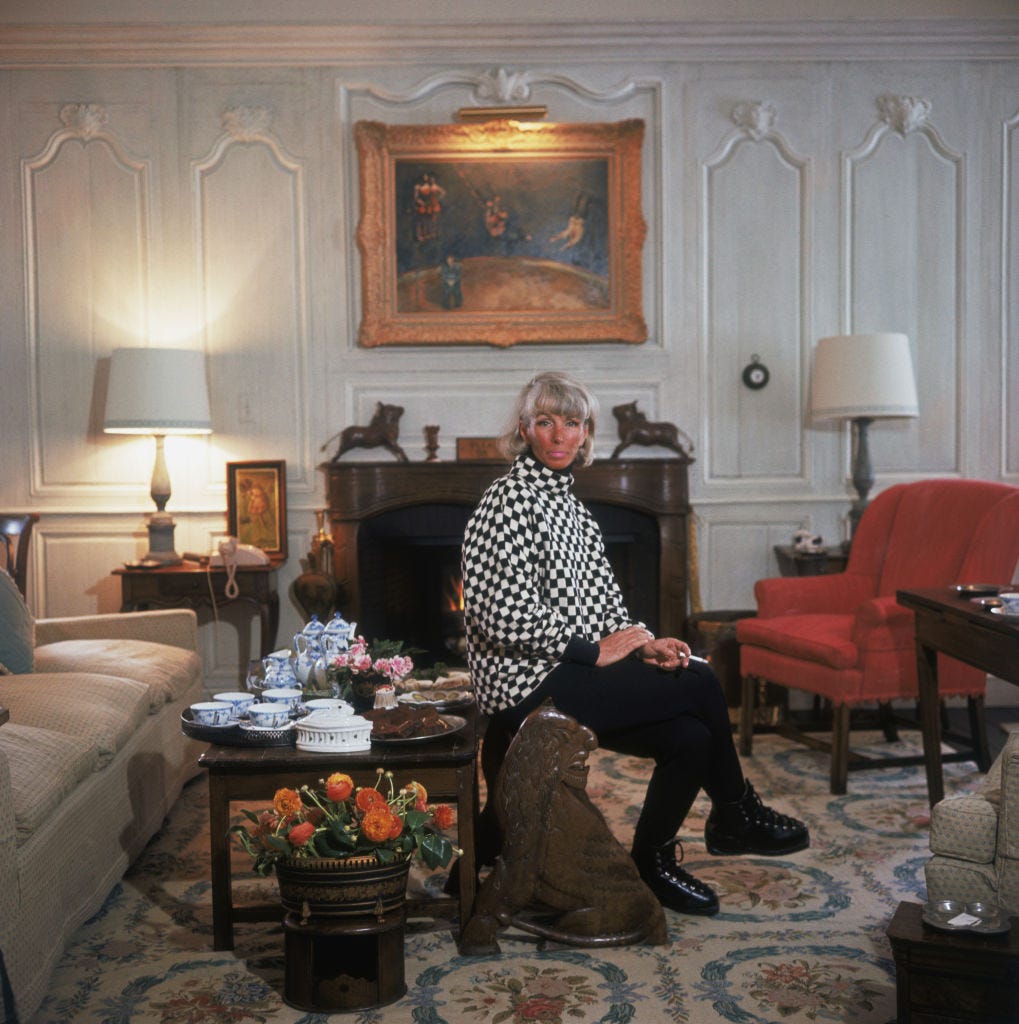
It’s not always about the ultra-modern in the 1960s. Socialite Ann Bonfoey Taylor’s Vail home demonstrates how traditional furnishings remained popular.
1965
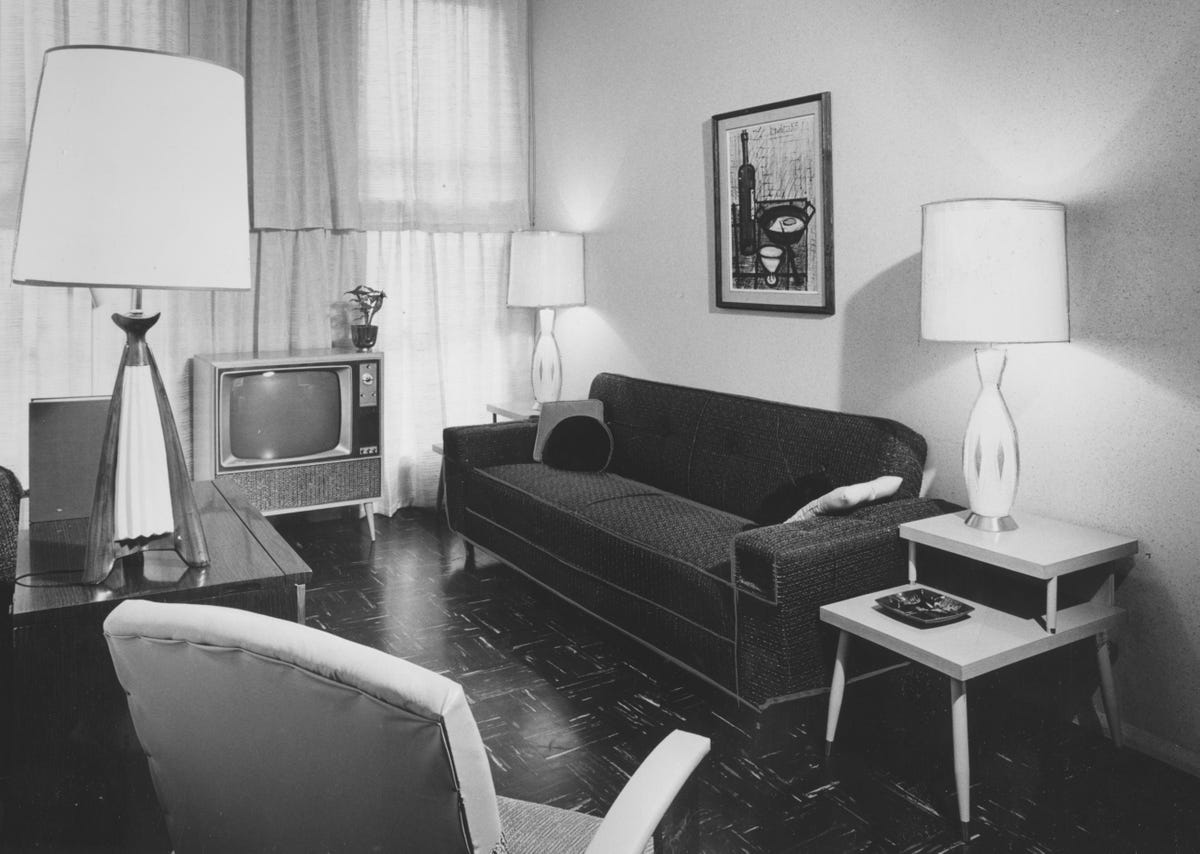
Lighting design underwent significant changes in the 1960s, with fixtures taking on much more artistic and sculpted shapes.
1966
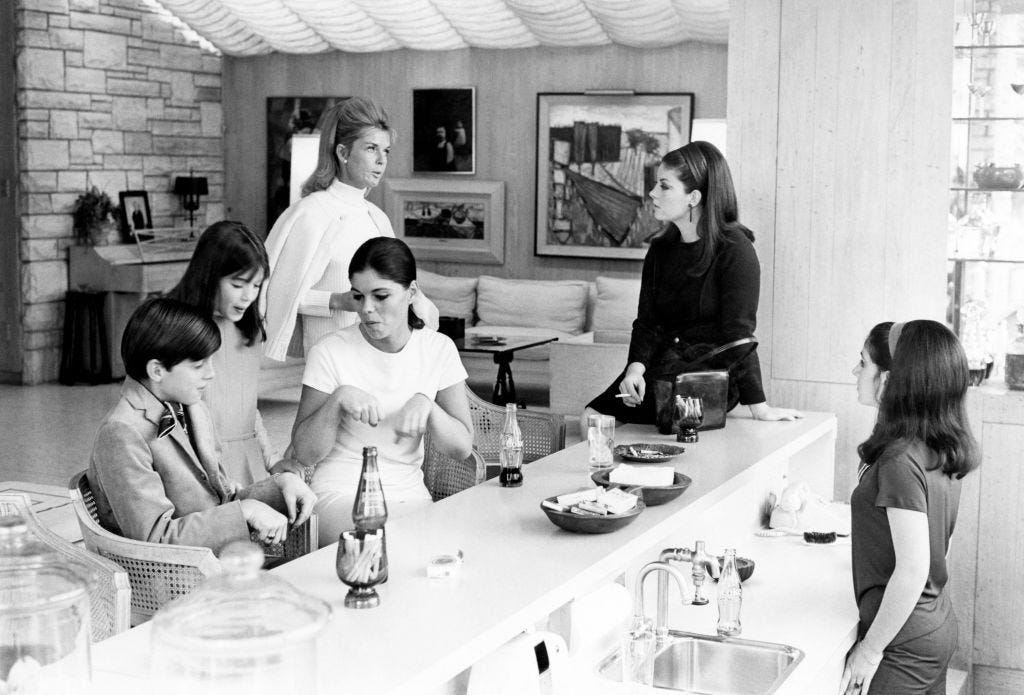
Open-concept layout, spacious kitchen, and high ceilings—this home meets all the criteria for midcentury modern design. (It’s the Los Angeles residence of singer Dean Martin.)
1967
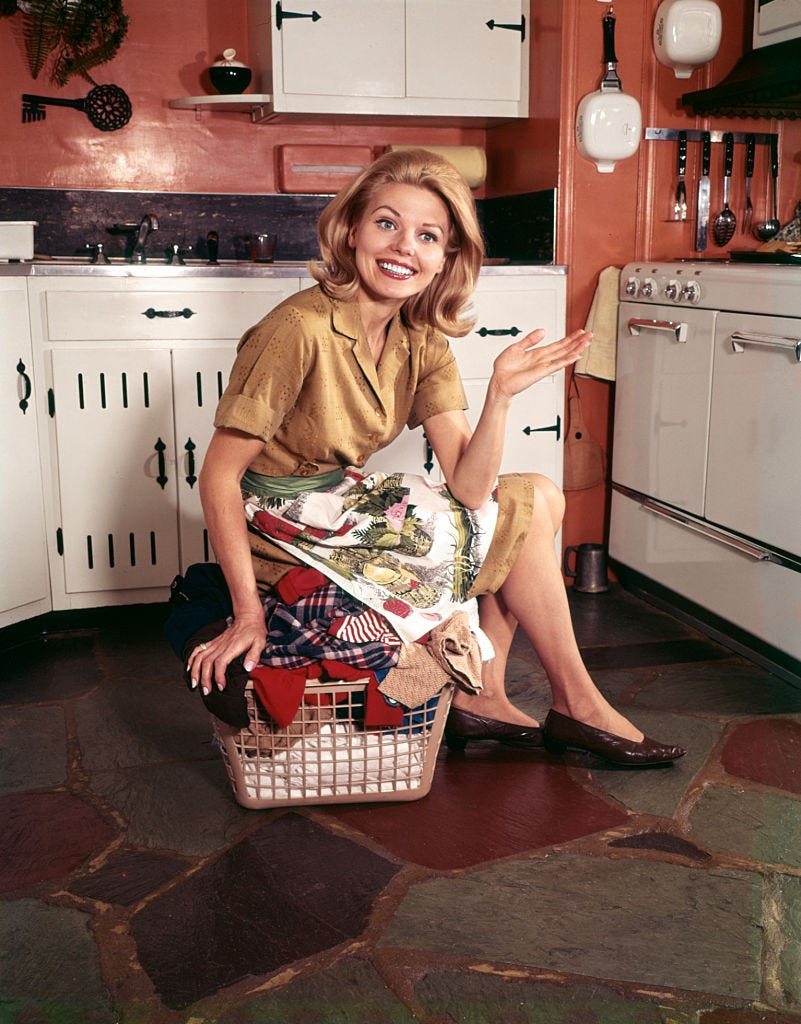
Now you can witness the vibrant tiled flooring in all its grandeur! The material was incorporated throughout the home, from the kitchen to the living room to the patio.
1968
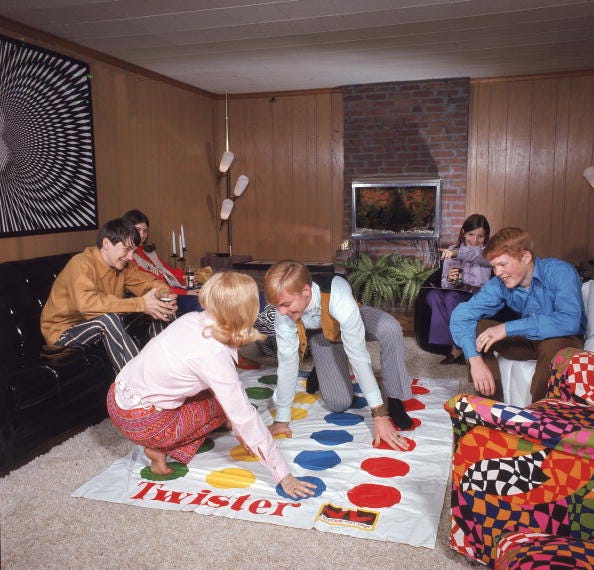
This basement highlights some of the more daring design styles from the late 1960s, including the optical art on the wall and the vibrant chair. However, it also features more subdued elements, such as the wood-paneled walls.
1969
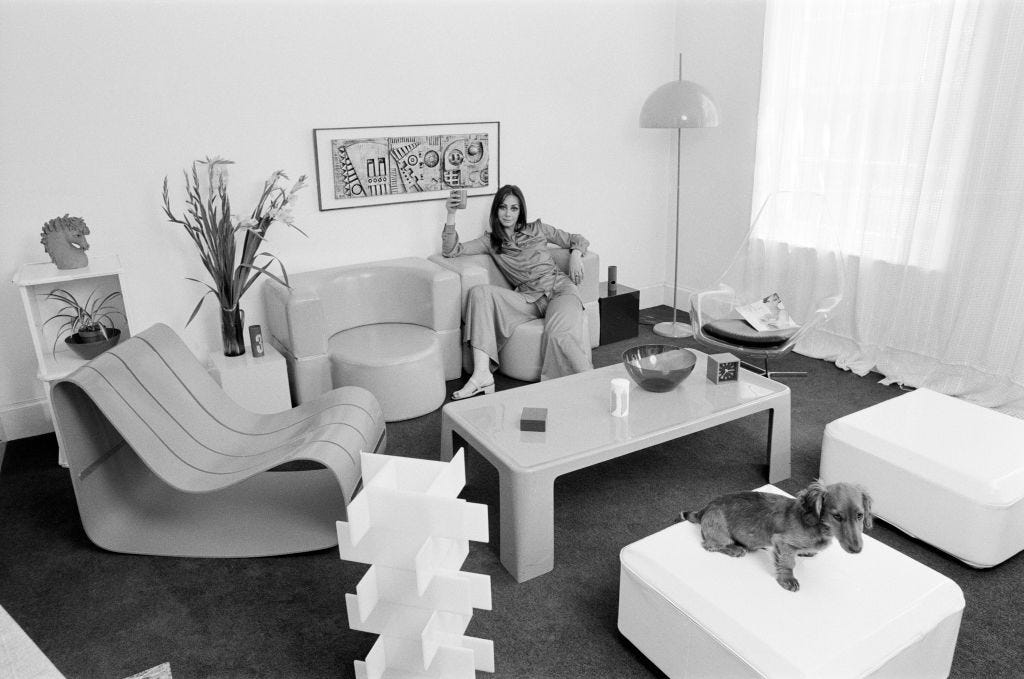
Although most American homes do not possess an entire collection of modern furniture, this photograph highlights some of the more minimalistic, yet innovative, pieces of furniture design from that era. Pay attention to the acrylic chair—it is almost invisible.
1970
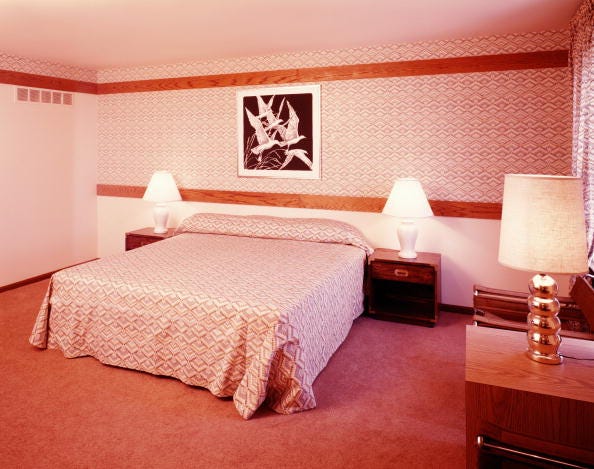
Monochromatism was somewhat significant. Designs and surfaces assist in breaking up the intense pinkness of this space.
1971
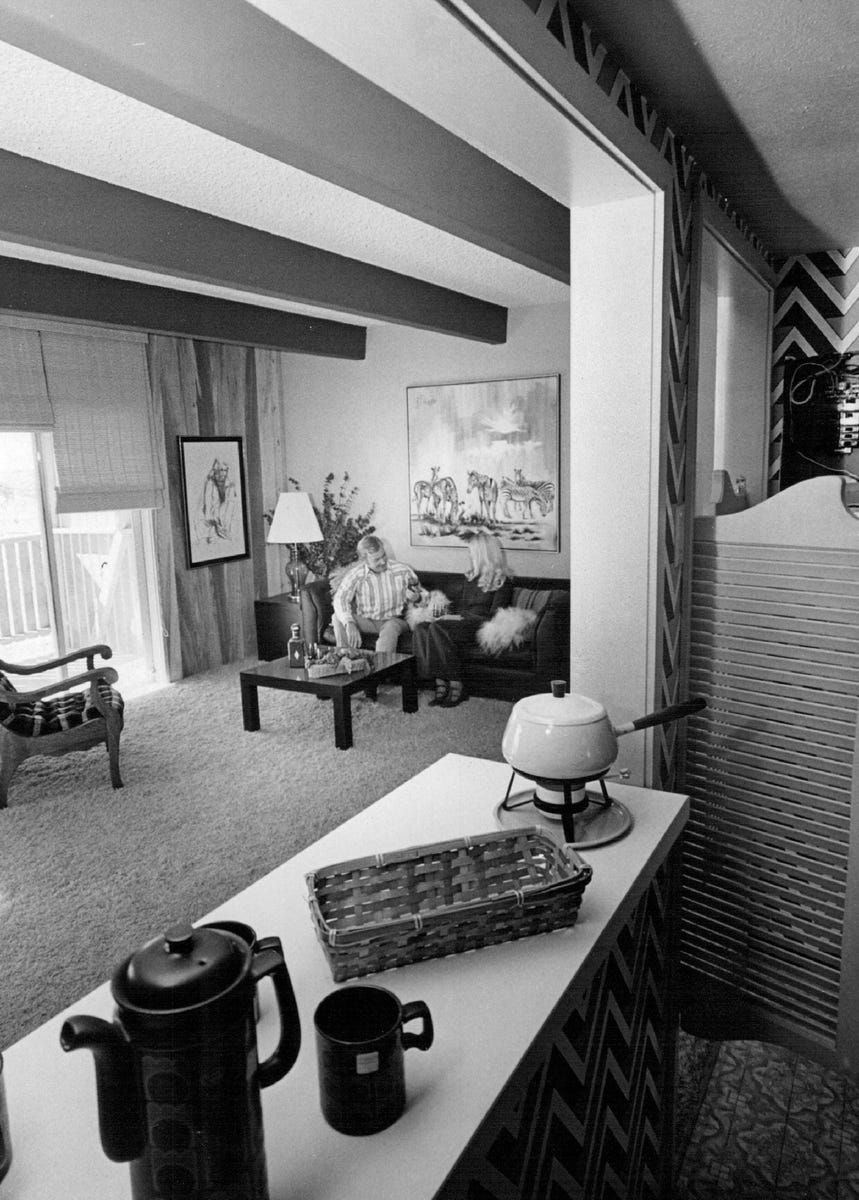
Ah, who can forget shag carpet? It’s a symbol of the 1970s.
1972
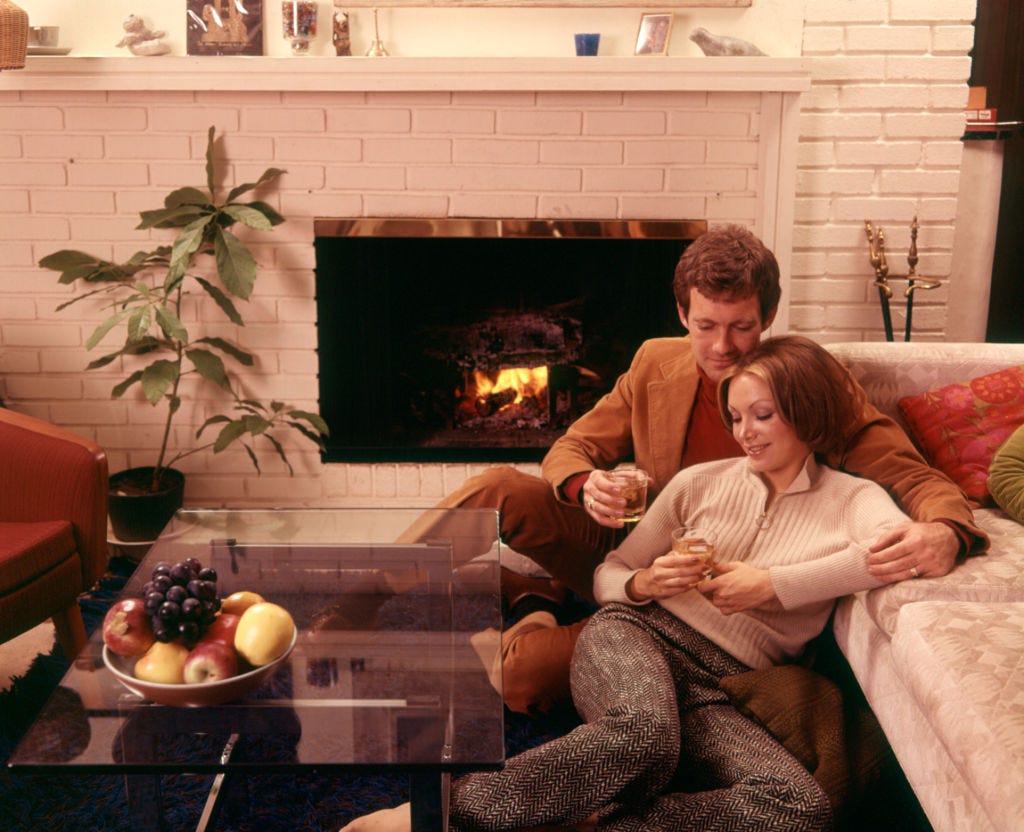
By 1972, coffee tables with glass tops had been in existence for about twenty years, and they remain popular today. Glass tables—or any transparent furniture, for that matter—create the appearance of additional space.
1973
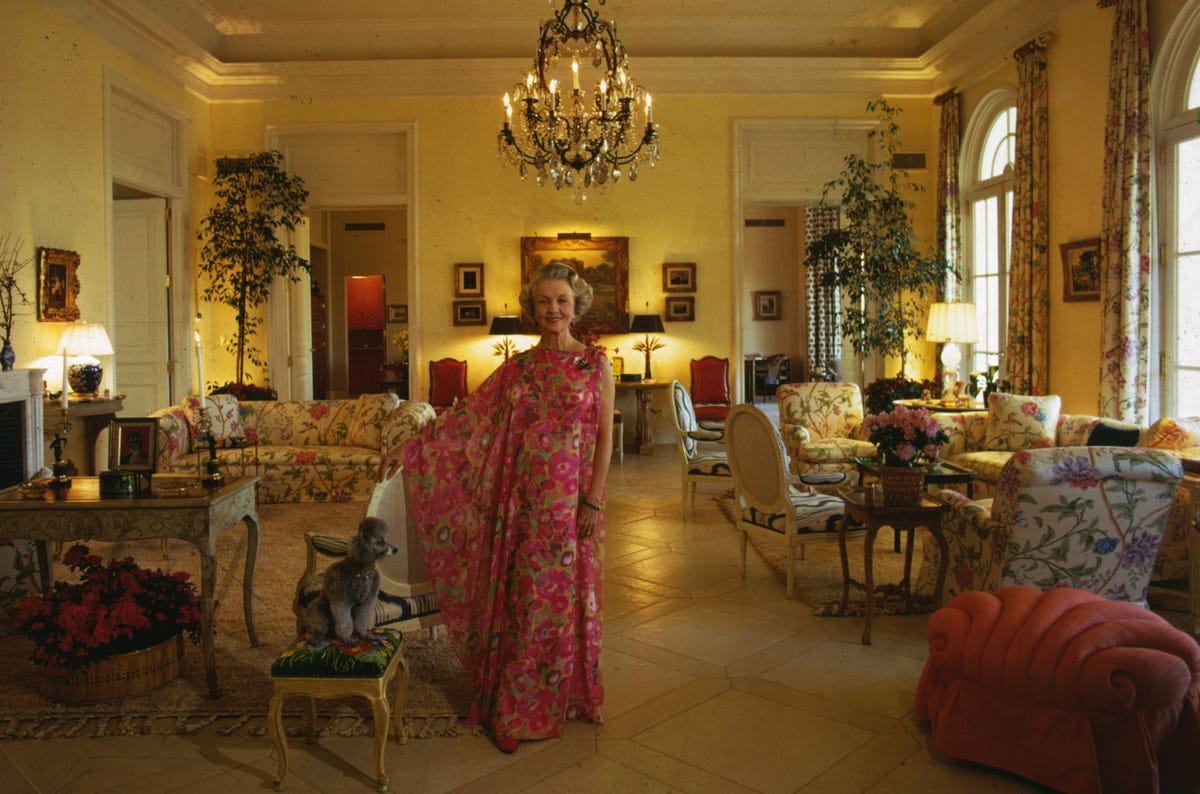
Philanthropist Mrs. Donald Harrington displays her parlor, which is traditionally adorned and appears quite timeless. However, the item that clearly situates these photographs in the ’70s is the scalloped ottoman.
1974
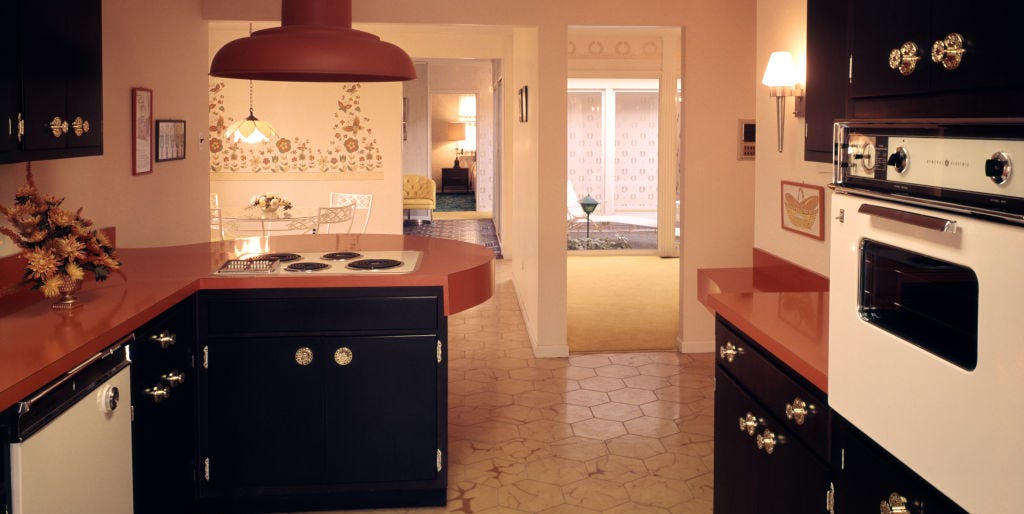
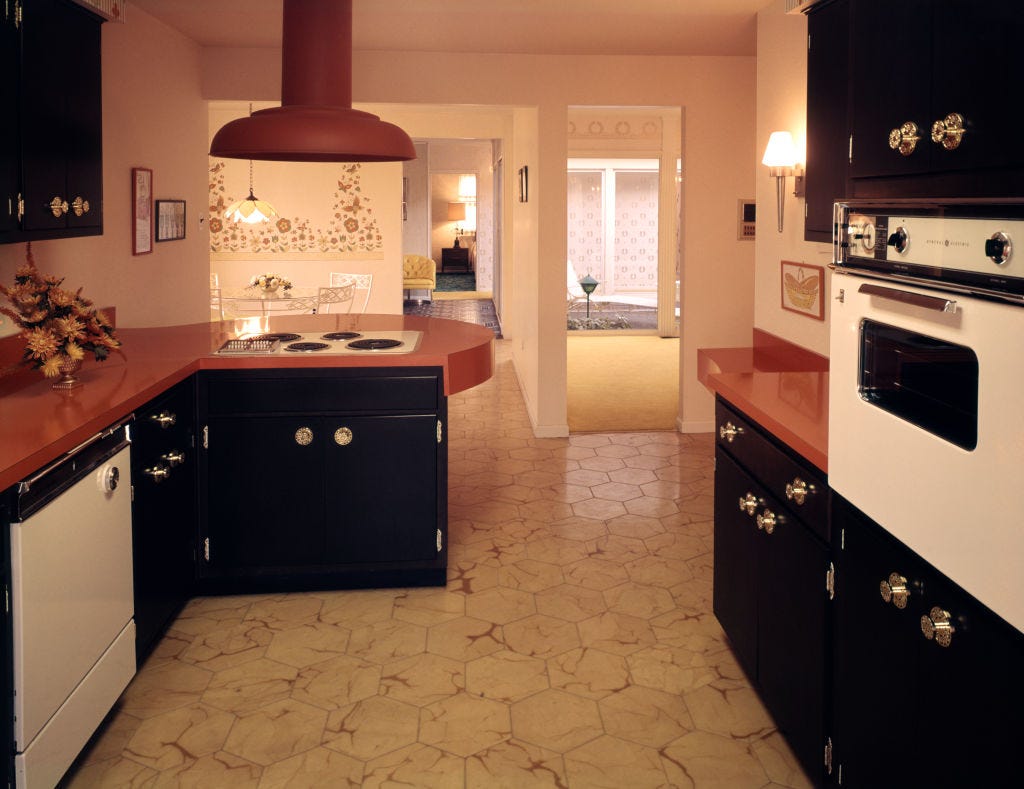
Kitchens are becoming increasingly modern by the middle of the 1970s. Black cabinets, white appliances, and red countertops represent a daring design decision—and one that suits the era perfectly.
1975
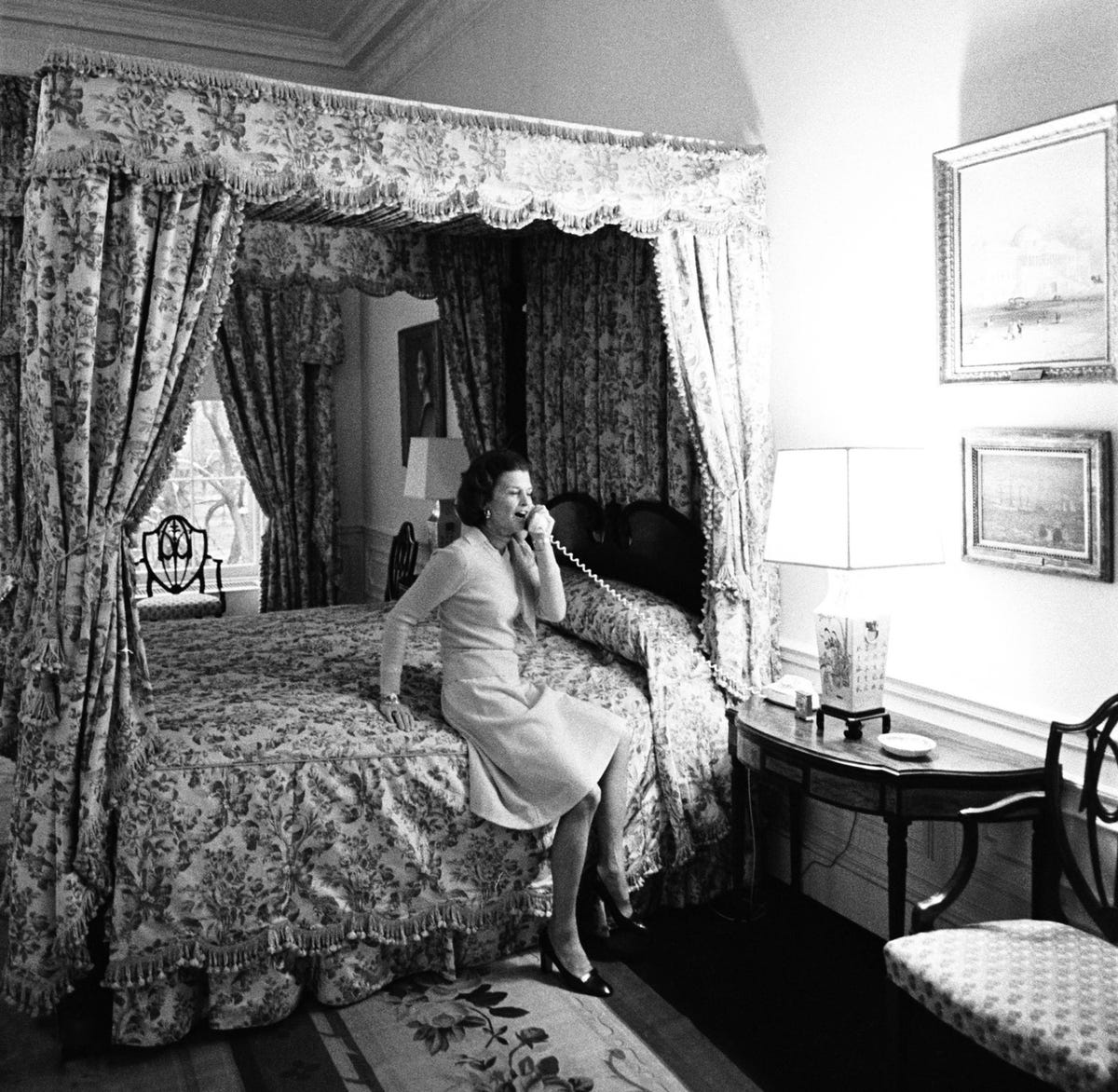
By 1975, floral patterns made a return. Similarly, coordinated sets, such as a canopy and a matching comforter, as seen in Betty Ford’s bedroom, came back into style.
1976
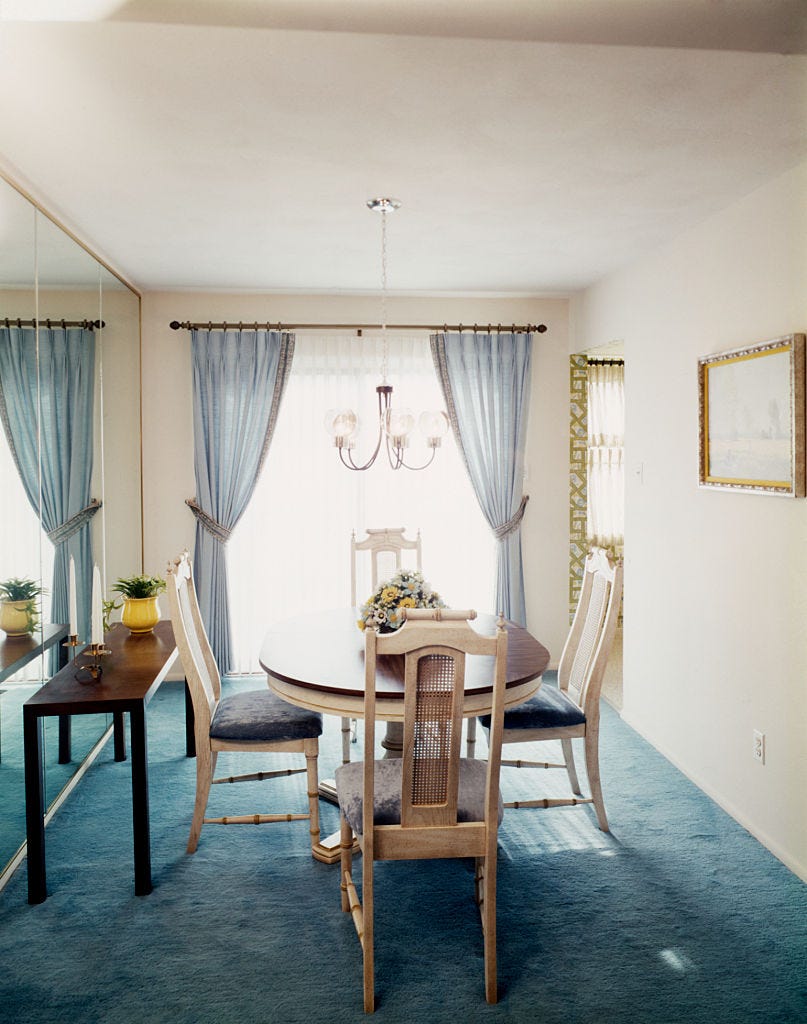
It’s not solely about pinks and reds. Teal was also a popular color during the ’70s.
1977
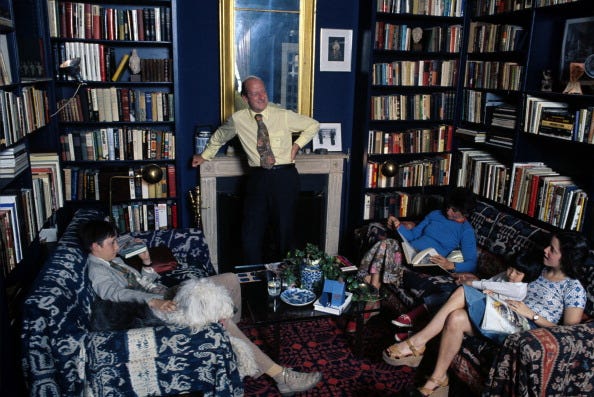
The blue bookcases in this library might seem very 2020s, but it’s the batik slipcovers on the sofas that give away the room’s true age. (And the tie of former New York City Deputy Mayor Osborn Elliott,Newsweekeditor of the magazine at that time.
1978
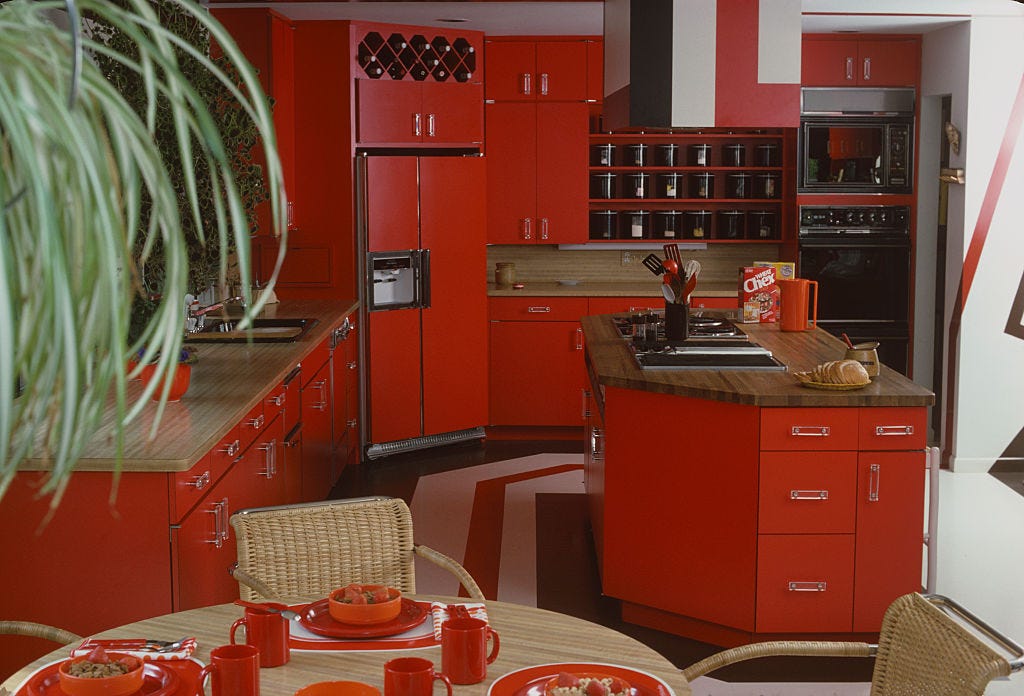
You’d need to be quite courageous to put in this type of kitchen. Indeed, red remained a popular choice in 1978.
1979
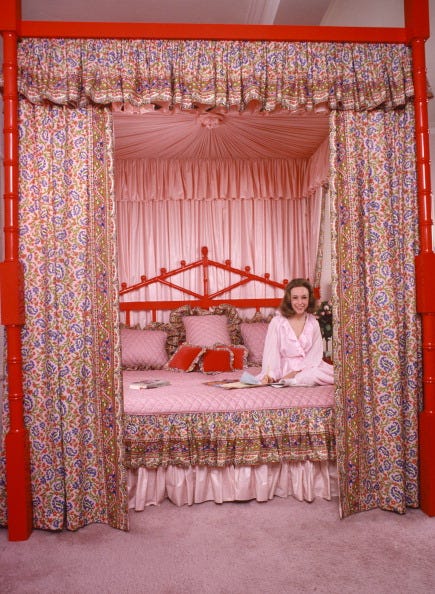
Paisley patterns, pinks, and reds—this is definitely a ’70s bedroom. It belongs to businesswoman Helen Gurley Brown, who served as the editor-in-chief ofCosmopolitan (House Beautiful’ssister magazine).
1980
The combination of floral and plaid wallpaper is a stylish vintage style. When matched with wooden cabinets? That’s going to require some effort to modernize.
1981
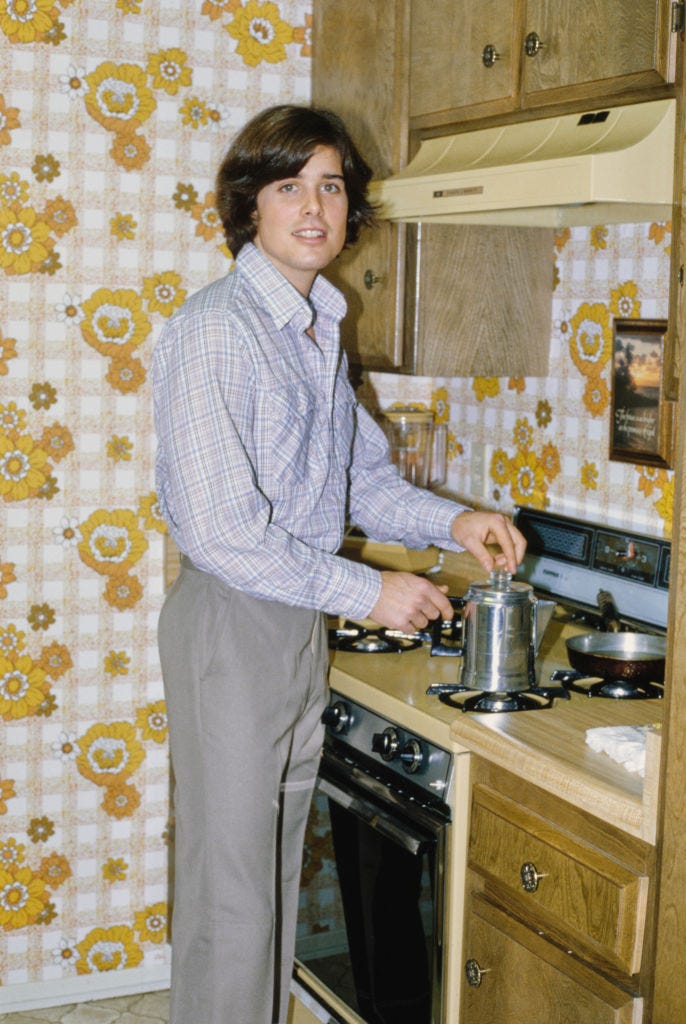
If you’re curious abouttheclassic American residence, look no further than theWhite House. As each new president takes office, the decor changes. In 1981, President Ronald Reagan and his wife Nancy represented the early ’80s with floral wallpaper, white couches, and a pastel pink rug in their living room. (See the White House interiors over the years)here).
1982
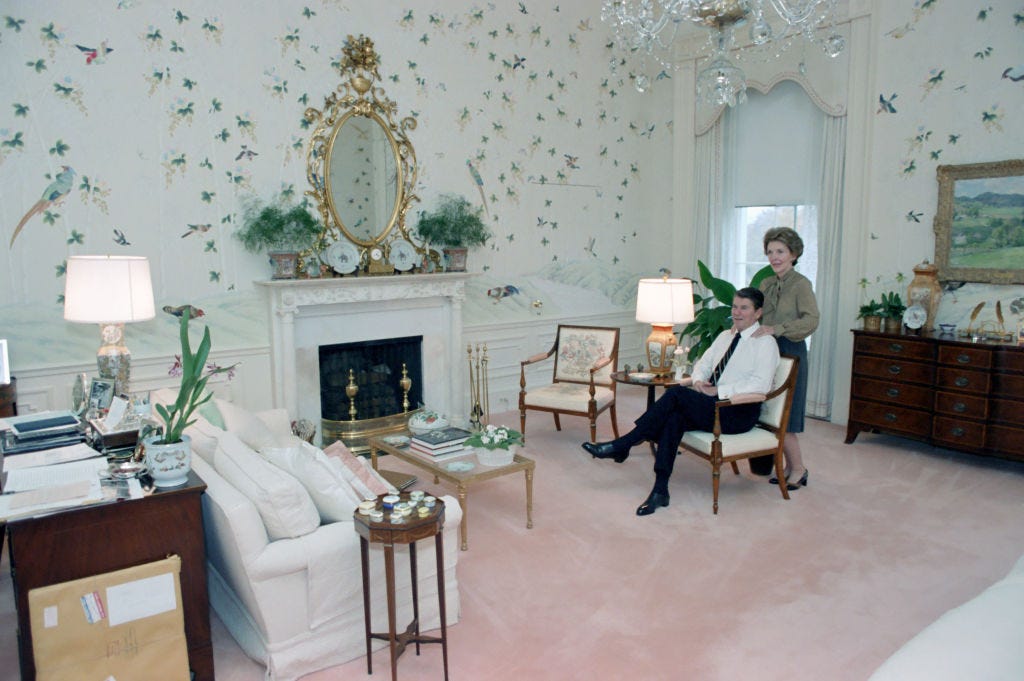
In the early 1980s, open conceptFloor plans were extremely popular. Regarding kitchens, this meant it was the perfect time for peninsulas and islands to take center stage.
1983
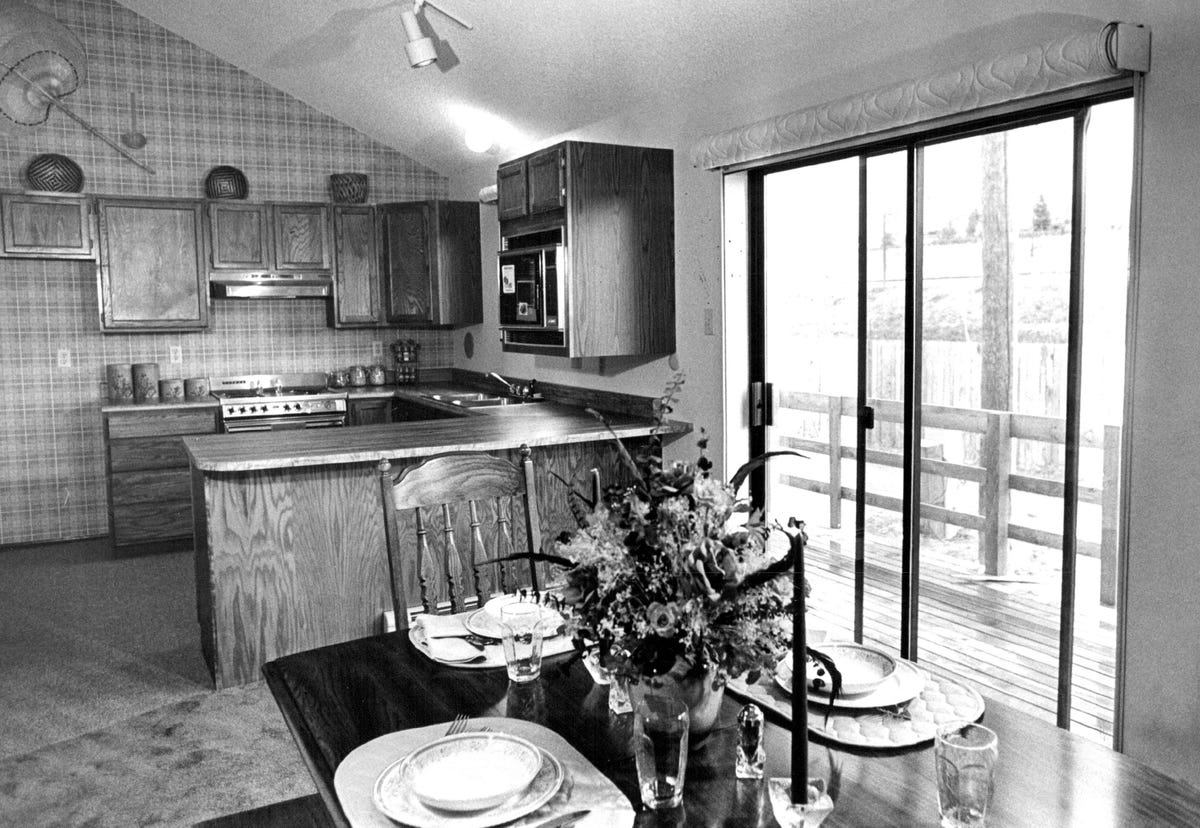
Leave behind the flower-patterned sofas of the ’70s. Couches in the 1980s were designed to be low and deep—perfect for relaxing, as demonstrated by socialite Mollie Wilmot.
1984
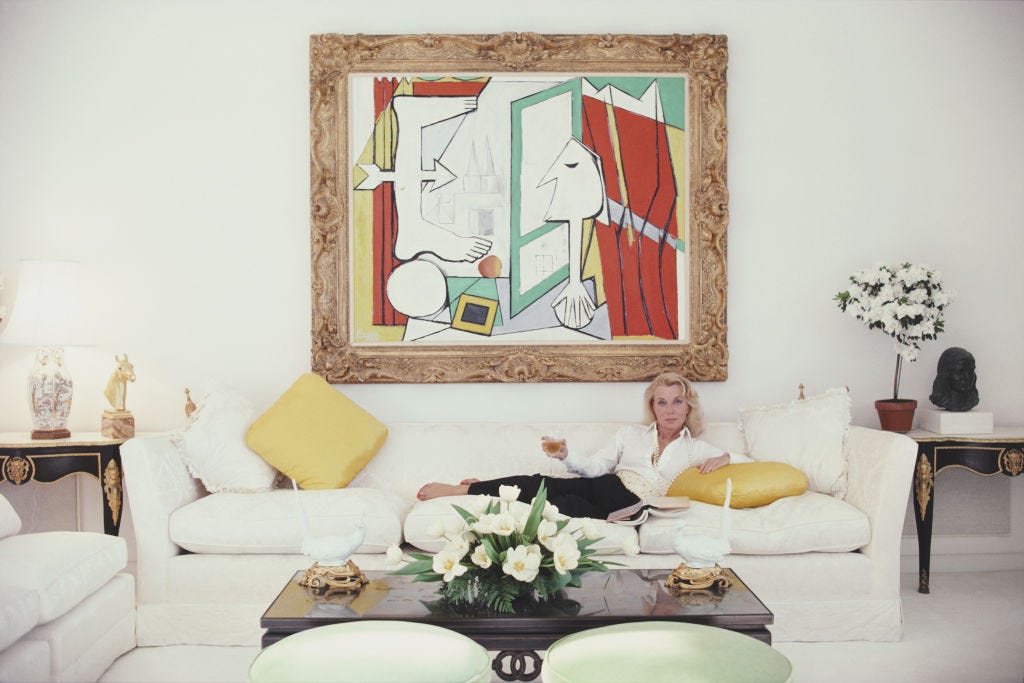
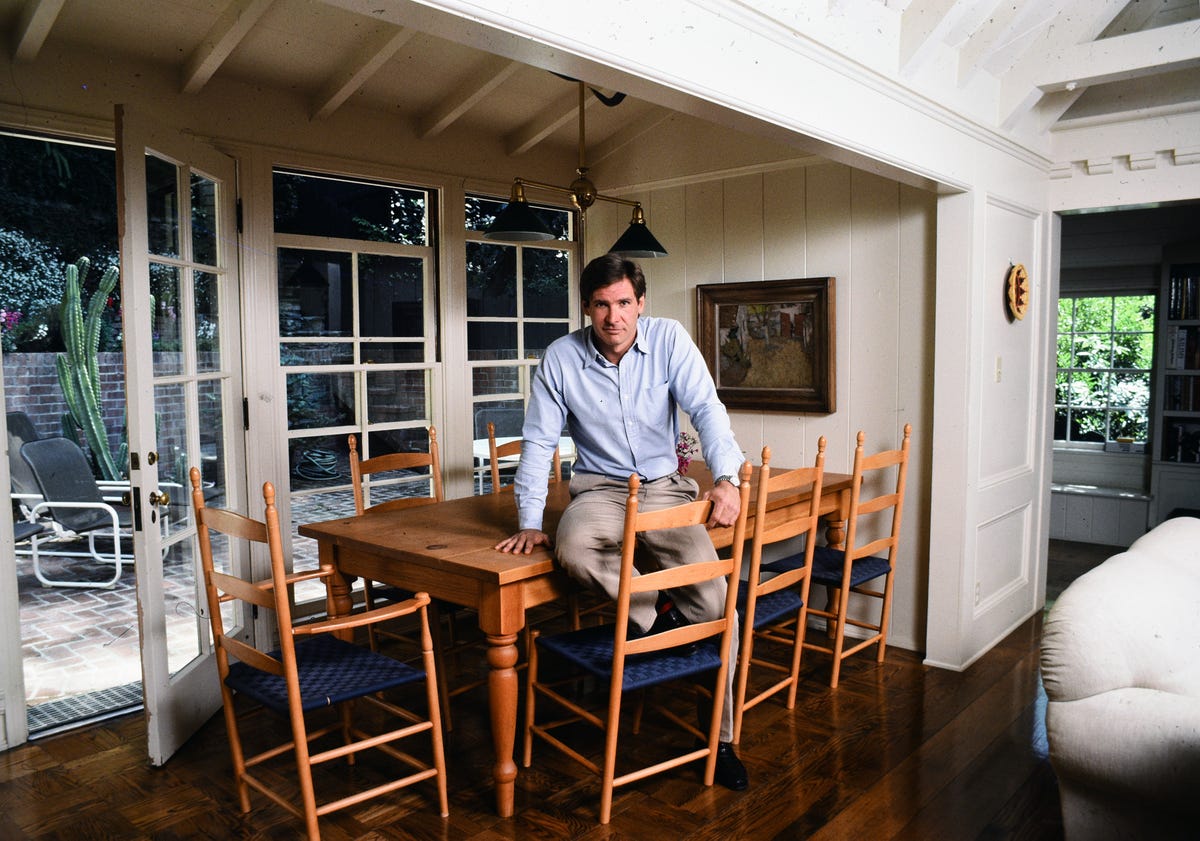
But it wasn’t always focused on ultra-modern aesthetics. Cozy, rustic elements still found a spot in homes during the ’80s. In this case, Harrison Ford demonstrates his carpentry skills by showcasing a dining set he crafted himself.
1985
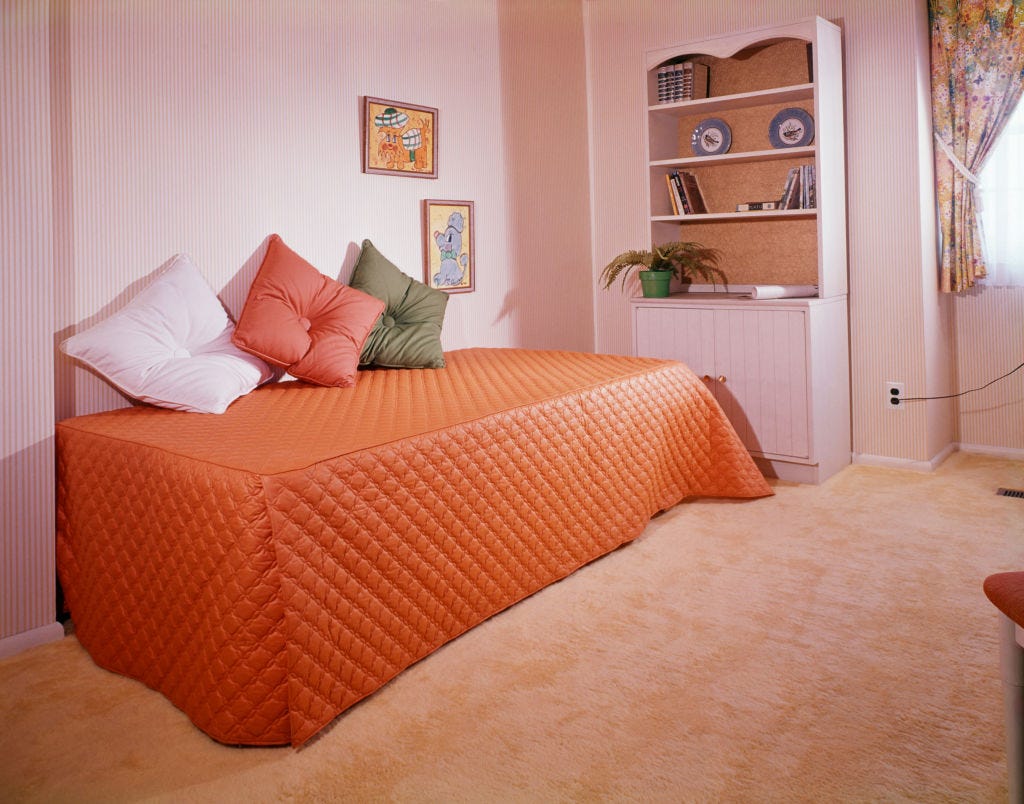
Although pastels were in fashion during the 1980s, bolder color options were also popular. Many homeowners found no problem in using both together.
1986
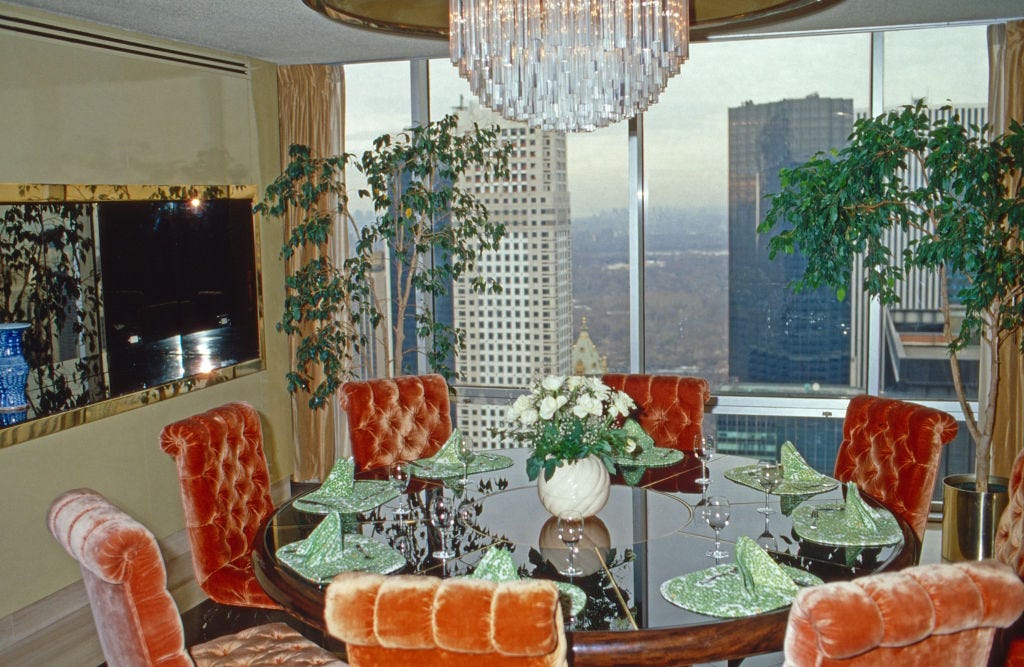
If you possessed riches during the 1980s, you likely didn’t hesitate to display them through lavish interior design, such as crystal chandeliers and velvet dining chairs.
1987
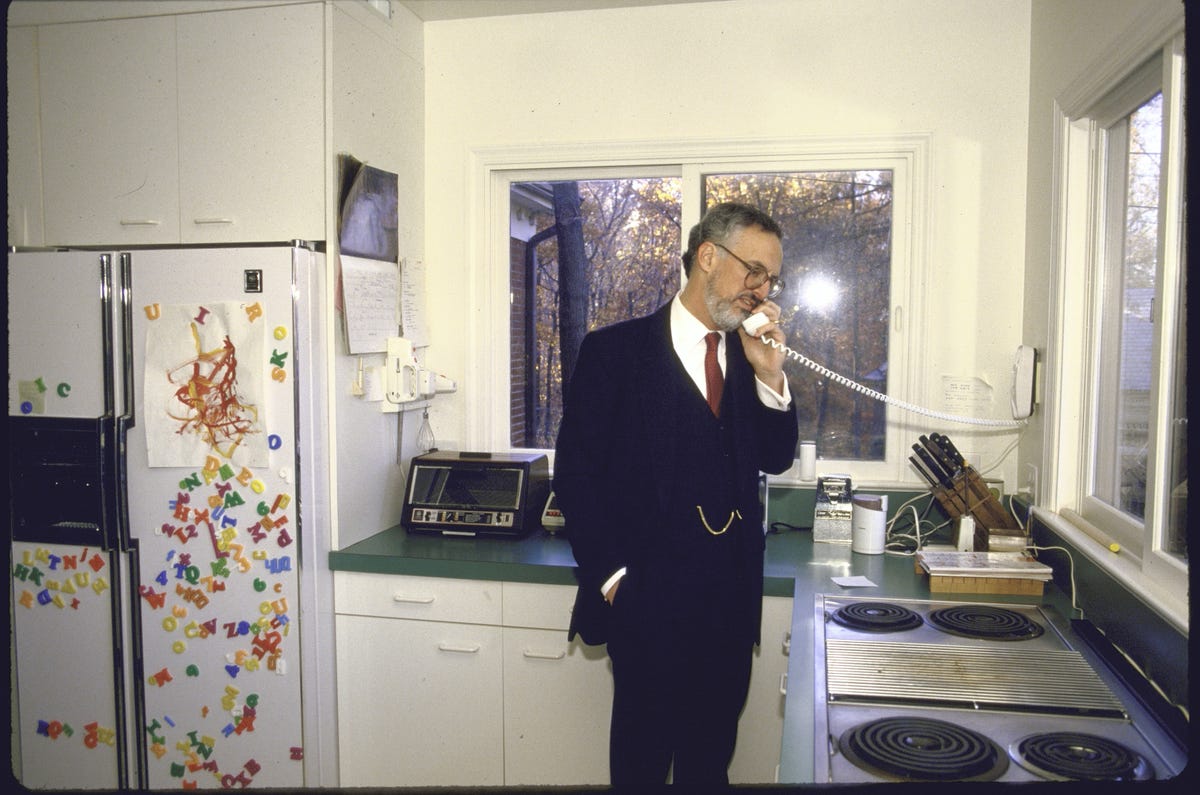
A strong sense of nostalgia fills Judge Douglas H. Ginsburg’s kitchen. Firstly, examine the laminate countertops, a hallmark of the ’80s. Secondly, notice the vibrant fridge magnets—perfect for evoking memories of childhood.
1988
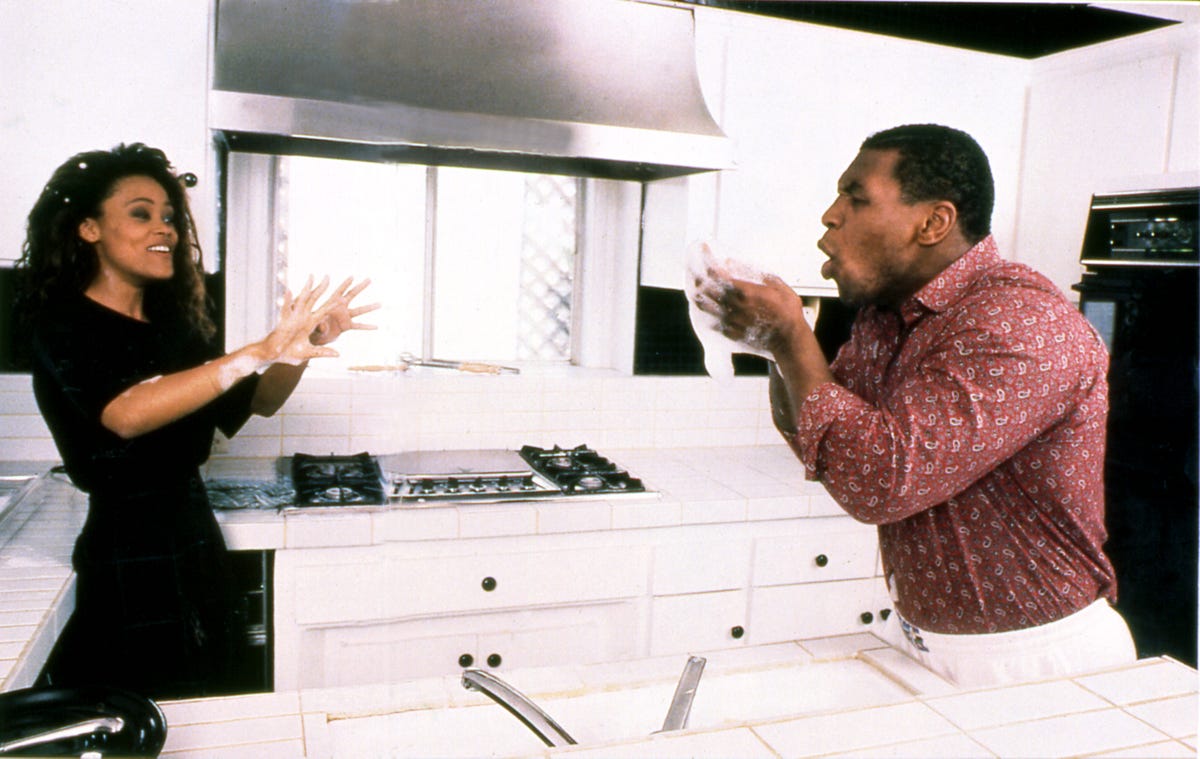
The growing favor of stainless steel has influenced modern kitchen designs, as demonstrated in the home of Mike Tyson and Robin Givens. However, subway tile countertops might be better left in the ’80s. (Picture trying to clean all that grout!)
1989
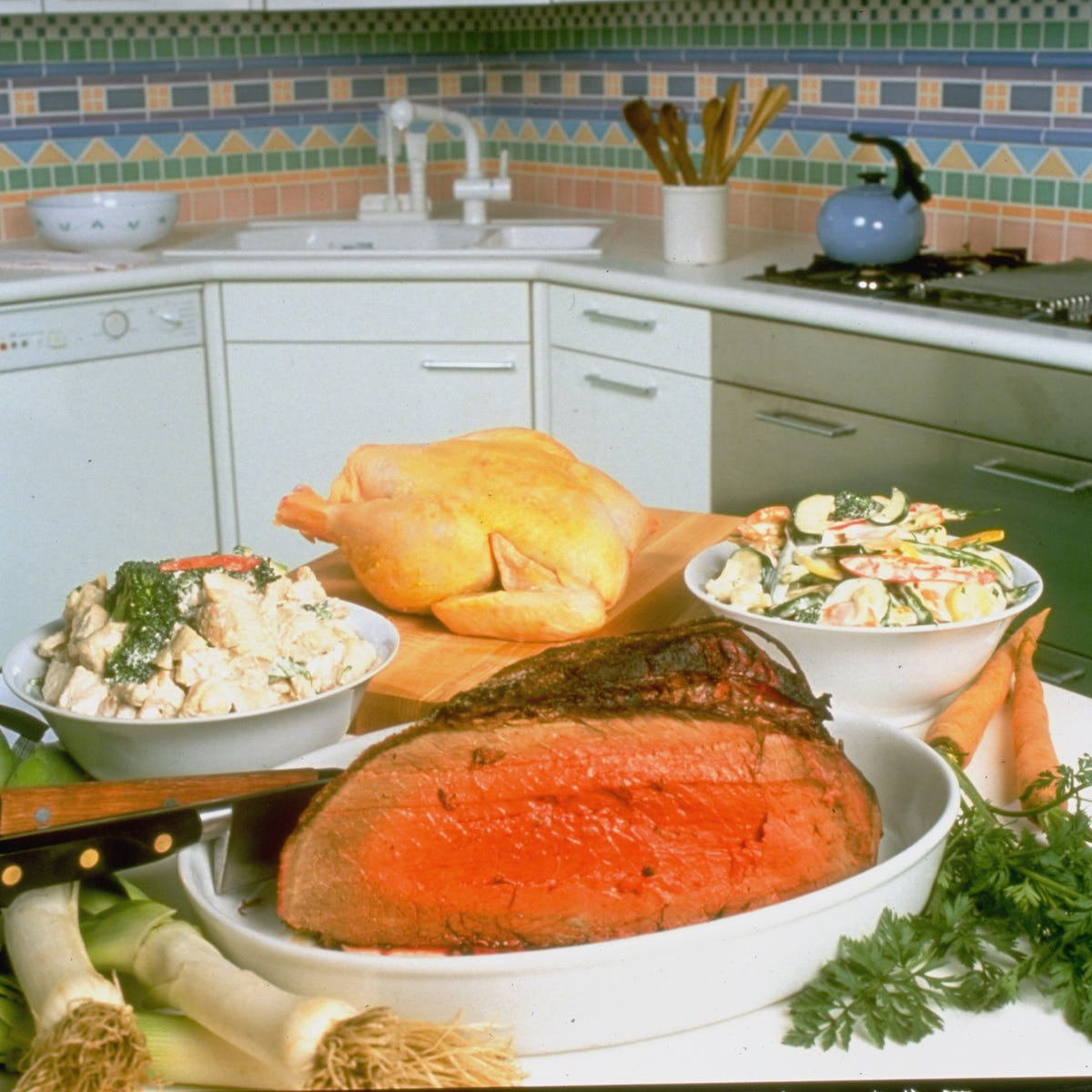
Geometric designs and pastel colors were prevalent throughout the whole house in the ’80s. And, indeed, that even extended to the kitchen—what a stunning backsplash!
1990
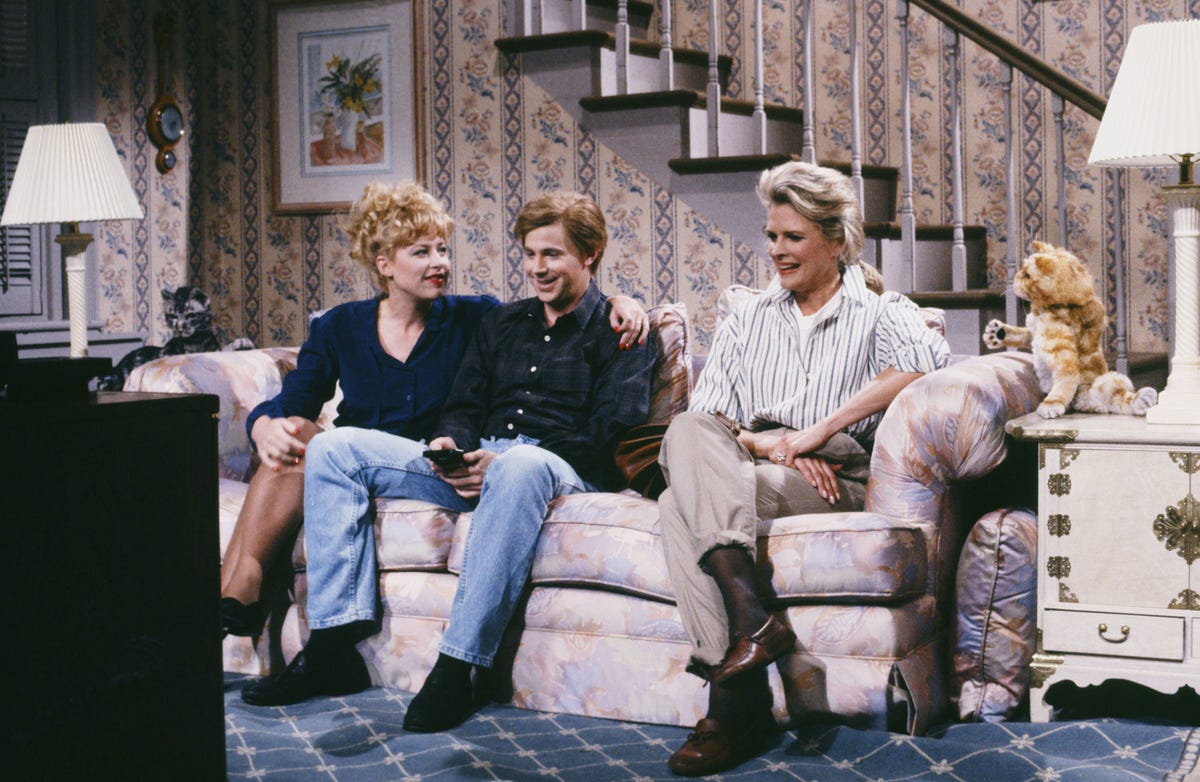
This image does not depict an authentic American home, but rather a set fromSaturday Night Live.Nevertheless, it reflects a genuine American furniture classic from the ’90s: a pastel-patterned couch, combined with floral wallpaper and a patterned carpet.
1991
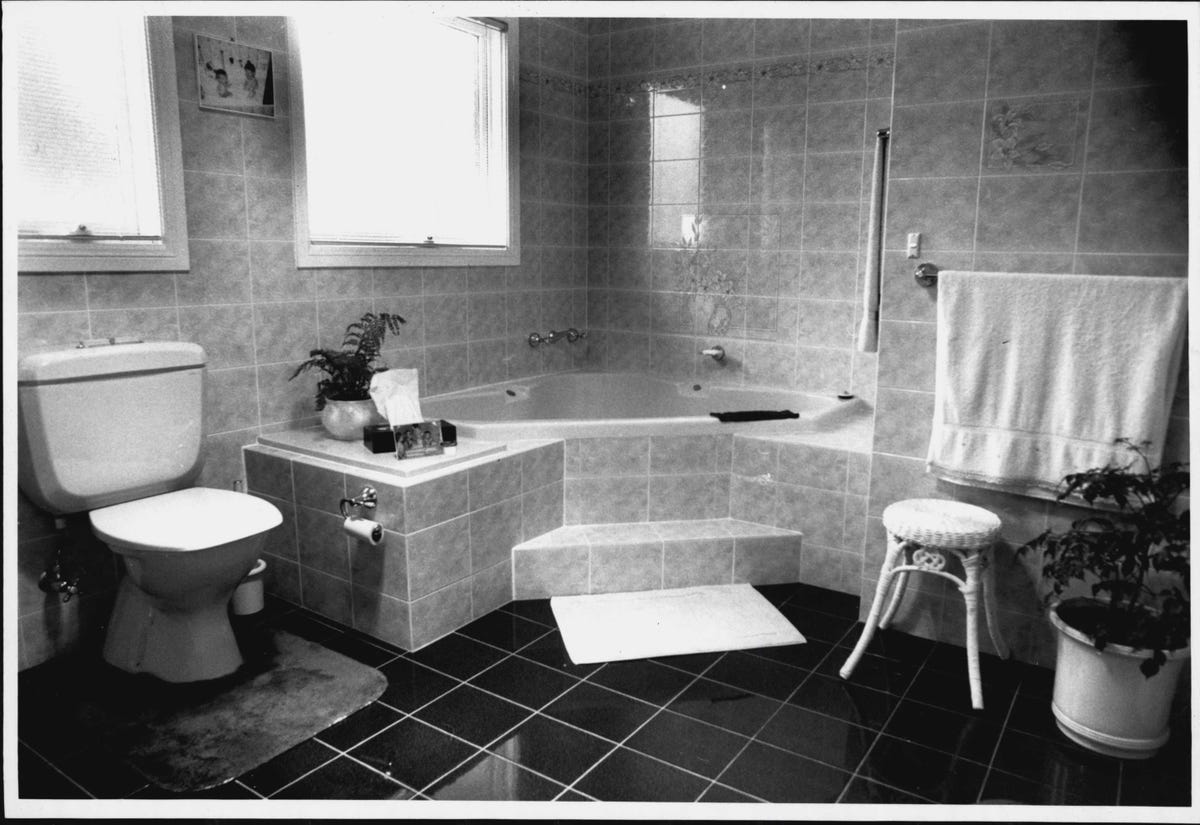
Tile was prevalent in the 1990s, and that meant it was found on nearly every surface in the bathroom. However, don’t overlook the addition of some wicker furniture to introduce a different texture.
1992
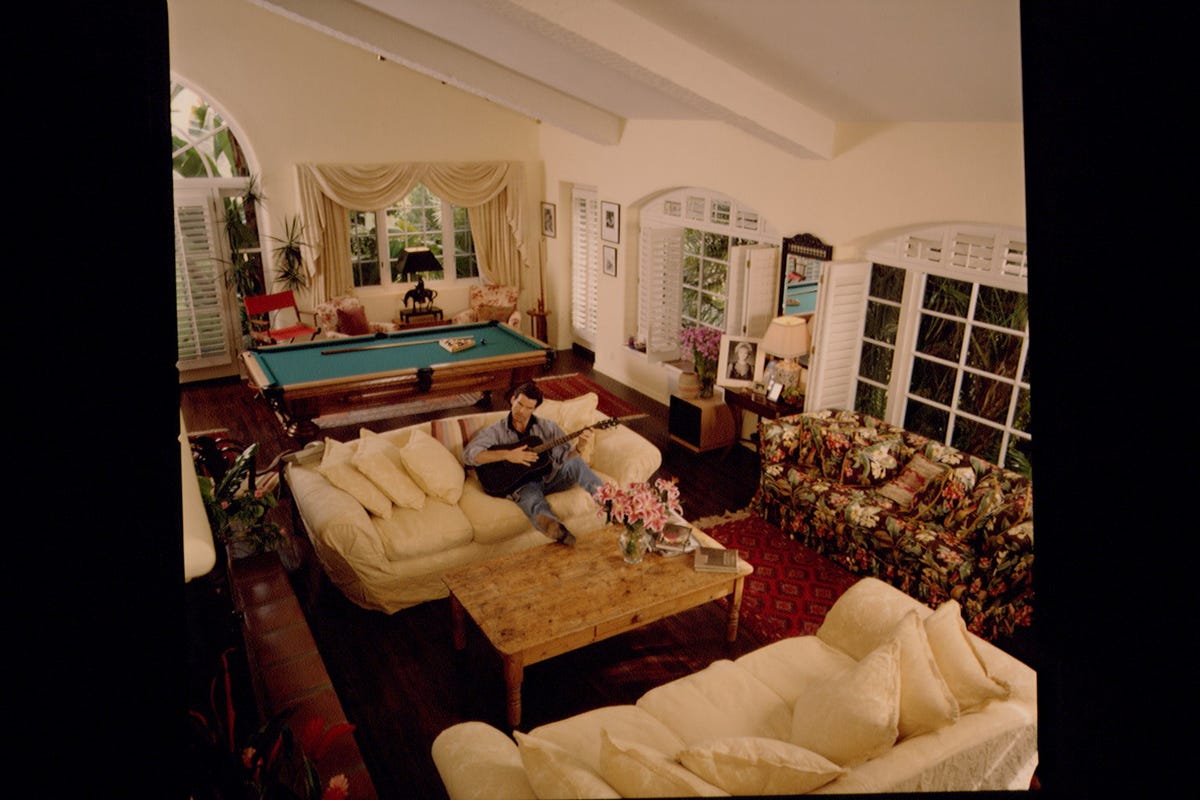
Slipcovers were a key element of ’90s furniture. In this image, Pierce Brosnan joins the trend with two white sofas and a vibrant floral one.
1993
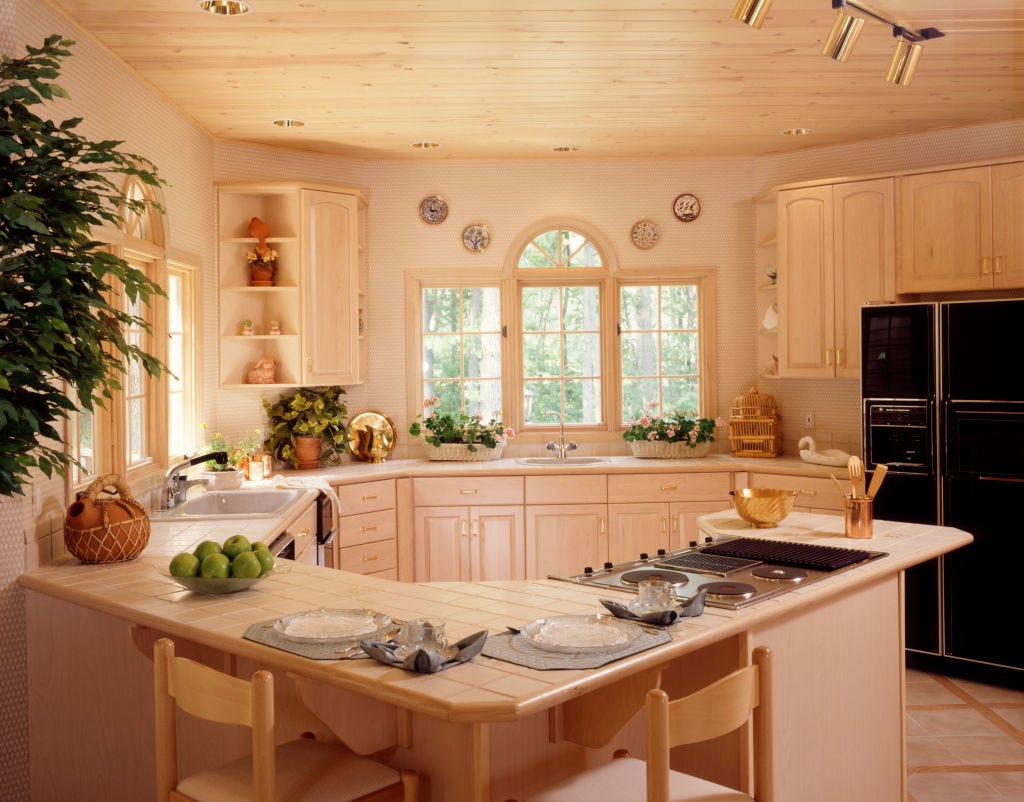
The 1990s brought the “all beige, all day” trend. A bit dull? Absolutely.
1994
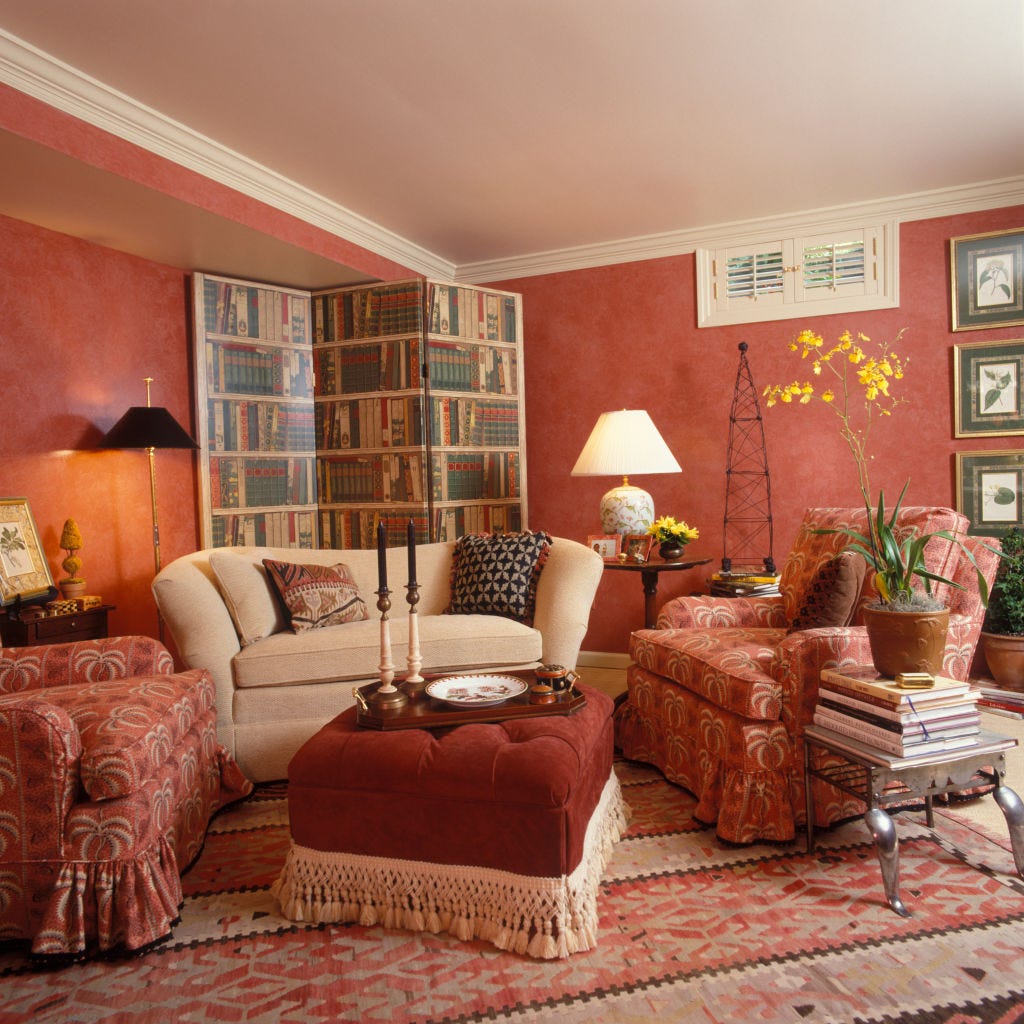
However, it wasn’t solely beige that dominated ’90s interior design. Warm Mediterranean colors—such as rust red, sage green, and sunny yellow—were also in fashion. Another trend from the ’90s was walls with a sponge-painted finish.
1995
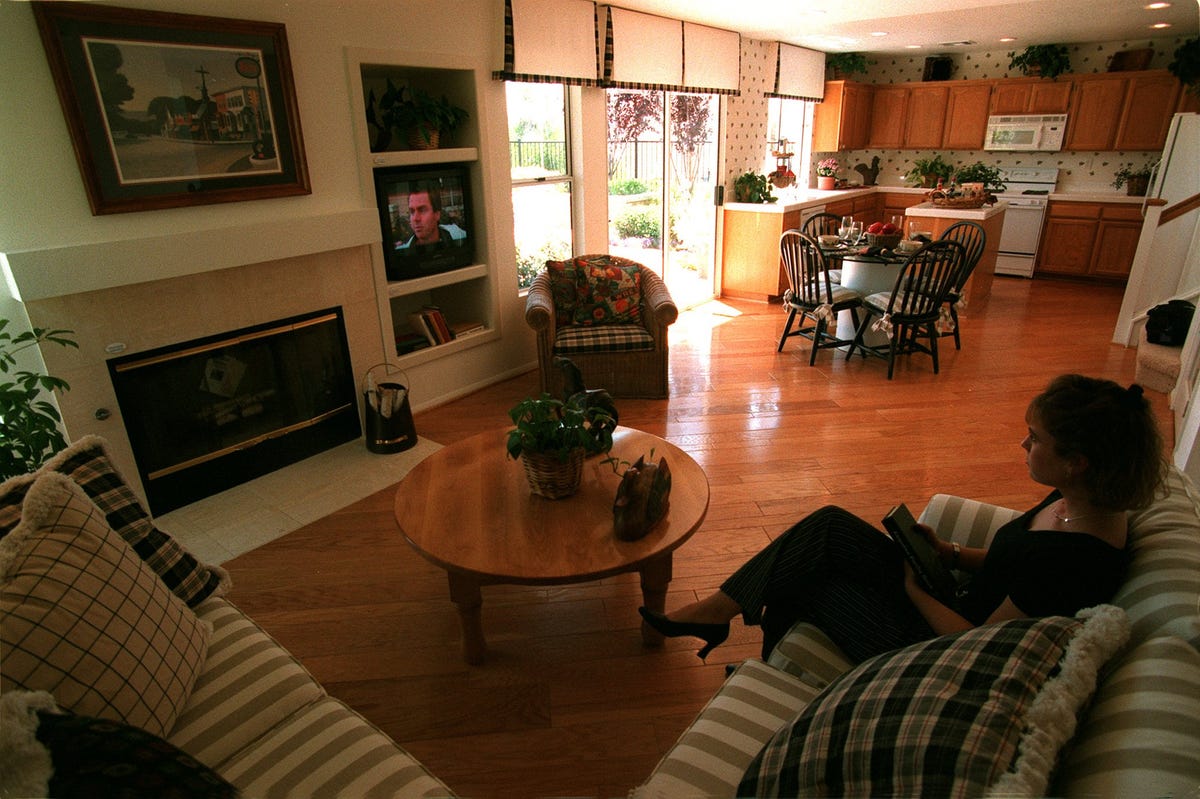
This house features a blend of various ’90s design elements. Begin with the striped, plaid, and floral fabric furnishings, then look at the built-in entertainment unit, and conclude with the wood cabinet and white appliance setup in the kitchen.
1996
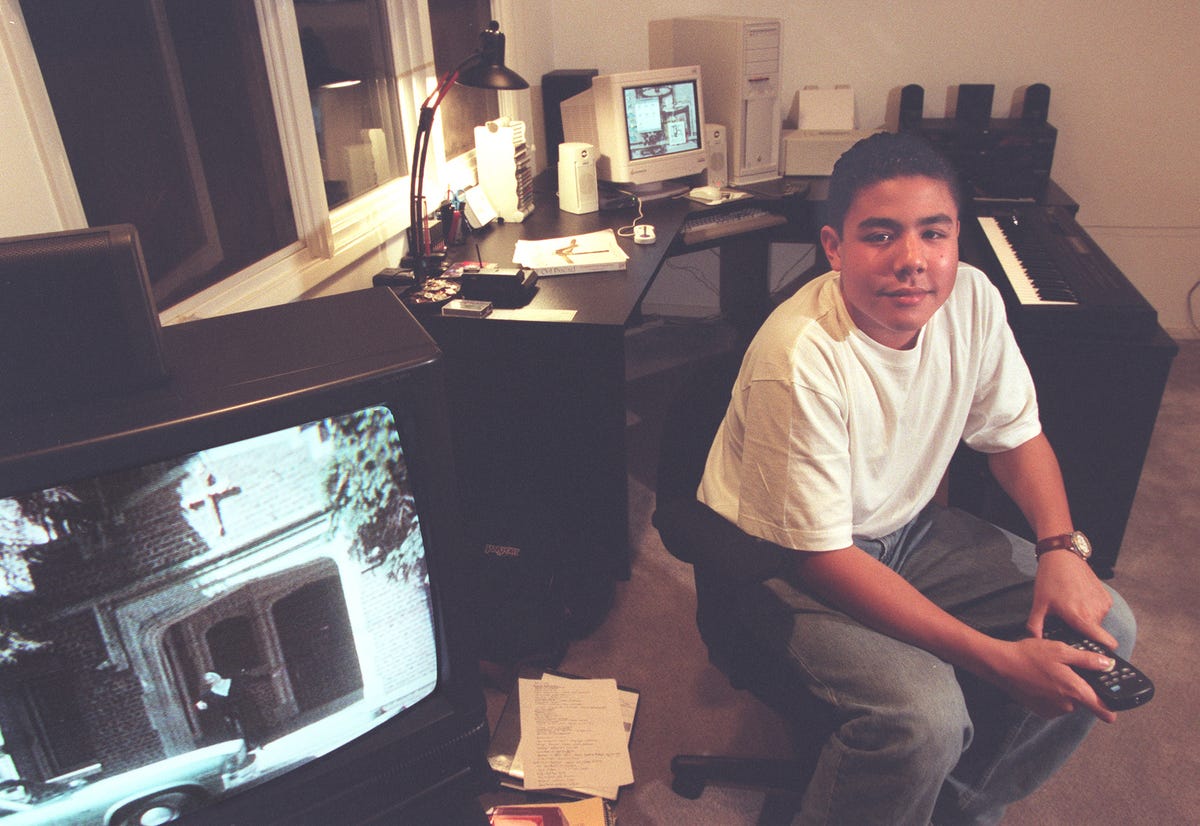
Home technology was gaining popularity during the latter half of the 1990s, with all the latest gadgets on display in teenagers’ bedrooms. This image first appeared in theLos Angeles Timeswith the caption, “Chris Parnell, 16 years old, resides in the Mandeville Canyon neighborhood of West Los Angeles and has a keyboard, stereo, computer, and printer, television, VCR, and telephone in his bedroom.”
1997
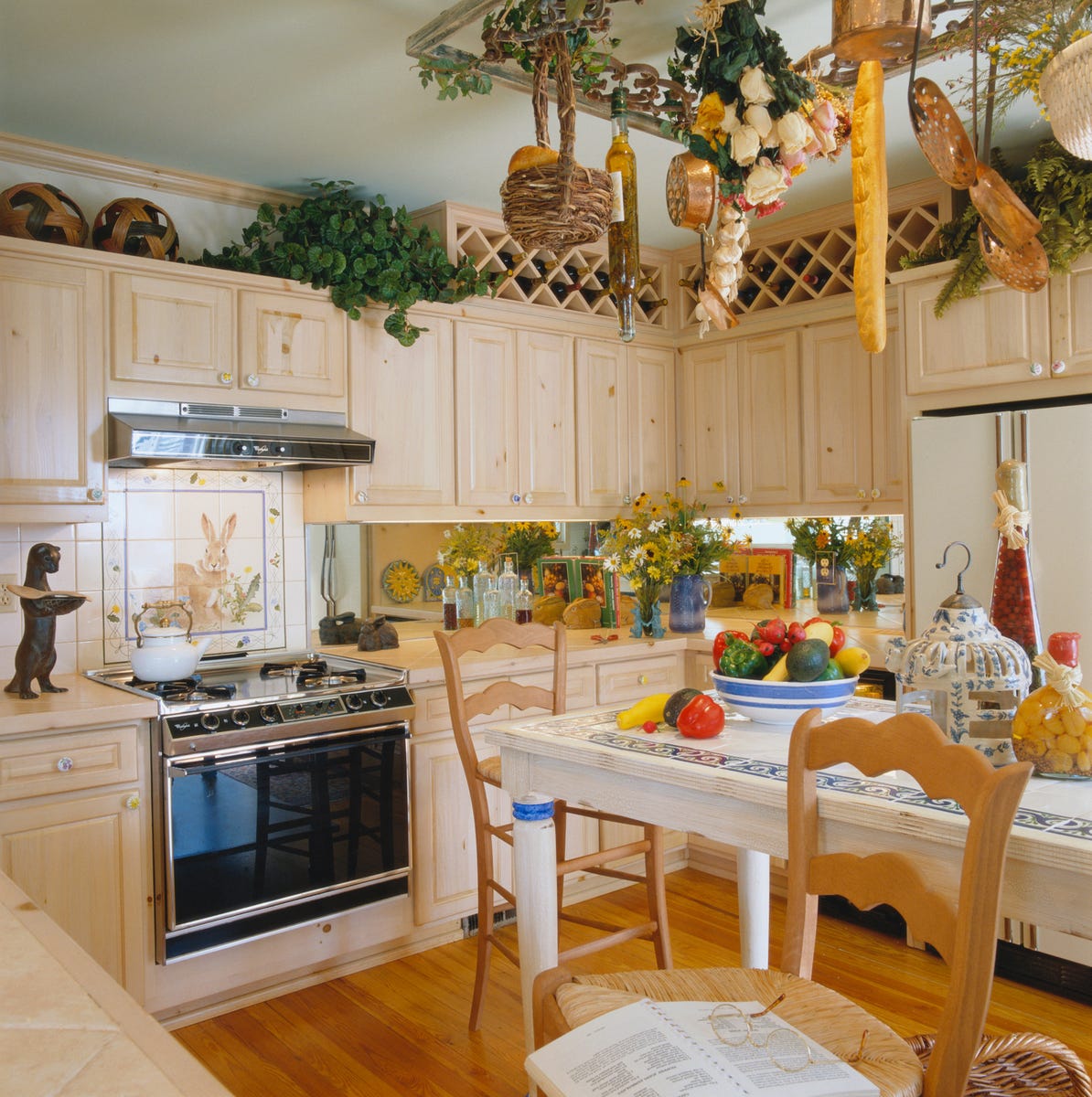
Even with the rise of technology, decorators in the ’90s couldn’t resist the charm of rural aesthetics. Kitchens frequently featured a rustic design, including fake flowers and vegetables.
1998
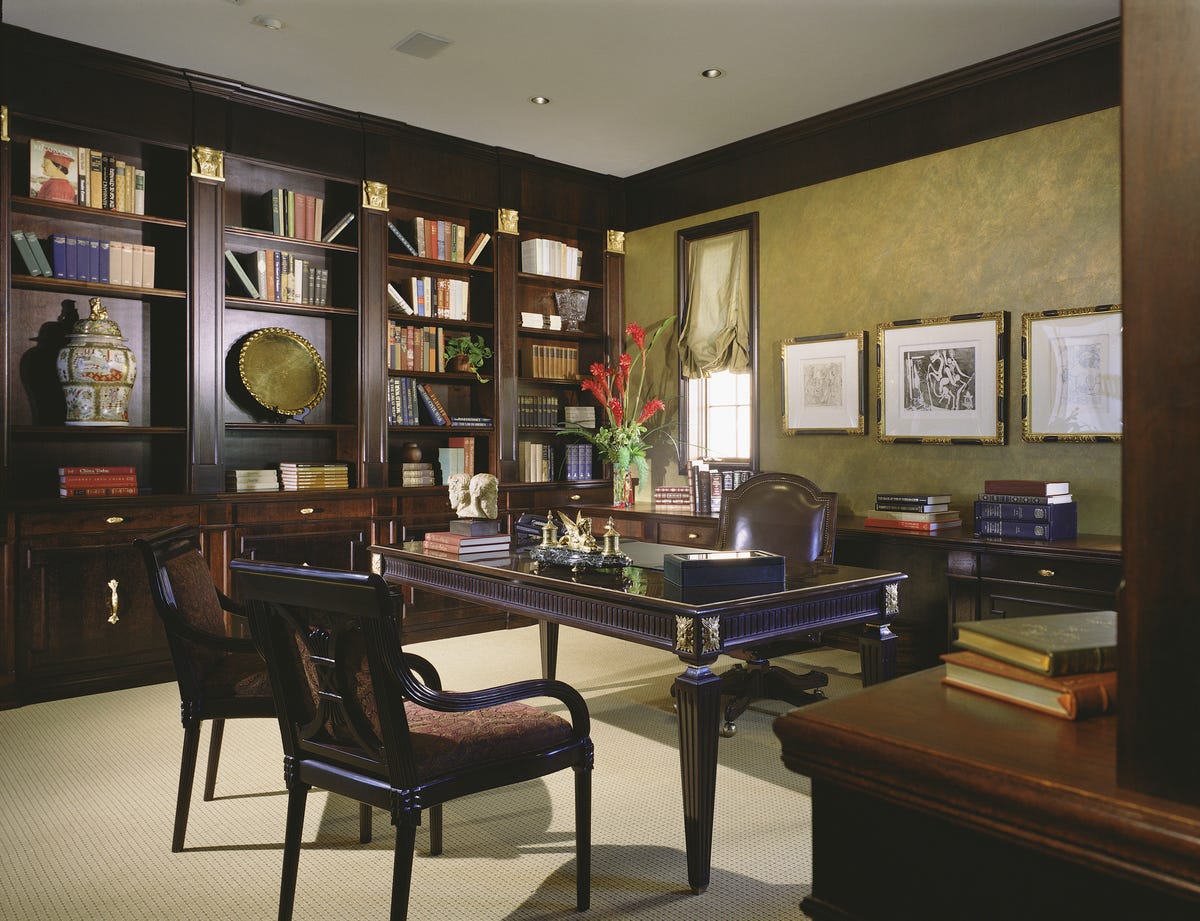
Home offices, on the other hand, had a more somber appearance, typically featuring dark brown furnishings. There’s the same textured wall painting once more.
1999
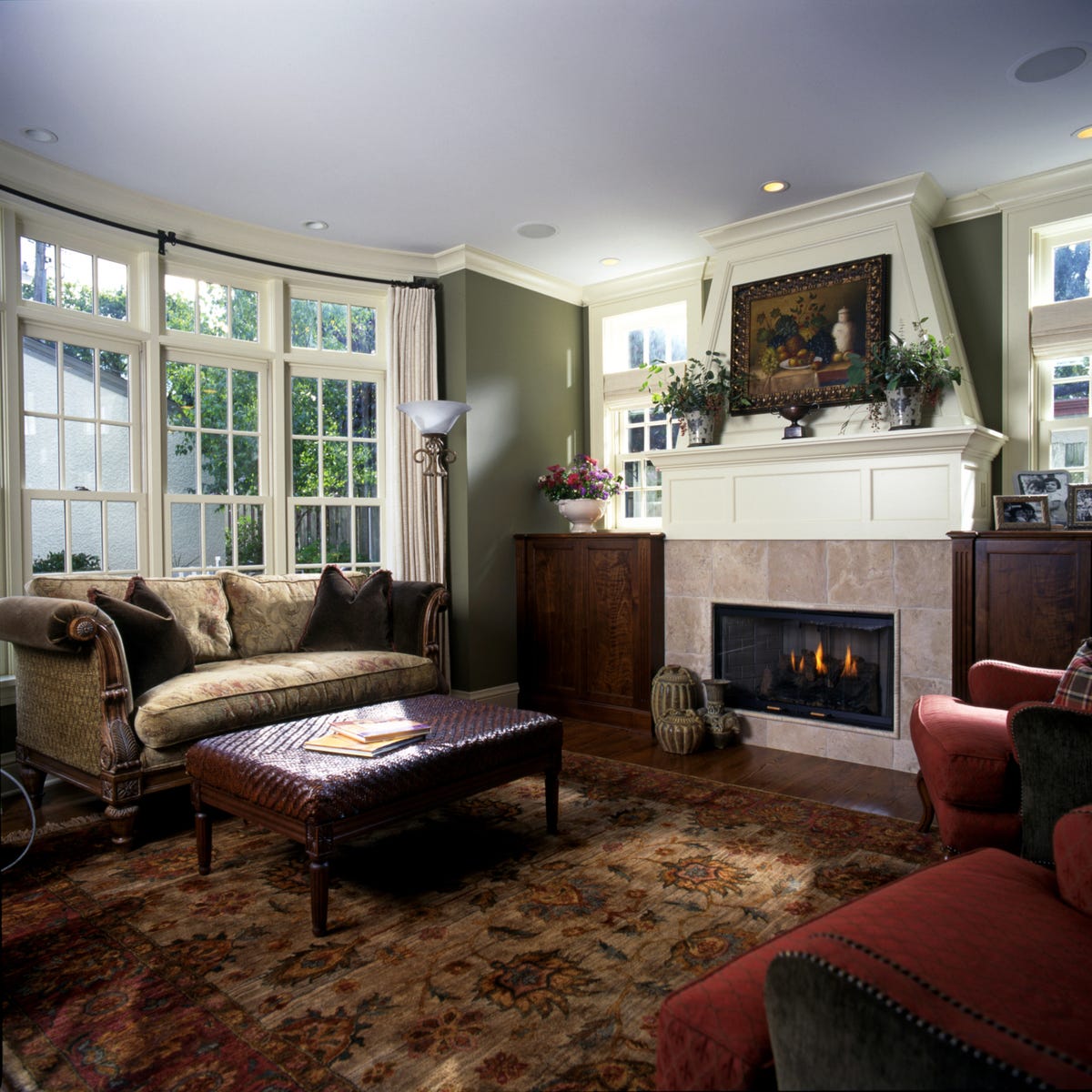
Old World style also showed up in the ’90s, featuring tapestry-style seating, leather footstools, and Renaissance-inspired still life artworks.
2000
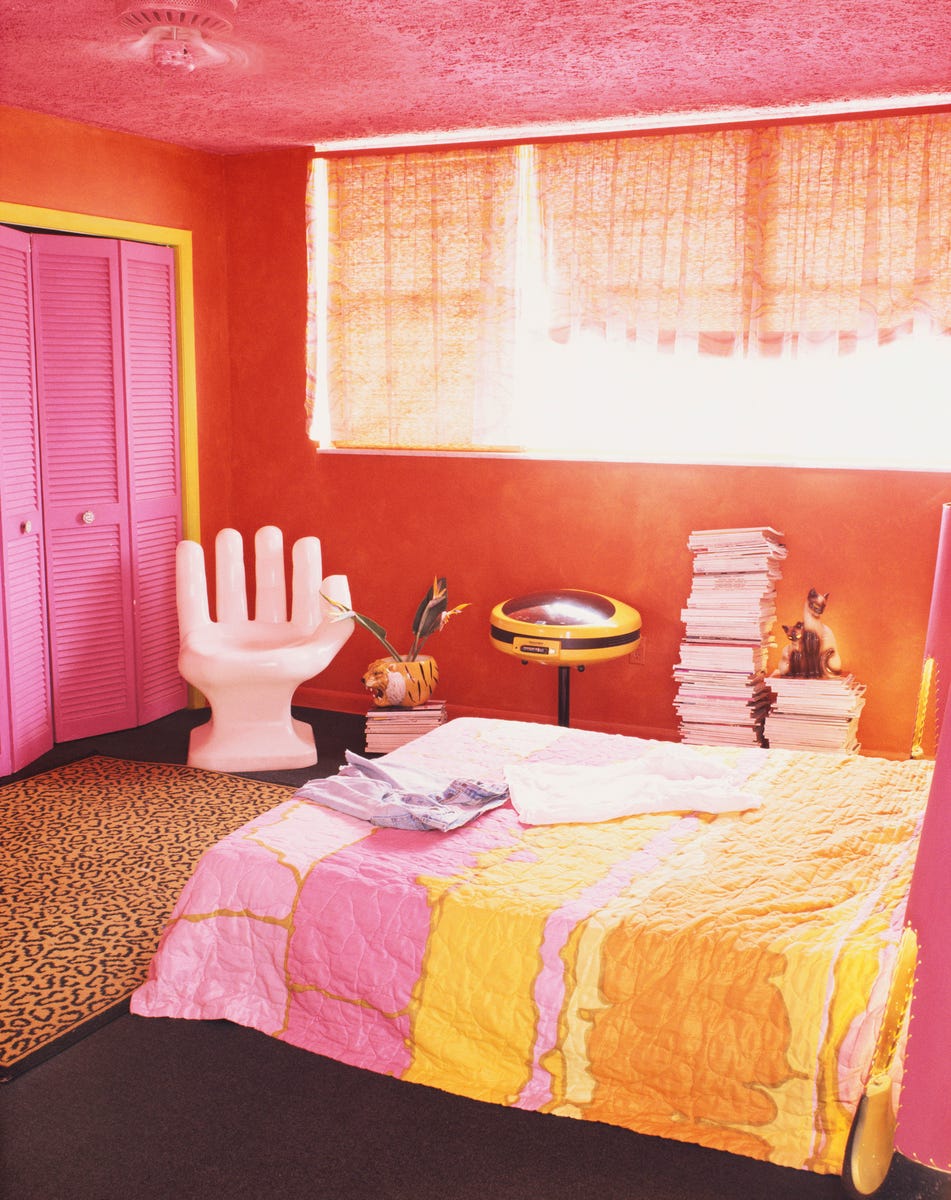
As the millennium began, bedrooms—particularly those of teenagers—became more vibrant and expressive. This shift went beyond just color selections. Using patterns and painting ceilings were also popular trends.
2001
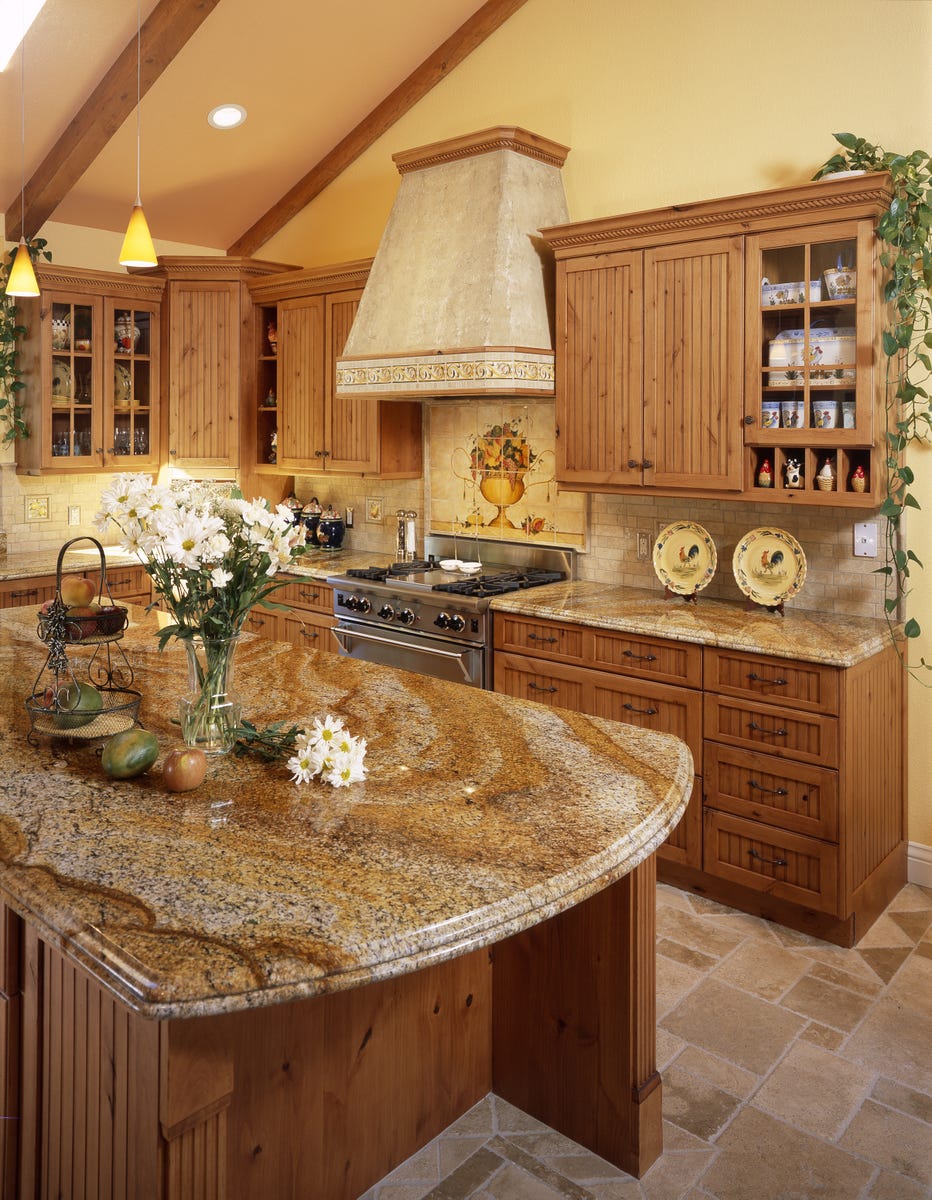
Behold: the common Tuscan kitchen from the early 2000s in all its splendor. This one includes granite countertops and 50 variations of beige.
2002
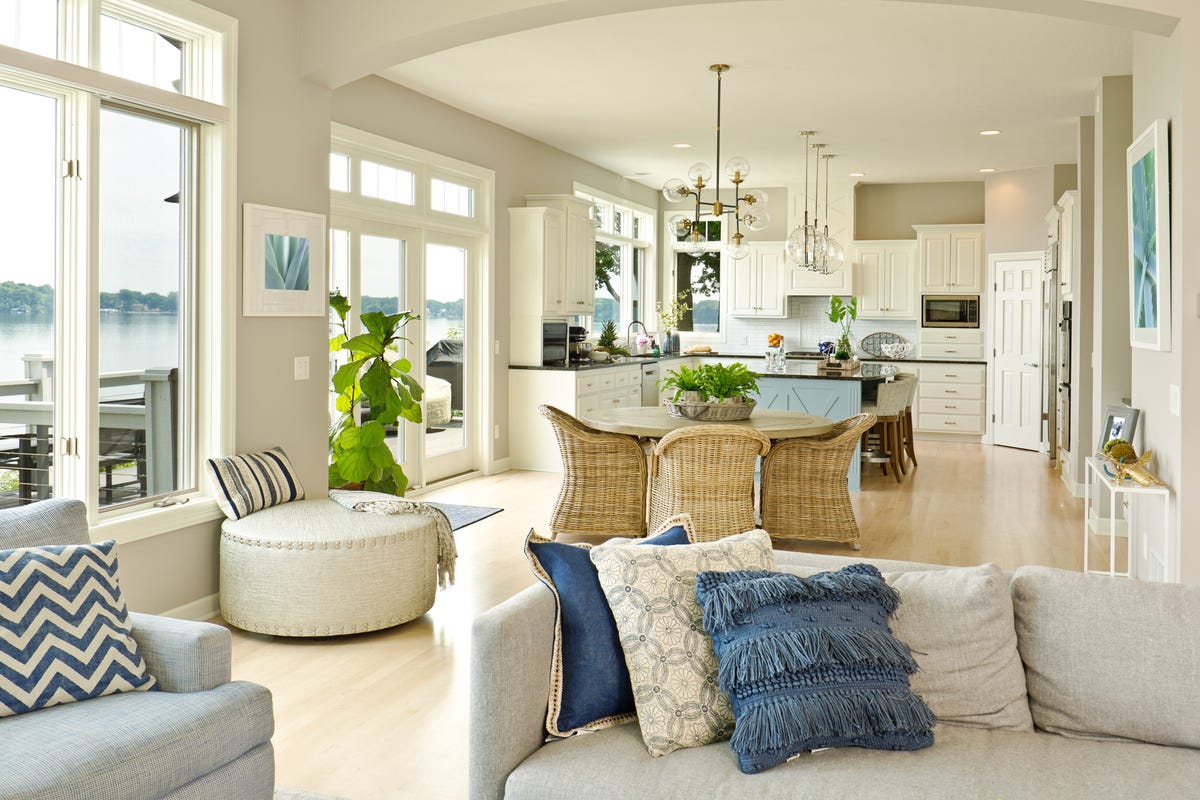
Open-concept floor plans that integrated cooking, living, and dining areas into a single space made a comeback in the early 2000s.
2003
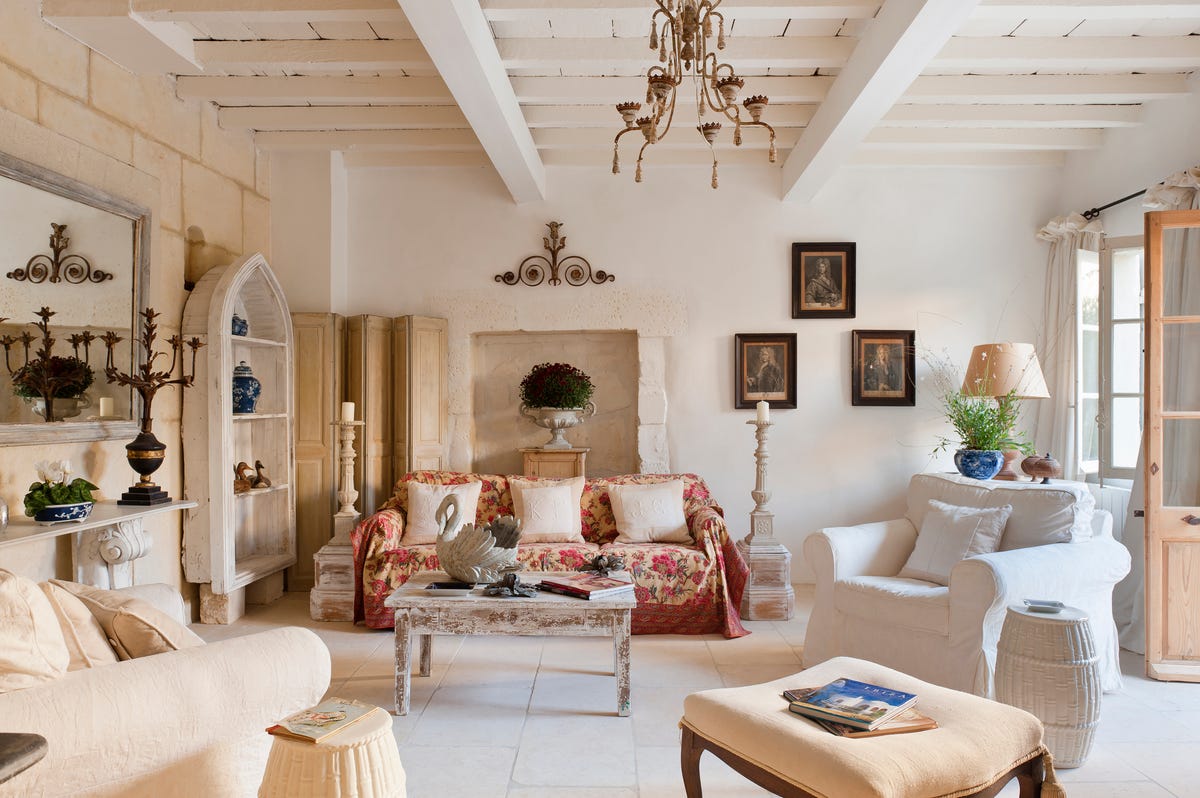
2003 was the year when Nancy Meyers’Something’s Gotta Give, which in turn is responsible for the original “Coastal Grandmother-Diane Keaton. In terms of style, this involved a lot of comfortable, vintage-style furniture to achieve that meticulously layered look of shabby-chic.
2004
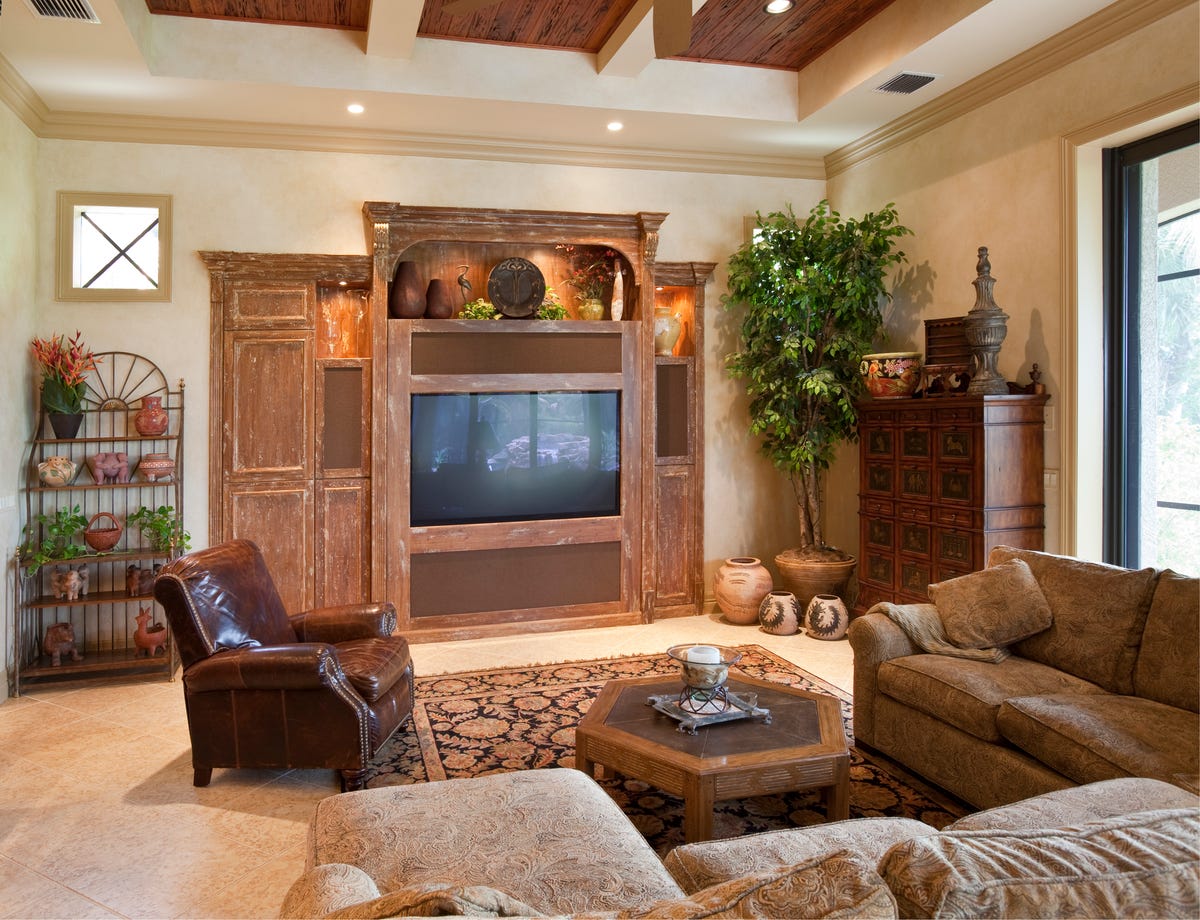
Observe dark brown highlights, large entertainment units (this was the peak of DVDs, to be sure), and some subtle Tuscan-influenced elements from previous times.
2005
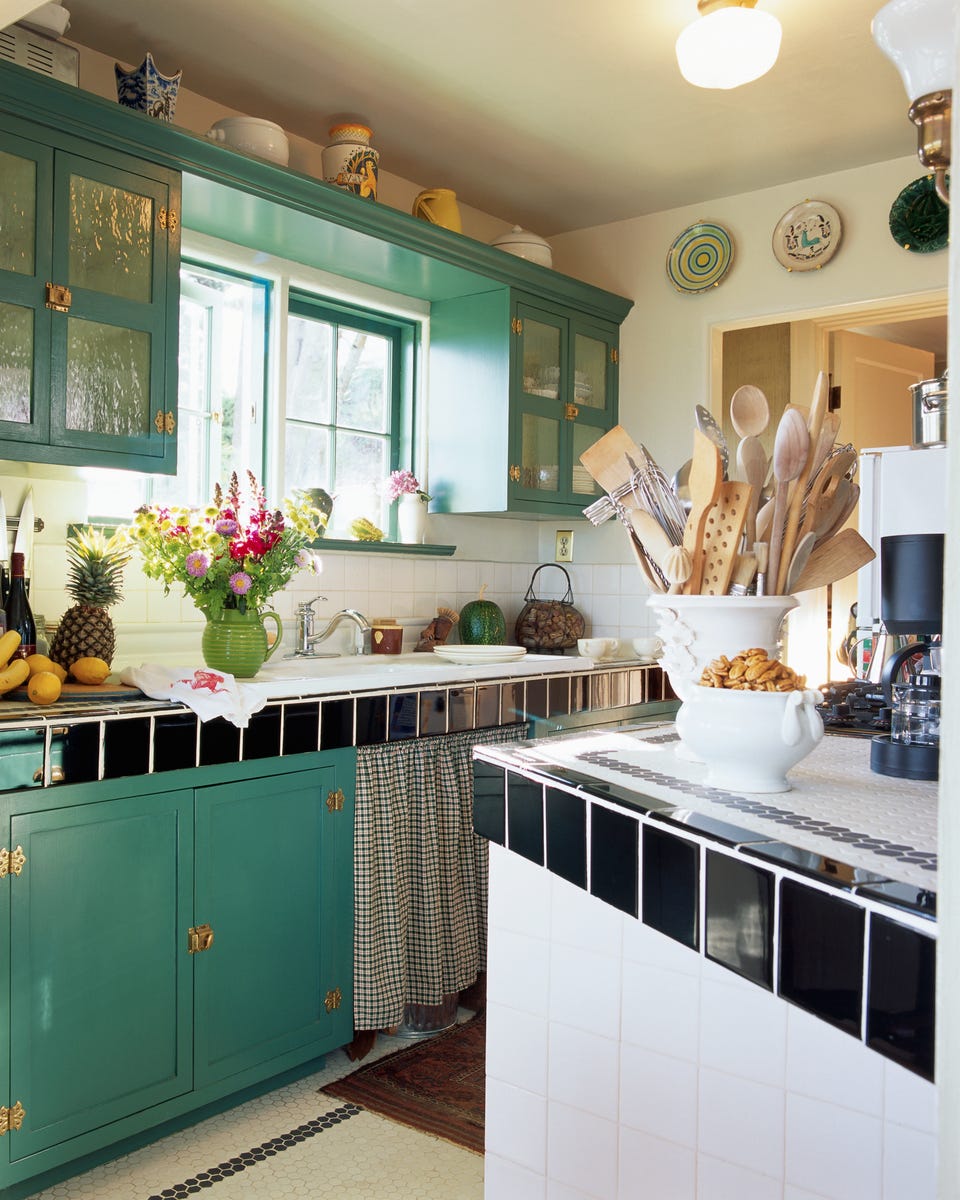
“Blue Turquoise” (the official year’s)Pantone color) provided a lively contrast to the numerous beige tones, but it was most effective in moderation—such as when used on kitchen cabinets and window trim.
2006
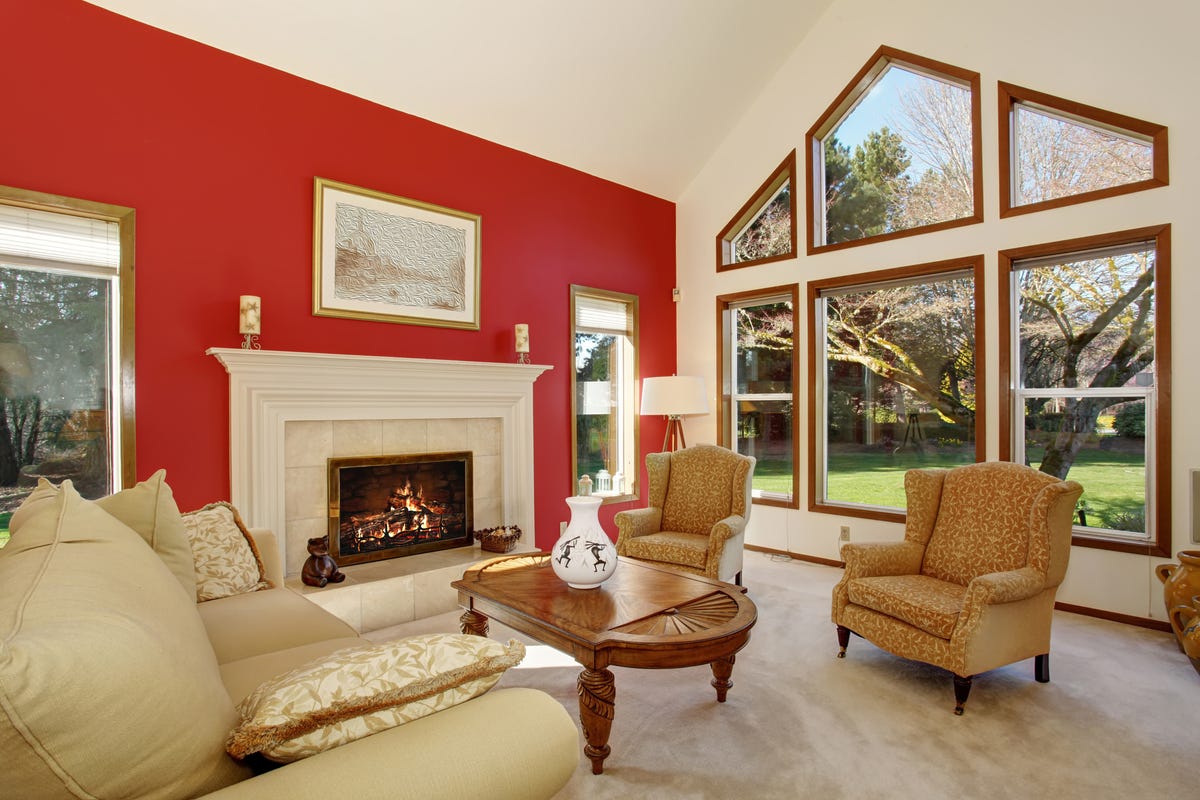
An alternative method to incorporate a striking color in a more modest quantity? The accent wall, showcased here in a fire truck red version.
2007
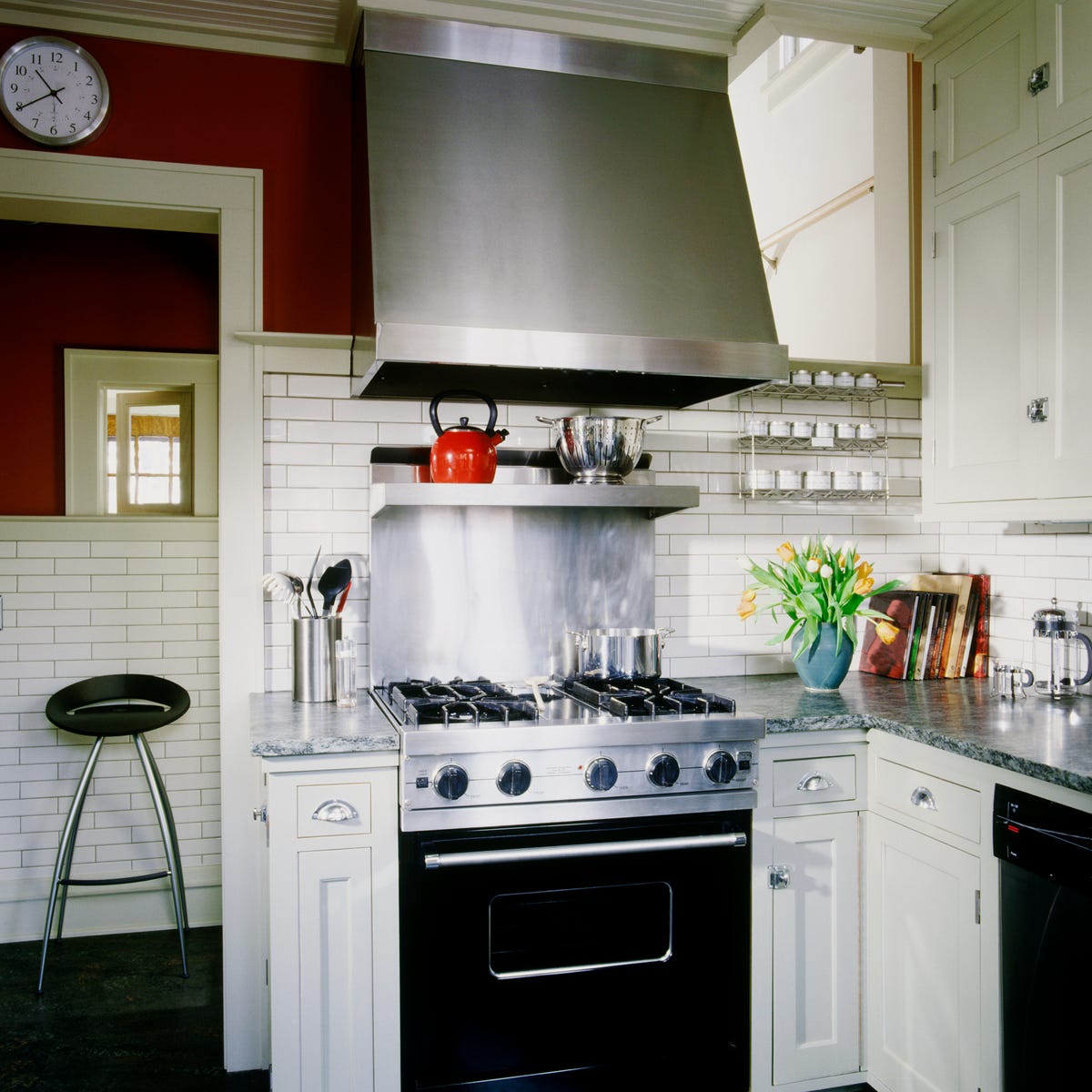
The granite countertops remained for a short period, but kitchens underwent a more simplified transformation with the introduction of stainless steel appliances. Sleek and modern, they represented a shift away from the traditional black or white fixtures.
2008
Sleek chrome and satin nickel took the place of the heavy bronze fixtures from previous years—the start of the end for the Tuscan trend. Faced with more striking colors, such as purples (2008’sPantone’s Color of the Year) or black and gray, the design shifted towards a high-contrast approach.
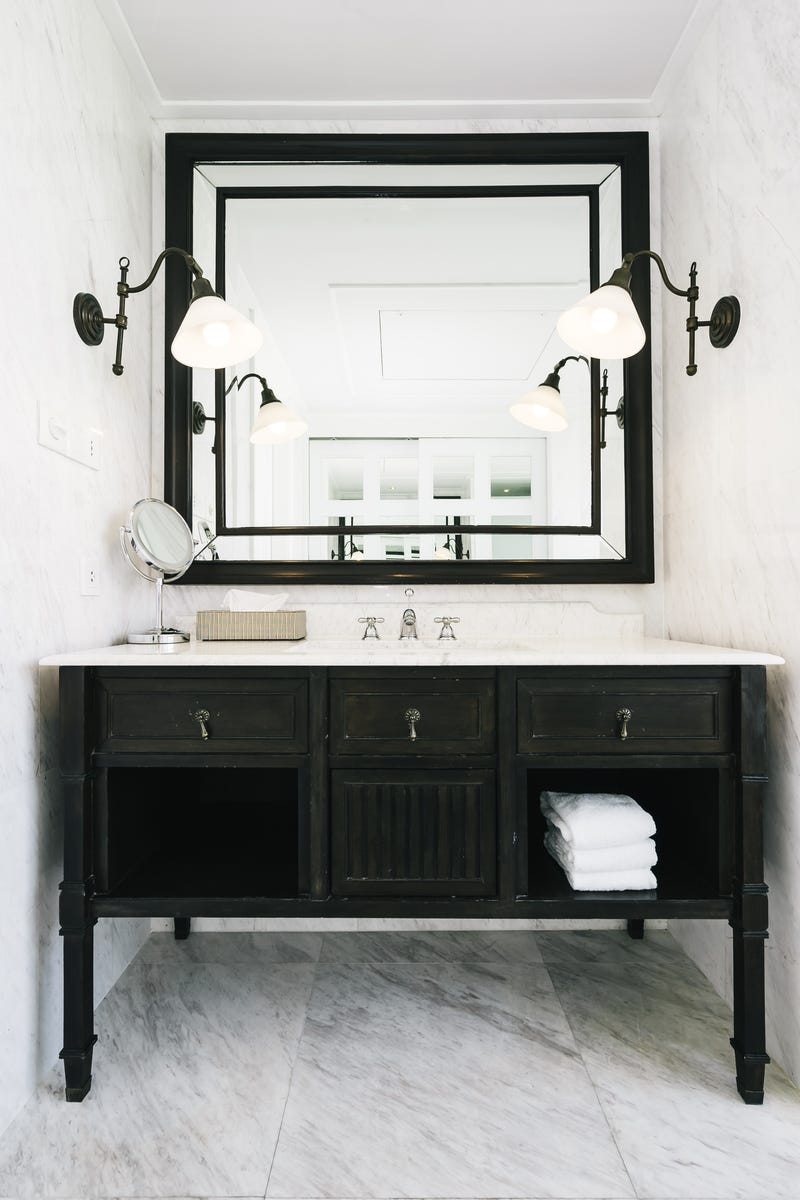
2009
Large—but neat—shapes, vibrant color schemes, and quirky patterns all came together by the end of the decade.
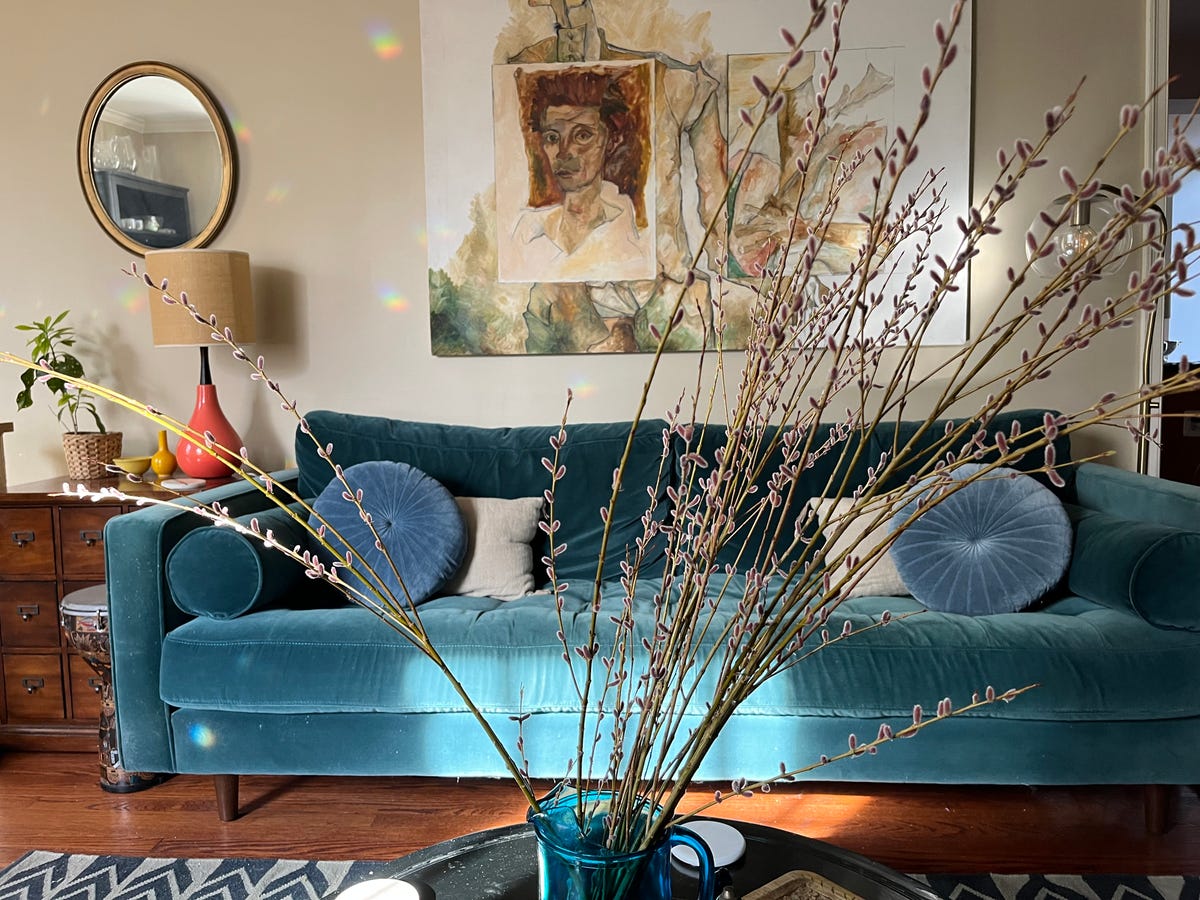
2010
On the other hand, there was another rising trend: an industrial style inspired by lofts, featuring mid-century pieces and possibly an Edison bulb (or even 12). A quick glance at any television during that period supports this idea.
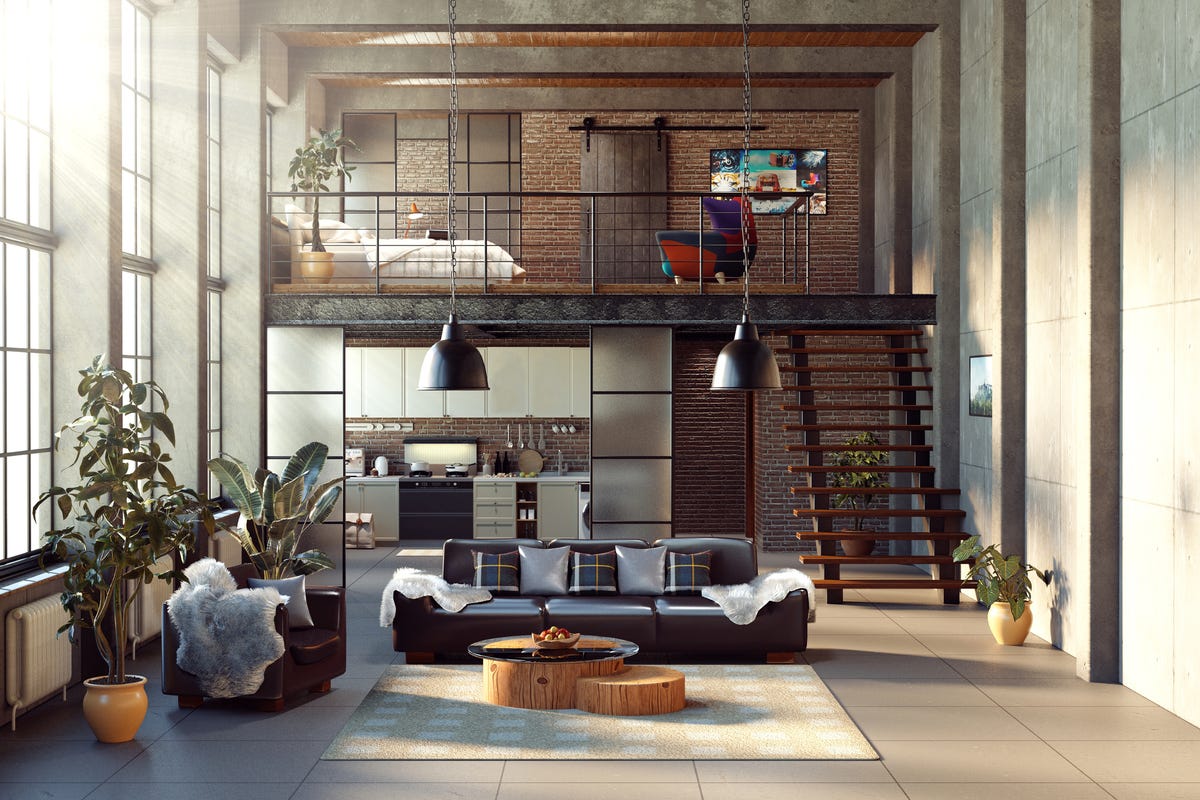
2011
After the 2008 economic downturn, home decoration experienced a unique shift. There was a growing focus on second-hand and restored items, and we witnessed the rise of exaggerated Victorian styles, adapted for the digital age.
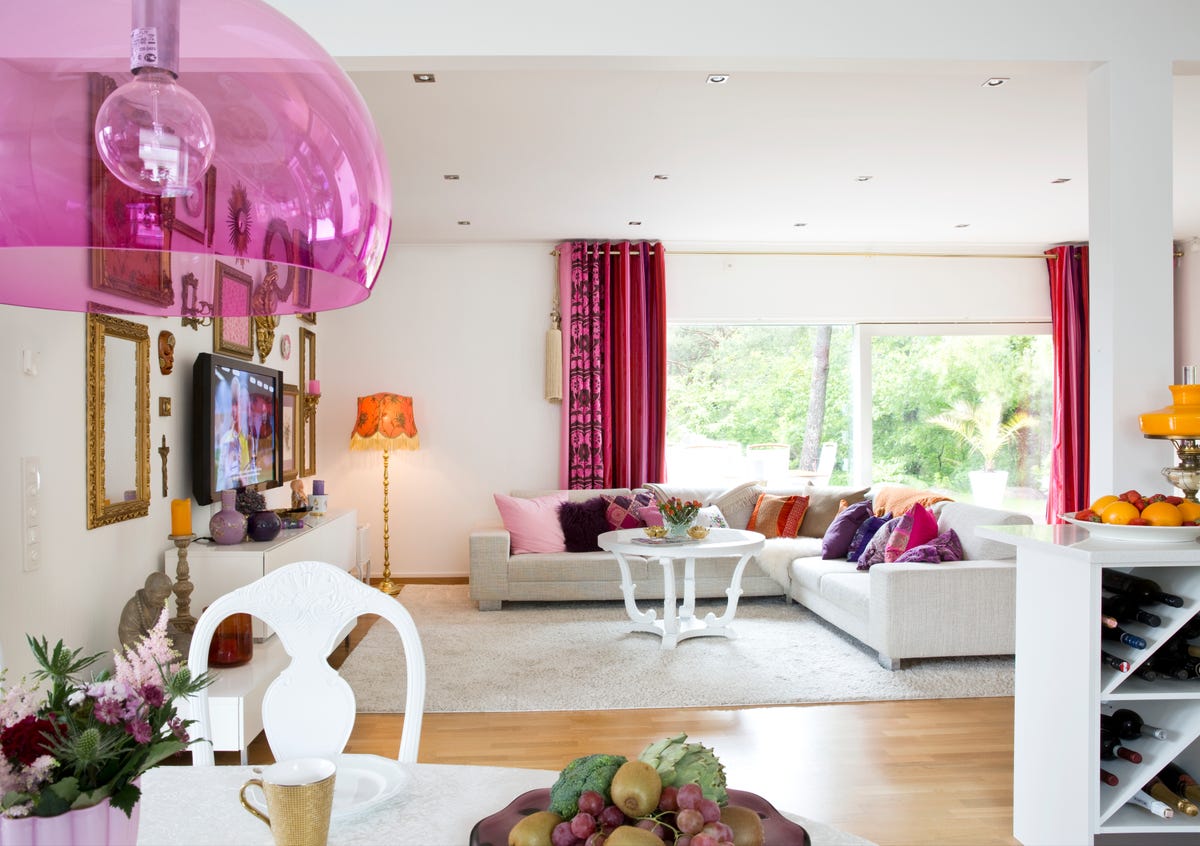
2012
Every stereotype associated with a hipster’s home was very much present in 2012. Reclaimed wood, chevron patterns, fairy lights, andMad Men–midcentury modern inspired reproductions were everywhere.
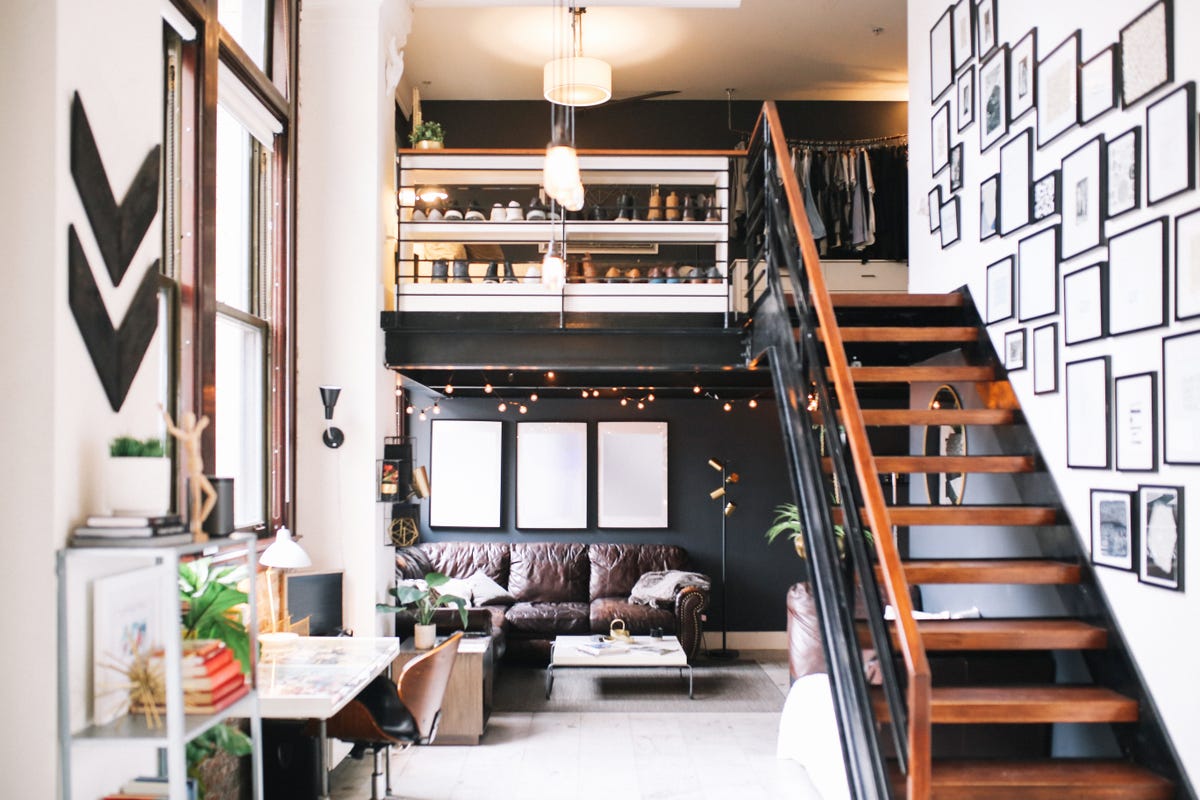
2013
This interior showcases the “best of all worlds” design philosophy that defined 2013. High-end materials combined with a subtle, adaptable color scheme.
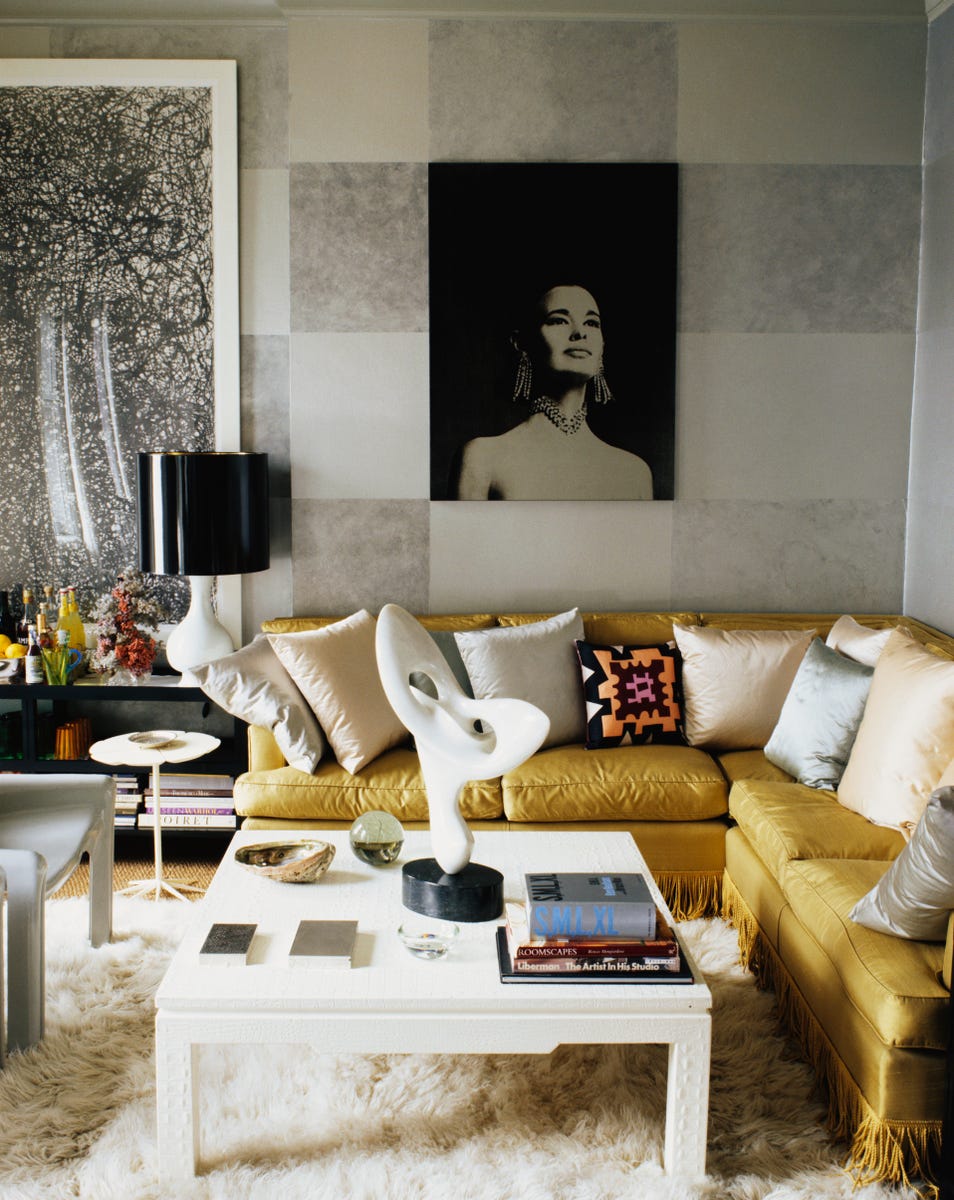
2014
Welcome to the era of open-plan living. Exposed light bulbs, sleek-legged sofas, and replicas of the Eames Chair were at their peak.
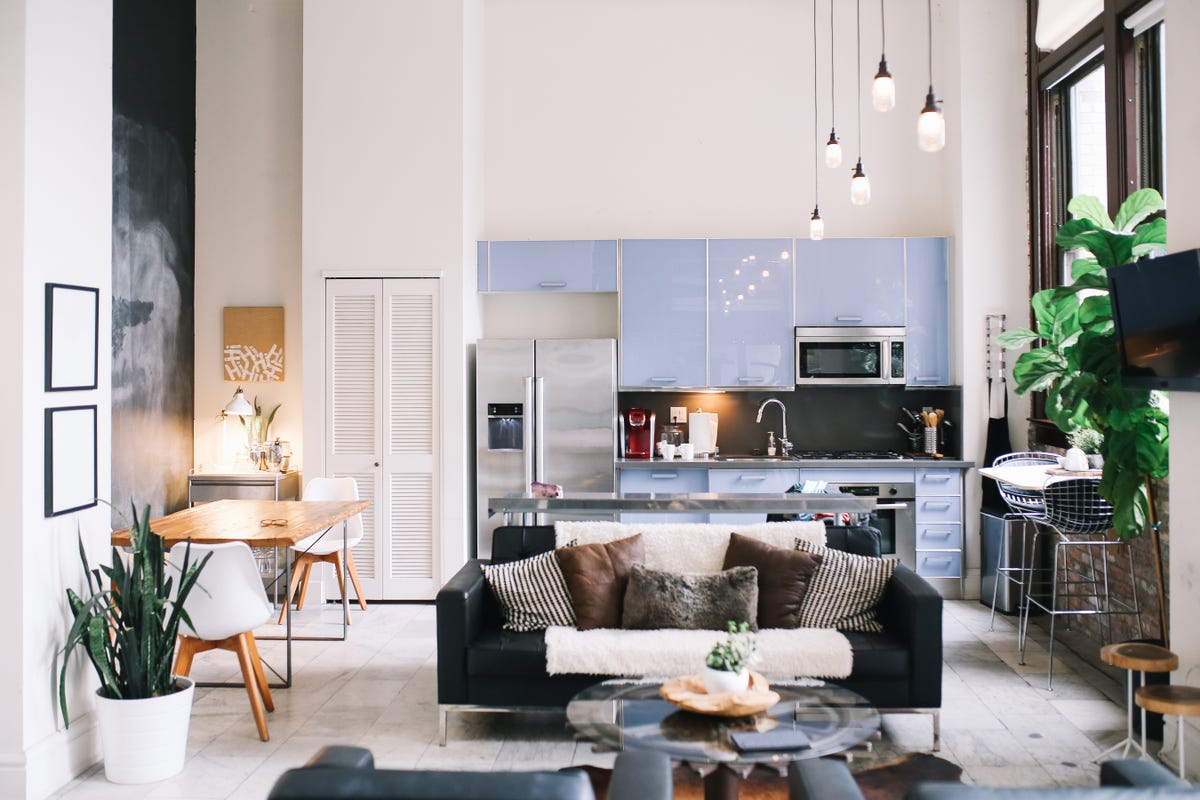
2015
In 2015, minimalism was becoming the preferred style. A focus on fewer, higher-quality items and a neutral color scheme quickly became the most desired interior design trend.