U.S. Travel Advisory for Cyprus Amid Regional Tensions
The U.S. Department of State has issued several travel advisories over the past week, reflecting the ongoing tensions between the U.S., Israel, and Iran that have significantly impacted air travel across the Middle East. These warnings have extended to Europe, particularly to a popular Mediterranean beach destination known as the “Island of Love.”
Cyprus, often referred to as the “Island of Love,” was placed under a Level 3 advisory on Wednesday (March 3), urging Americans to “Reconsider Travel” due to the threat of armed conflict and limited embassy assistance in certain areas. This decision followed an Iranian-linked drone attack on a British Royal Air Force (RAF) base in the southern region of Cyprus. The State Department also authorized the departure of U.S. government employees from the island, indicating growing security concerns.
Despite these warnings, the Cypriot government has emphasized that there is no indication the Republic of Cyprus is a target or under threat. Locals have shared that the island continues to operate normally, and they are encouraging tourists to remain calm while staying informed about the evolving situation.
U.S. Updates on Travel Advisory for Cyprus
On Wednesday, the State Department increased its advisory level for Cyprus to Level 3. Americans are advised to reconsider travel due to the risk of armed conflict and limited U.S. embassy assistance in the Turkish Cypriot Administered area. On the same day, non-emergency U.S. government employees and their families were authorized to leave Cyprus due to safety risks.
A security alert issued by the U.S. Embassy in Cyprus on Friday (March 5) highlighted that the security environment remains complex and can change quickly. Routine visa and U.S. Citizens Services have been suspended, and Americans currently in Cyprus are advised to monitor local news and official sources for updates.
Armed Conflict in Cyprus
The State Department’s armed conflict advisory summary references the drone attack on Tuesday at the British Sovereign Base Area in Akrotiri, located in the southern part of Cyprus. The advisory notes the ongoing war between the U.S., Israel, and Iran, which has led to significant disruptions in commercial flights.
Widespread flight suspensions have occurred at Cyprus’ Larnaca and Paphos airports earlier this week, with Lufthansa Group canceling operations until Friday (March 6). The U.S. government warns of serious risks in the Turkish Cypriot-Administered Area, including limited ability to assist U.S. citizens and human rights concerns in detention facilities.
Why Cyprus Is Called the “Island of Love”
Cyprus is known as Europe’s “Island of Love,” rooted in Greek mythology that identifies it as the birthplace of Aphrodite, the goddess of love and beauty. The legend states she emerged from the sea foam near Paphos, a city in the southwestern region of Cyprus and a UNESCO World Heritage Site known for its ancient architecture.
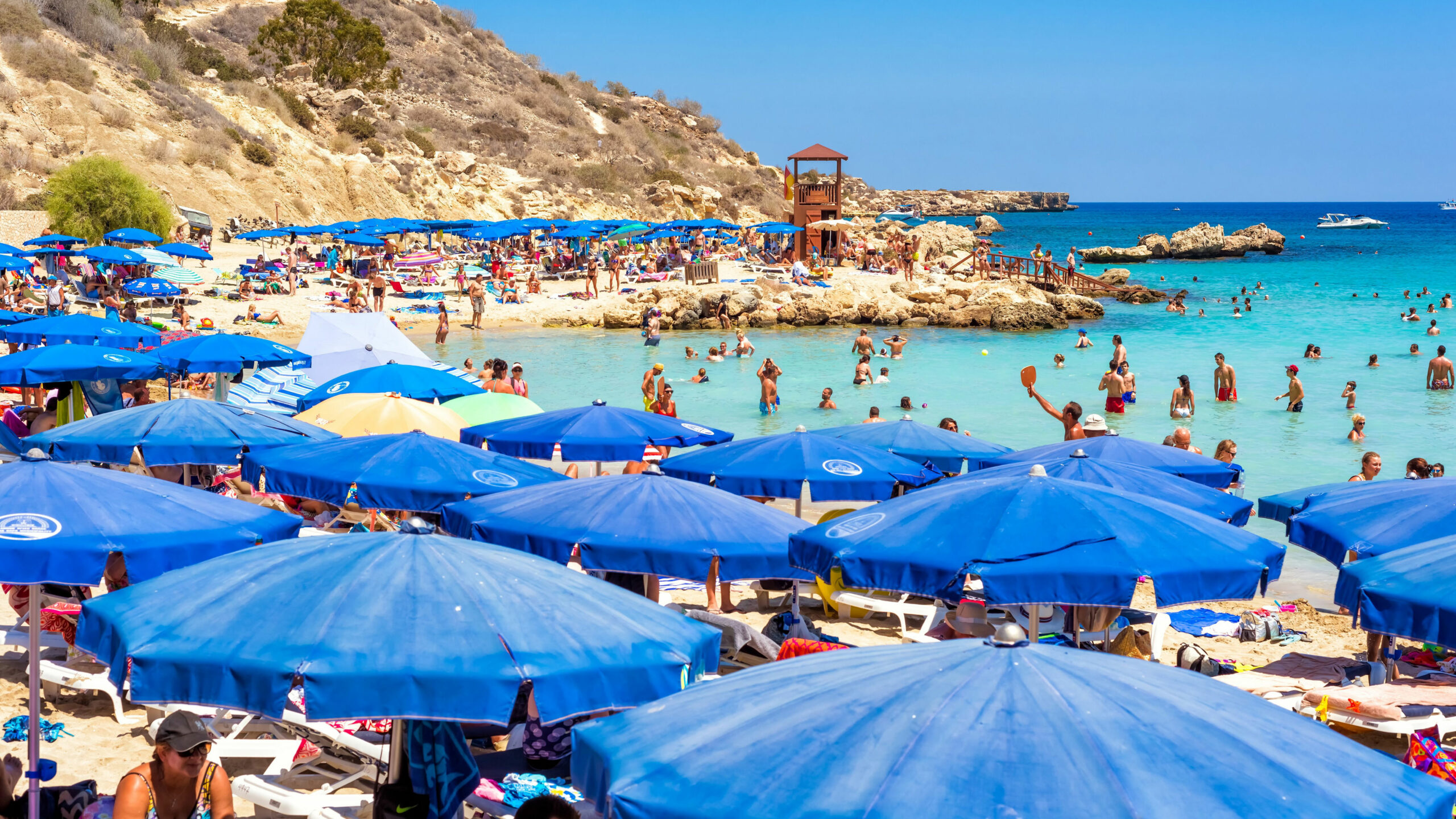
Cyprus lives up to its mythological reputation, offering breathtaking sunsets on the Mediterranean coasts, picturesque villages, and a culture rich in romance—from folk songs about longing to festive traditional weddings and its status as a global wedding destination. The island enjoys 300 to 340 days of sunshine annually, making it one of the sunniest places in the Mediterranean.
According to April 2025 figures, American tourists spend the most per person in Cyprus. In that month, 4,301 U.S. travelers visited the island, with an average stay of 12.7 days, spending about $1,559.71 or $122.81 per day.
What U.S. Citizens in Cyprus Should Do
The State Department’s latest security alert urges U.S. citizens to maintain caution in Cyprus and monitor local news and official sources for breaking developments. This includes checking the U.S. Embassy in Cyprus’ Security Alerts and enrolling in the Smart Traveler Enrollment Program (STEP) for updates and emergency contact.
Travelers planning to visit Cyprus during this time should:
- Ensure they have a valid U.S. passport for short-notice travel.
- Avoid protests and demonstrations, keep a low profile, and be vigilant of their surroundings.
- Develop a plan to leave in an emergency that does not rely on U.S. government help.
- Create a communication plan with family, employer, or host organization to confirm safety.
- Obtain travel insurance with evacuation assistance, medical coverage, and trip cancellation options.
Is It Safe to Travel to Cyprus? Locals Call U.S. Travel Advisory “Fear-Mongering”
Many locals have assured concerned U.S. travelers on social media that Cyprus remains safe to visit following the attack on the British RAF base. However, some locals and foreign travelers warn that visitors must prepare for possible air travel disruptions due to the volatile situation.
Concerns arose on social media when Paphos International Airport was briefly evacuated due to reports of a drone in restricted airspace. On Monday (March 2), 60 flights were canceled in Cyprus alone. However, Lufthansa Group Airlines plans to resume operations at Cyprus airports on Saturday (March 7), with EasyJet already beginning its operations in recent days.
Cypriot Government’s Statement on Safety Concerns
While the Cypriot government has increased its warnings, it has assured that Cyprus is not involved in the ongoing military conflict in the region. President Nikos Christodoulides urged the public to remain calm and avoid spreading unverified information.
“Our country – and I do not wish to repeat it again today – is not, in any way, engaging in any offensive or military operations. We have always been part of the solution and we will continue to act in the same manner,” said President Christodoulides following the Iran-linked attacks on a British air base in Cyprus.
How Cyprus Got Involved in the U.S.-Israel-Iran War
On March 1, a day before the Iran-linked attacks on the British RAF base at Akrotiri, UK Prime Minister Keir Starmer announced that the U.K. would allow the U.S. to use British military bases for “defensive” strikes on Iranian missile sites. This development has led to protests in Cyprus, calling for the removal of U.K. military bases.
Melanie Steliou, an actress and TV presenter living near the Akrotiri RAF base, told Al Jazeera that “people are realizing that the activists and politicians who have been warning we are in danger might have been right,” adding that there was little information for residents near the base following the attack.