A Journey Through Tunisia’s Diverse Landscapes and Cultural Treasures
Tunisia, often overlooked as a Mediterranean destination, offers one of the most diverse landscapes in North Africa. From Roman amphitheaters to Islamic holy cities, crystal-blue-water beaches, and vast Sahara dunes, the country is a treasure trove of history, culture, and natural beauty.
During my road trip across Tunisia, I explored its many landscapes and cultural centers, from bustling towns and markets to the serene, endless dunes of the Sahara. Here are some of my favorite stops that left an indelible mark on my journey.
Sousse & Hammamet
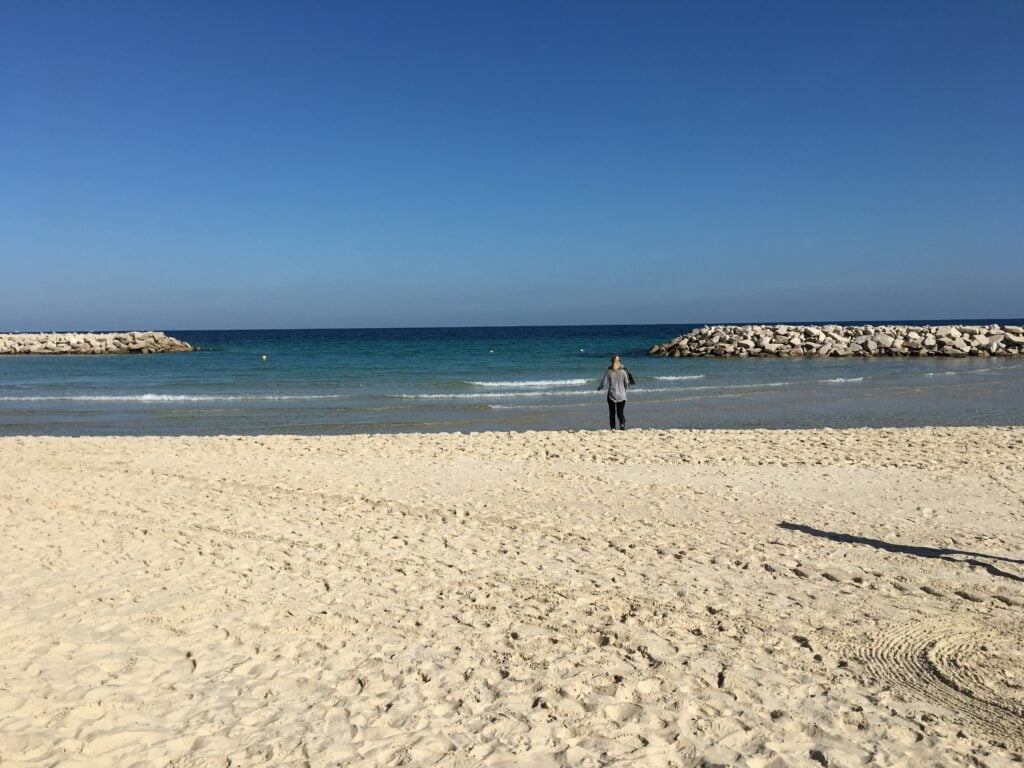
Our journey began in the coastal city of Sousse, known for its maze-like medina (historic center) and vibrant shops and restaurants. Staying in a small apartment near the coast, the water and sand made it feel like stepping into a Greek island. Much of Tunisia shares aesthetic and architectural similarities with Greece, with Tunisians often painting their homes white and blue, using light colors to reflect the sun.
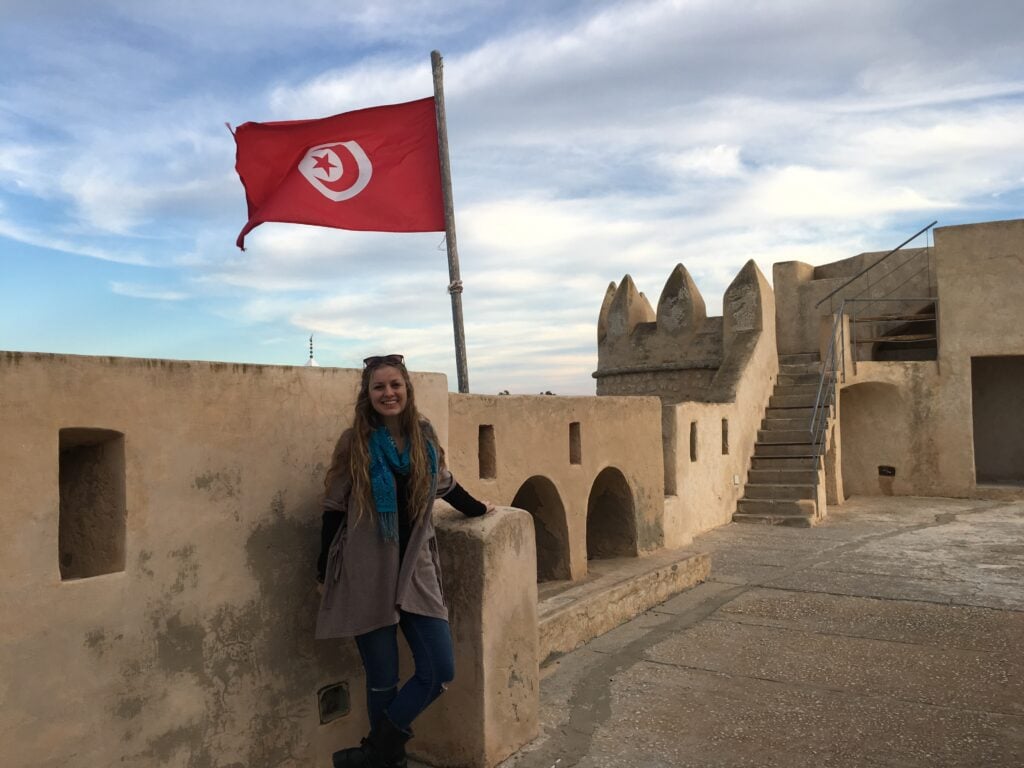
The first day trip was to Hammamet, a nearby village with a 15th-century fortress (kasbah). Every town in Tunisia has a strong historical presence, as the region was once the heart of the Phoenician empire before being conquered by the Roman Empire and later by the Islamic caliphates. The kasbah stood at the heart of the city, overlooking the harbor as a means of protection from naval invasions.
Standing on the parapets of the kasbah, I marveled at the city life below. The beaches extended in both directions, with small colorful fishing boats sitting in the sand and families playing in the waves. The kasbah contained an inner courtyard and rooms, a reminder of the warfare that once took place here. Today, it remains quiet, with tourists and local families coming to watch the sunset and see the city from above.
El Djem Amphitheater
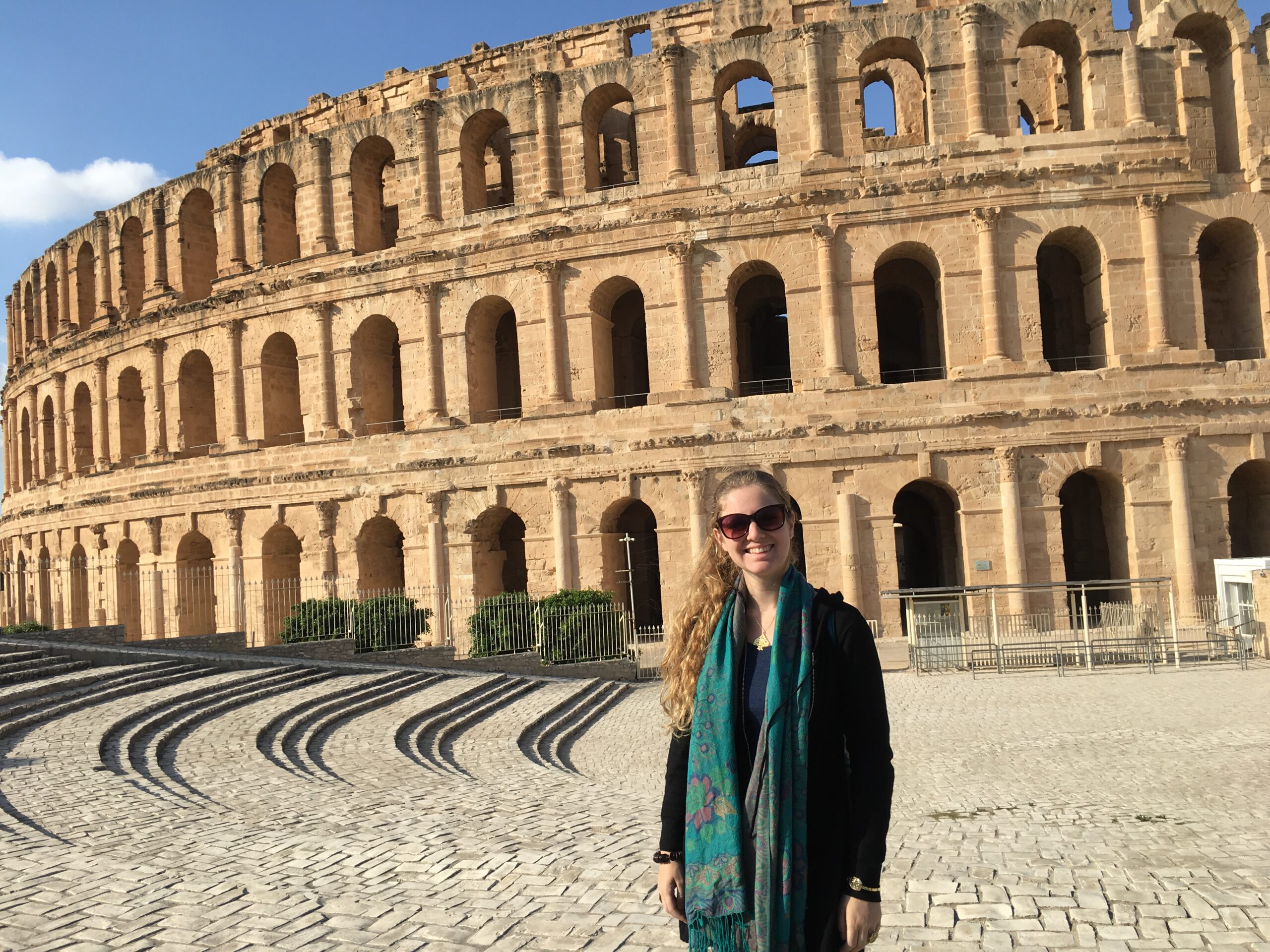
After hours of driving from the coast to the desert climate of the central part of the country, we passed through local villages with animals outside butcheries, people shopping in markets, and children playing on the side of the road. Turning toward the amphitheater in the small town that surrounded it, an astonishing sight came into view—a contrast of new and old, with streets lined with cars and modern shops giving way to a horizon of Roman architecture, towering over the whole town.
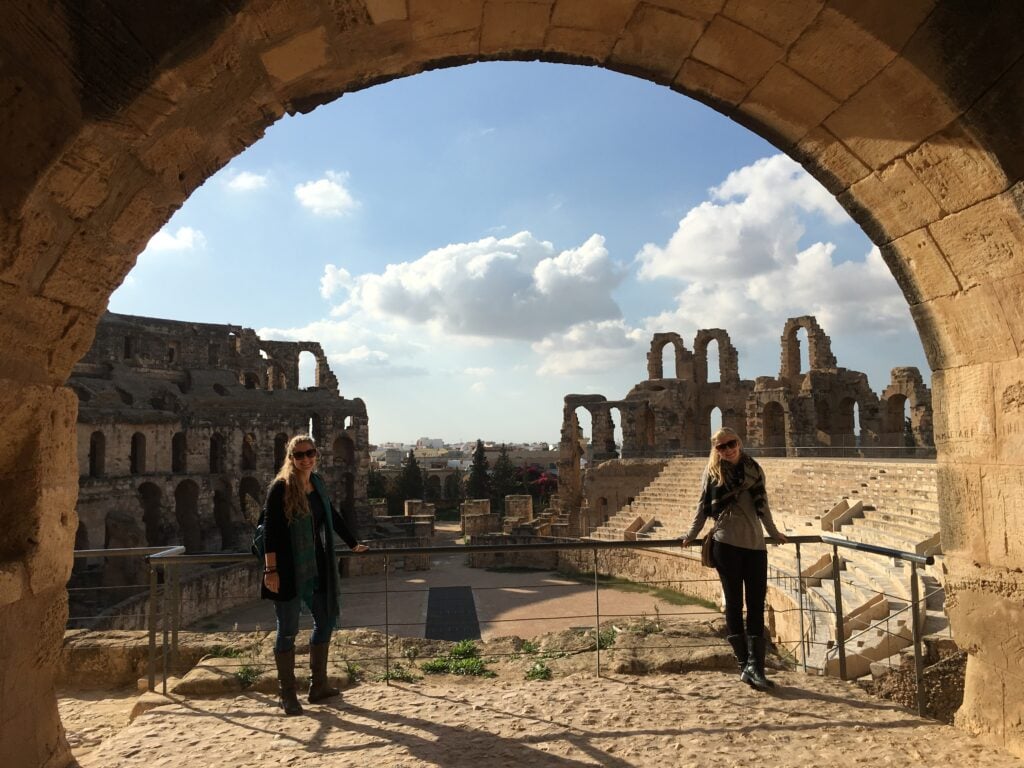
Built in the 3rd century CE when the region was part of the Roman Empire, this incredible amphitheater had a capacity for 35,000 people. Constructed of huge sandstone blocks, it featured multiple tiers and floors of arches rising high into the sky. Walking through the amphitheater, it was completely empty, with almost no other visitors. As I strolled under the first level, with towers and ceilings of arches above my head, I could imagine what it must have been like to come here during its heyday as a spectacle of power and Roman glory.
Coming out onto a clearing, I saw the entire amphitheater before me, with its many reconstructed seats and high walls still preserving much of its original shape. While there were no other visitors at the time, many around the world have seen it before, as it was the set of a Game of Thrones scene. It was incredible to see an amphitheater as grand as the Roman Colosseum with no one in it, reminding me that there are so many incredible places to visit out in the world.
Kairouan
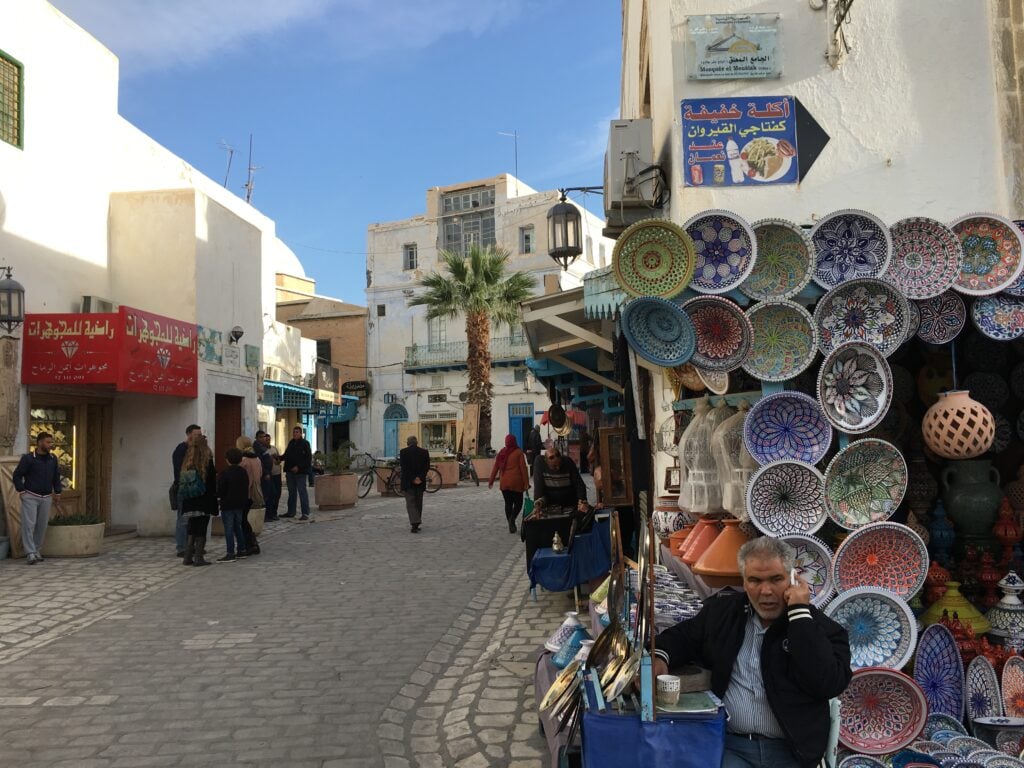
As fans of Indiana Jones, we were excited to visit Kairouan, where scenes meant to be in Cairo, Egypt, were filmed in the first movie. With a white-and-blue tone throughout the city, Kairouan is famous for its architecture and the Great Mosque of Kairouan, the most important mosque in Tunisia and one of the most influential in the Islamic world. Founded in 670 CE by the Arab general Uqba ibn Nafi, the city served as a spiritual and political center of the early Islamic world.
The main courtyard of the mosque was made of sandstone, with Islamic archways encircling the entire square. On one side, the minaret rose, decorated with intricate levels in a traditional North African Islamic style. Although we couldn’t enter the mosque itself, we were able to see some of the prayer rooms, which were ancient and mystical. Large golden lamps hung from the ceilings, with dark walls that appeared centuries old, overlooking devotees.
In the narrow streets of the city, we searched for the white alleyways featured in the film, recreating scenes we recognized. The gorgeous blue-painted doors of the city stood out against the light cream of the buildings, with different shades of teal, royal blue, and light blue gracing each doorway.
Luke Skywalker’s House and Traditional Tunisian Underground Architecture
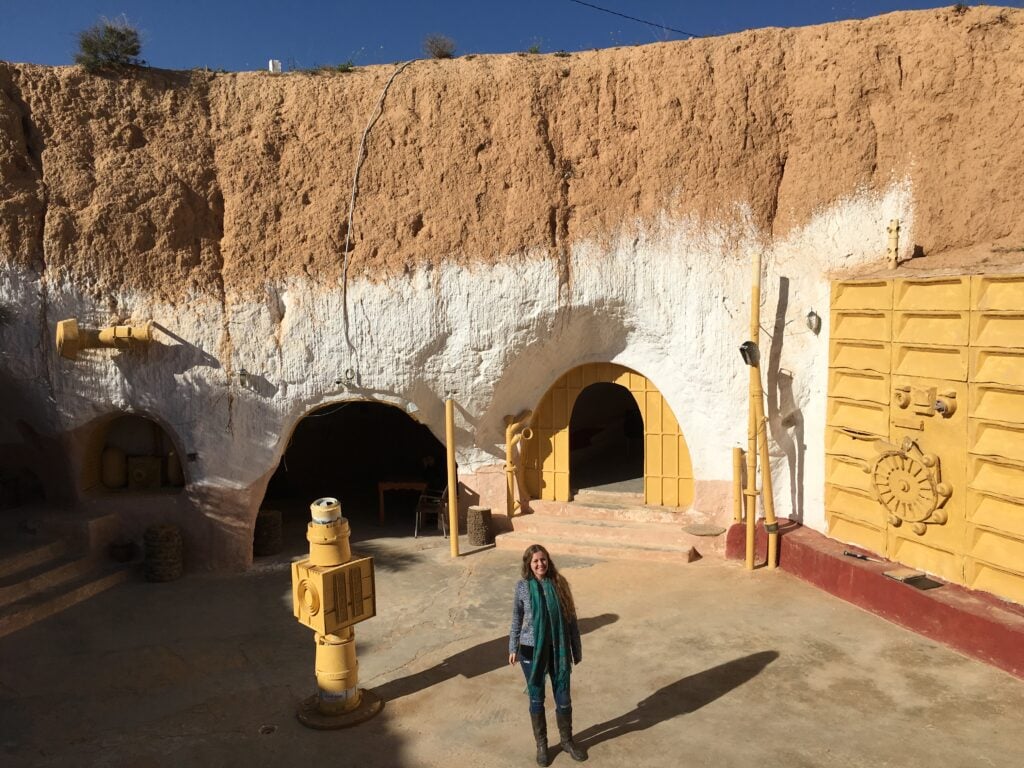
Near the desert town of Matmata, we stepped into another movie set—the home of the Skywalkers from the Star Wars franchise. The home is actually a traditional troglodyte dwelling, a type of underground architecture used by Berber communities for centuries to keep cool in the blistering sun. Throughout North Africa, some communities continue to build such houses, and the film incorporated the architecture to make it look otherworldly.
Entering the house, which sat just outside a small village, I immediately realized how little they changed. Now a small museum, the home still contains most of the original Star Wars props and additions. In the small cafe next to the room where they filmed the “kitchen table scene” in Star Wars: A New Hope, the owner showed us pictures of George Lucas filming there, alongside autographed images from the cast. For Star Wars fans, this is a great place to visit!
Douz & Touzer
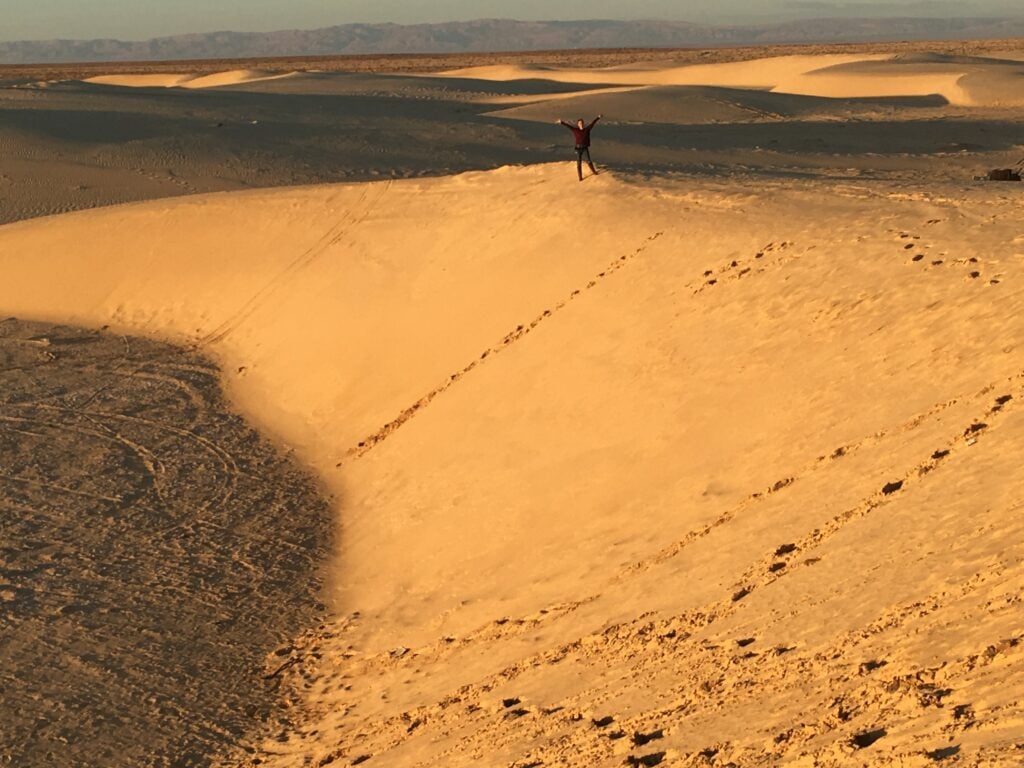
Traveling further south towards the Sahara Desert, we stopped in the towns of Douz and Touzer. In Douz, we stayed in a luxurious desert resort, surrounded by palm trees along the lake. Taking part in an ATV adventure, we rode through the sand dunes, experiencing the region’s open landscapes.
In Touzer, we went on a desert excursion with a local Berber guide, who explained their customs and traditions beyond just seeing the dunes. Traveling in a 4×4 jeep, we went up and down the tall dunes, feeling as though we were on a rollercoaster in the middle of nowhere. It was amazing to imagine where I was geographically, right on the border with Algeria.
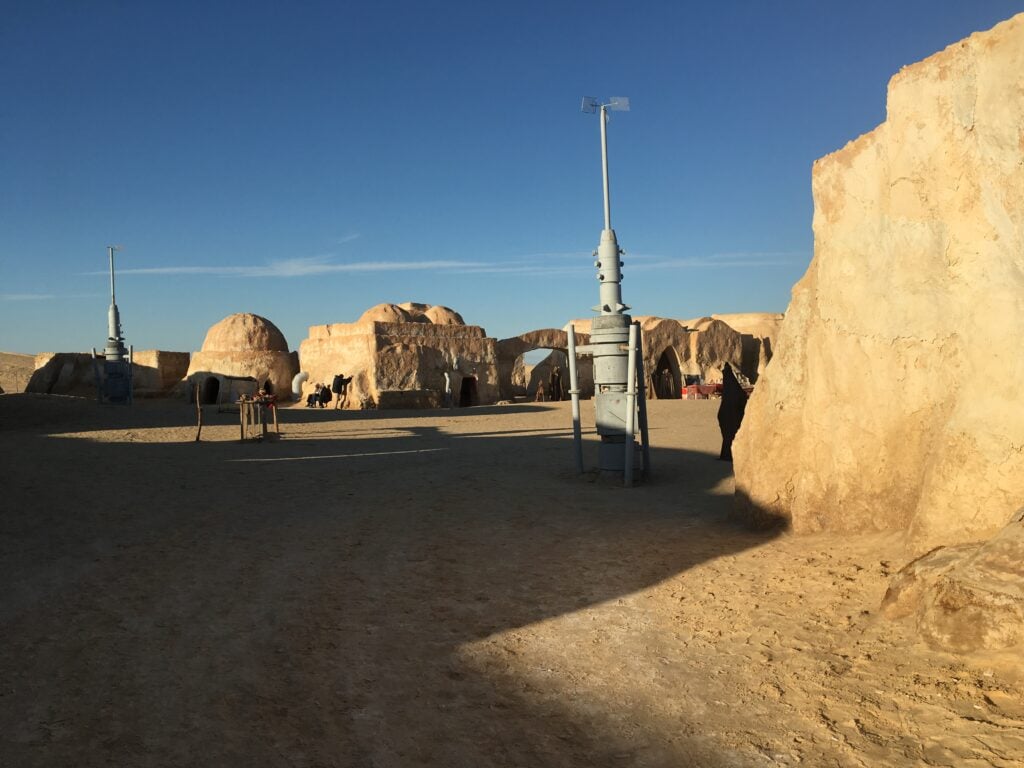
Beyond the dunes, we found ourselves in another Star Wars town, this time the set of the fictional city of Mos Espa from The Phantom Menace. The entire town is still there, made out of wood and plaster, giving the appearance of a real city from far away. For Star Wars fans, this is the perfect place to step onto a film set that feels entirely real, with the guide stating that George Lucas built it and then just left it all there without worry.
In the same area, we also visited the desert region where they filmed the racing scenes in The Phantom Menace, as well as a canyon featured in A New Hope when Luke meets the Jawas and Obi-Wan Kenobi.
Tunisia is an ideal destination for visitors craving a mix of ancient history, North African culture, and gorgeous beaches. With the country being relatively small, a 2-week road trip is the perfect amount of time to see the highlights. While I never made it to the capital, Tunis, or the ruins of ancient Carthage, I hope to return one day and explore more of the country’s diverse landscape.