

Cultura Creative // Shutterstock
The Rise of Travel Nursing: From Crisis to Career
Travel nursing, once a niche option for healthcare professionals, has evolved into a significant career path. The industry saw a surge during the COVID-19 pandemic and continues to grow. In 2020, staffing demand for travel nurses increased by 35%, according to Staffing Industry Analysts. What was once a small percentage of hospital nursing staff—between 3% and 4%—expanded to 8% to 10% by mid-2021. Hospitals relied heavily on travel nurses to maintain operations, transforming what was initially a temporary solution into a core component of the healthcare system.
The concept of travel nursing is not new, but it gained mainstream attention during the pandemic. In January 2019, travel nurses accounted for 4% of all hospital nursing hours, according to Syntellis Performance Solutions data. By January 2022, that number had risen to 23%. National Health Ratings analyzed where travel nurses earn the most and least, using data from the Stellar Nurse Ultimate Travel Nurse Salary Guide. This article explores how pay varies by location, specialty, and demand in today’s dynamic healthcare environment.
The Travel Nursing Boom: From Crisis Response to Career Path
Before COVID: A Niche Solution
Travel nursing began in 1978 with TravCorps in New Orleans. Initially, it was designed to fill staffing gaps caused by regional shortages, seasonal surges, or new hospital programs. These roles offered competitive pay and flexibility, but most nurses viewed them as temporary positions rather than long-term careers.
How the Pandemic Changed Everything
The arrival of the pandemic in 2020 drastically increased demand for travel nurses. By August 2021, over 30,000 travel nurse jobs were available, according to health care staffing firm SimpliFi. The combination of high pay, flexibility, and urgent need turned short-term contracts into long-term opportunities for many nurses.
Now: High Demand, Slower Pace
While the travel nursing market has cooled, it remains stronger than before the pandemic, according to Staffing Industry Analysts. The U.S. industry reached $42.7 billion in 2022, and a 2025 report from TravelNurses predicts it will stabilize around $19.5 billion by 2025. WiFiTalents projects steady growth at 5.8% annually through 2028.
Where Travel Nurses Earn the Most and Least
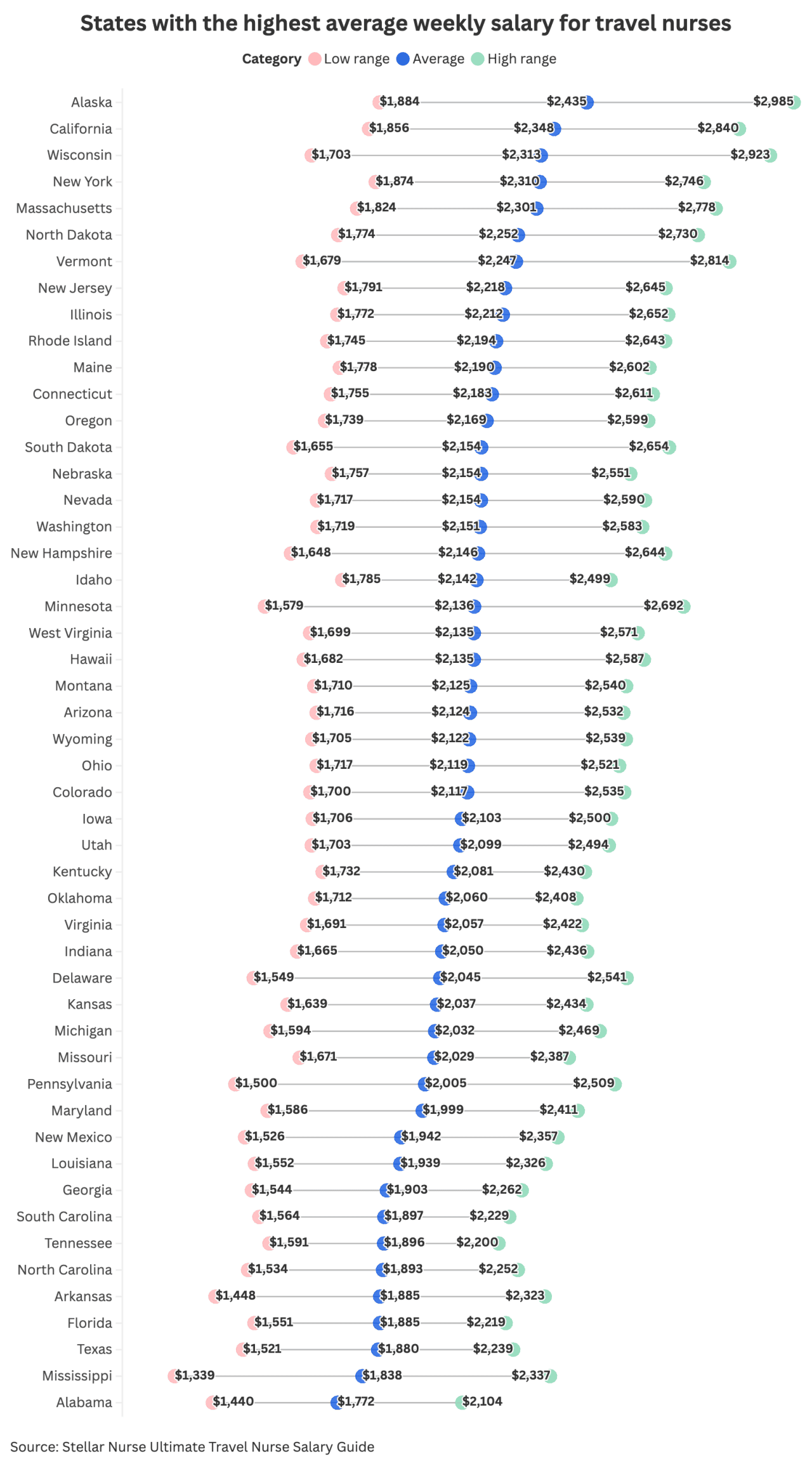
Pay for travel nurses varies significantly depending on location. According to the Stellar Nurse Ultimate Travel Nurse Salary Guide, Alaska leads with an average weekly wage of $2,435. California follows closely at $2,348, while Wisconsin, New York, and Massachusetts also offer strong pay. These high-paying states often have higher living costs, strong union presence, and greater demand in urban hospitals.
On the lower end, Alabama averages just $1,772 per week, with Mississippi, Texas, Florida, and Arkansas hovering around $1,880. While these states have lower living costs, they rarely compensate for the smaller paychecks.
National Health Ratings
Regional trends are also shifting. In Q1 2025, salaries increased by 0.7% in the West but dropped by 0.88% in the South, indicating stronger demand along the coasts. Big cities typically pay more than rural areas, but weekly pay isn’t the only factor. Real value comes from the full compensation package, including housing stipends, tax-free benefits, and how far your money goes in a given city.
How Specialization Shapes Travel Nurse Pay
Location is important, but specialization can have an even bigger impact on earnings. Nurses in high-stress, high-demand specialties consistently top the pay charts.
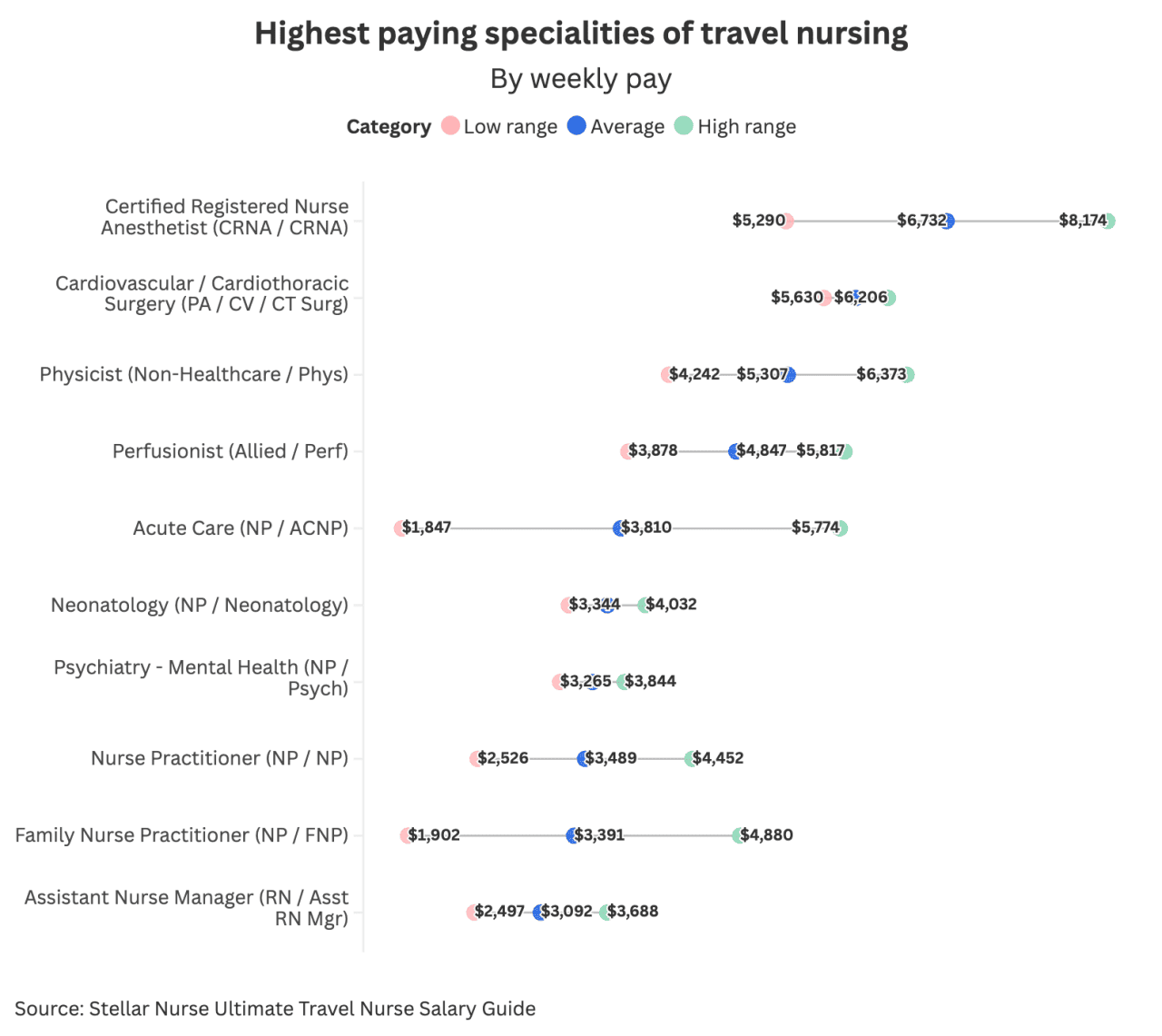
At the top, Certified Registered Nurse Anesthetists (CRNAs) earn about $6,732 per week, with some making $8,000 or more. Cardiovascular and cardiothoracic surgery physician assistants follow at $5,918, while nonclinical roles like medical physicists average $5,307 a week.
Other strong earners include perfusionists ($4,847) and acute care nurse practitioners (ACNPs), who average around $3,810 per week. These roles usually require advanced certifications and deep experience in critical care or surgical environments.
National Health Ratings
Experience also plays a role. New travel nurses often make between $90,000 and $100,000 a year, while seasoned ICU nurses can earn up to $150,000, especially with credentials like Certified Critical Care Registered Nurse or Trauma Nursing Core Course. Investing in high-acuity certifications can lead to substantial income increases.
What Nurses Really Earn: Beyond the Base Rate
Travel nurse pay isn’t just about hourly wages. The full compensation package includes tax-free stipends, travel reimbursements, and long-term perks that can boost take-home value.
Stipends and Daily Support
Housing stipends are one of the biggest draws, along with daily meal and incidental allowances based on federal General Services Administration per diem rates. Additional perks may include travel and relocation costs, such as gas, airfare, and licensing fees.
Tax Perks That Add Up
Many stipends are nontaxable if nurses maintain a qualifying tax home. This setup can lead to thousands in annual savings compared to permanent staff roles with similar base pay.
Benefits That Go the Distance
Top agencies offer health insurance on day one, plus extras like 401(k) matching, continuing education funds, and certification support. Some even provide bonuses for completing contracts or staying with the same agency.
What It Takes to Become a Travel Nurse
Education and Licensing Basics
To start, you’ll need to become a licensed registered nurse (RN). This involves earning either an associate degree in nursing or a Bachelor of Science in Nursing, followed by passing the National Council Licensure Examination for RNs. Many hospitals now prefer or require a BSN.
To work across state lines, many nurses obtain a multistate license through the Nurse Licensure Compact (NLC). Currently, 43 states fully participate, allowing nurses in those states to take assignments without reapplying for a license each time.
Experience Requirements
Most agencies require at least one to two years of hands-on clinical experience. For specialties like ICU, ER, or OR, expect to need two or more years of post-orientation work. Inpatient experience is usually a must, as hospitals tend to favor candidates with inpatient backgrounds for high-acuity roles.
Finding the Right Agency
Choosing the right staffing agency is crucial. Look for one that offers clear pay details, strong benefits, and solid recruiter support. A good recruiter will match you with the right jobs, walk you through contracts, and ensure you understand the full compensation package before signing on.
The Bottom Line on Travel Nursing Today
For nurses seeking flexibility and better pay, travel nursing remains one of the most appealing career paths. From high-paying coastal gigs to growing demand in the Midwest, nurses can shape their assignments around income goals, lifestyle, and experience.
There’s room for growth, too. Specializing in high-acuity areas or earning advanced certifications opens the door to top-tier contracts and better rates. When combined with smart agency partnerships, tax-savvy planning, and long-term goals, travel nursing becomes more than a short-term move—it becomes a viable, rewarding career.
Whether you’re just starting out or considering your next step, understanding where the money is—and how to make it work for you—helps you plan smarter for the road ahead.