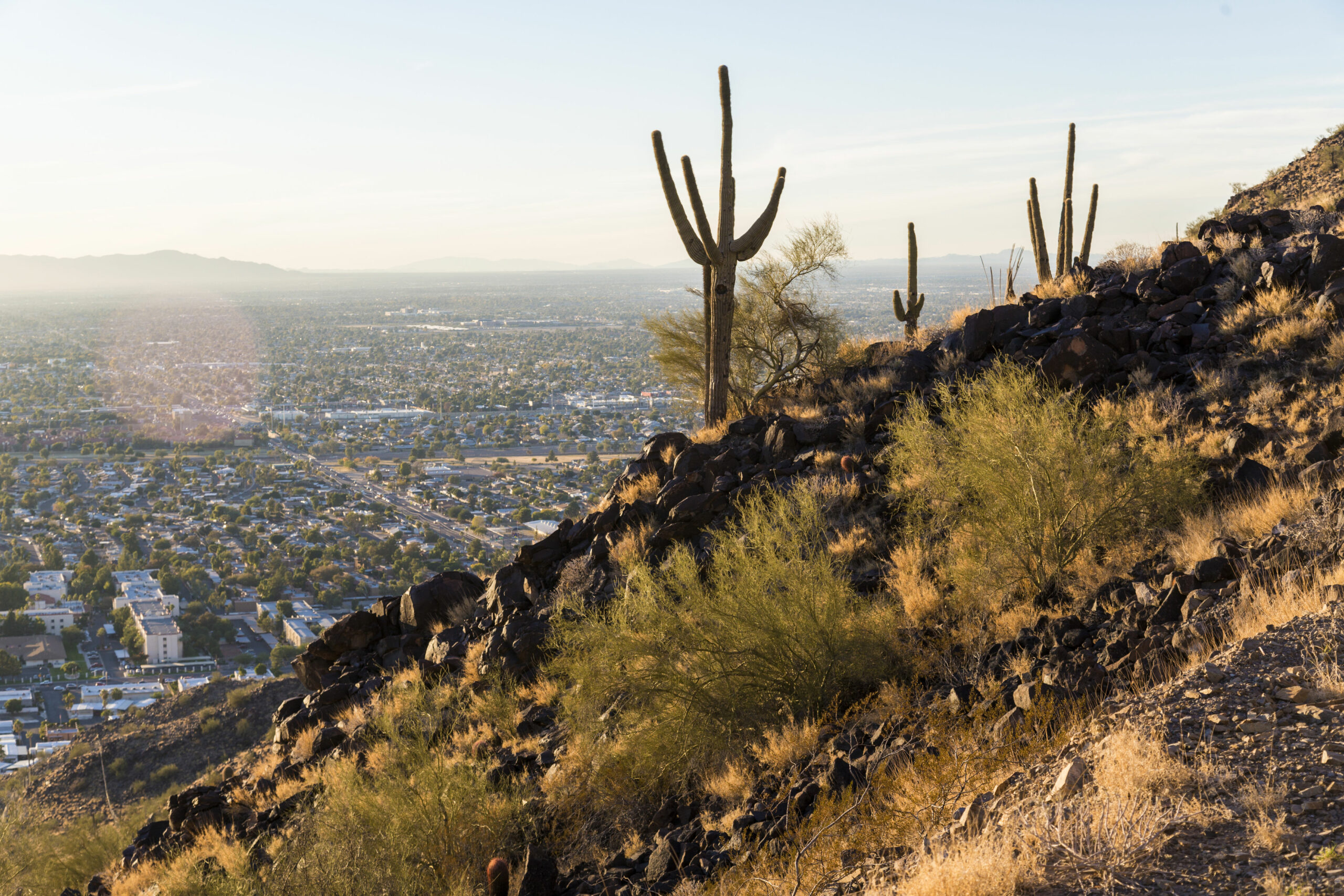
View of Phoenix from the North Phoenix Trail. (Photo via Matt Mawson/Getty Images)
A Unique Landscape and Cultural Identity
Arizona has long been associated with a sense of otherworldliness, often compared to the Martian landscapes described in Ray Bradbury’s stories. This comparison is not without merit, as the state boasts canals, unusual plant life, and ancient, mysterious abandoned cities. The bittersweet, nostalgic optimism that permeates Bradbury’s work is also present in Arizona’s character, even if the inspiration for his stories came from Venice, California. For those who have moved from Los Angeles County to Phoenix, the Valley of the Sun offers an even more profound sense of otherworldly magic.
The feeling of the frontier is deeply ingrained in Arizona’s identity. The state is self-conscious about its western roots, with cowboy films frequently shot in locations such as Old Tucson Studios, Monument Valley, or Sedona. Arizona is home to the world’s oldest rodeo and the famous O.K. Corral. While California has long since moved beyond its Western origins, Arizona still feels like a new land. It is the mental image of the exotic West that many around the world associate with the American Southwest. This image has even influenced cultures far and wide, from Korea in the 1950s to the former Soviet Union in the 1970s, and continues to resonate today in places like France.
Economic Growth and Innovation
Today’s Phoenix, the fifth-largest city in the United States, may no longer be a frontier outpost, but it retains the qualities of a new community. Over the past 20 years, its population has grown by nearly 40%, attracting immigrants from other states. These newcomers bring with them new cultural experiences and economic opportunities. For example, Phoenix is one of the few cities outside the Great Lakes region where you can find Lou Malnati’s pizza.
Arizona’s economy has been growing steadily, drawing businesses and employment in impressive numbers. One major factor behind this growth is the state’s low tax rates. In 2021, the Goldwater Institute helped pass a statewide flat tax, and a year later, successfully defended against efforts to impose a massive and unconstitutional tax increase. By allowing people to keep more of their earnings, Arizona encourages entrepreneurship and hard work, a contrast to certain neighboring states that seem to punish these values.
Legal Reforms and Individualism
Arizona has also taken steps to make it easier for people to move here for work and start new businesses. Key reforms include the Right to Earn a Living Act, the Universal Licensing Law, and the Permit Freedom Act. The state has also passed pioneering legislation to protect homeowners’ rights to rent out their properties on platforms like Airbnb or VRBO through the Property Ownership Fairness Act. Additionally, Arizona leads the nation in school choice, offering families the Empowerment Scholarship Account program, which provides tools to escape the one-size-fits-all government system.
Beyond economic factors, Arizona is known for its youthful spirit. As the last of the continental United States to join the union in 1912, the state reflects the energy and innovation of its young age. More than 60% of Arizonans were born elsewhere, making it a state of immigrants. This diversity contributes to a culture of independence, with more than a third of residents refusing to join a political party. This individualism is evident in the work of Arizona’s greatest artists, including Maynard Dixon, Ed Mell, Waylon Jennings, Alice Cooper, and the iconic Frank Lloyd Wright.
Embracing the Future
One of the most Bradburian aspects of life in Phoenix is the rise of self-driving vehicles. The city now hosts the largest market for autonomous cars in the country, with companies like Waymo offering thousands of robo-rides weekly. Even robot-assisted delivery services are becoming commonplace. While self-driving cars may seem like a symbol of the future, they have become so integrated into daily life that many residents hardly notice them anymore. These vehicles hold the potential to make driving as safe as flying, potentially saving lives by reducing accidents.
The Desert and Its Influence
Out in the desert, there is a real sense of vastness and virginity. Southern Arizona spans 30,000 square miles of desert, with rainfall ranging from 3 to 15 inches annually. Beyond the Valley of the Sun lies a landscape filled with rattlesnakes, boulders, and remnants of human habitation, such as Tuzigoot, where an entire village was abandoned centuries ago. There is even a place called “Nothing,” consisting only of the ruins of a gas station and a road sign bearing that name.
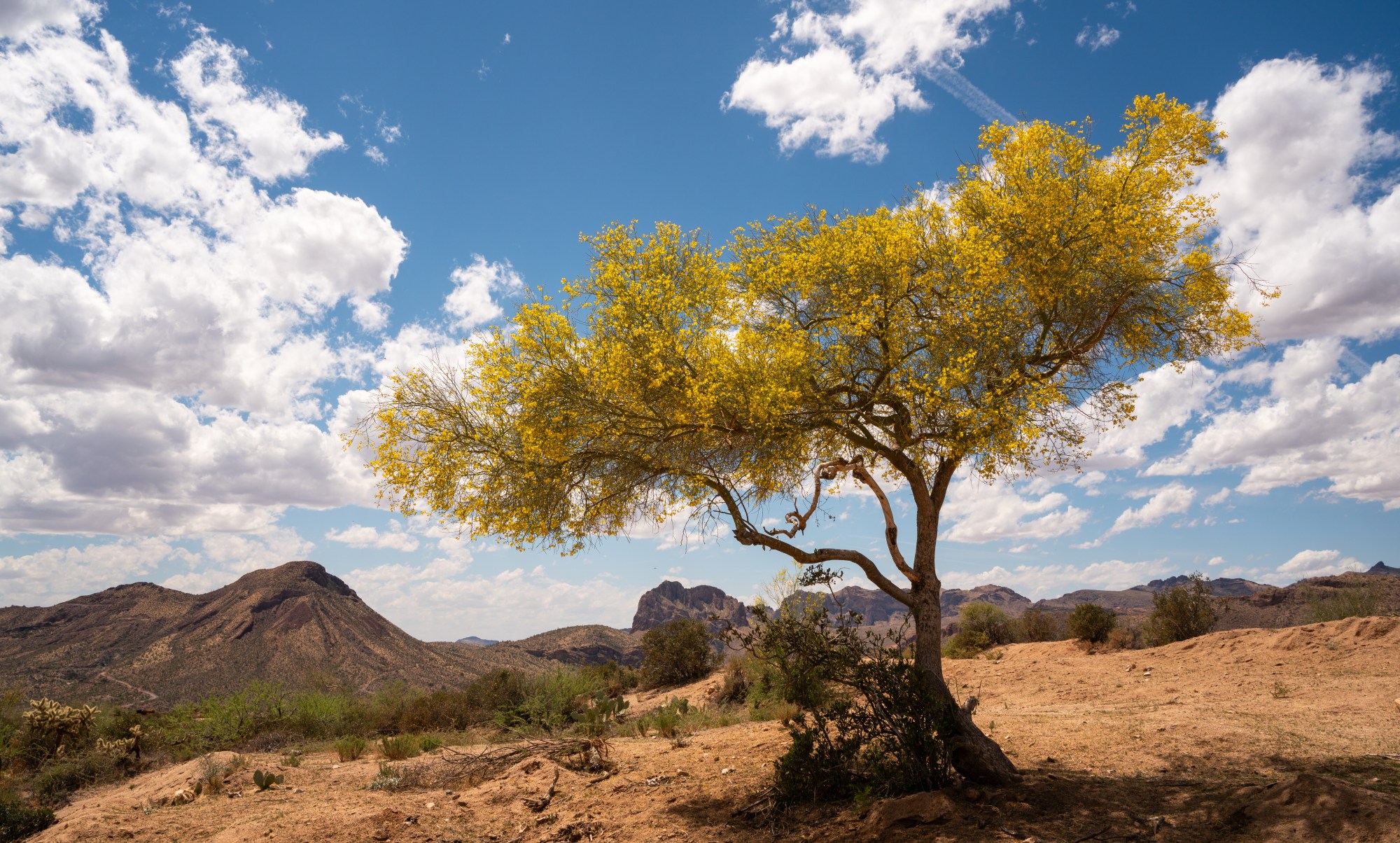
The desert is not barren, but it is austere. The intense heat of Phoenix’s summers, the incredible dryness that creates crystal-clear nighttime skies, and the proximity to areas untouched by human feet all contribute to a sense of unfamiliarity. This environment keeps residents conscious of both the brevity of human life and its immense possibilities. Unlike California, which tries to hide its desert nature, Arizona embraces it, with yards featuring native plants like saguaro, ocotillo, and palo verde.
A Legacy of Transformation
Bradbury understood how settling a frontier transforms both the land and the people. In his final chapter ofThe Martian Chronicles, a family arrives on Mars and decides to stay, destroying their rocket and burning Earth maps. They then look at their reflections in a canal and realize they are the Martians. This moment captures the essence of what it means to settle a new place—both the land and the people change, creating something new.
This feeling is still present in Phoenix, where the past and future coexist in a unique balance. As the city continues to grow, it must navigate the challenges of change while maintaining its connection to the timeless beauty of the desert.