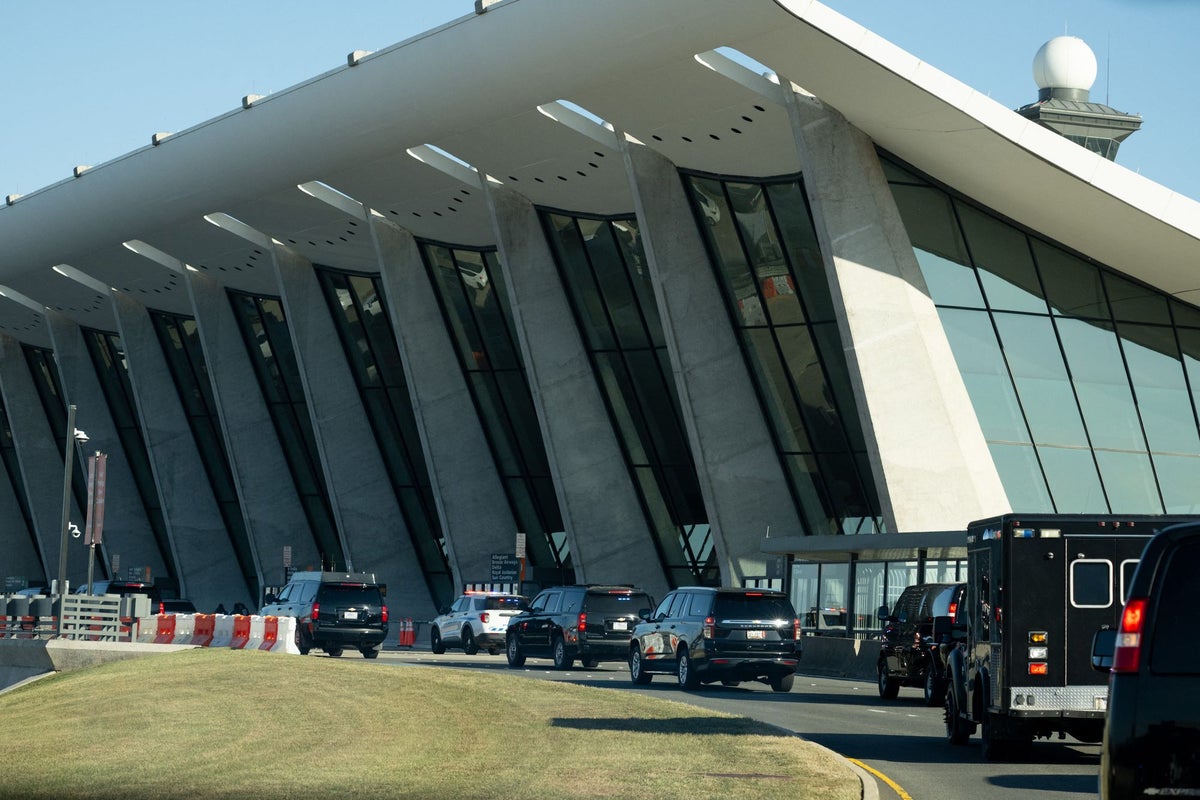
A competition is taking place at Newark Liberty Airport.
It’s not at all like “Fast and Furious” and is more similar to a Survivor-style contest.
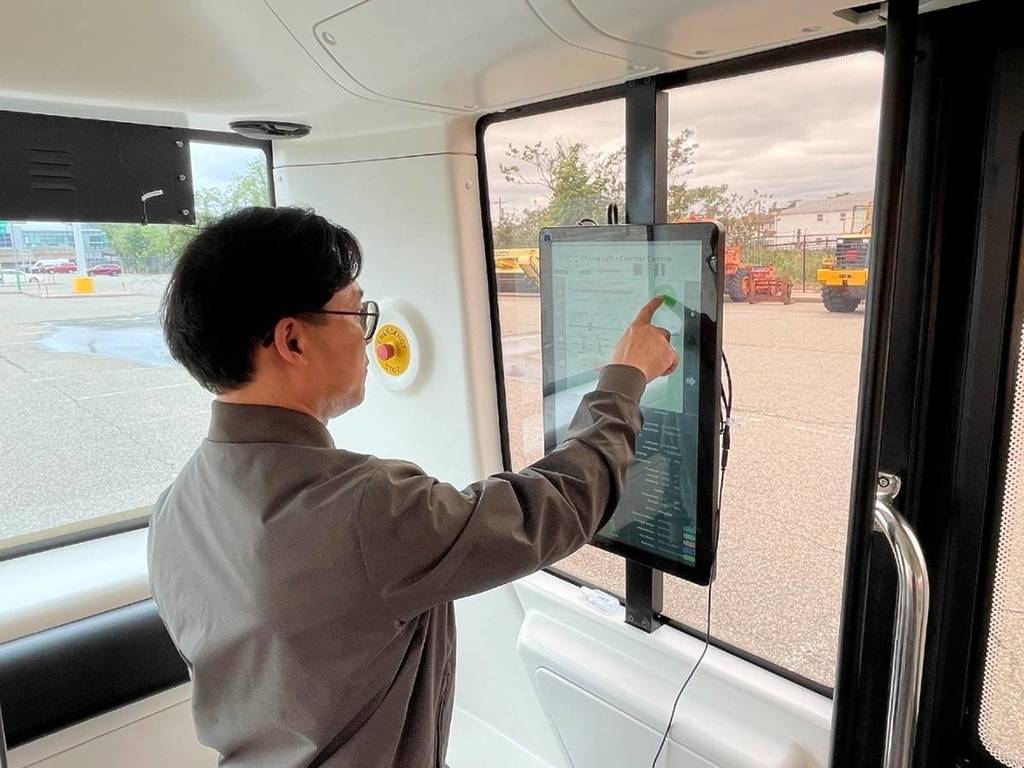
Three small, adorable electric shuttles will start testing next month at the airport, each from a different company, with the potential that one might eventually transport passengers, according to Port Authority officials.
It won’t be a simple exam. Although the shuttles won’t have real passengers, they will face the fluctuating weather and other factors present at Newark Airport.
A trial course was set up in an abandoned airport parking lot, designed to mimic the winter conditions of the northeastern region, including snow-making equipment and fire trucks spraying water onto the pavement, which then turns into ice, according to officials.
Of course, that was before the snowstorm arrived.
Besides checking the weather, the vehicles are evaluated on their ability to identify obstacles, like a crash test dummy on a skateboard, according to officials.
The agency is considering methods to establish automated links between EWR’s current facilities and thenew AirTrain NewarkThe new system to replace Newark’s outdated monorail is set to begin operations in 2030.
The shuttles vary in design, from a boxy look resembling a Nissan Cube or Kia Soul to two models featuring more streamlined, advanced styling.
Shuttles from Oceaneering are scheduled for testing in March, Ohmio in late March, and Glydways in May.
“For many years, we have effectively utilized self-driving technology, especially at airports, and are confident that autonomous shuttles provide a secure and effective way to transport passengers. At the same time, we are working on constructing a new AirTrain Newark and the newly designed Terminal B,” said Kevin O’Toole, chairman of the Port Authority board.
Those assessments will enable eligible companies to submit bids in response to an official Port Authority proposal request, which could be released in 2027. The authority is also considering traditional electric buses as part of its overall evaluation of transportation strategies during the upcoming redevelopment of Newark Airport.
The Port Authority is not the only airport operator exploring the use of self-driving vehicles to transport passengers and decrease congestion.
Atlanta launched a $20 million pilot initiativewith Glydways to link Hartsfield-Jackson airport and the Georgia Convention Center through a network of self-driving pods that transport four individuals.
The two-year pilot initiative is set to begin functioning later this year and aim to transport up to 10,000 individuals per hour by utilizing specialized lanes and offering flexible service.
An autonomous shuttle pilot initiative launchedat Daniel K. Inouye International Airport in Honolulu by the Hawaii DOT in April 2024 for moving between two terminals.
Other autonomous non-airport shuttles currently functioning as brief route links between locations and public transportation, created to offer what specialists refer to as the initial or final segment of a journey.
“Autonomous vehicles are being utilized globally and domestically, and they have become a part of the contemporary travel experience, whether in a personal vehicle, a ride-hailing service, or public transportation,” stated Kathryn Garcia, Executive Director of the Port Authority, in a statement.
However, the Port Authority is not new to this, having carried out different autonomous vehicle tests since 2022.
The most recent were tests in summer 2024at John F. Kennedy International Airport where travelers could take self-driving vehicles in parking lot 9 at JFK.
Two earlier testsAutonomous platooned vehicles were tested at JFK’s Aqueduct Parking Lot in 2022 and 2023, marking JFK as the first North American airport to showcase a self-driving group of three vehicles.
A trial of an autonomous shuttle buswas also initially carried out in mixed traffic at Newark Liberty in 2023, with a second instance occurring in 2024.
In July 2022, the Port Authority conducted successful trials of self-driving vehicle platooning and lane-keeping systems using modified buses within its operations.Exclusive Bus Lane, which speeds up bus travel into and out of the Lincoln Tunnel during morning rush hour.
The concept of platooning is seen as a method to increase the number of buses using the Route 495 Xclusive Bus Lane towards the Lincoln Tunnel.
Platooning may also substitute the current shuttle buses that connect airport terminals with parking areas by using a series of compact, self-driving shuttles.
On a national level, airports are either implementing or evaluating various autonomous ground vehicle systems, such as passenger shuttles, as reported by the Federal Aviation Administration.
They feature self-maintaining vehicles, including lawnmowers, snow clearing machines, sweepers, and systems for detecting and removing foreign objects, as well as boundary security vehicles, driverless aircraft tugs, luggage carts, and staff buses, according to theFederal Aviation Administration.
These types of vehicles have been utilized at airports in China, Amsterdam, and Cincinnati,CNN reported. However, FAA regulations limit their use to locations where aircraft are not in motion.
©2026 Advance Local Media LLC. Go to MathHotels.com. Distributed by Tribune Content Agency, LLC.