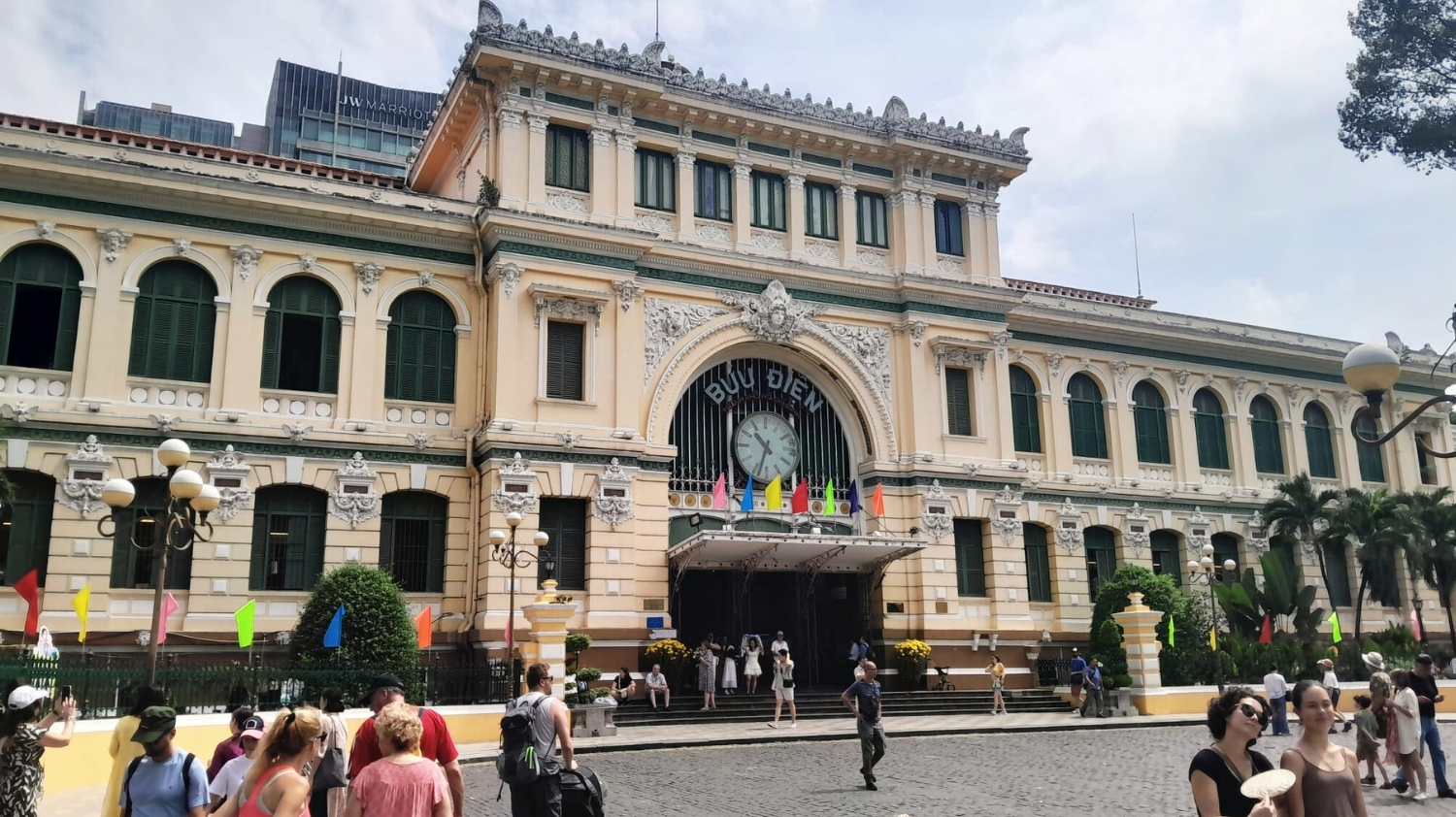
A Colonial Landmark in the Centre of Saigon
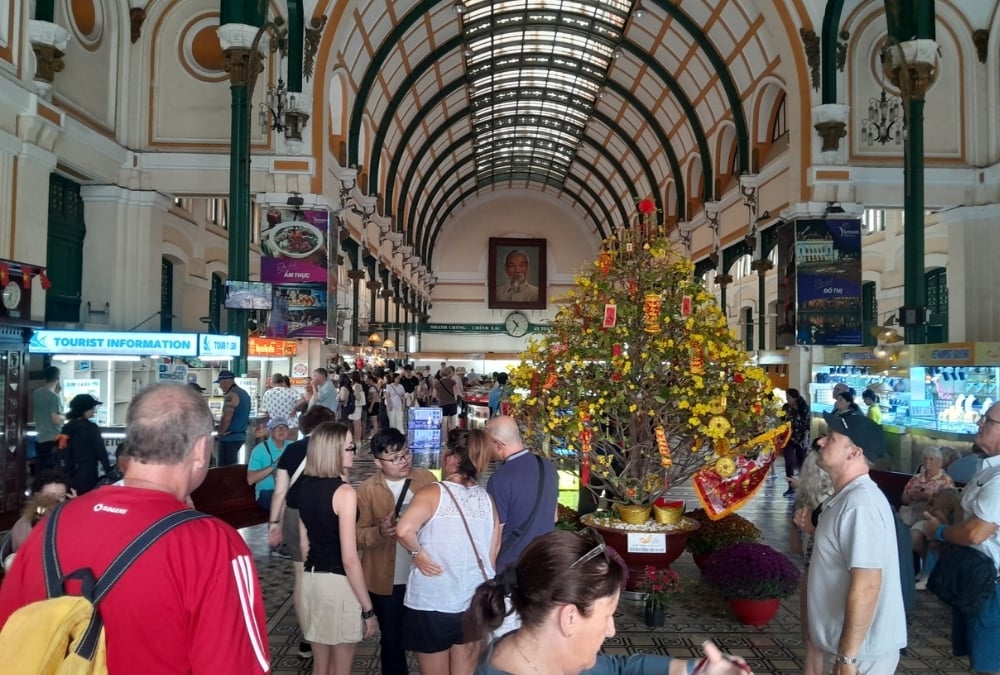
The Saigon Central Post Office stands as one of the most recognizable colonial-era buildings in the city. Even if you’ve never stepped inside, you’ve probably seen photos of its yellow façade and green shutters. Built during the French colonial period, the architecture is unmistakably European, with its arched windows and a high-vaulted ceiling. The space feels open and symmetrical, with long wooden counters lining both sides and a large portrait of Ho Chi Minh overlooking the main hall.
The front of the building can be quite busy, but not chaotic, as the tourists wander around taking photos and buying from the stalls. But toward the back, where all the postal business gets done, it’s more relaxed. Locals queue (in the Asian style) quietly at the counters waiting their turn, and vendors sell stamps, making the building a functioning post office, not just a preserved historic building.
Sending Postcards: Surprisingly Cheap
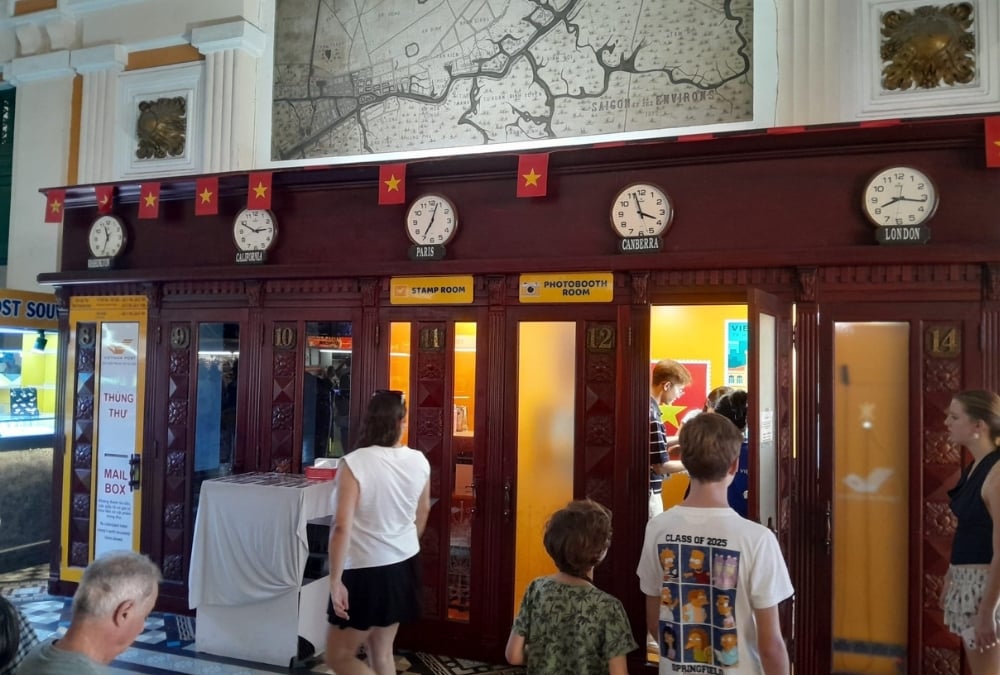
The main reason I decided to send postcards from the Post Office was due to the price. Sending a postcard internationally was far cheaper than I expected. I’ve sent postcards from different locations in Vietnam before through couriers, and the difference between prices can be huge. However, many people choose to use the couriers as they claim the Vietnamese postal service isn’t up to scratch, and your mail often ends up missing.
The claim isn’t without merit. I recently applied for a birth certificate to be sent to me from home, and as of now, 3 months later, it’s nowhere to be seen. However, that could be from my home country’s end, but I’ll never know for sure. Regardless, my postcards and parcels all made their destinations through the Vietnam post office without a hitch.
They Only Accept Cash

Something incredibly important to note is that the Saigon Central Post Office only accepts cash. There are no card payments, bank transfers, or QR scans, and for a city as modern and digitally connected as Ho Chi Minh City, this feels slightly unexpected, particularly when the merchants selling souvenirs a few steps away will expect all the above.
It’s particularly annoying when you’ve waited in line for a few minutes as the workers nonchalantly move from one place to the next, only to finally acknowledge you, and then inform you that you actually need cash to continue… meaning you have to leave the line, go to the nearest ATM, and come back. If you go planning to send something, make sure you bring enough Vietnamese dong. There’s nothing complicated about the process, but you don’t want to get stuck without cash after writing your message.
The Doubt
After handing over the postcards, you’ll probably walk away feeling uncertain, wondering if your packages/postcards will actually arrive or not, or did you just throw your cash into an empty void. Vietnam’s postal system isn’t something I’ve had much experience with, as I’ve usually dealt with couriers, so naturally, there was a bit of doubt.
Once the cards disappear behind the counter, you’re placing trust in a system you can’t see. After a few days, a message came in from a friend in Germany, and thankfully, he had received his postcard; however, days turned into weeks, and the postcard with the package I had sent to a friend in Poland seemed to have been lost to the void. Mercifully, after a month, my friend hit me with a text with gushing thanks for the gifts they had just received.
Whether or not it takes longer to reach Poland than it does to reach Germany, or whether it takes packages far longer to arrive than just a single postcard, I don’t know, but for me, it is proof at the very least that sending postcards out of Vietnam works effectively.
What It’s Like to Use the Post Office
Thankfully the process is simple. You queue, approach the counter, and explain what you want to send. The staff speaks English, and they are pleasant to deal with, but they do seem to have to balance dealing with customers as well as other duties, so it might take time for them to get to you, and you also have to consider Vietnamese customs, so they might not pay attention to you unless you shout for their attention.
Thankful there is no unnecessary paperwork for postcards. For larger packages, they’ll weigh your parcel and calculate the price depending on weight and destination.
Sending Packages
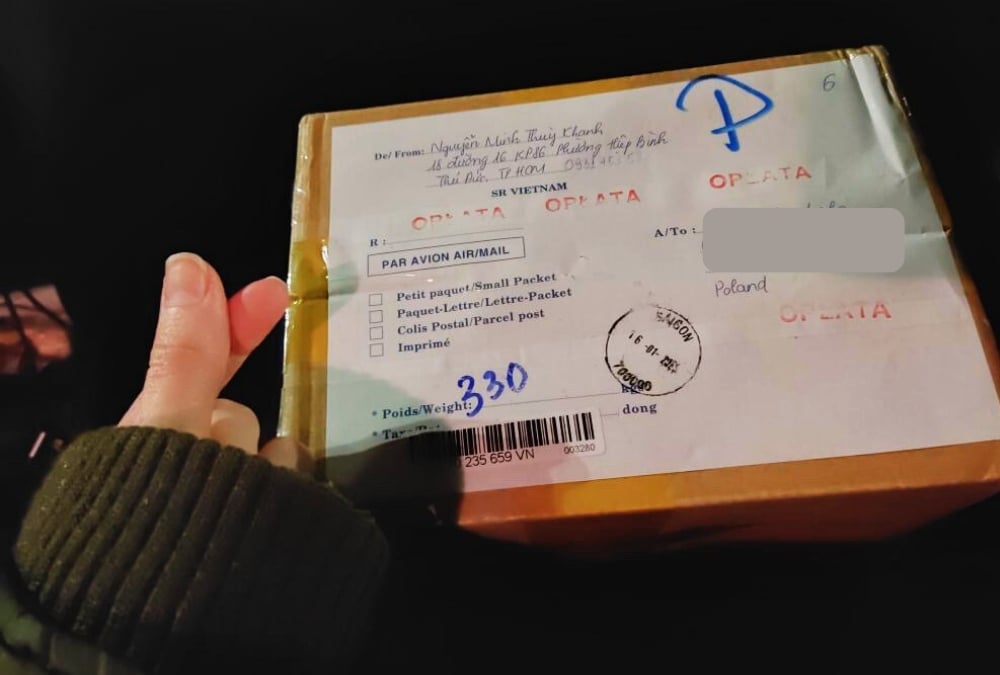
You can send larger parcels internationally. While my package was quite small, weighing less than 1kg, I did watch others prepare packages with staff assistance. Depending on weight, destination, and speed (10–30 days). For international shipping to Europe, expect roughly 550,000 VND per kg, while air freight to the US can range from $3–$6 per kg for heavier, non-express shipments.
Nearby Attractions

One of the advantages of visiting the Saigon Central Post Office is its central location. Within just a few minutes’ walk, you can explore some of the city’s most recognizable landmarks. Right next door stands Notre-Dame Cathedral Basilica of Saigon, an iconic red-brick cathedral built during the French colonial period. Even when renovations are ongoing, it remains one of the most photographed buildings in District 1.
Just around the corner, you’ll find Nguyen Van Binh Book Street. This pedestrian street is lined with small bookstores, cafés, and shaded seating areas. It’s a calm space compared to the traffic-heavy roads surrounding it, and a good place to sit with a coffee after visiting the post office.
Because everything is within walking distance, it’s easy to combine the post office with a short exploration of central Saigon without needing transport.
Practical Tips for Visiting
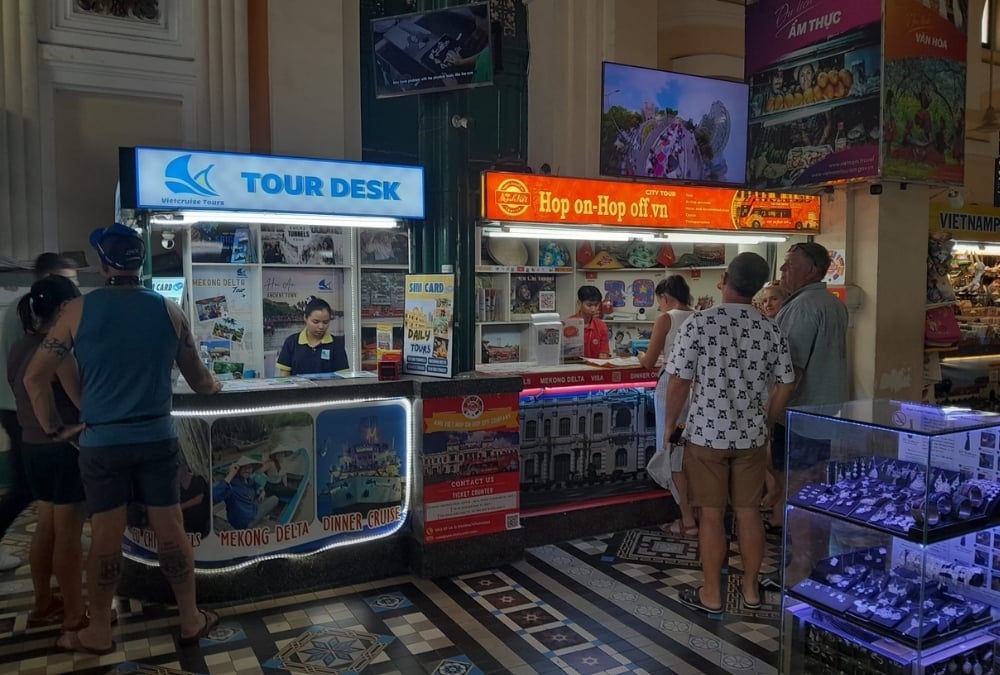
Bring Cash – This is essential if you plan to send anything. There are no card terminals at the counters for mailing services. Expect a Mix of Tourists and Locals – The building is one of the city’s most photographed landmarks, so you won’t have it to yourself. If you want a slightly calmer experience, going earlier in the day helps.
Is It Worth Visiting?
Yes – but not just for the exterior. The architecture alone makes it worth stepping inside. But actually using the service – sending a postcard, buying a stamp, watching the process – adds something more meaningful. The pricing is affordable. The system works. And while the cash-only rule feels old-fashioned, it doesn’t take away from the efficiency.
For me, sending postcards from the Saigon Central Post Office transformed it from a quick sightseeing stop into a small but memorable experience. Sometimes the simplest travel moments are the ones that stay with you.