

It’s been a while since Path of Exile updated its acclaimed Atlas of Worlds system, an endgame progression path where players battle through progressively harder maps and bosses. Since its introduction a decade ago, it has been the primary reason players continue to invest hundreds of hours each season.
It has been so successful that other games, such as Last Epoch and Diablo 4 (in its upcoming expansion), have designed their endgame content around the concept of facing increasingly difficult monsters for greater rewards—and tailoring your gameplay through an extensive skill tree.
The developer Grinding Gear Games has maintained the Atlas system largely unchanged since 2016, likely because there’s no need to alter something that is already functioning well. However, Path of Exile 2 took the concept and transformed it into an infinite system where players can move across a randomly generated map, navigating from one node to another in pursuit of special locations. Although the Atlas in PoE 2 is significantly larger and more diverse compared to the original game, many players of PoE 1 desire it to operate in the same way as the version they have cherished for years.
In a decision that could initially disappoint certain players, GGG is implementing significant modifications to the Atlas.PoE’s next expansion Mirage. It takes inspiration from PoE 2’s approach without fully altering the fundamental framework of PoE 1. Rather than searching for keys to access particular maps, keys are now general items used to unlock nodes on the Atlas that represent maps—essentially how it functions in PoE 2. It won’t feature an infinite network of nodes, but you’ll still need to explore every area where you can face significant bosses.
It appears that GGG aimed to streamline the Atlas while maintaining the aspects that fans appreciate. As someone who began with PoE 2 and later returned to PoE 1, I value the improved clarity in progressing through the difficulty tiers, as you no longer need to wait for specific keys to drop. You can start right after completing the campaign, and if there are maps you dislike, you can simply avoid them.
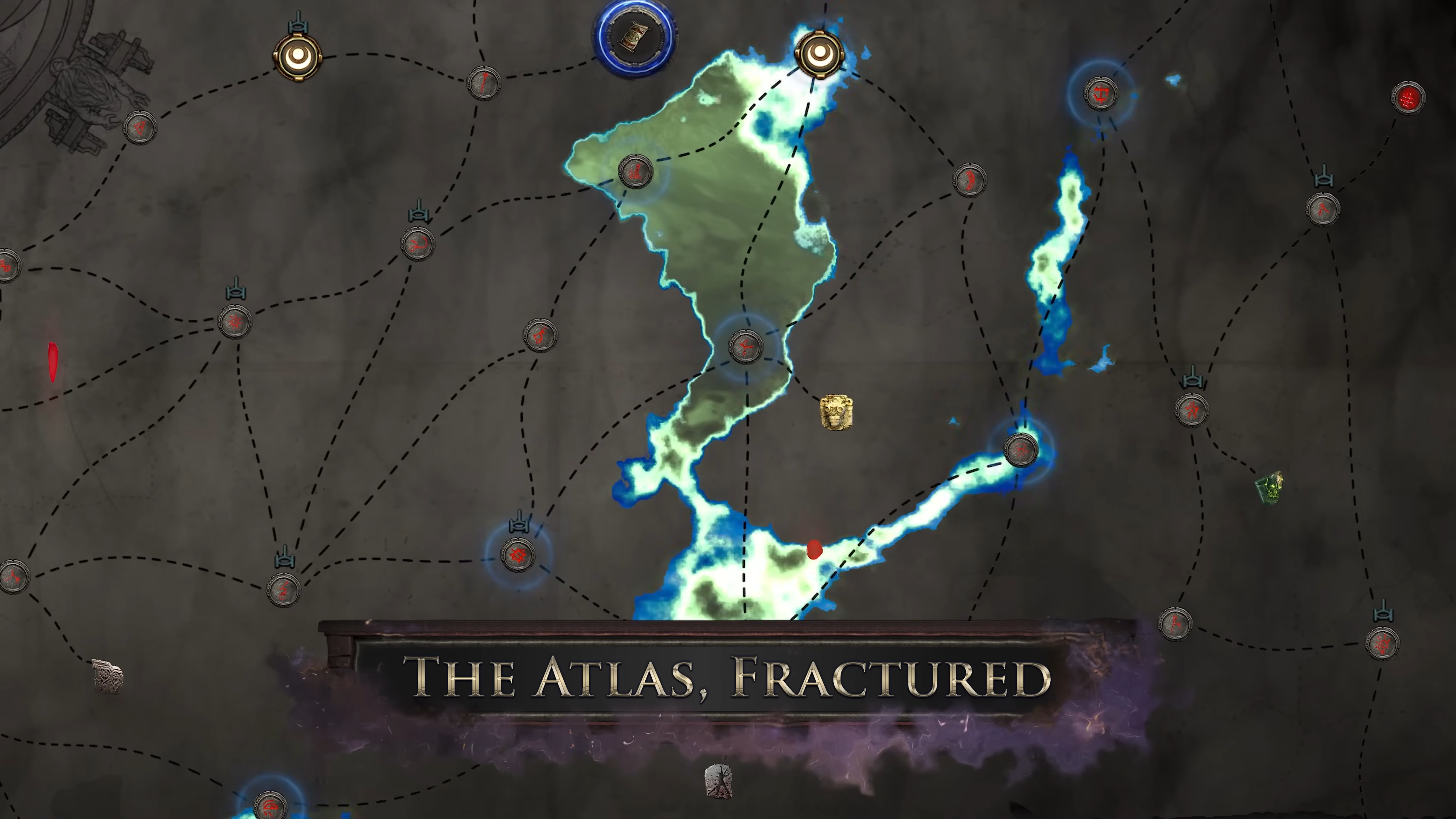
There are also new astrolabe items that create a rift on the Atlas, ensuring specific modifiers for parts of the maps. These will feature higher difficulty and better rewards, along with unique “league” mechanics or in-map events that provide special types of loot. PoE 2 already includes tablet items that function similarly for individual maps, but in PoE 1, astrolabes make nearby maps more challenging each time you complete one. Some of these features have been available through other items before, but now they’re more focused and offer greater motivation to keep improving your character.
The next update for PoE 2 is expected to be a significant overhaul of the endgame content, and I now believe it will incorporate some elements from Mirage. The Atlas in Mirage presents an interesting idea, but there are challenges in determining where to go and how to optimize your rewards from each map. It wouldn’t surprise me if tablets begin to influence multiple maps simultaneously, and if pinnacle bosses become essential locations you must visit before being able to fully explore the Atlas without restrictions.
The endgame update for PoE 2 will be delayed until April, but the one for PoE 1 is set to release next week on March 6.

2026 games: All the games scheduled to come next
Best PC games: Our all-time favorites
Free PC games: Freebie fest
Best FPS games: Finest gunplay
Best RPGs: Grand adventures
Best co-op games: Better together
Liked this article? To discover more stories like this, follow us on MSN by clicking the +Follow button located at the top of this page.