
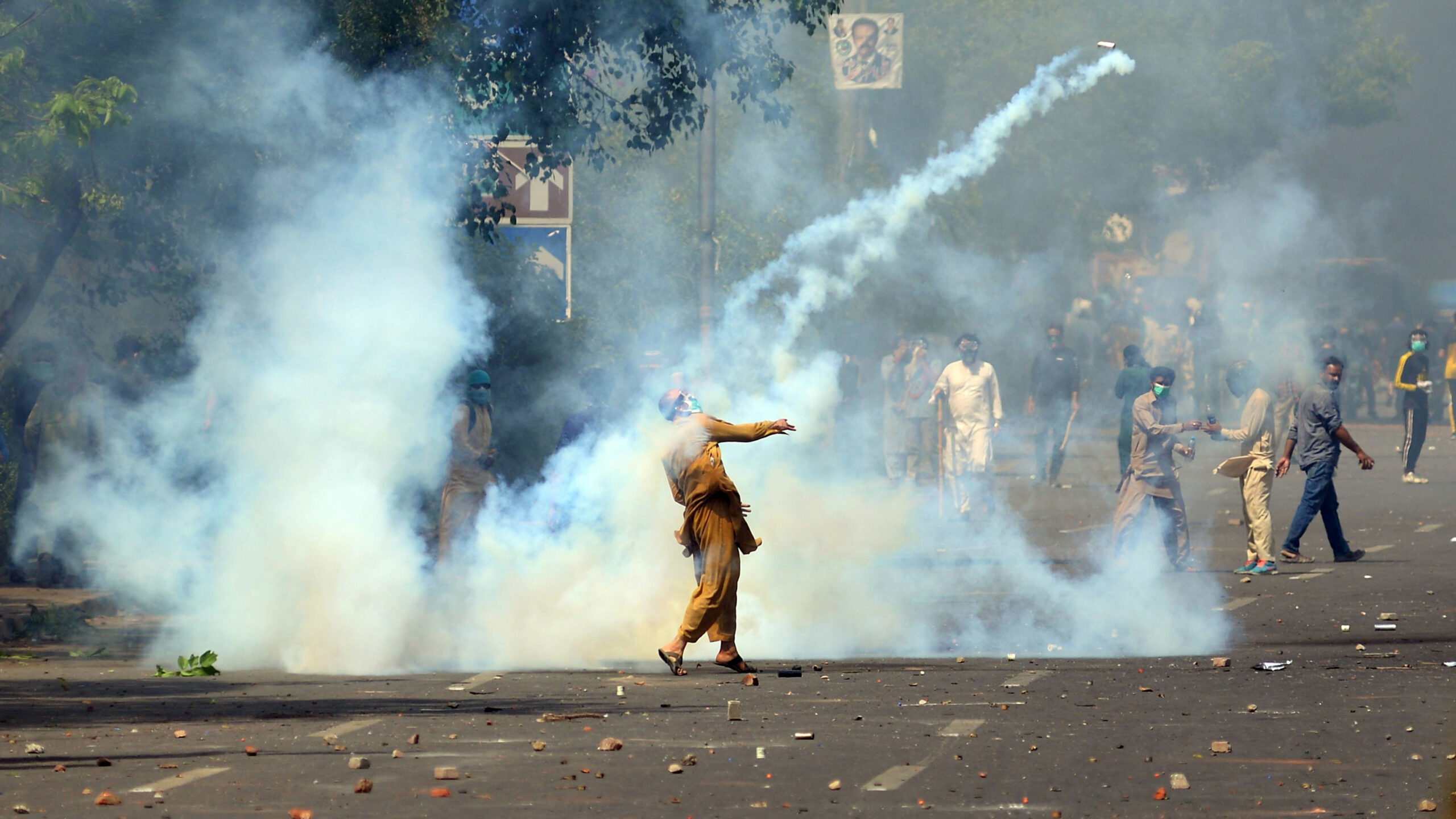
The U.S. State Department has issued a partial departure order for Pakistan, citing an “open war” that is separate from the ongoing conflict between the U.S., Israel, and Iran. This situation has led to controversial “depart now” but “we can’t help” orders. The updated travel advisory for Pakistan comes in response to deadly protests targeting U.S. consulates across the country.
The violent demonstrations, which resulted in at least 22 deaths, were a reaction to the killing of Iran’s Supreme Leader, Ayatollah Ali Khamenei, during joint U.S.-Israeli airstrikes on February 28. These protests continue, while tensions with Afghanistan are also escalating, leading to hundreds of casualties.
Here’s a closer look at the State Department’s updated “Reconsider Travel” advisory for Pakistan.
U.S. Issues Partial Departure Order For Pakistan Consulate Staff Amid “Open War” And Deadly Protests
On Tuesday, March 3, the State Department ordered non-emergency U.S. government employees and family members of U.S. government personnel from U.S. Consulates in Lahore and Karachi to leave Pakistan. This decision was made following the violent demonstrations that occurred on Sunday, March 1, which left at least 24 people dead nationwide.
The State Department advises U.S. citizens in Pakistan to take the following steps for their safety:
- Monitor local news
- Observe good personal security practices
- Be aware of your surroundings
- Avoid large crowds
- Make sure your STEP registration is up to date
- Keep a low profile
- Carry identification and cooperate with police
The U.S. Embassy in Islamabad continues to operate normally. However, a security alert issued on Thursday, March 5, warns of possible protests throughout Pakistan on Friday, March 6, which may limit the movements of all U.S. personnel. The Consular Section will not be open for routine services on Friday, but staff remain available for emergency services.
U.S. Advice For Travelers Amid Pakistan’s “Open War” With Afghanistan
The State Department has also updated its warnings for Pakistan after it declared an ongoing “open war” on Afghanistan on February 27, a day before the U.S.-Israel strikes on Iran. The deadly border dispute was driven by Islamabad’s frustration over the Taliban allegedly violating ceasefire pacts, while the latter denied enabling terrorism.
On February 27, the U.S. Embassy & Consulates in Pakistan issued a security alert, warning that “Pakistani security forces have increased their presence in major cities in response to potential terrorist threats. Law enforcement facilities, military installations, and major commercial centers remain likely targets for terrorist organizations.”
Americans in Pakistan are advised to exercise caution when visiting these locations, particularly during peak hours. Casualty figures have not been verified yet. However, a spokesperson for Afghanistan’s Defense Ministry claims 150 fatalities among Pakistani troops, while Pakistan says more than 430 Afghan soldiers have been killed, according to Al Jazeera’s report on Wednesday, March 4. “Heavy fire” was reported on that day, with displaced Afghans reaching nearly 66,000 amid the conflict.
All Risks Indicated In U.S. State Department’s “Reconsider Travel” Advisory For Pakistan
On Tuesday, the State Department updated its Level 3: “Reconsider Travel” advisory for Pakistan to reflect the partial departure order for U.S. Consulates in Lahore and Karachi. The same risk indicators remain:
- Armed conflict
- Terrorism
- Crime
- Kidnapping
Americans are reminded that violent extremist groups have carried out attacks in Pakistan, and that this could occur without warning.
Common terrorist targets in Pakistan include tourist spots, transportation hubs, hotels, markets, malls, schools, hospitals, religious sites, government buildings, as well as military and security force sites. As for demonstrations, the State Department warns that U.S. citizens have been detained for joining protests. Posting content on social media that may be viewed as critical of the Pakistani government, military, or officials could also lead to detention.
Lastly, Pakistan’s security environment is described as “fluid,” which means it could change suddenly without any notice. Among the most reported crimes in the country are pickpocketing, bag-snatching, and phone theft. Americans are advised to protect themselves by staying in major cities where there are “greater security resources and infrastructure,” and that they “may be more readily able to respond to an emergency compared to other areas of the country.”
Some areas have increased risks, with “Do Not Travel” warnings for the following regions in Pakistan:
- Balochistan Province
- Khyber Pakhtunkhwa (KP) Province, including the former Federally Administered Tribal Areas (FATA)
- The immediate vicinity of the Line of Control
These areas are considered high-risk due to terrorism and the potential for armed conflict.
U.S. citizens are told that the U.S. government has limited ability to assist or provide them services in places under the “Do Not Travel” advisories, and most areas outside of Islamabad, Lahore, and Karachi. Should you decide to visit Pakistan during this time, you must have a plan to leave the country in an emergency that “does not depend on U.S. government help.”
Travelers and U.S. lawmakers have recently complained about this advice, as Americans were left confused about orders to depart from the Middle East amid airport closures, severely limited flights, and “shelter-in-place” notices from the U.S. Embassies across the region. But on Thursday, the State Department announced that nearly 20,000 U.S. citizens have already returned from the Middle East, and that they have set up a 24/7 task force and are seeking to increase the number of chartered flights to help more Americans get home.








![[IMAGE: Best Travel Apps for Stress-Free Adventures United States]](https://www.mathhotels.com/wp-content/uploads/2025/09/608_Best_Travel_Apps_Stress_Free_Vacation_Hero.jpg)