A Swarm of Seismic Activity in Central Nevada
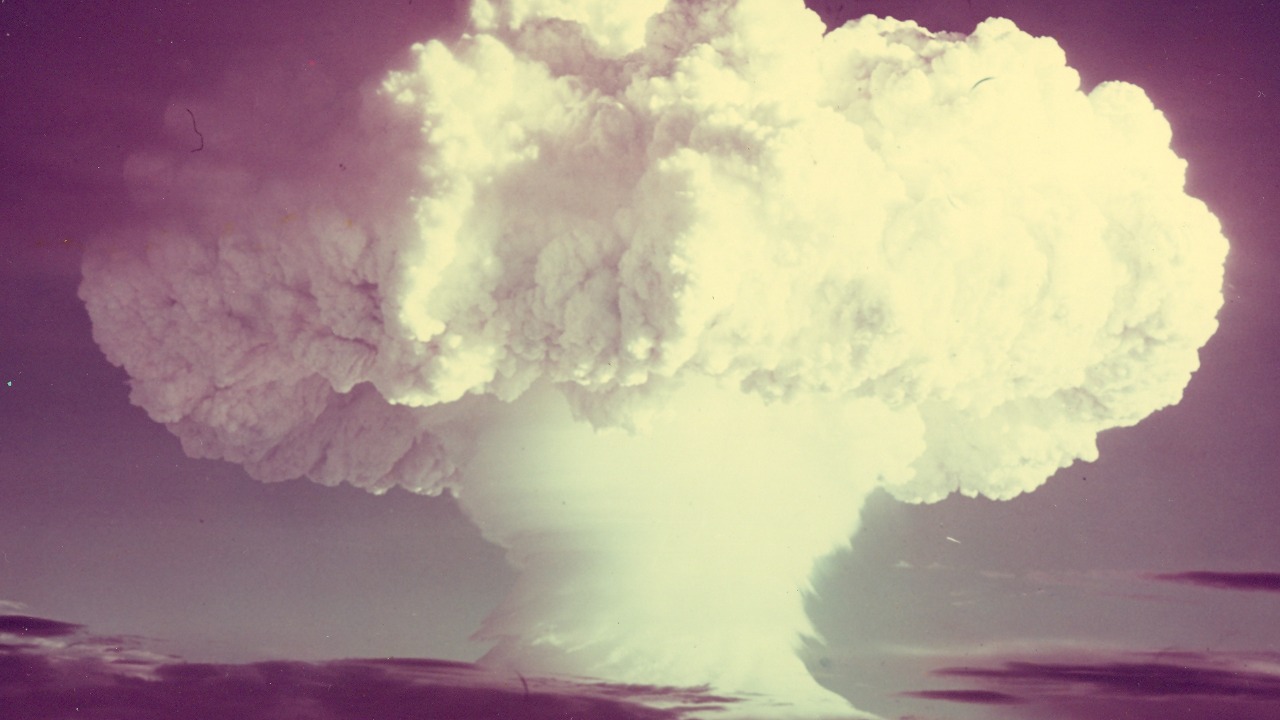
A series of over 100 earthquakes has recently shaken central Nevada, near the former Nevada Test Site. The most significant tremor, measuring a magnitude of 4.3, occurred on March 1, 2026. This cluster of seismic events is located in close proximity to Pahute Mesa, an area that was once used for numerous underground nuclear detonations during the Cold War. Scientists are currently investigating whether these quakes are the result of natural tectonic activity or if they have any connection to the old nuclear tests. No official statement has been issued regarding the cause of the seismic activity.
Understanding the Largest Event in the Sequence
The strongest earthquake in the sequence struck approximately 78 kilometers northeast of Tonopah, Nevada, at a depth of about 11 kilometers. This depth places the rupture within the brittle upper crust, where both natural faults and rock fractured by past explosions can release stored stress. A magnitude 4.3 earthquake is strong enough to be felt across a wide rural area, although it typically does not cause structural damage.
Using the ANSS Comprehensive Earthquake Catalog (ComCat), officials have recorded more than 100 events in this sequence. ComCat aggregates data from multiple seismic networks and provides key details such as magnitude, depth, event IDs, and review status. This database serves as a single source for researchers to verify each quake. The high number of events, combined with their location near historical test infrastructure, has drawn attention from seismologists and the public alike.
Historical Seismic Activity at Pahute Mesa
Pahute Mesa has a long history of seismic activity. A foundational USGS study, Open-File Report 77-826, documented 1,075 earthquakes near the area between October 8, 1975, and June 30, 1976. Many of these events were classified as aftershocks linked to underground nuclear detonations. The report analyzed the magnitude ranges, depths, and geometry of these quakes relative to the buried test devices. It established a clear pattern: nuclear explosions caused fractures in surrounding rock, which then produced quakes for months or even years afterward.
Additional USGS research compiled in Circular 1050 further detailed how past explosions induced seismicity through progressive rock failure. The process involves creating a cavity and radiating fractures, which can be reactivated over time due to shifting groundwater pressures and gravitational settling. However, it remains unclear whether these processes could still be active half a century later or if the current swarm is entirely unrelated to the test legacy.
Challenges in Determining the Cause
Central Nevada is part of the Basin and Range Province, one of the most seismically active regions in the western United States. Normal and strike-slip faulting occur frequently as the crust stretches. USGS focal mechanism analyses can distinguish between different types of faults by examining the pattern of seismic waves. However, the current swarm presents a complication: the depths of the events vary, making it difficult to link every quake to a single fault plane or to known test cavities.
Most coverage of earthquake swarms near former test sites defaults to one of two narratives: either the quakes are purely natural and their proximity to old weapons sites is coincidental, or they are induced aftereffects that prove nuclear testing left permanent geological scars. Neither explanation holds up well under scrutiny. The 1975 to 1976 data from Pahute Mesa showed that induced aftershocks tended to cluster tightly around detonation points and decayed in frequency over months. For the 2026 swarm to be test-related, a different driving mechanism, such as delayed pore pressure migration through fractured aquifers, would be needed. Without targeted studies combining seismic waveform modeling and groundwater isotope sampling, the question cannot be resolved using catalog data alone.
Advances in Modern Monitoring
Today’s seismic networks are far denser and more sensitive than those available in the 1970s. The USGS interactive map provides near-real-time locations and magnitudes, while ComCat’s standardized fields allow researchers to compare events across decades. This improved resolution means the current swarm is being tracked with precision that earlier studies could not match. Every event receives a magnitude estimate, a depth calculation, and a review status flag before entering the permanent record.
Despite these advancements, better instruments do not automatically answer the harder question of causation. Distinguishing a natural swarm from one influenced by legacy subsurface damage requires data that standard seismometers do not collect: borehole pressure readings, geochemical sampling, and high-resolution tomographic imaging of the rock beneath Pahute Mesa. While the USGS publications archive contains decades of test-site research, no updated open-file report has been released linking the 2026 events to specific past nuclear shots. Until such work is funded and completed, the swarm will remain in an interpretive gray zone.
Impact on Rural Communities
For residents of Nye and Esmeralda counties, the distinction between natural and induced seismicity is not academic. Homes in rural Nevada are often older, lightly built, and far from emergency services. A magnitude 4.3 event is unlikely to cause serious harm on its own, but a prolonged swarm raises concerns about cumulative stress on structures, water well integrity, and the psychological toll of repeated shaking without clear explanations. Local officials must balance reassurance with transparency, emphasizing that current magnitudes remain modest while acknowledging the legitimate unease that comes from living next to a former nuclear proving ground.
The nuclear legacy question also shapes how communities perceive risk and responsibility. If the swarm were ultimately shown to be influenced by historic testing, residents might press for expanded monitoring, infrastructure assessments, or federal support for mitigation. If, instead, the sequence proves to be a typical Basin and Range swarm, it would underscore that central Nevada faces ongoing natural seismic hazards independent of the test site. In either scenario, the earthquakes highlight a broader reality: decades after the last underground detonation, the ground beneath Pahute Mesa is still capable of surprise, and understanding those surprises will require sustained scientific attention rather than quick, definitive answers.