Legroom on Major Airlines: A Shrinking Space
Legroom on major airlines has seen a significant reduction over the years. According to recent reports, legroom on economy class seats has shrunk by an average of four inches since the late 20th century. While business class and premium economy class have seen increases in legroom, this has come at the expense of economy class seats, which have become smaller. Additionally, the trend of shrinking seats is compounded by the fact that people are generally getting larger.
Airlines often use the smallest seat size possible, leveraging regulations to maximize the number of passengers they can fit into an aircraft. This strategy allows for higher revenue and potentially cheaper tickets. However, it also means that passengers may find themselves with less space than in previous decades. In this article, we will explore the world’s longest economy class legroom seats and identify the largest ones in the United States.
Variations & Differences in Legroom
Legroom can vary significantly between different aircraft types and airlines. For instance, the Embraer E190 offers one of the longest seat pitches at around 32 inches, while the Airbus A320neo has a seat pitch of 28 inches. Premium and legacy airlines typically offer more legroom compared to low-cost carriers, although this is not always the case.
International airlines often provide multiple classes, each offering varying levels of legroom from economy to premium economy, and then business and first class. In the United States, several major airlines have experienced a decline in legroom. American Airlines, Delta Air Lines, Southwest Airlines, and United Airlines have all lost between two inches and five inches of legroom since the 1980s. The average legroom is now 31 inches, down from 35 inches, according to Condé Nast Traveler.
Some budget airlines have even less, such as Wizz Air and Spirit Airlines, with a seat pitch of around 28 inches. These airlines focus on offering the lowest fares, making their seats a viable option for short-haul flights.
A Comparison — United States
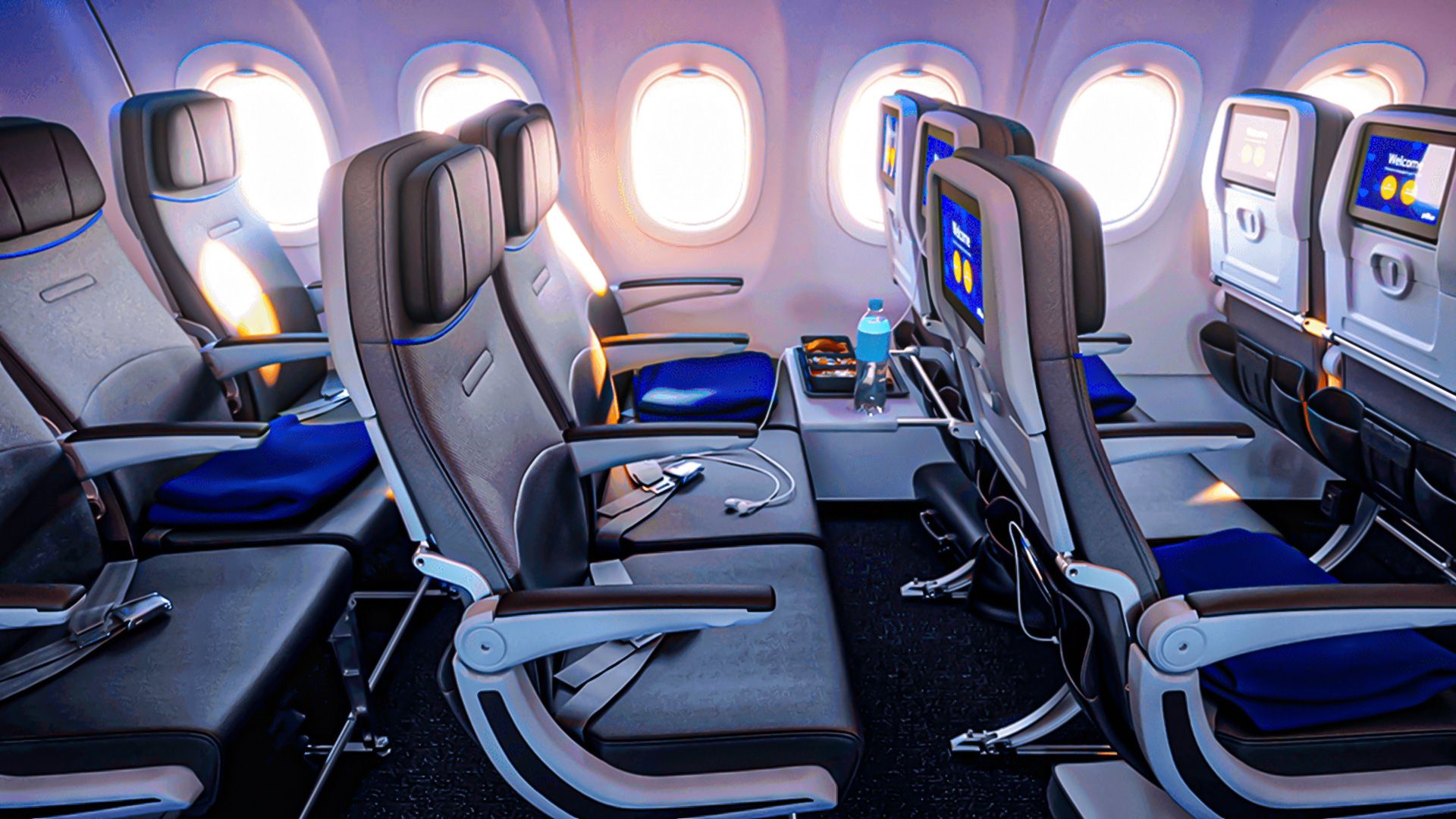
According to research by OAG on seat capacity, standard economy seat pitch ranges from 28 to 32 inches, while premium economy seats offer 34 to 40 inches. Surprisingly, JetBlue, a low-cost carrier, offers the most legroom for economy passengers, with four inches more pitch than Frontier Airlines and Spirit Airlines. This difference may not seem significant, but it becomes noticeable on longer flights.
Southwest Airlines, another low-cost carrier, has an average seat pitch of 31.7 inches, along with perks like free checked bags and free flight changes. Alaska Airlines and Delta Air Lines tied in third place with an average seat pitch of 31 inches, while American Airlines followed with a 30.3-inch seat pitch and United Airlines with 30.1 inches.
Hawaiian Airlines has a smaller 29-inch seat pitch, though its A330 aircraft offer a larger 31-inch pitch and a seat width of 16.5 to 18 inches. Ultra-low-cost airlines like Frontier Airlines and Spirit Airlines have the least seat pitch at 28 inches, making them the least comfortable but most affordable options.
The Largest Economy Seats
Japan Airlines and All Nippon Airways (ANA) have some of the largest economy seat pitches in the world at 34 inches. Japan Airlines Sky Wider seats consistently win awards for the best economy class experience. The 2-4-2 configuration on the Boeing 787 offers more legroom compared to the typical Dreamliner configuration of 3-3-3. The slim seatback provides additional space and is known for being one of the most comfortable seats in the skies.
ANA’s economy seats have the same 34-inch pitch as its rival on the Boeing 777-300ER and the Boeing 787-9. The new Recaro seats introduced this summer on the Boeing 787-9 will offer one inch extra legroom and one and a half times more recline, totaling seven inches of recline, one of the highest in the world for an economy seat.
Both Japan Airlines and ANA maintain this large pitch due to their focus on the premium passenger experience and higher returns per seat. Their business culture, philosophy, competitive strategy, and market dynamics differ from those of other airlines globally.
Worldwide Comparison
Japan Airlines, ANA, and Emirates (on the Airbus A380) have some of the largest economy seats with more legroom. The Emirates A380 economy seats have a 34-inch seat pitch, 18-inch width, and a four-inch recline. JetBlue comes in second with between 32 and 34 inches of legroom, while Cathay Pacific ranks third with their A350-100 economy seats, which have a 32-inch pitch and 18-inch width.
Singapore Airlines ties with Qantas and Cathay Pacific with their economy seats on the A380, featuring a 32-inch pitch, 19-inch width, and six inches of recline. Qantas will soon receive its first Airbus A350LXRs with a 33-inch seat pitch, making it another competitor in the market for longer seats and more space.
Korean Air and Oman Air also offer notable economy seats. Oman Air has a 34-inch seat pitch in economy on the Boeing 787, compared to 31 inches on their Boeing 737. Korean Air has a 34-inch seat pitch on its long-haul fleet, with Boeing 737s having a 33-inch pitch and the A321neo and Boeing 787 having a 32-inch pitch, which is less than their Boeing 777, 747-8, and 787-9.
Why The Variations?
The primary driver of the economy class cabin is to fit as many passengers as possible on the aircraft. Reducing the space between each row by just one inch can allow an airline to add an entire row of extra seats on a narrowbody aircraft. This translates to millions of dollars in revenue across an entire fleet and numerous flights.
To compete with low-cost airlines, full-service airlines often reduce seat pitch to offer lower fares. Airlines make more profit on business and first class, while economy class provides enough revenue to cover basic operating costs. The Federal Aviation Administration (FAA) does not specify a minimum seat size or pitch, so airlines can theoretically make seats even smaller as long as the aircraft can be evacuated within 90 seconds with half of the exits available.
Other factors include demand for more comfortable seats and better facilities, leading to the introduction of premium economy seats with more personal space on long-haul flights. Business class seats have been upgraded to suites with lie-flat beds, which are in high demand. Economy class remains largely unchanged and is rarely upgraded.
How Can You Increase Legroom On Your Next Flight?
When booking your next flight, it’s always a good idea to check aircraft maps on the airline’s website and AeroLOPA. Ensure you check the seat width between the armrests. The row pitch is measured from any single point on the seat to the same point in the row in front. The seat recline is measured from the maximum horizontal extent of the recline relative to the upright position.
Once onboard, use the overhead locker to store personal items instead of under the seat in front of you. Exit rows can be booked for additional space, but they may cost more and have restrictions on who can sit there. You may also be asked to assist in an emergency evacuation. Items must be stored in the overhead locker, not under the seat, and the seat recline is limited.
Bulkhead seats also offer more space, but all items must be stowed in the overhead locker, and in-flight entertainment screens must be stowed away during taxi, takeoff, and landing. These seats are close to the galleys and lavatories, so they may receive more footfall and noise than other seats. If you have a loyalty status with an airline, you may get upgraded to a more premium seat. It is also possible to bid for an upgrade or pay a discounted upgrade price with some airlines.