A cosmic spectacle is set to unfold in the night sky as two of the most prominent celestial bodies in our solar system prepare for a rare and visually stunning event. Venus, one of the brightest objects in the sky, will be joined by Saturn, one of the largest planets, creating a planetary conjunction that promises to captivate skywatchers.
What Is a Planetary Conjunction?
A planetary conjunction occurs when at least two planets appear close together in the sky from Earth’s perspective. Although these planets are actually millions or even billions of miles apart, their alignment creates an illusion that they are near each other. This phenomenon is not only a treat for astronomers but also an exciting opportunity for casual stargazers to witness multiple worlds in our solar system at once.
Conjunctions happen because planets orbit the sun at different speeds and sometimes align on the same side of the sun. When this alignment coincides with our view from Earth, we experience a conjunction.
When Will the Venus-Saturn Conjunction Happen?
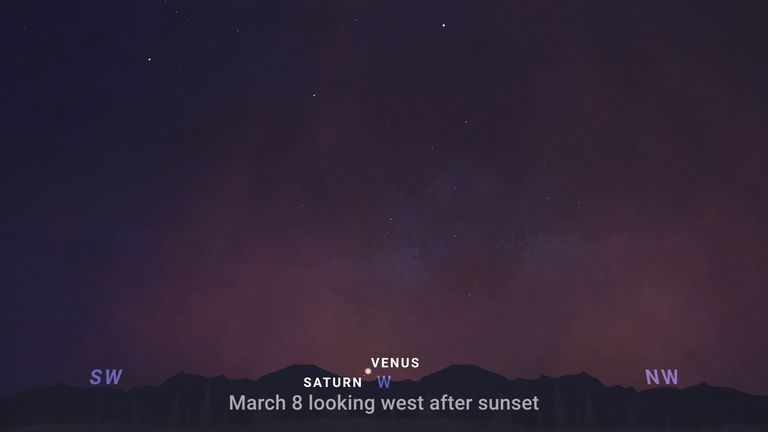
According to NASA’s monthly skywatching guide, the conjunction between Venus and Saturn will take place on Sunday, March 8. This is a rare opportunity for observers to see both planets in the same part of the sky.
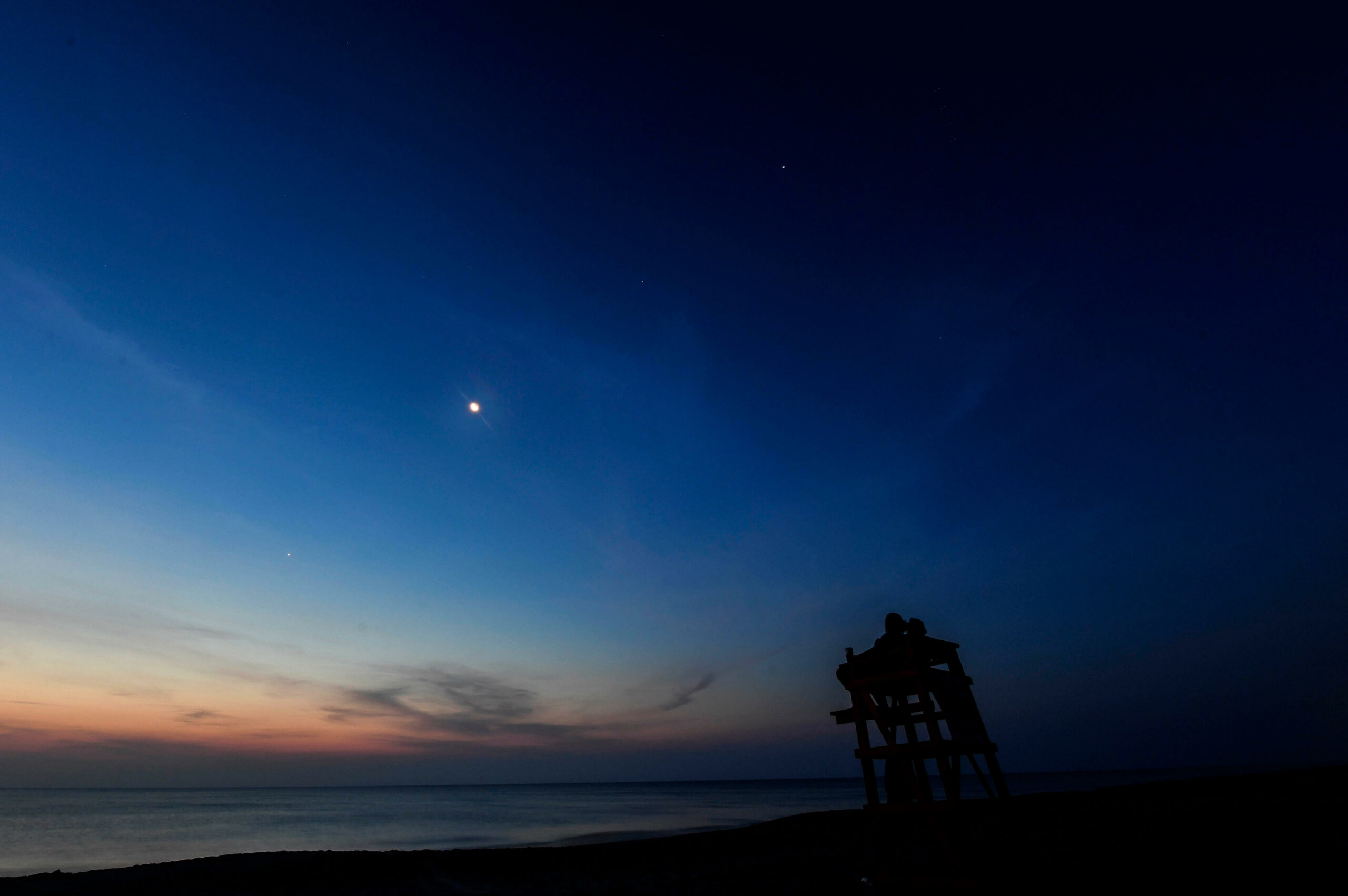
Venus, known for its brilliance, will be visible shortly after sunset, while Saturn, the sixth planet from the sun and the second largest in the solar system, will be nearby. The two planets will be approximately one degree apart, which is about the width of a single finger held at arm’s length.
How to Observe the Conjunction in California
For those in California, the best time to observe the conjunction will be just after sunset, looking toward the western horizon. While telescopes can enhance the view and may reveal Saturn’s rings, no equipment is necessary to spot Venus and Saturn with the naked eye.
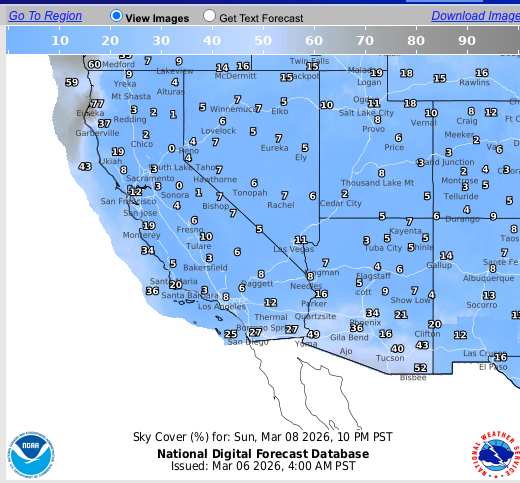
However, weather conditions could affect visibility. The National Weather Service has provided a graphic showing cloud cover for the night of March 8. Gray areas represent the cloudiest regions, so it’s essential to check local forecasts before heading out.
Best Locations for Viewing in California
To fully appreciate the conjunction, it’s recommended to find a location away from city light pollution. Dark sky communities offer ideal viewing conditions. Some notable locations in California include:
- Julian– A rustic mountain town in the Cuyamaca Mountains of East San Diego County
- Anza-Borrego Desert State Park / Borrego Springs– Located in San Diego County within the Colorado Desert of Southern California
- Joshua Tree National Park– Situated about 2 hours east of Los Angeles and 1 hour north of Palm Springs
- Death Valley National Park– Straddles the California–Nevada border
- Sequoia and Kings Canyon National Parks– Located in Central California
- Yosemite National Park– Offers excellent opportunities for celestial observation
- Shasta, Siskiyou, and other North State counties– Provide great views of the night sky
- Prairie Creek Redwoods State Park– A prime location for night sky-watching on the North State coast