A Cosmic Encounter in the Arizona Sky
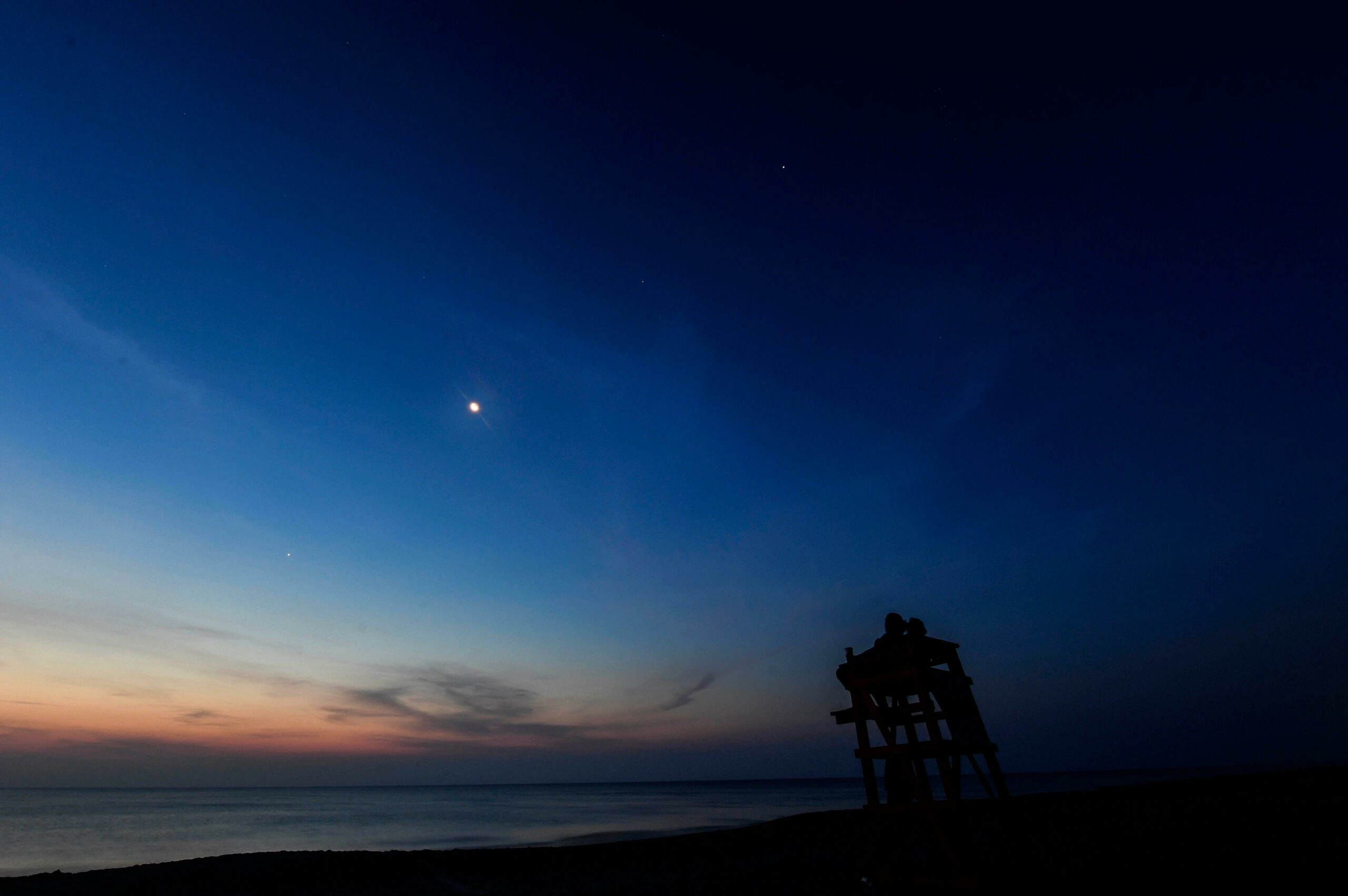
A cosmic wonder is about to grace the night sky as one of the brightest objects in our solar system, Venus, meets up with one of the largest, Saturn. This event, known as a planetary conjunction, offers a rare opportunity for observers to witness two celestial bodies appearing close together in the sky.
What is a Planetary Conjunction?
A planetary conjunction occurs when at least two planets appear to be near each other from our perspective on Earth. Although these planets are actually millions or even billions of miles apart, the alignment creates a visually striking phenomenon that captivates both astronomers and casual stargazers.
The reason behind these events lies in the orbital paths of the planets. As they orbit the sun at different speeds, their paths sometimes bring them close together on the same side of the sun. When this alignment coincides with our view from Earth, we experience a conjunction.
When Can You See the Conjunction?
Venus and Saturn will have a cosmic meetup that should be visible on Sunday, March 8. NASA has confirmed this event in its monthly skywatching guide. On that night, viewers can expect to see Venus, one of the brightest objects in the sky after the sun, and Saturn, the sixth planet from the sun and the second largest in the solar system.
Will Clouds Interfere?
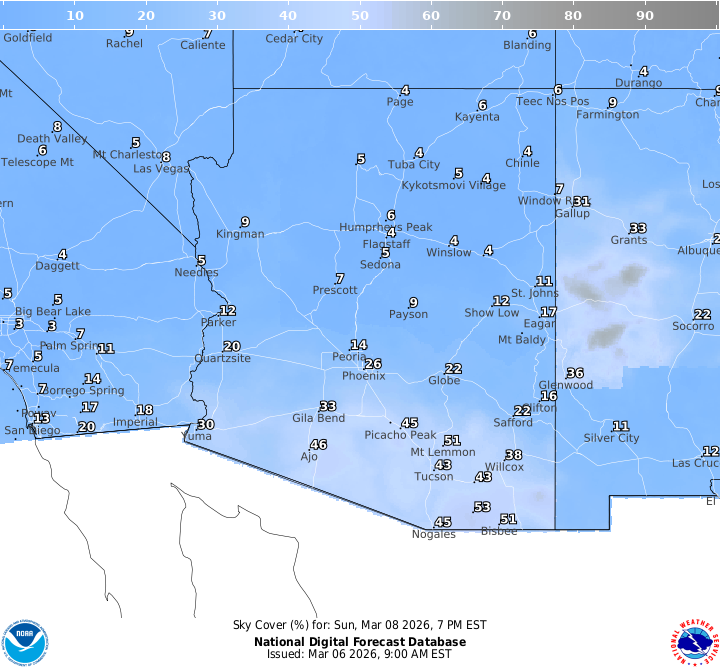
Cloudy weather could potentially hinder the view of this celestial event. The National Weather Service provided a graphic showing cloud cover on the night of March 8 in Arizona. The numbers represent the percentage of cloud cover, while the gray areas indicate the cloudiest regions.
How to Spot the Conjunction in Arizona
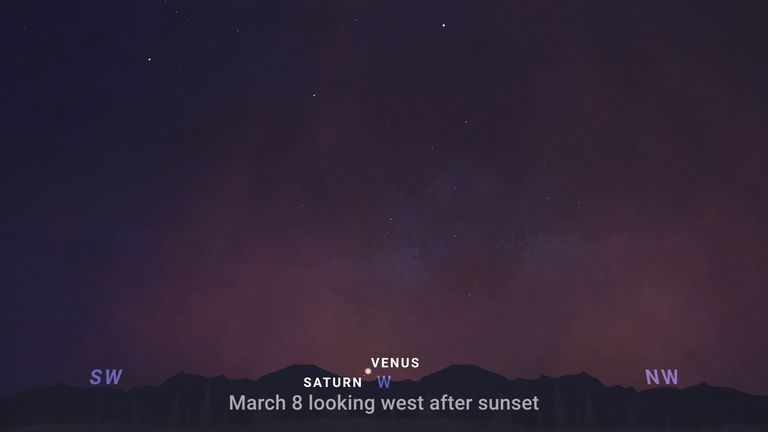
For those in Arizona, spotting the conjunction should not be too difficult. After sunset, look close to the horizon in the western sky. Venus and Saturn will be about one degree apart, which is roughly the width of a single finger if you hold it at arm’s length.
While telescopes can enhance the view and may even reveal Saturn’s rings, no equipment is necessary to spot Venus and Saturn in the pre-dawn sky.
Best Locations for Stargazing in Arizona
The best place to observe any astronomical event is away from city light pollution. DarkSky International maintains a list of designated dark sky communities around the world, including 171 in the United States. Here are some of the top locations in Arizona:
- Thunder Mountain Pootsee Nightsky– Located on the Kaibab Paiute Indian Reservation near the Utah border
- Pipe Spring National Monument– In northern Arizona surrounded by the Kaibab Paiute Indian Reservation
- Grand Canyon National Park– One of the most recognizable parks in the world, situated in some of the most remote territory in the contiguous United States
- Parashant National Monument– Located north of the Colorado River and bounded to the south by the Grand Canyon and to the west by the Nevada border
- Under Canvas Grand Canyon– A glamping destination set upon 160 acres of secluded forest near the South Rim Entrance to Grand Canyon National Park
- Petrified Forest National Park– A rural area in northeastern Arizona
- Flagstaff– The world’s first International Dark Sky Place, receiving its designation in 2001
- Flagstaff Area National Monuments– Three sites collectively managed by the National Park Service
- Sedona– A popular tourist destination known for its iconic red rocks
- Big Park/Village of Oak Creek– An unincorporated area in far northeastern Yavapai County
- Camp Verde– Located in the Verde Valley of central Arizona
- Cottonwood– Located in Yavapai County, between Prescott and Sedona
- Fountain Hills– A town situated at the edge of the greater Phoenix metropolitan area that derives its name from the fountain in the human-made lake at its center
- Tonto National Monument– A 1,120-acre national monument located less than a mile from Arizona 188
- Oracle State Park– Located east of the unincorporated town of Oracle in southeastern Arizona
- Saguaro National Park– Characterized by rugged terrain covering two mountain ranges on the outskirts of Tucson
- Kartchner Caverns State Park– Located in southeastern Arizona in the foothills of the Whetstone Mountains, the Park preserves a set of limestone caverns
- Bisbee– A historic mining town located in Cochise County in the southwest corner of Arizona
- Tubac– Located in the Santa Cruz Valley in the high Sonoran Desert of southern Arizona
- Tumacácori National Historical Park– Located in the upper Santa Cruz River Valley in Santa Cruz County, the site preserves the ruins of three Spanish mission communities
- Chiricahua National Monument– Located in the Chiricahua Mountains of southeastern Arizona
- Diamond Mountain Retreat Center– Located in the remote Chihuahuan high desert with secluded cottages
Eric Lagatta is the Space Connect reporter for the USA TODAY Network. Reach him at [email protected]