Impact of Unseasonably Cold Weather on Florida’s Landscapes
The unseasonably cold winter in Florida has presented significant challenges for both homeowners and horticulture teams across the state. Central Florida, in particular, has seen its share of frost and freezing temperatures, which have affected everything from residential lawns to the meticulously maintained gardens of theme parks.
At Walt Disney World, the cold snap required extensive measures to protect the park’s iconic topiaries. These elaborate designs were covered with frost cloths overnight to shield them from the harsh conditions. Similarly, at Legoland Florida, heaters were strategically placed around the base of the park’s famous banyan tree, a natural feature that has stood since the days of Cypress Gardens.
Michele Czerkies, a manager for Walt Disney World horticulture, explained the steps taken to preserve the park’s greenery. “We did many things to help with our preparation, and we were able to save many things through covering with frost cloth to protect our tender bedding plants and some of our more precious plants,” she said. The park also utilizes on-property greenhouses, where some topiaries and flower towers were stored during the coldest nights.
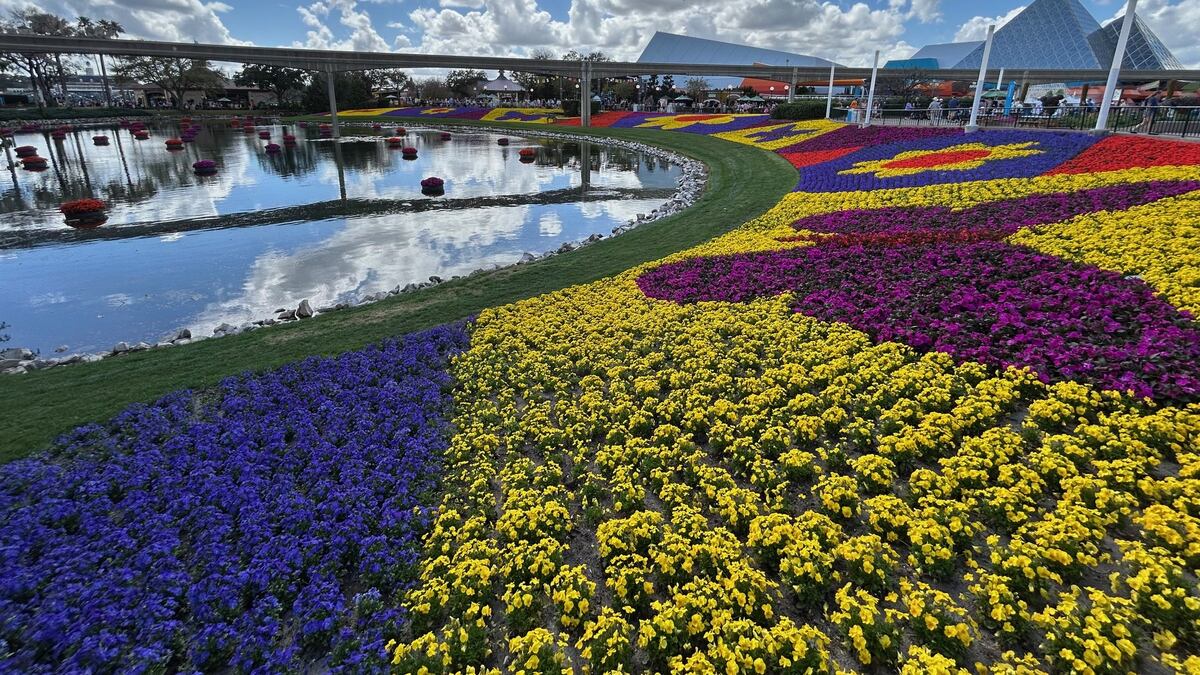
This effort came just as Walt Disney World was preparing for the Epcot International Flower & Garden Festival, which is currently underway. “You can’t cover all of Walt Disney World. So we just covered our critical points of service,” Czerkies noted. The festival’s vibrant displays survived thanks to careful planning and collaboration with floral vendors. “We make our topiaries, we make our flower towers, we make our floating gardens, but a lot of the color we purchase and plan out a year ahead, and it all delivered,” she added.
Preserving Historic Landscapes
Orlando’s theme parks are known not only for their rides but also for their lush landscapes. From basic flower beds to elaborate theming, the attention to detail is evident in areas like Jurassic Park at Universal’s Islands of Adventure or the tropical atmosphere of Aquatica, SeaWorld’s water park.
Cory Lytle, technical services director at Legoland Florida, shared his perspective on the impact of the cold weather. “We did see some browning and some discoloration of some of our vegetation in the park, but that’s normal,” he said. “The vegetation in the park has been around for quite a long time, and this isn’t necessarily the first time a cold weather snap has actually hit the region.”
One of the most notable survivors is the banyan tree, which was planted in the 1930s during the early years of Cypress Gardens. Legoland, which opened on the property in 2011, has preserved the historic gardens. “We take some special care with the banyan tree. We place heaters all around the base of the tree,” Lytle explained. “We have teams that are gearing up days in advance to get everything ready to go for the banyan tree and to support its long life.”
The sprawling tree has a canopy that spans approximately 200 feet. “The canopy of it is just so massive, there’s no wrapping, per se, that you technically do for it,” Lytle said.
Adapting to the Cold
After the initial cold snap, some replacement of young plants near the new Galacticoaster attraction was carried out at Legoland. “We have trimmed some. We’ve pruned some. We’ve replanted as needed,” Lytle said. “Our whole park is irrigated in some respect, so we’ve monitored that as well – turn it back if we need to, turn it up a little bit more when that’s necessary.”
At Walt Disney World, visitors may notice some pruning, especially around palm trees near Magic Kingdom’s Crystal Palace restaurant and Epcot’s entrance. These palms now have a spiky look, with only the middle section of the fronds remaining. “What’s left is the middle section of the palm, and that’s where the new palm frond is going to come out. They just took off the ones that were brown and freeze-damaged,” Czerkies said.
She also mentioned that some of the palm trees have started to open up due to recent rain. “All of us are excited because we feel we’re going to have a true spring. And as a native Floridian, that’s not something that we’re used to,” she concluded.