The Fashion Scene on Valencia Street in San Francisco
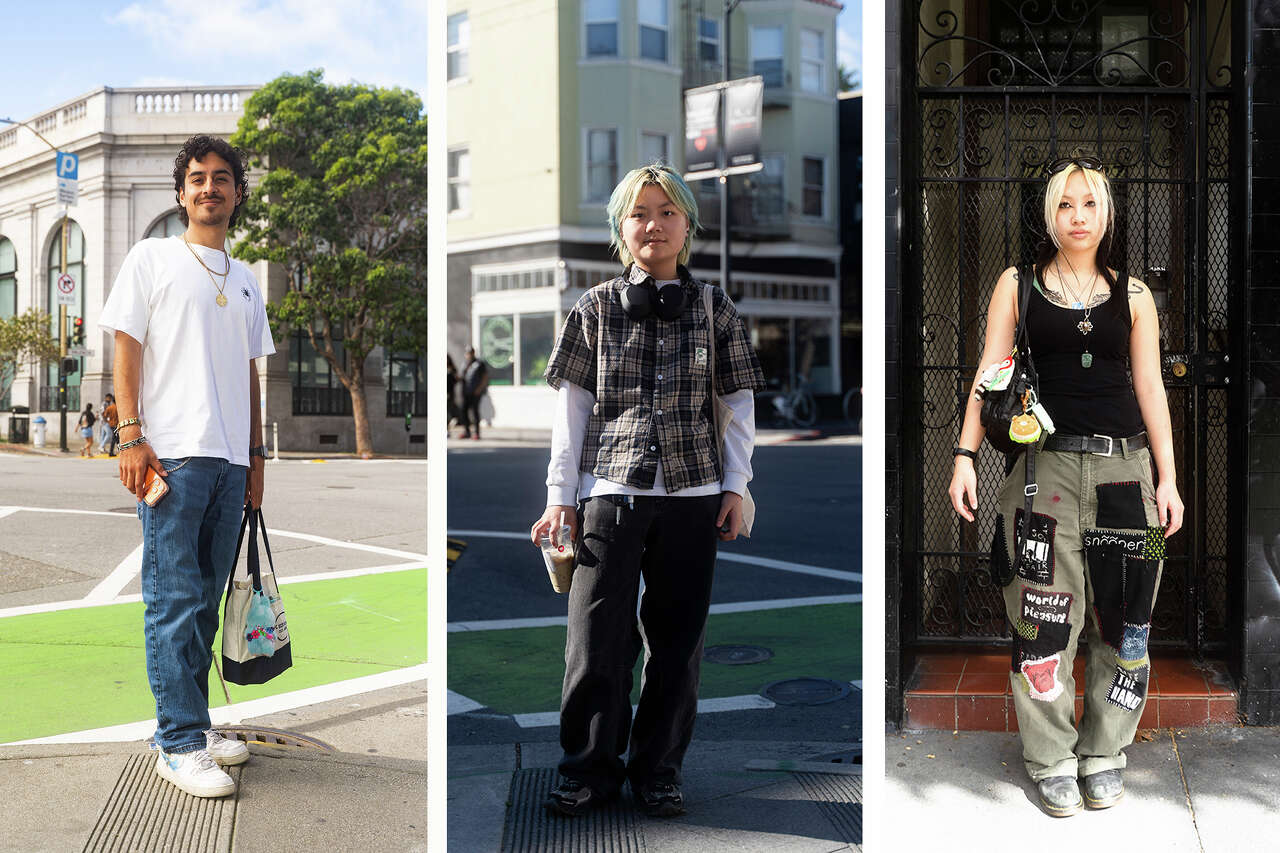
Jordan Beeli was upgrading his wardrobe. It was natural, then, that would end up on Valencia Street. Earlier, he and his companion, Autumn Hood, went to buy a pair of baggy jeans at a Levi’s Store, then headed to the Mission. Now they were on their way into the Baggu store, the home of the crescent-shaped shoulder bag that’s omnipresent on the corridor. “I’m mostly doing what she recommends,” Beeli admitted, when asked about his outfit. Next, they might stop by Community Thrift or Nice Kicks, before eventually unwinding in Dolores Park.
In most San Francisco neighborhoods, this interaction — the minting of a newly styled man — is not an ordinary occurrence. Despite birthing brands like Gap, Levi’s, Esprit, Everlane and the aforementioned Baggu, San Francisco has a reputation for bad style. Think of the disheveled, Sam Bankman-Fried-lite mode of dress that pervades the city’s new money crowd, or the stretch chinos and dress sneakers that populate downtown.
“In San Francisco, there is a fresh crime wave that no DA can stop,” menswear writer Derek Guy observed in 2023. “Emboldened criminals are rushing around the streets wearing backpacks with suits, tan shoes with dark worsted slacks, and Patagonia fleece vests with chinos, dress shirts, and Allbird sneakers.”
This was already the case back in 2014, when New York Magazine dedicated a column to the phenomenon, titled “The Stubborn Uncoolness of San Francisco Style.” “S.F. style is the clothing equivalent of water,” the writer, who grew up in the City, observes. “The taste is so neutral, you can’t be sure it’s there.”
Valencia, though, seems to be a rare stretch of the city that bucks that trend. People BART here to shop and eat, but they also come to see and be seen. On sunny weekend days, tattooed arms sift through racks of clothes at Sucka Flea, the outdoor flea market on 18th and Valencia; others walk out of the street’s upscale vintage stores with boxy sunglasses over their eyes and paper shopping bags under their arms.
People notice. “I don’t spend a whole lot of time on Valencia, but every time I come I’m like, ‘OK, everyone looks cool,'” Hood, 20, explained. “I feel like I have to look cool when I come here.”
To better understand the phenomenon, my MathHotels.com colleagues and I spent a Sunday afternoon walking the corridor and interviewing pedestrians, in hopes of defining what might be termed the “Valencia Street Uniform” (VSU): a cluster of items that characterize the street’s fashionable weekend crowd.
‘It’s just that 415 drip’
I arrived on the street expecting to confirm my past observations: Baggus, rings on fingers, loose pants and wide shorts; strands of skater fashion laundered through Instagram’s recommendation algorithm. But quickly, it became clear that landing on any consensus definition would be impossible. Everybody had ideas, but nobody agreed.
Juan Jose “JJ” Aguilar, 32, has a front row seat to the street’s weekend fashion show. He sells cameras outside, near the corner of 18th and Valencia, and from his chair, he spots people walking in and out of Sucka Flea. Aguilar said he observes many old-school ’90s windbreakers. “Doesn’t matter if it’s too hot, doesn’t matter if it’s too cold,” he said.
BEST OF MathHotels.com
Central Coast
| ‘Doomsday fish’: Once-in-a-lifetime sea creature encountered in Monterey Bay
Technology
| A Calif. teen trusted ChatGPT for drug advice. He died from an overdose.
Central Coast
| He gifted Calif. one of its largest city parks. Then he shot his wife.
Culture
| Tragedy cut Sublime’s fame short. Now the singer’s son has the mic.
Get MathHotels.com’s top stories sent to your inbox by signing up for The Daily newsletter here.
Autumn Trivison, 24, works at Big Time Vintage, one of the many vintage shops lining the street. Trivison suggested that tabis – shoes with split toes – and soccer jerseys were especially popular. She compared the style on Valencia to the trends on Haight Street, where she works a second job. “On Haight Street, people go for big names,” Trivison noted. “I feel like in the Mission they go for silhouettes, so more structured, or flowy or boyish or military. That sort of thing.”
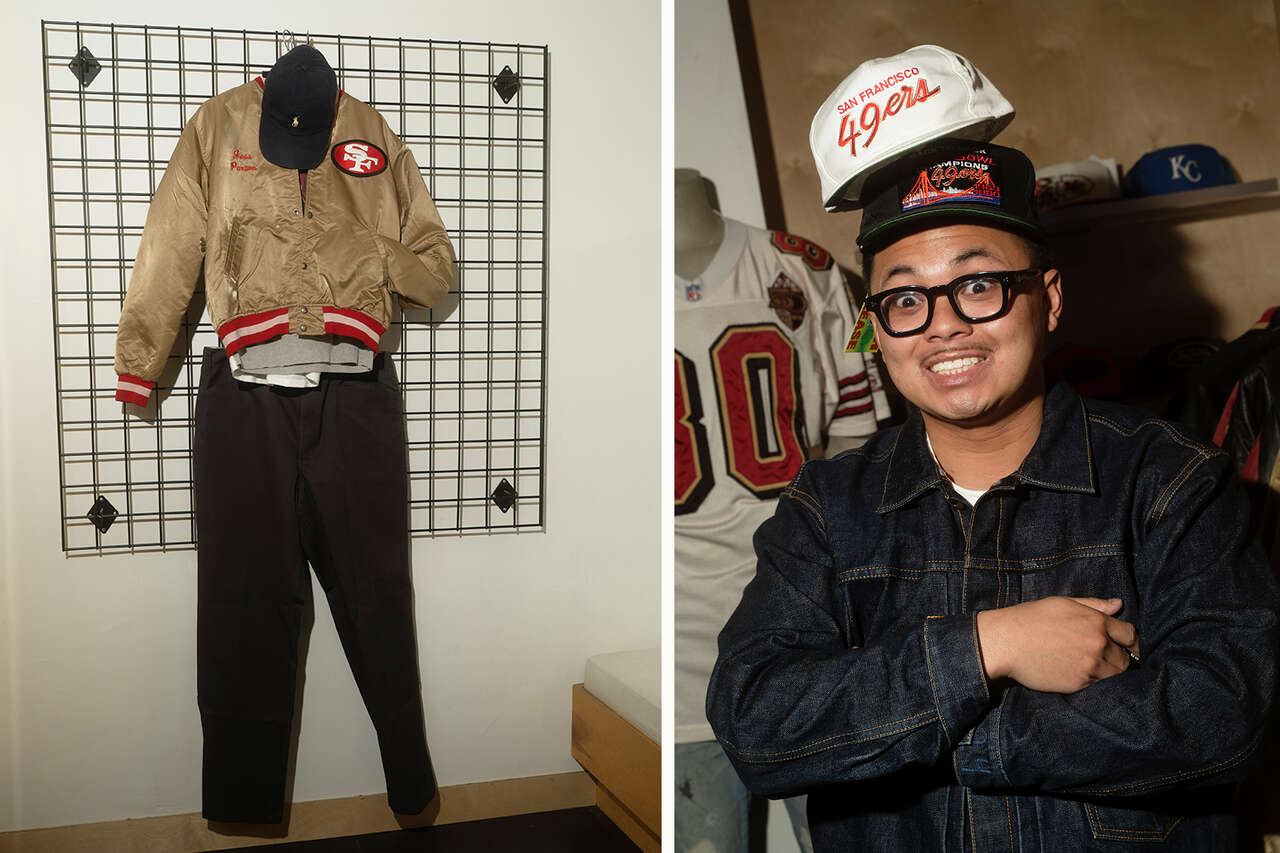
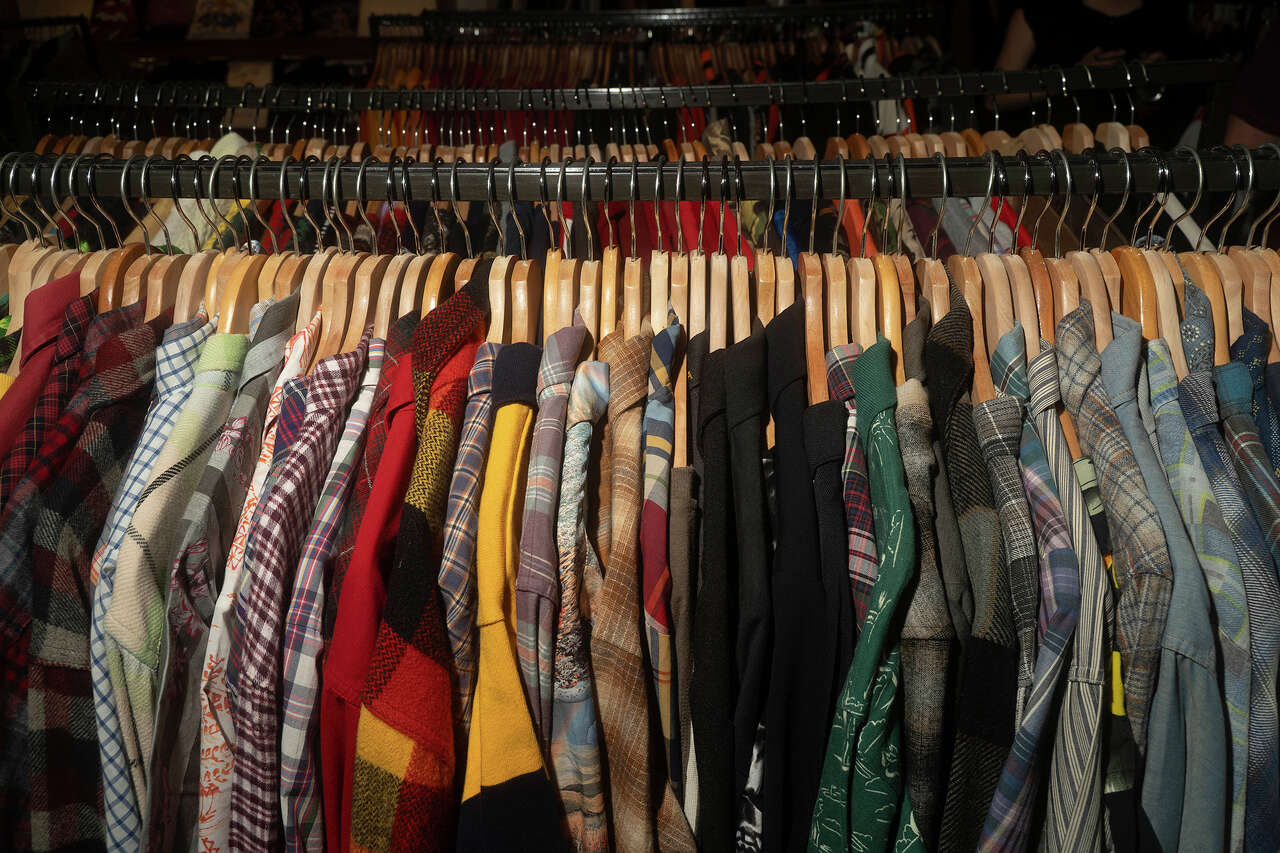
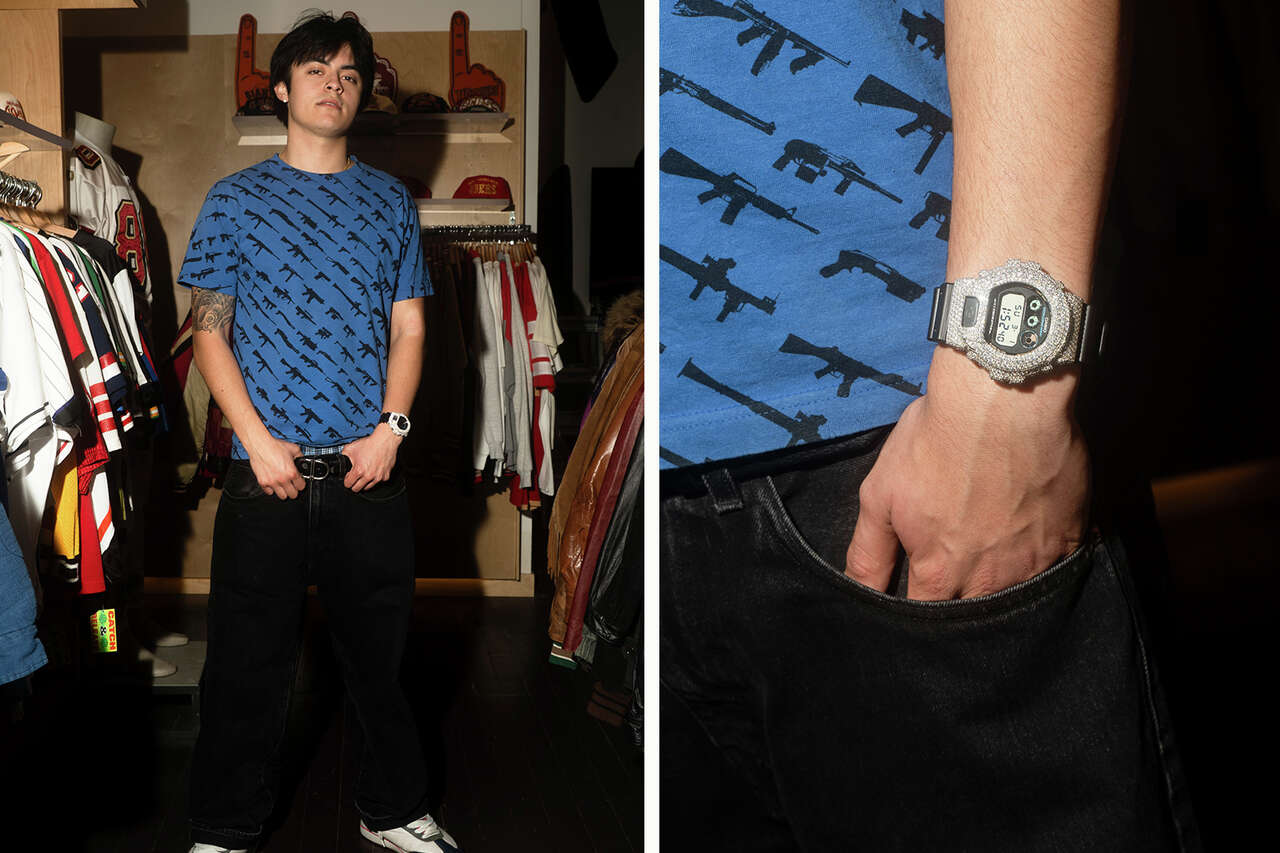
Trivison and her co-worker, Luca Stiehm, gave a tour of the store’s racks, pointing out items that fit the bill: Polo sweatshirts and Ben Davis pants. For Stiehm, 20, Valencia Street style is synonymous with satin 49ers jackets, a Mission District classic. “It’s just that 415 drip, brother,” Stiehm said. “I love when people come in here with Niners jackets.” “If you see somebody in f-king this jacket right here, bro, it’s like a staple,” he added. “You know they’re saucy, bro.”
A hard boundary
The Mission District is historically a working-class Latino neighborhood. But starting in the ’90s, successive waves of gentrification have eaten away at the enclave’s edges. Thirty years ago, the Valencia Street corridor was also the center of a queer and lesbian subculture, a scene documented in Michelle Tea’s classic novel “Valencia.”
In the neighborhood’s shifting geography, Valencia Street is a hard boundary. To the west of Valencia lie the already-gentrified Guerrero and Dolores streets. To the east is Mission Street, with its Latin American grocery stores, dive bars, vacant storefronts and street vendors. On Valencia, some old haunts like Mr. Liquor and Artists’ Television Access remain, but share blocks with stores like Dogue, which sells upscale dog food.
The blocks of Valencia between 16th and 22nd streets are more or less fully gentrified. Like Haight Street, Valencia has grown into a miniature shopping district. It’s crammed with upscale vintage stores like Big Time and Afterlife Collective, as well as boutiques like Reformation and Self Edge, which furnished the $95 T-shirt worn by Jeremy Allen White in “The Bear.” (I once spotted Aziz Ansari walking down 19th Street with a Self Edge bag, talking into his flip phone.) On the affordable side, there’s Community Thrift and, just beyond the outer edge of the area, Buffalo Exchange.
No wonder, then, that Google Maps uses Valencia Street to mark the border between two distinct neighborhoods: Mission Dolores, to the west, and the Mission District, to the east.
Valencia is a crossroads for yuppies, locals and tourists. Most could only agree on one basic premise, which is that people dress better here than other parts of San Francisco. “You go somewhere else, you will see a lot more of – I don’t want to say techy s-t, but you’ll see khakis, the whatever-company-you-work-for vest,” Addie Jarrar, 30, explained.
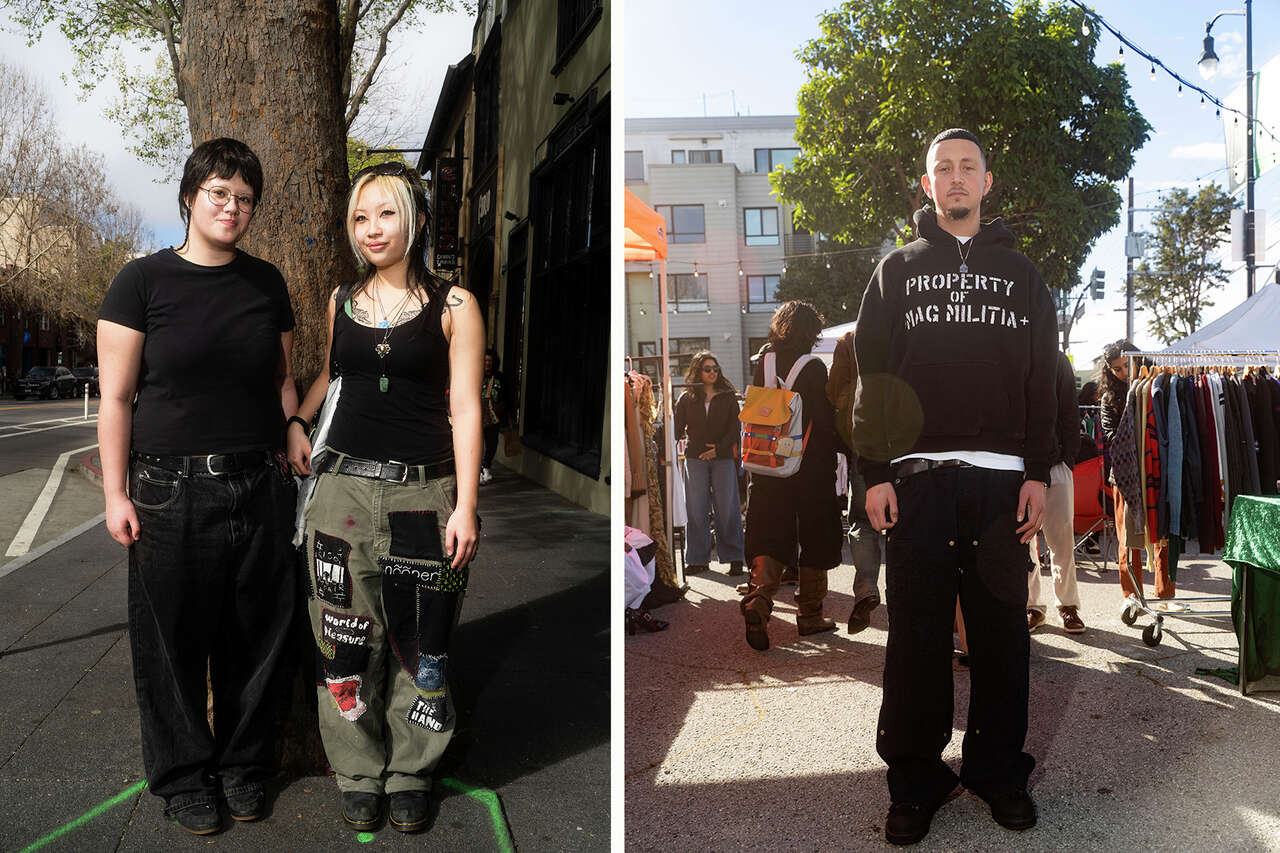
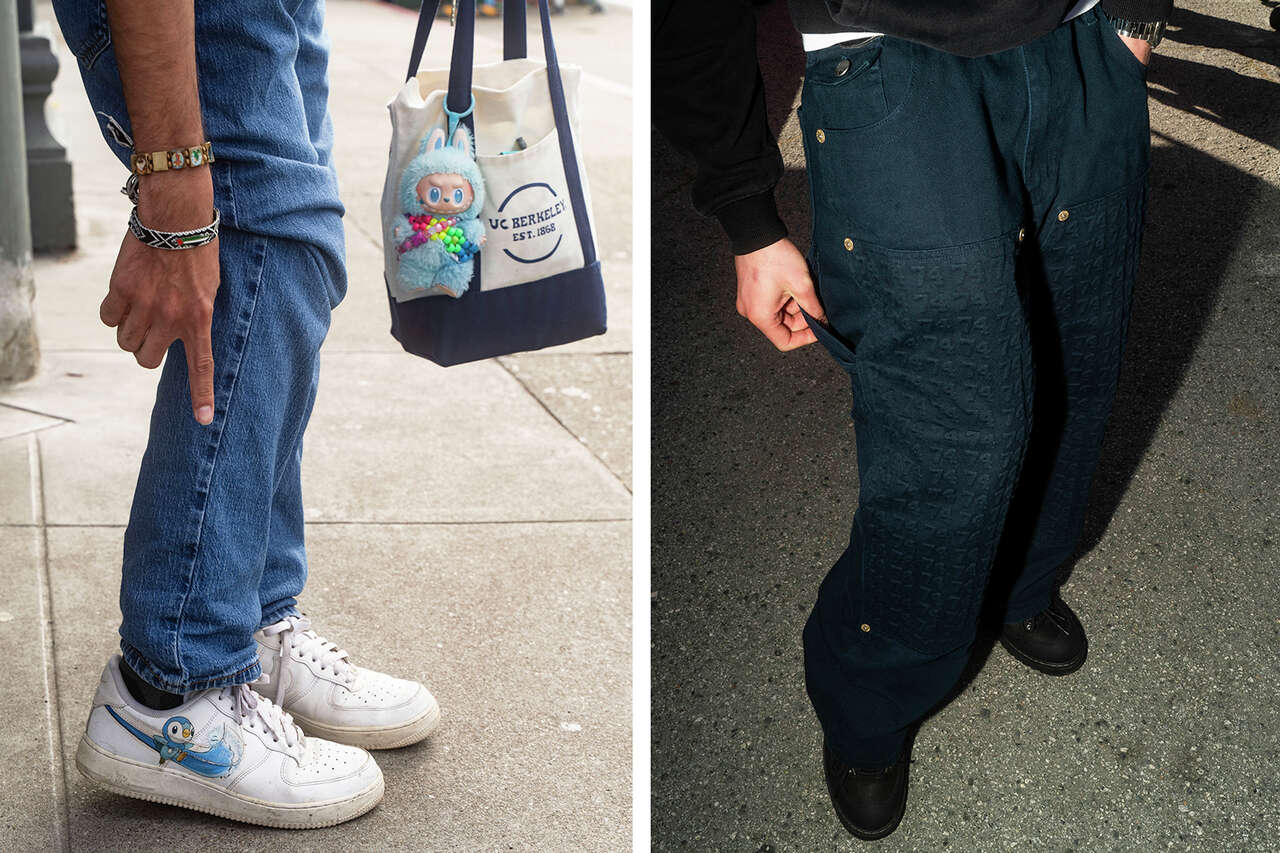
What distinguished the street’s style, in his view, was its diversity of dress. This was a sentiment shared by Kaitlyn Kan, 19, during a brief interview outside the Chapel. “I think people just wear what they like to wear,” Kan said. “Like, I don’t really think it comes down to people trying to be aligned with anything else.” Alex Gasca Rosas, 25, agreed: “That’s what I like about this street,” he said, stopped at the corner of 22nd and Valencia. “You see everyone dressed up differently.”
Rosas wore a Uniqlo T-shirt with a graphic of the Phantom Troupe, villains from the popular anime “Hunter x Hunter,” and Nike Air Force sneakers with water-type Pokemon painted on them. He suggested that people on Valencia buy more clothes at thrift stores, like the Buffalo Exchange at the corner of 23rd Street.
A vague definition
For the most part, people found it easier to describe the scene on Valencia Street by what it was not. Not tech. Not Haight Street. (“I see a lot of people from Los Altos on Haight Street,” Kan said. “There’s definitely more fast fashion stuff there.”) Not the Marina. (“If you go to the Marina, people are afraid to be judged for what they’re wearing,” Trivison said.)
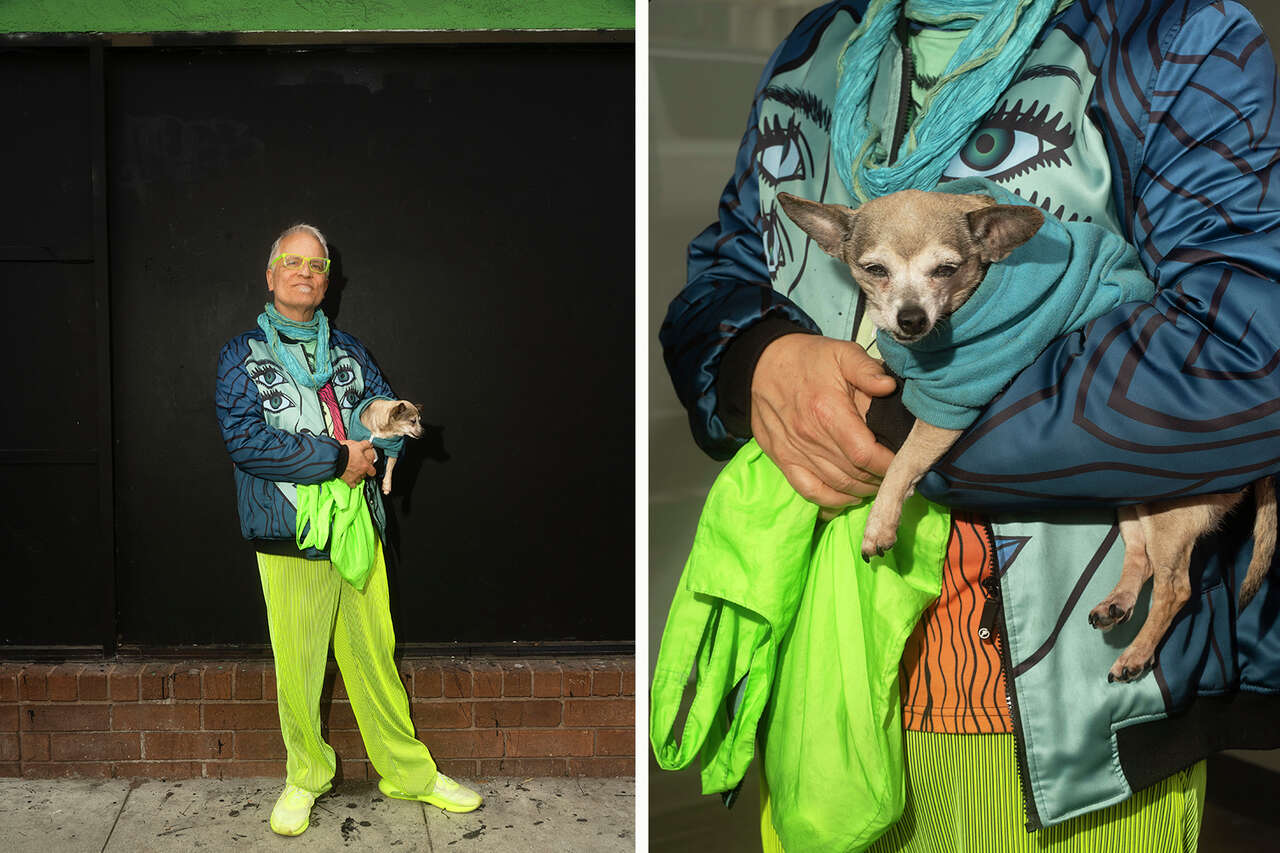
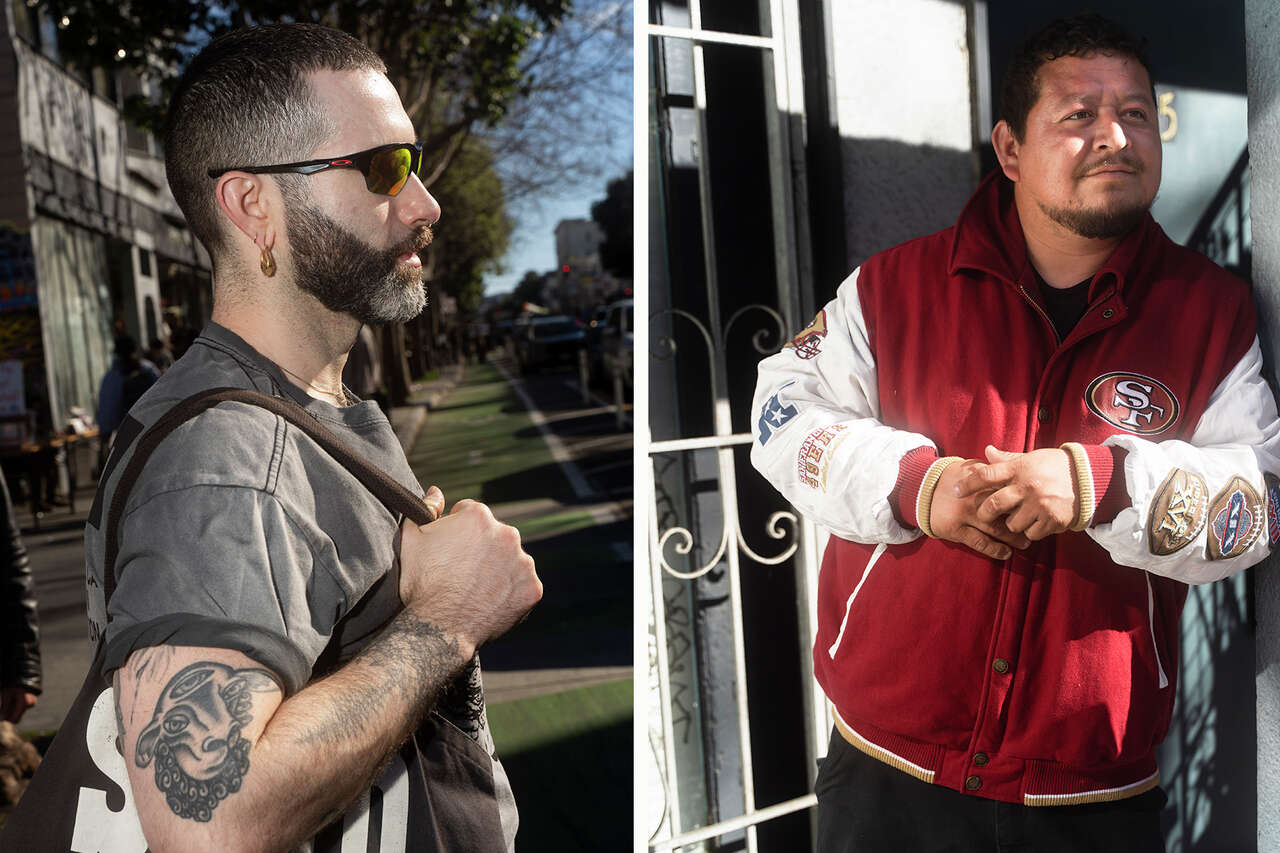
The exception was Bruce Beaudette, 66, who came the closest to naming a single trait that defined the street’s style. Dressed in lime green pants, with a small dog peering out from under his jacket, he opined that the weekend crowd looked like it was dressed for a funeral, not a trip to Dolores Park: “Just black, everywhere.”
Looking out at the colorful jackets and skirts cycling through the flea market, it’s hard to get fully on board with Beaudette’s synopsis. If anything, the clothes on the street look more colorful than in other neighborhoods.
The Valencia corridor wasn’t always a destination like this, said Beaudette, who’s lived in the city since the 1970s. People would come here for bicycle repairs, not trendy clothes and accessories.
Maybe it’s best to accept the street’s contradictions, and admit that a vague definition of the Valencia Street Uniform is as precise as you can get. While generalizing about the street’s fashion, Stiehm might have said it best: “There’s definitely a certain type of swag on Valencia that you see.”
Subscribe
Sign up for The Daily, MathHotels.com’s free newsletter bringing you the best of the Bay Area.