
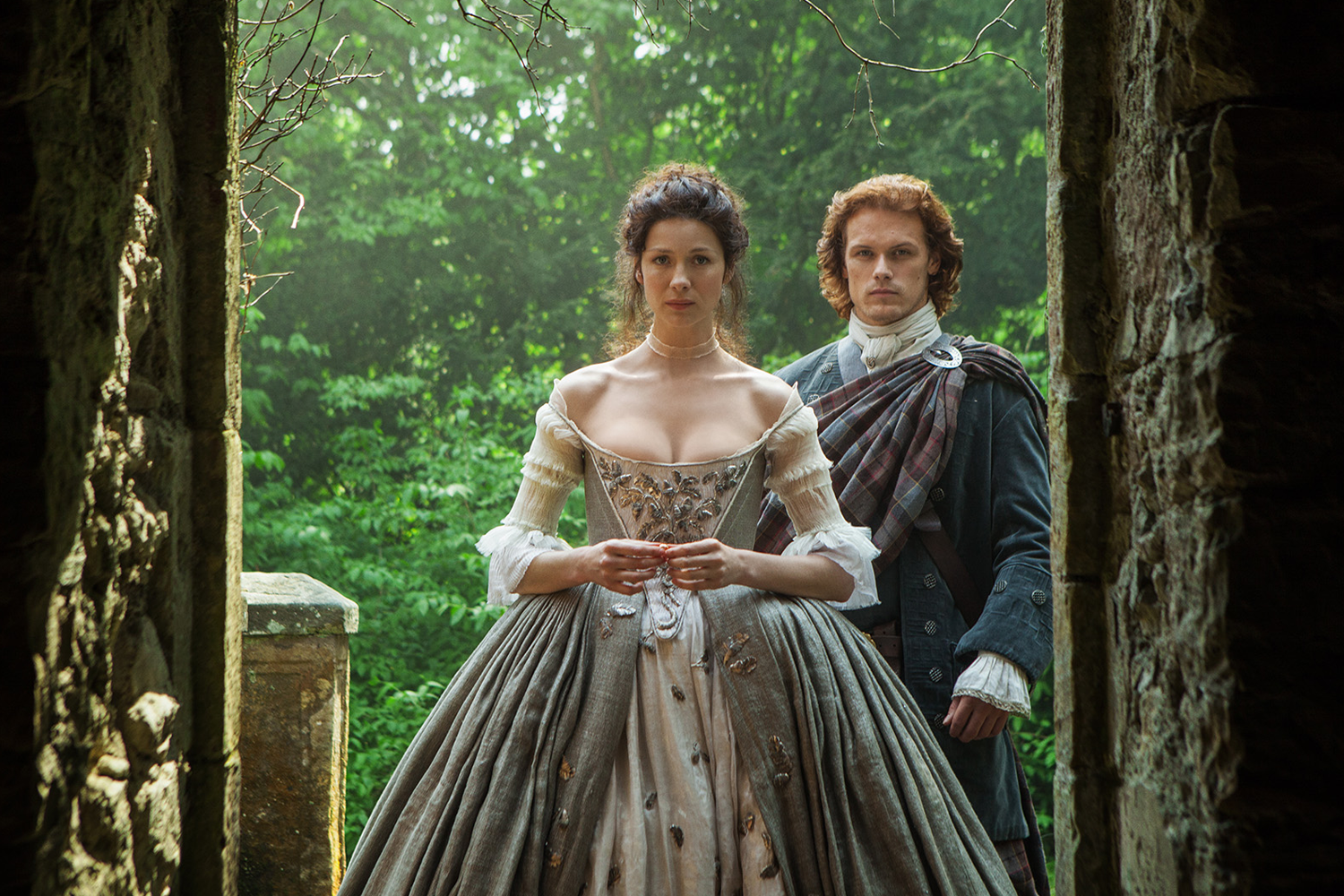
A Journey Through Time with “Outlander” Costumes
Few television shows cover as many eras as “Outlander,” Starz’s smash-hit series about a time-traveling World War II nurse who is transported to 1740s Scotland. Over the course of seven seasons, the show’s heroine, Claire Fraser, travels to the battlefields of the Jacobite Risings, the court of Louis XV of France, a plantation in Jamaica and the Thirteen Colonies on the eve of the American Revolution. “Outlander” has jumped forward in time, too, making stops in 1960s Boston and the Scottish Highlands in the 1980s.
Now, as the period drama begins its final season, an exhibition at the American Revolution Museum at Yorktown in Virginia is spotlighting the costumes that helped transform it into a beloved cultural phenomenon.
Featuring 26 original ensembles selected by Terry Dresbach, who oversaw the series’ wardrobe department during its first four seasons, “Outlander: Costumes Woven in Time” examines how these “meticulously researched, emotionally expressive designs became central to the show’s visual identity and storytelling,” notes the museum in a statement. The exhibition also features hand-sewn reproductions of clothing that the characters’ real-life contemporaries would have worn. These garments were created by the museum’s tailors, who specialize in dressing living-history interpreters.
“As I approached my job as costume designer, I was constantly asking myself questions,” says Dresbach in the statement. “Who are these people? What was their daily life like? What’s the history of their family? What was happening in the world they lived in? History is so much more than the listing of dates in a textbook. It’s the story of being human. This exhibit is a wonderful opportunity to examine our own lives and the history we create every day as we get dressed.”
The Origins of “Outlander”
“Outlander” debuted in 2014 as a television adaptation of Diana Gabaldon’s best-selling book series of the same name. The show quickly won over fans with its steamy portrayal of the central love story between Claire (played by Caitríona Balfe) and Jamie Fraser (Sam Heughan), a kilt-wearing Scottish soldier who finds himself embroiled in the Jacobites’ efforts to restore the Stuart dynasty to the British throne.
Caught in the midst of events like the 1746 Battle of Culloden and the leadup to the Revolutionary War, Claire repeatedly tries to change the past, with little success. (She, Jamie and many of the show’s main characters are fictional, but they occasionally encounter actual historical figures, from Stuart pretender Bonnie Prince Charlie to George Washington and Benedict Arnold.) By the eighth season, which premieres on Starz today, the Frasers have settled in Colonial North Carolina, where they try—and fail—to avoid getting involved in the Revolution.
Iconic Outfits and Their Significance
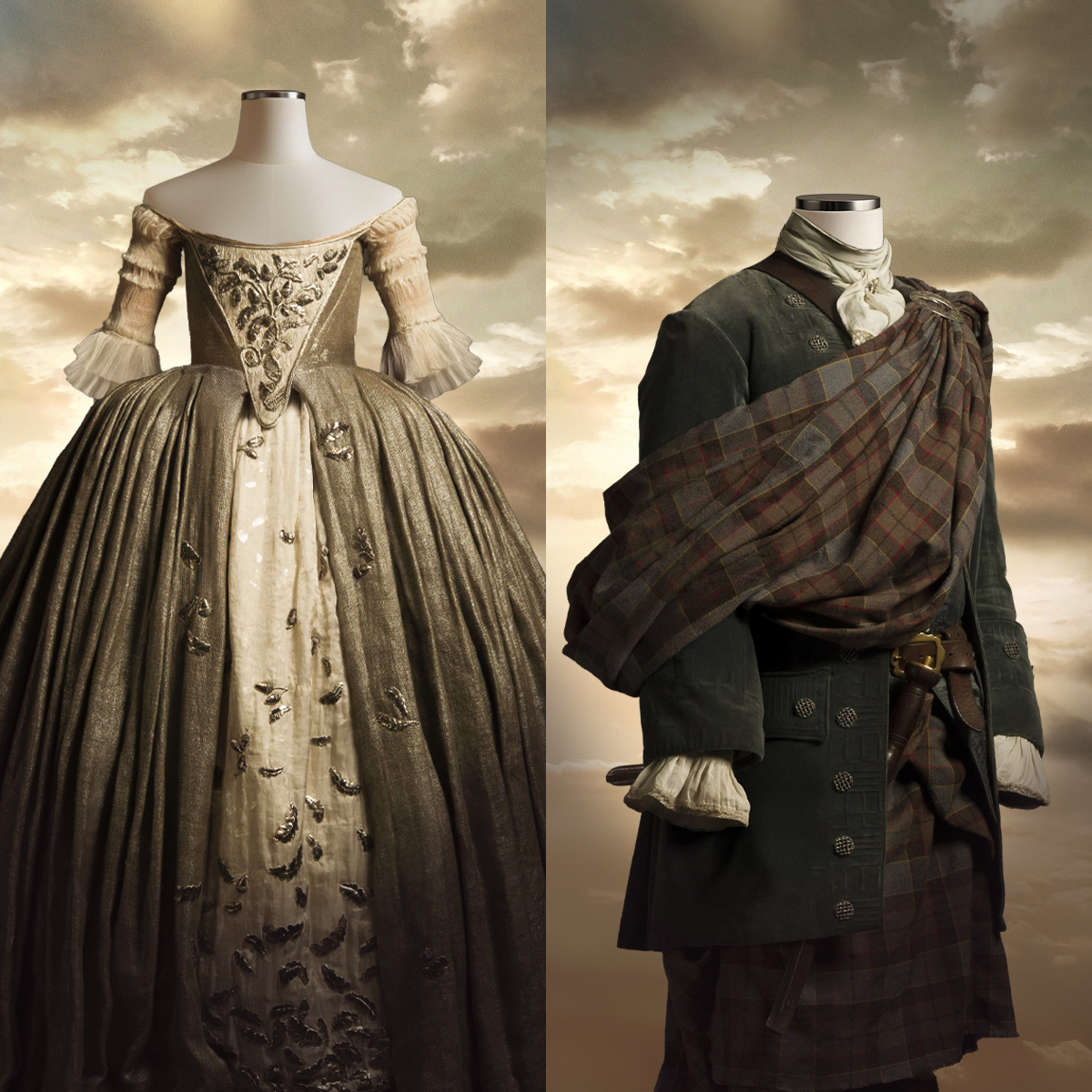
“Costumes Woven in Time” showcases some of the most iconic outfits from the early days of the couple’s relationship, including Claire’s embroidered wedding dress, which weighs 66 pounds and features sewn-in mica shavings, and the tartan kilt worn by Jamie during his nuptials. Visitors can also see a low-cut red gown donned by Claire when she meets the French king at the Palace of Versailles in season two.
Inspired by Claire’s original time period, the 1940s, the “scandalous, powerful and sensual” red dress “is the 18th-century version of modern couture with a twist, because Claire is not a woman of the 18th century,” Dresbach told People magazine’s Sarah Kinonen in 2016. “Every time she walks onto camera, everybody should take a gasp. Everybody should say, ‘I can’t believe she’s wearing that!’”
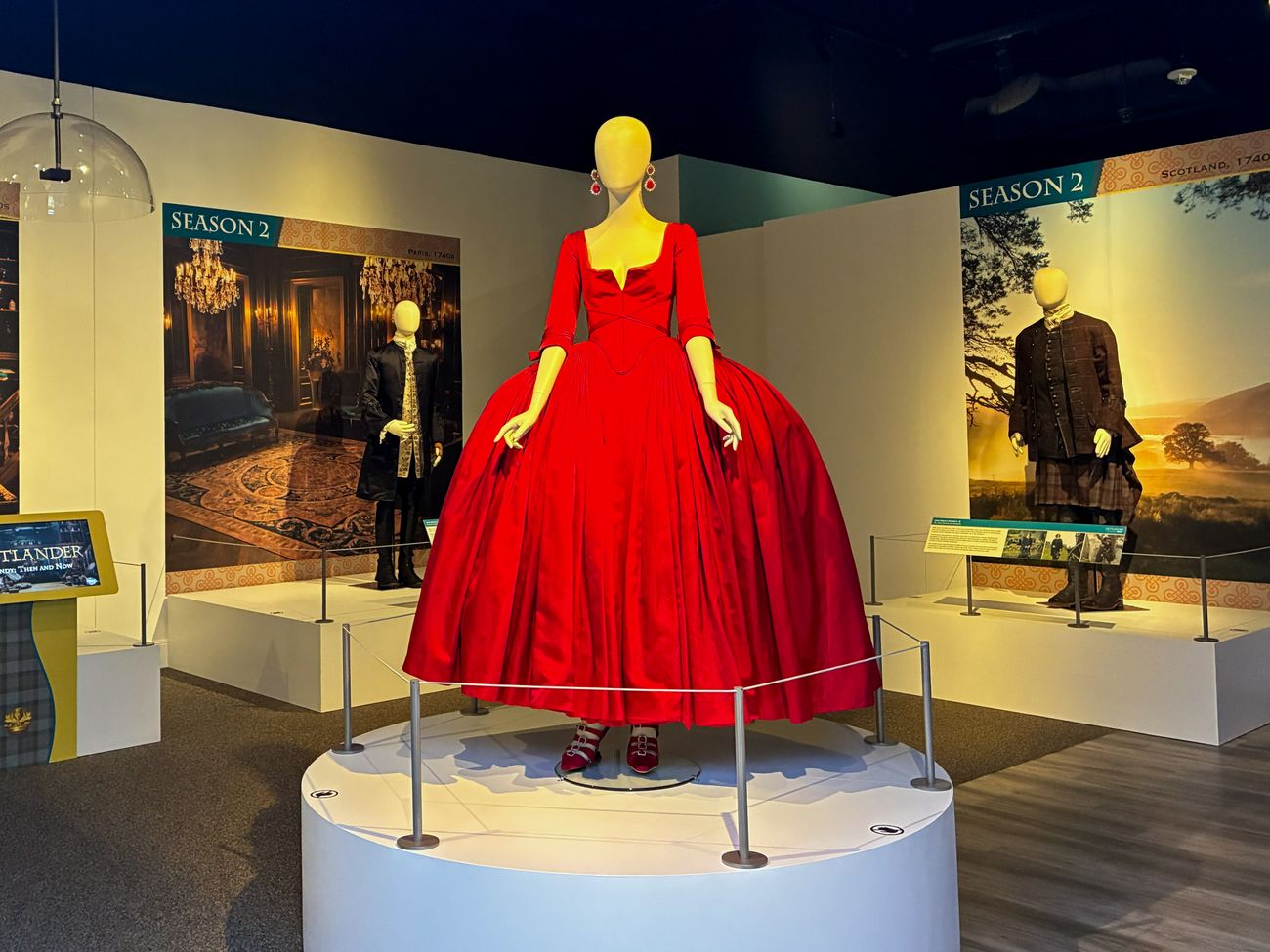
While Claire’s wardrobe in France isn’t entirely accurate to the period, Dresbach and her team took care to ensure that many of the costumes in “Outlander” are representative of the eras depicted—albeit with some allowances for Hollywood flair.
“I would not have done a modernized view of the 18th century, or any other, for that matter,” Dresbach told the “Frock Flicks” blog in 2016. “I was not going to put everyone in leather to make it sexy, have women running around in corsets as outerwear or use runway fashions so that the audience could go out and dress like the characters.”
Historical Accuracy and Criticism
In a 2015 blog post for “Frock Flicks,” fashion and art historian Brenna Barks praised the level of research that went into the attire worn by Jamie and other Scottish Highlanders in the show. Barks argued, however, that the muted coloring of these characters’ tartans (patterned cloth with interlocking stripes) contradicts historical descriptions of Highlanders’ vibrant ensembles. Dresbach is no stranger to such criticism: As she explained to Elle in 2016, she tried to “ride the line very, very carefully” when it came to the scholarly debate over these textiles.
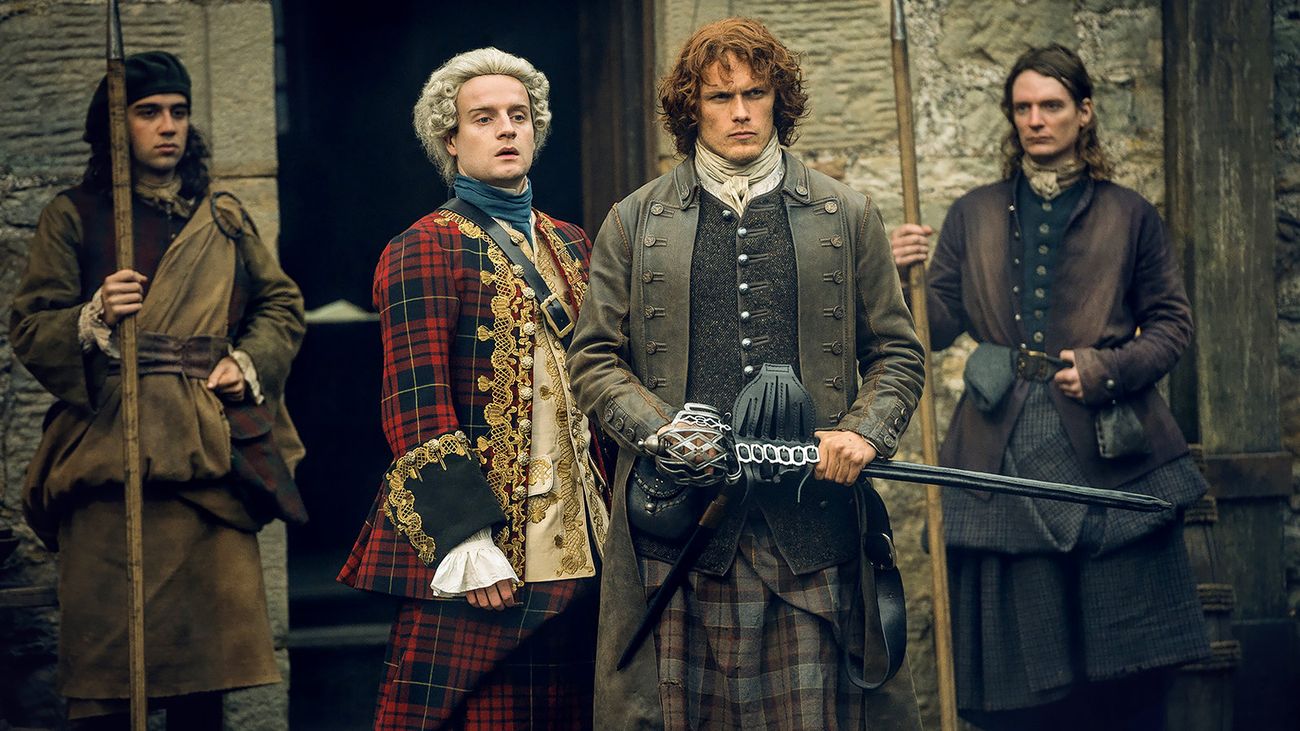
Ultimately, Dresbach put herself in the mindset of an 18th-century weaver, dyer or fabric maker. “[If] I’m living in a little smoky hovel with three generations and maybe [a] cow and pig in the corner, and it’s pouring rain outside all the time, how much time am I spending with that giant pot over the fireplace [dyeing fabric] getting the exact correct shade of lavender?” she told Elle. “Probably not a lot.”
Expanding the Story Beyond the Main Characters
Jamie and Claire are the focus of the exhibition, but members of their extended circle are represented, too. Like Claire, the couple’s daughter Brianna (played by Sophie Skelton) is a time traveler who spends time in both the 20th and 18th centuries. “Costumes Woven in Time” juxtaposes two of Brianna’s looks from the 1970s with the clothing she wears in the American Colonies: a patchwork hunting shirt, a belt, deerskin leggings and moccasins.
At the museum, these outfits are displayed alongside reproductions of clothing that might have been worn during this period by a Cherokee woman, a Black patriot soldier, a middle-class female farmer and a self-emancipated formerly enslaved man.
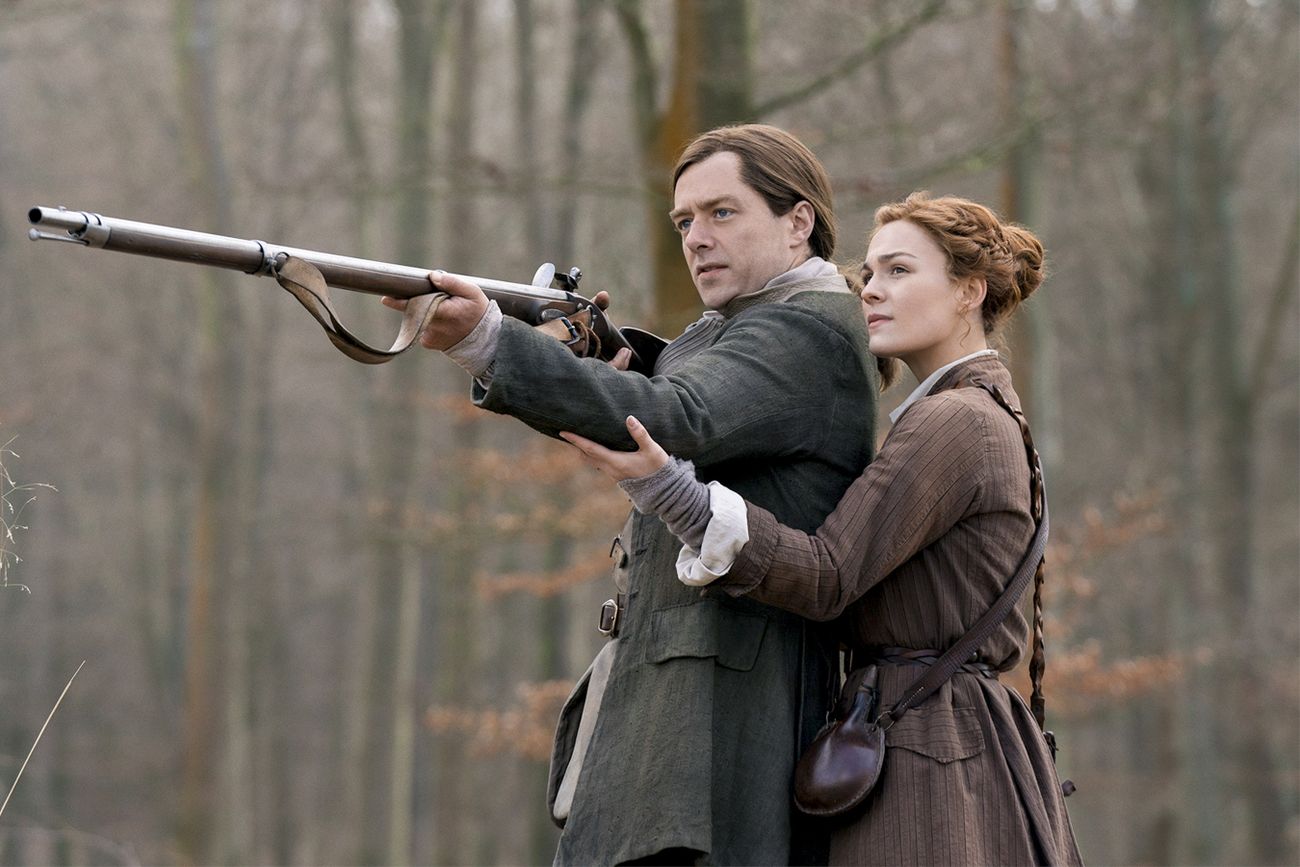
“We’ve found pop culture can be a great ‘hook’ to draw in people who may not have visited us before or even think history is ‘boring,’” Mariruth Leftwich, senior director of museum operations and education at the Jamestown-Yorktown Foundation, tells the Virginia Gazette’s Alison Johnson. “We want to change their minds.”
Leftwich adds: “A huge part of early American history is the diversity of people and how they exchanged trade items, foods, clothing and ideas. It’s a more complex story than many people necessarily expect, and this exhibit is about connections carried across centuries.”
Final Season and Exhibition Details
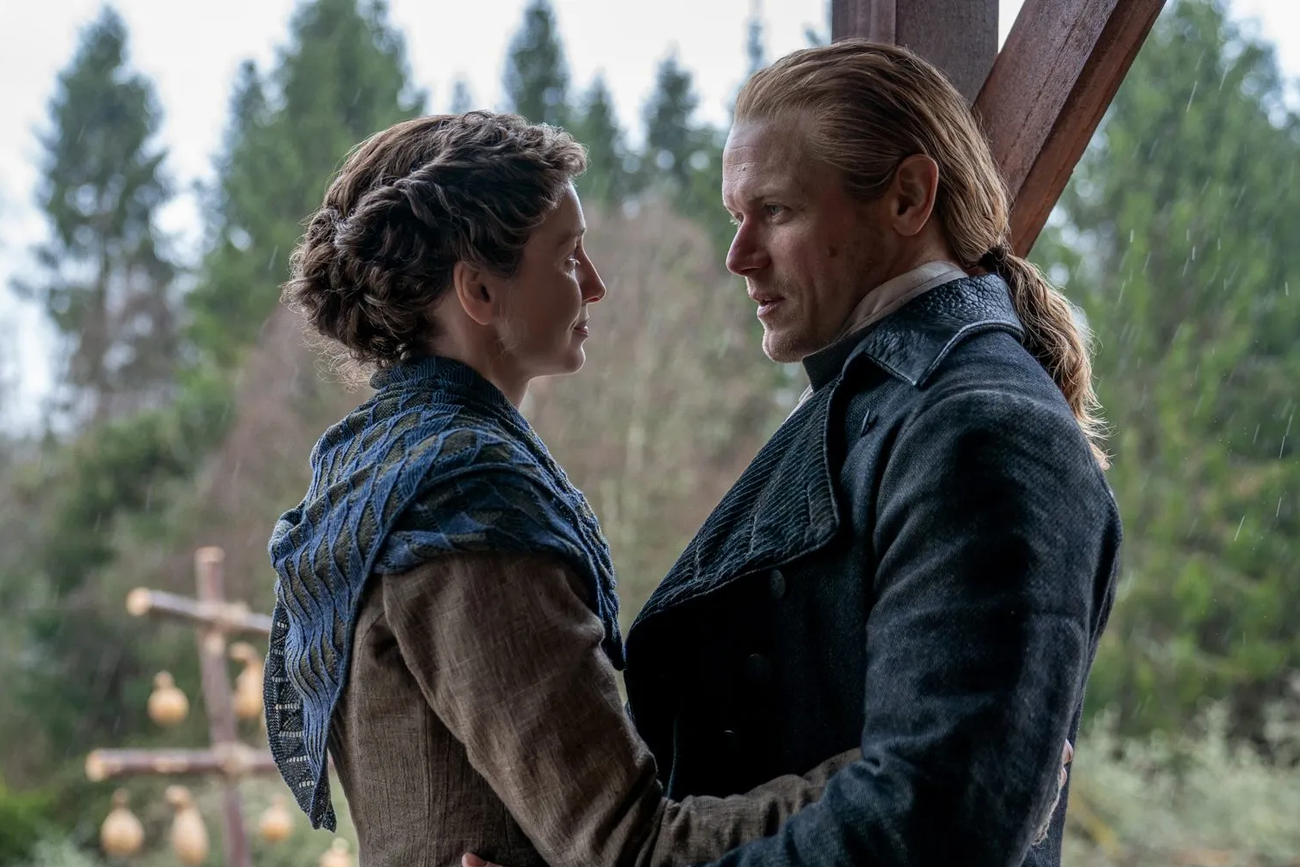
“Outlander: Costumes Woven in Time” is on view at the American Revolution Museum at Yorktown in Virginia through May 18.





![[IMAGE: Best Travel Apps for Stress-Free Adventures United States]](https://www.mathhotels.com/wp-content/uploads/2025/09/608_Best_Travel_Apps_Stress_Free_Vacation_Hero.jpg)