Los Angeles
Boasting luxurious Beverly Hills homes, sports cars on every street, numerous plastic surgeons, and a culture and economy deeply rooted in entertainment, this city has always appeared focused on superficial appearances. It’s intriguing, therefore, that the most captivating art at two local fairs centers around unconventional surface manipulation, employing unique methods or materials to go beyond mere visual appeal. Consider it a touch of meta, reminiscent of Charlie Kaufman’s style, within a week of art events highlighted by Frieze, the major international fair that launches today.
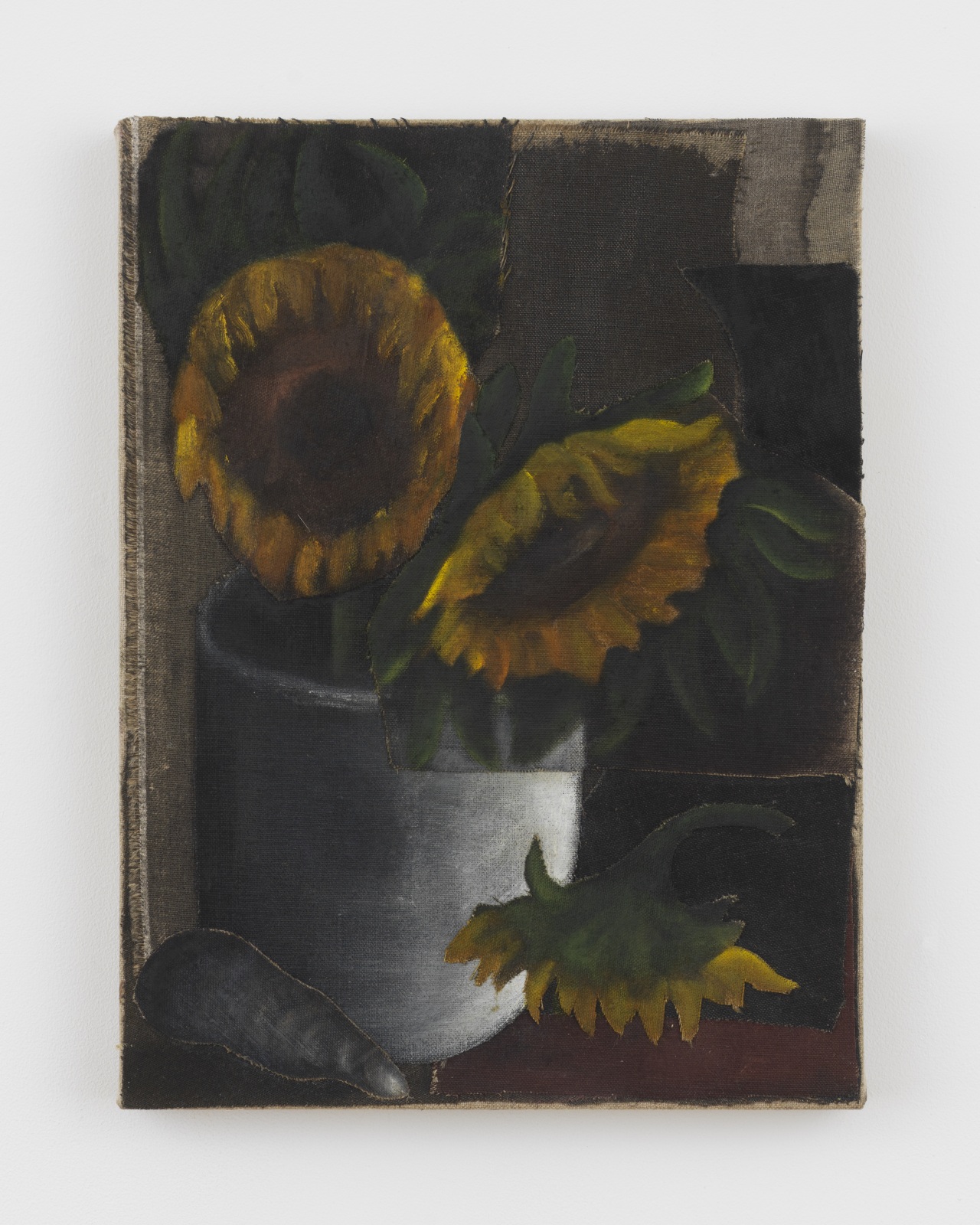
At Felix, approximately seventy-two vendors opened their trunks for the yearly display that features exhibits in the rooms of the historic Hollywood Roosevelt Hotel (including its past guests: Marilyn Monroe, who represented the complex, troubled spirit beneath a glamorous exterior).Alessandro Teoldireworks painting and collage at Marinaro by attaching painted fabric pieces to linen canvases. His images incorporate traditional themes (still lifes, landscapes, portraits), and their simplified shapes carry hints of sensuality and mortality: a tempting peach lies on a table, bananas stand boldly in a bowl, and sunflowers droop in a container. These patchwork scenes have a calm, reflective quality that thoughtfully considers the gravity of their themes without ever falling into exaggerated emotion or provocation.
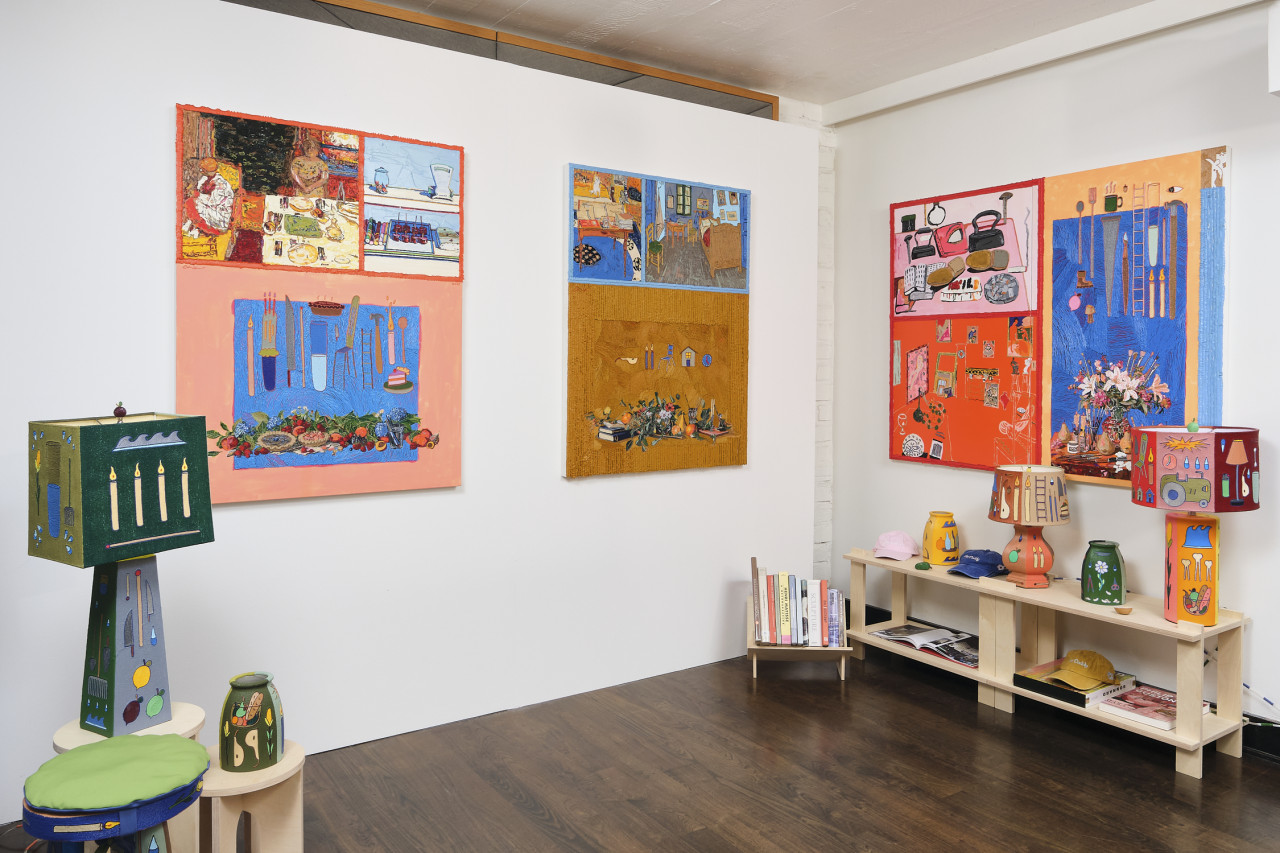
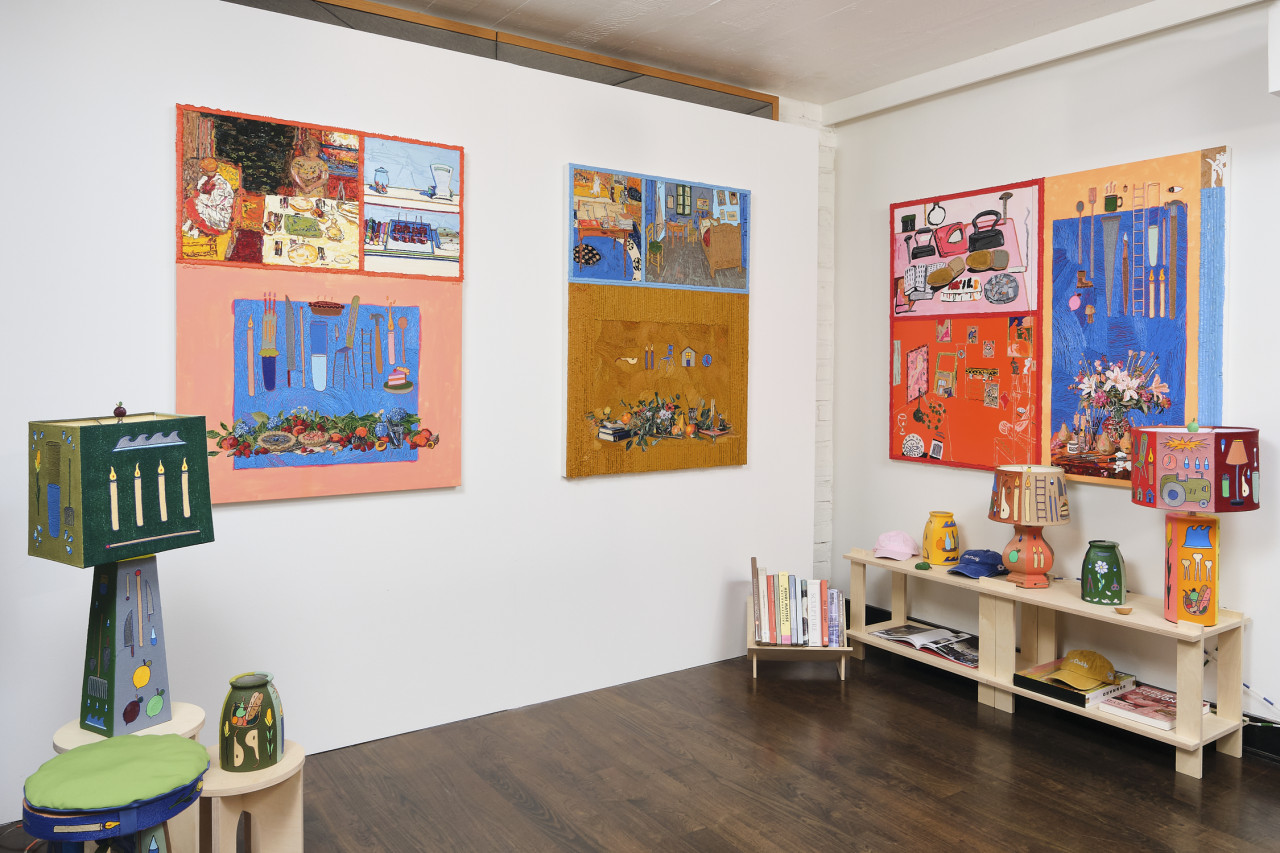
The most surprising application of materials is brought to you byCharles HickeyAt Feia, an artist who crafts his images using a 3-D pen. His collection of design objects and everyday sculptures (lamps, stools, toiletries, liquor bottles, and more) complements his three-part canvases where he replicates famous images from art history; isolates individual, representational elements from those works; and then creates his own still lifes based on those two images. For instance, a copy of Van Gogh’s “The Drinkers” is placed next to a series of glasses filled with water, both images floating above a table setting adorned with lush vegetation that echoes the Dutch artist’s vibrant depictions of nature. The outcome is a visual form of a word-association game, with Mr. Hickey presenting intriguing, thoughtful connections that are all the more appealing because of their enchanting colors and texture. It requires a special effort not to touch these attractively three-dimensional surfaces.
Also touchable are the ceramic and stoneware sculptures ofYoshikazu Tanaka,who incorporates fragments of his own shattered creations into the surfaces of his pieces at ATLA Gallery. There is a conflict in his artwork, between breaking and repairing, devastation and innovation, that offers a hope of renewal and gives ordinary shapes extraordinary strength.
Takuya Otsuki, showcasing at COHJU, incorporates traditional Japanese art in his images, which simplify historical works into standalone, occasionally abstract components, reimagined using mineral and dyed-mud pigments on hemp paper. These calm arrangements are both sparse and dreamlike, as the edge of a fierce fire is depicted with a subtle line, or a multicolored shrimp hovers in the center of an empty space. Due to his themes and materials, Mr. Otsuki’s art seems ageless, while his deliberate, understated aesthetic offers a refreshing contrast to much of today’s loud and attention-seeking art.
While numerous artists at Felix explore their surfaces using additive methods, some employ a subtractive technique to enhance their pieces. At COMA,Justin WilliamsHis paintings portray surreal scenes drawn from his experiences as a new father. One shows rugmakers calmly working with their textiles—a peaceful moment capturing the artist’s final days before his child’s birth. Another features Mr. Williams as a self-portrait, playing chess in a small room against a bird, offering a lighthearted take on the lonely and strange feeling of being a new parent. The artist deliberately roughens the surfaces of his works, adding an aged look that enhances their folk-like atmosphere and makes the images even more engaging.
Keisuke TadaCracked and damaged landscapes, displayed through a dual exhibition by Chilli and Slip House, reflect strong influences from the Barbizon and Hudson River schools. His ethereal scenes, rich in craquelure due to the particular paints he employs, are created using multiple layers of paint. Mr. Tada then further “ages” the pieces by removing small parts of his images, giving his scenes a feeling of deterioration, which highlights an environmental message in his artwork that also touches on humanity’s timeless interest in the natural world.
Across town, a new fair called ENZO—small in scale and created by collector R Parmar—unites nine downtown New York galleries in an exhibition that doesn’t require participation fees, providing a rugged, grassroots alternative to other events happening this week. Many of the works here have an avant-garde vibe. The most notable among the group that traveled across the country is Laurel Gitlen’s presentation ofPeggy Chiang. The sculptures created by Ms. Chiang, featuring hangers shaped like stars, stained collars from work shirts, bandsaw blades, and molds for horse saddles, present a postindustrial perspective on the American West that reexamines the meaning of labor in the 21st century and how it has moved away from romanticized notions of work and opportunity. Although there is still much potential for this new fair to expand, it, along with the impressive pieces at Felix, demonstrates that the most compelling contemporary art displayed in L.A. is far from shallow.
Felix Art Fair
Hollywood Roosevelt Hotel, until March 1
ENZO
1634 West Temple Street, until February 28th
Mr. Kelly serves as the Journal’s associate editor for Arts in Review. Connect with him on X at @bpkelly89 and contact him via email at [email protected].