Understanding the Salamander Migration in Summit County
Each spring in Summit County, a largely unseen wildlife migration unfolds after dark. On the right rainy night, salamanders emerge from the forest floor and begin a slow trek toward seasonal breeding pools. For those willing to venture out in damp conditions, the migration can offer a rare glimpse of one of Northeast Ohio’s quieter natural events.
Visitors hoping to view the amphibians – or spot towering great blue herons nearby – can find opportunities throughout the Summit Metro Parks system. Here’s what to know about this fascinating phenomenon.
When Can You See the Salamander Migration?
Salamander migration typically occurs on warm, rainy nights in late February and early March, according to Summit Metro Parks naturalist Kasey Krok. Longer daylight hours and warming ground temperatures help trigger the migration, prompting salamanders to leave their forest homes and travel under the cover of darkness to temporary rain-filled breeding areas known as vernal pools, Krok said. Mild air temperatures help the cold-blooded amphibians move more easily, while rain keeps their skin moist during the journey.
Where Can You Watch Salamanders in Summit Metro Parks?
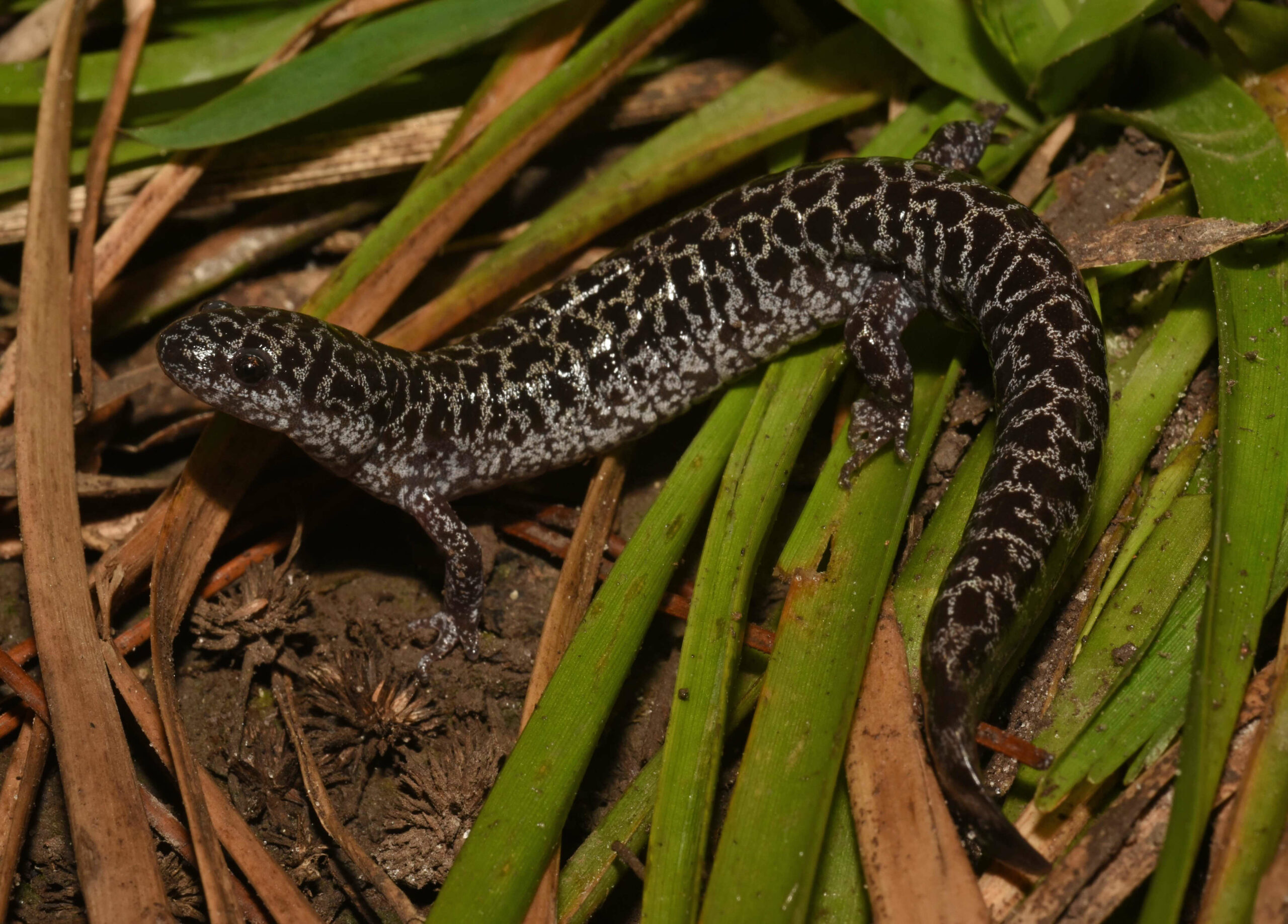
Salamanders can be found in all Metro Parks in a variety of habitats, including streams, wetlands and forest floors. Summit Metro Parks is home to 13 species of salamanders, including spotted, long-tailed and four-toed salamanders.
Liberty Park contains about 3,000 acres of restored wetlands, streams and ledges, and Summit Metro Parks describes the park as “a salamander’s paradise.” Krok said salamanders live throughout many Summit Metro Parks locations, but there is no single perfect place or method to observe them without potentially disrupting their migration.
“Car tires, bright flashlights and hiking feet can all negatively affect these small, sensitive creatures – no matter how good our intentions may be,” Krok said. Instead, park officials encourage visitors to “happen upon, not hunt for” salamanders during the spring migration by walking trails carefully, listening for frog calls or participating in scheduled naturalist programs.
Why Are Salamanders Important to the Ecosystem?
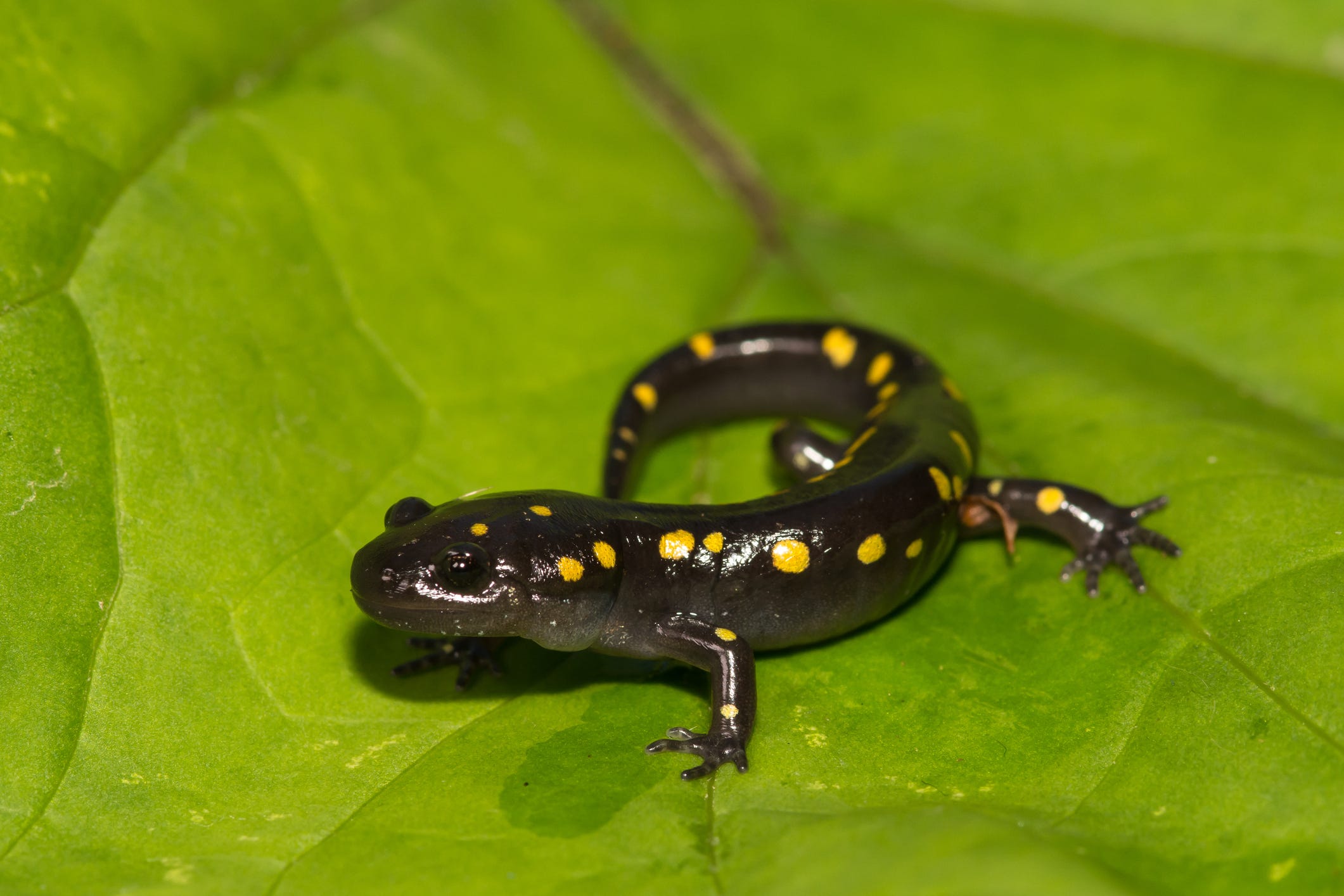
Salamanders play a key role in the forest food web. They serve as predators of small insects and invertebrates while also providing food for birds, mammals and other wildlife.
How Are Parks Helping Protect Salamander Habitat?
Restoration work at Sand Run Metro Park has included planting native vegetation, stabilizing streambanks and improving natural water flow. These efforts aim to restore stream and wetland ecosystems and support the wildlife that depends on them. Officials also permanently closed a portion of a road that went through Sand Run and replaced it with a walking trail to improve habitat connectivity, Ideastream reported.
Where Can You See Great Blue Herons?
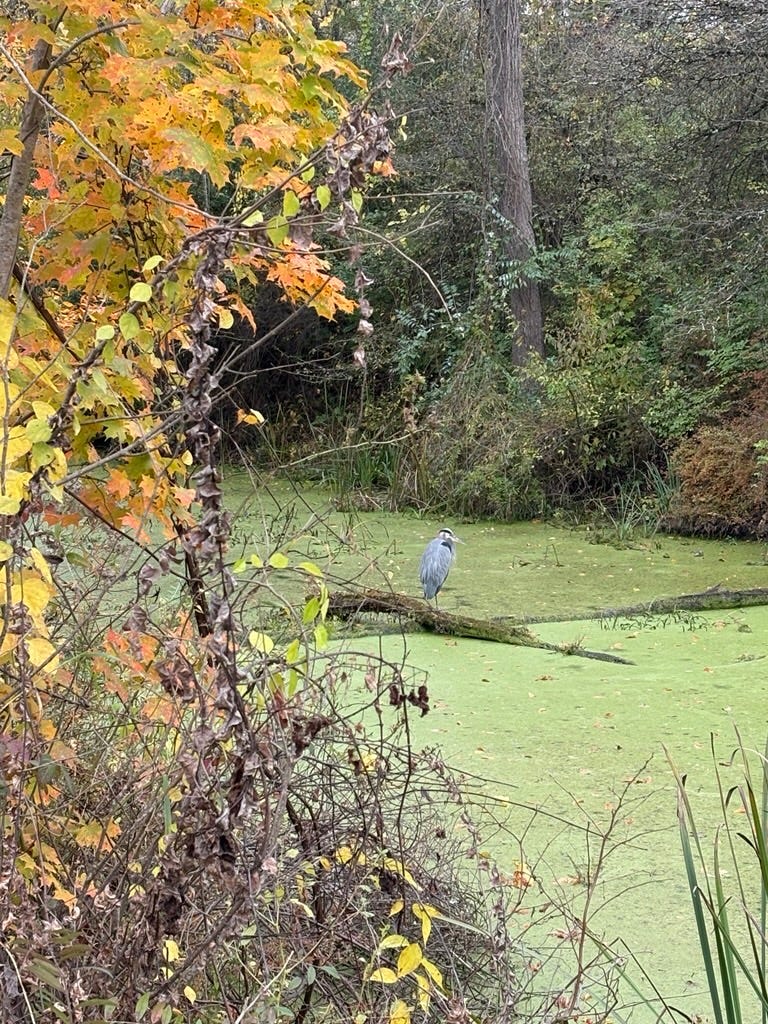
While salamanders draw attention on rainy spring nights, birdwatchers may have better luck spotting great blue herons during the day. “Great blue herons can be seen just about anywhere there is water, including most of our parks,” Summit Metro Parks naturalist Kevin Ruegg said. One of the best places to watch them locally this time of year is at a property shared by Summit Metro Parks and Cuyahoga Valley National Park along Bath Road.
“We are fortunate enough to host an active rookery here on Bath Road, between Akron-Peninsula and Riverview Roads,” Ruegg said. “We’ve lost a few trees over the years, but many herons continue to nest in this rookery every year.” A roadside pull-off along Bath Road allows visitors to watch the nesting activity from a distance.
Ruegg said visitors can often see the birds returning to the area in February and March, when herons begin nest building and pair bonding. Chicks typically begin appearing later in the spring. “You won’t see the chicks popping their heads up until May, so make sure to check back in throughout the season to see the little fuzzballs in action,” Ruegg said. “Evenings tend to be more active, but the birds will be visible all day long.”
What Should Visitors Know Before Heading Out?
Timing and conditions are key to seeing salamanders during their spring migration. According to officials at Brecksville Reservation, migration viewers should plan visits for about an hour after dusk during the first weeks of spring, particularly on rainy nights when temperatures are above about 40 degrees.
To safely view the migrating salamanders:
- Bring a headlamp or flashlight with at least 1,000 lumens and a red filter. A phone light or app flashlight is not sufficient and may disturb the animals.
- Stay close to small vernal pools in the shallow woods, rather than just watching the road, because salamanders are most likely near these temporary breeding pools.
- Wear warm clothing, a rain jacket and waterproof boots, and bring a camera or phone if you want to take pictures.
- Krok also encourages visitors to stay on designated trails and avoid touching the animals.
“Visitors should stay on designated trails at all times and avoid any physical contact with salamanders, as their skin is highly sensitive,” Krok said. “If hiking on rainy evenings, remember to walk slowly and watch for movement.”
Although salamanders can be exciting to encounter, Krok said the best way to appreciate them is to give them space during their spring migration.
“The best way to show appreciation is by staying out of the way during this vulnerable time,” she said.
Are There Ranger-Led Programs About Salamanders This Spring?
Visitors who want to learn more about amphibians can also attend naturalist-led programs offered by Summit Metro Parks. Krok said the park district will host several programs this spring focused on salamanders and other amphibians.
Upcoming events include “Salamander Slime Open House” on March 8, “Dive into Vernal Pools” on March 15, and the “Friday Night Frogs” series, which takes place every other Friday beginning March 13. Times and locations vary by event. Visitors can find more details at the Summit Metro Parks website.