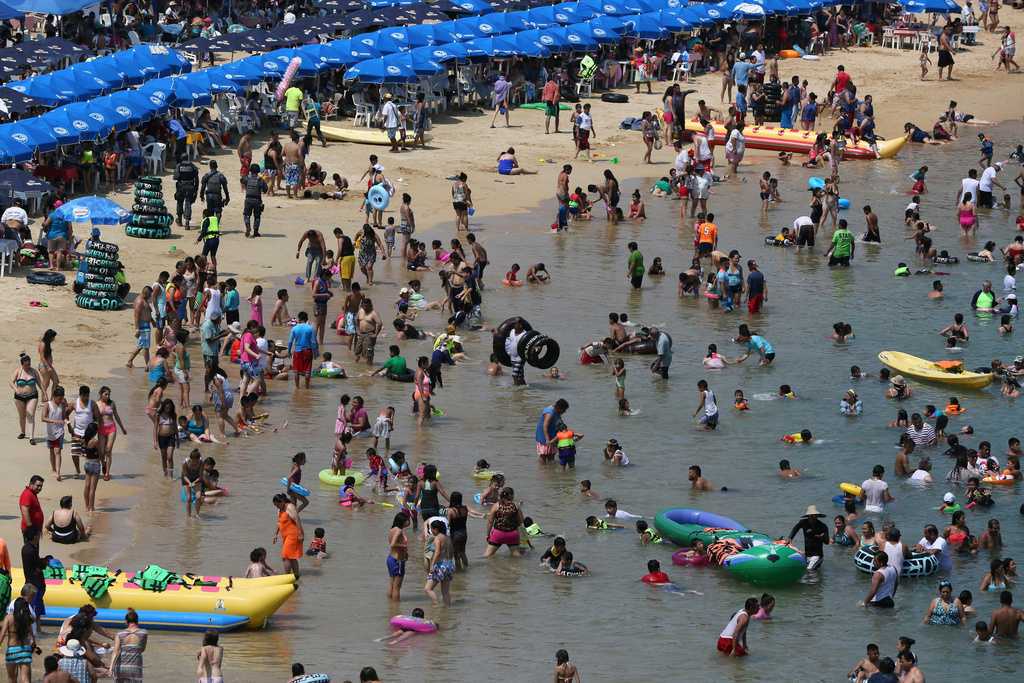
As spring break approaches, tourists might be reconsidering their travel plans to Mexico following recent gang-related violence in certain areas of the country.
Retaliatory violence erupted in approximately 20 states following the killing of Mexico’s most influential drug cartel leader on Sunday, coinciding with many families and university students finalizing their arrangements for spring break, typically held in March or April.
Safety and travel risk specialists state that travelers are naturally worried, but highlight that potential threats can differ significantly based on their location, the means of transport they use, and the activities they intend to undertake.
Regardless of location or time, travel often brings unpredictability, as Michael Johnson, president of Ensemble Travel—a network of travel agencies in the U.S. and Canada—explained, “there’s always something that can come up.”
The United States and Canada have removed the “shelter in place” warnings they temporarily issued for their citizens in certain areas of western Mexico, such as Guadalajara and Puerto Vallarta in Jalisco state, where the former drug cartel leader Oseguera Cervantes, also called “El Mencho,” was active. Both countries are advising travelers to remain cautious, stay informed about local situations, and check for updates before and while traveling.
The U.S. Department of State advises against traveling to six Mexican states and suggests reconsidering visits to seven more, including Jalisco. Global Affairs Canada recommends that citizens avoid non-essential travel to 13 states and Lagunas de Zempoala National Park in Morelos.
What to consider
It is crucial to recognize where the greatest risks lie and be aware of the available choices if situations change rapidly, Johnson stated. Instead of deciding yes or no right away, travelers should “proceed gradually.”
— Official recommendations: Travel advisories from the U.S. State Department and Global Affairs Canada can assist travelers in understanding overall risk levels. Travelers are also advised to keep an eye on local news reports regarding current conditions in the specific areas or regions they intend to visit, Johnson mentioned.
— Mexico is approximately three times the size of Texas. Popular tourist spots such as Cancun or Tulum are over 1,200 miles (1,900 kilometers) away from Jalisco, which has been the site of recent conflicts. Staying in major resorts and tourist areas can make travel arrangements easier and reduce the amount travelers need to move around upon arrival.
— Flexibility: Travelers need to examine the cancellation rules of airlines, hotels, and tour operators. If they have travel insurance, they should carefully check the details regarding what is and isn’t covered.
— Risk tolerance: Anxious travelers might consider canceling their trip. “Don’t take a vacation if you’re not comfortable. It’s one thing to arrive, but another if you’re constantly looking over your shoulder,” Johnson stated.
A Vancouver resident named Scott Leaf and his wife are set to travel to Mexico in two weeks to mark his 60th birthday, with planned visits to Mexico City, Cancun, and the coastal area of Akumal. Upon hearing about the recent incidents of violence, Leaf mentioned that they don’t feel compelled to cancel their trip to a country where they have spent their vacations every year for thirty years.
They are not traveling near Jalisco state, he said, and “we have never, ever felt unsafe in a tourist area in 33 years.”
“Canceling a trip to Cancun is similar to canceling a visit to Disneyland due to events in Minnesota,” Leaf stated, alluding to the Trump administration’s recent immigration enforcement actions in the state, which included two and a half months of protests, 4,000 arrests, and two fatal shootings by immigration officers.
Ways tourists can get ready What visitors can do to get set up How travelers can make themselves ready What guests can do to get prepared What individuals traveling can do to get ready What people on the move can do to prepare What those who travel can do to get ready What journeyers can do to get set for their trip What those going on trips can do to prepare What those who are traveling can do to get ready
Rich Davis, a top security consultant with the risk management firm International SOS, notes that being well-prepared can have the most significant impact on travelers who choose to proceed with their journey.
— Create a reserve: Individuals requiring necessary medicines should bring sufficient quantities to last beyond the scheduled trip duration, in case of unforeseen changes.
— Sign up with your government: U.S. travelers may join the State Department’s Smart Traveler Enrollment Program, enabling embassies to provide safety alerts and contact travelers during emergencies. Canadians can register via Registration of Canadians Abroad, referred to as ROCA.
— Speak with a travel consultant: Even if a trip has already been arranged, seeking advice from a travel consultant can still be beneficial. Johnson mentioned that consultants might have real-time information, including updates from clients who are currently in the region, and can recommend changes to your schedule. For those who haven’t made a booking yet, he noted that consultants can assist in creating plans that are adaptable and location-focused — and for individuals who book through a consultant, this connection can offer an extra level of assistance if circumstances change or issues occur.
On the ground
Upon arrival, some simple routines can assist travelers in exploring a unfamiliar place with ease, according to specialists.
— Travel in pairs or small groups: When possible, going with at least one other person can make navigating an unfamiliar area simpler and more pleasant, while also assisting travelers in remaining alert to their environment.
— Keep someone informed: Share your travel plans and daily schedule with a reliable friend or family member, and maintain regular communication, Davis suggested.
— Utilize the hotel as a central point: Arranging transportation directly through the hotel or resort concierge can provide a sense of reliability, particularly for transfers and tours. Before entering a vehicle, verify the driver’s name or information and the destination. Avoid taking unexpected rides, as Davis advised.
— How to seek assistance: Not all countries use “911” as their emergency phone number. The State Department provides a list of emergency contacts for various countries, and it advises travelers to store it in their phones.
READ MORE:Authorities recommend careful preparation for spring break in Mexico following violence linked to drug cartels
CHECK OUT WISN:Access the latest news, weather, and sports updates from Milwaukee. Our Wisconsin news team provides you with the day’s most important stories and those you might have overlooked.