
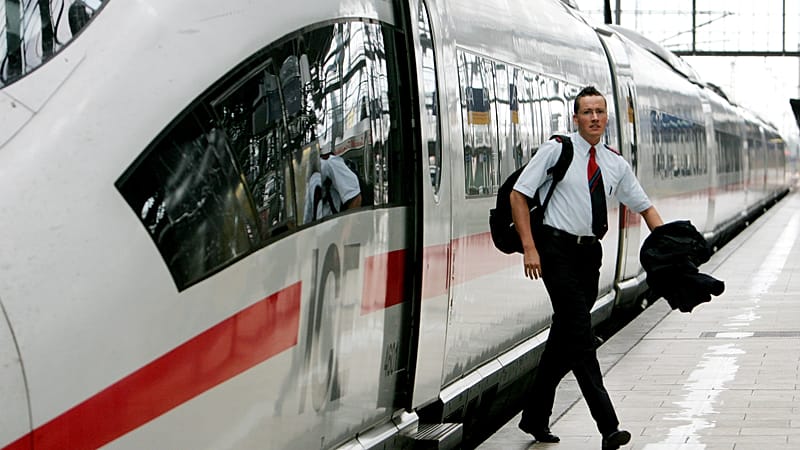
Understanding the Earnings of Public Transport Workers in Germany
In late February, strikes disrupted public transport across Germany. The issue was eventually resolved when Deutsche Bahn and the GDL train drivers’ union reached an agreement on pay. However, this incident raises a broader question: how much do tram, bus, and train drivers actually earn in Germany?
According to data from the Federal Statistical Office (Destatis), skilled bus and tram drivers earn approximately €3,638 gross per month as of April 2025. In contrast, skilled train and locomotive drivers take home an average of up to €4,600 gross monthly. These figures are pre-tax and before social security deductions.
Earnings Below the National Average
As of April 2025, the average gross earnings for full-time employees in Germany stand at €4,784. This indicates that both bus and tram drivers, as well as train drivers, earn less than or just at the edge of the overall average in the country. While special payments might alter the comparison, gross earnings alone show they earn less.
Beyond drivers, the public transport sector includes several other roles, especially within railways. Among nine relevant occupations, employees in railroad construction in highly complex positions earn the most, with median monthly gross earnings of €6,229. This figure drops to €4,844 for skilled workers.
The inspection and maintenance of railway infrastructure also pays well, with median monthly gross earnings of €6,074 for highly complex positions. This decreases to €5,292 for complex positions and further to €3,618 for skilled workers.
Other roles include surveillance and control of railway traffic, which have median earnings of €5,503, and technical railway operations, which earn €4,188. The lowest median earnings in the sector, based on available data, are for service in road and railway traffic positions at €3,568. This is slightly lower than the earnings of bus and tram drivers.
Complex Railway Jobs Pay Better
The data suggest that, on average, highly complex positions in the railway industry are better paid than the overall average for full-time employees. However, both bus and tram drivers and railway drivers earn below this overall average, along with other non-complex positions.
The official data cover more than 1,300 job titles. The median earnings of skilled drivers of train engines and other railway vehicles rank 667th, while skilled bus and tram drivers rank 985th on the list.
Additional insights come from the Economic Research Institute’s Salary Expert. The average gross base salary for tram drivers in Germany is €3,053, while it is significantly higher for subway train drivers at €5,978.
Best-Paid Sectors in Germany
According to Destatis, aviation is the top-paying sector in Germany, followed by healthcare, legal, and judiciary. Pilots have the highest median annual gross earnings in Germany at €27,459.
While this reflects Eurostat estimates for 2021, train drivers in Germany are among the highest paid in the EU. In nominal terms, Germany ranks fourth, while it ranks second when measured in purchasing power standards (PPS). Although their pay is comparatively high across Europe, their salaries remain below the national average in Germany.
Comparing Earnings with the UK
In the UK, employees in the rail and Tube sectors earn significantly more than the national median income. The median gross annual earnings for full-time employees reached £37,430 (€44,211) in April 2024 according to the UK’s Office for National Statistics (ONS).
Train and tram drivers earned a median salary of £63,958 (€75,545). These rail roles rank among the UK’s top 20 highest-paid occupations. Rail drivers also earn more than barristers and judges, whose median salary stands at £59,423 (€70,189), a difference of £4,535.














![[IMAGE: Best Travel Apps for Stress-Free Adventures United States]](https://www.mathhotels.com/wp-content/uploads/2025/09/608_Best_Travel_Apps_Stress_Free_Vacation_Hero.jpg)