More than 150 years before the famous phrase, “We hold these truths to be self-evident; that all men are created equal,” would be belted on Broadway stages, the line was changed to include women for the Declaration of Sentiments. It was the summer of 1848, and 300 people gathered at the newly built Wesleyan Chapel for the first Women’s Rights Convention. That is where that famous phrase, copied from the Declaration of Independence, which was signed 72 years prior, was reclaimed to protest unequal rights for women.
Today, the chapel is visited by people across the country and remains a key fixture of the Women’s Rights National Historical Park.
What to see at the Women’s Rights National Historical Park today
The Women’s Rights National Historical Park is made up of four locations in Seneca Falls and two in Waterloo, New York. Each site offers a unique glimpse into the history of the women’s rights movement and the pivotal events that shaped it.
The Visitor Center
See the “First Wave Exhibit” in the lobby, made up of bronze statues representing the first wave of women’s rights activists in the United States. Take a trip upstairs to explore a plethora of exhibits full of art, pictures, artifacts, stories and history of the women’s rights movement and the abolitionist movement, which many of the first women’s rights activists were inspired by.
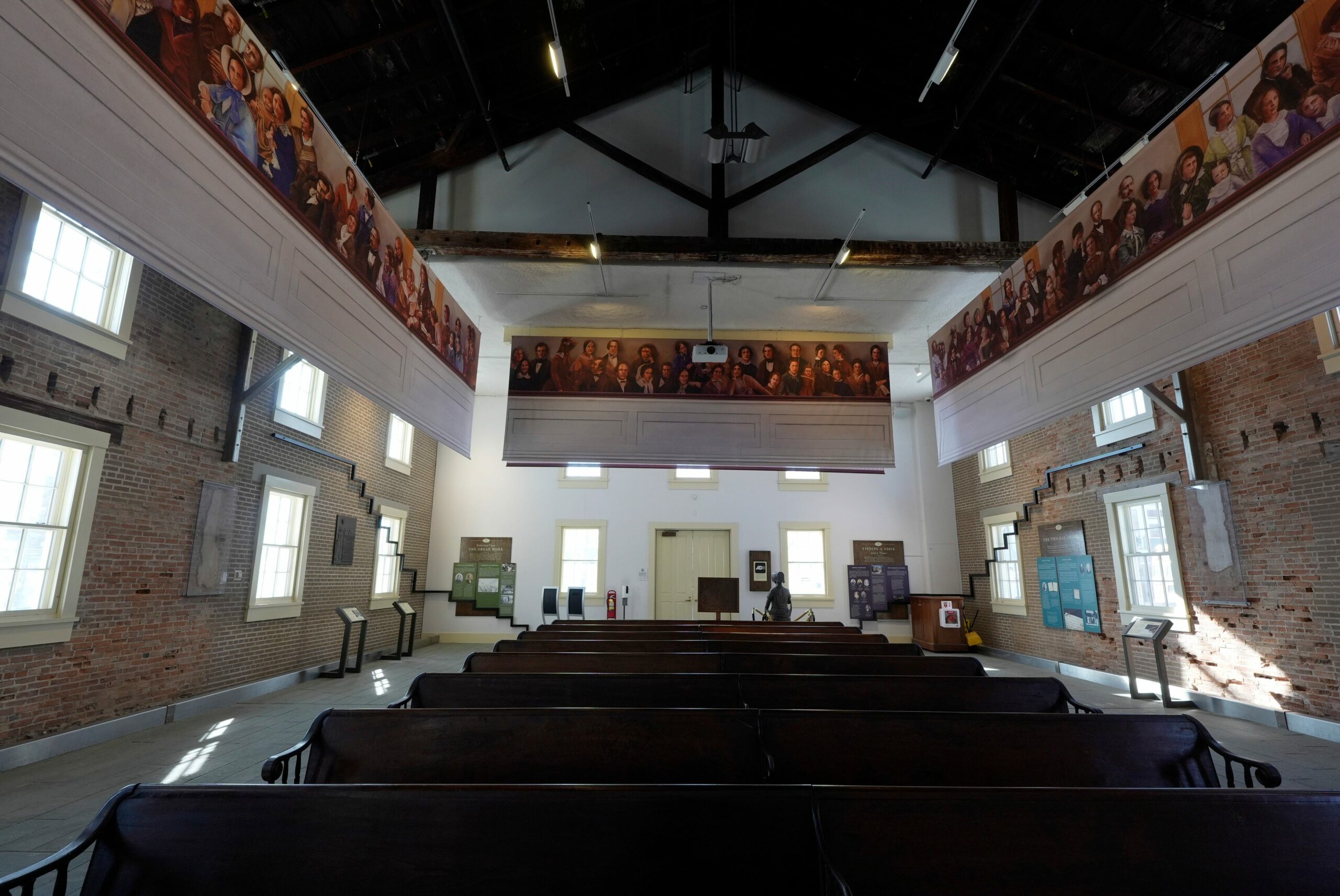
The Wesleyan Chapel
Sit in the pews of the chapel that started it all, or read the words of the Declaration of Sentiments at the lectern in the front. Inside those walls, you can feel the memory and energy from the first Women’s Rights Convention held there in 1848.
Elizabeth Cady Stanton’s House
Walk through Stanton’s house, which she used to call “Grassmere” and the “Center of the Rebellion.” It may look different today, but there you can get a better idea of how one of the “first wave” activists lived her life.
M’Clintock House
See the home of the convention organizers, Mary Ann and Thomas M’Clintock, where the Declaration of Sentiments was drafted. This house was also part of the Underground Railroad. It is located in Waterloo, New York, not Seneca Falls with the other sites.
Hunt House
Also located in Waterloo, the Hunt House is where the idea for a Women’s Rights Convention was born. Walk around the home where Jane Hunt invited Lucretia Mott, Mary Ann M’Clintock, Martha C. Wright and Elizabeth Cady Stanton for a tea party that turned into a discussion of the injustices women were facing, which resulted in the plan for the convention.
Declaration Park and Waterwall
Back in Seneca Falls, make a stop in the little green park between the Visitor Center and Wesleyan Chapel, known as the Declaration Park and Waterwall. There you can see and touch the full text of the Declaration of Sentiments and its signers, which was engraved on the waterwall.
Ask a local
Once you are done visiting the historical park, head over to Becky Bly’s shop, WomanMade Products, located at 91 Fall Street. Bly started her business as a T-shirt printing business on Long Island before opening up her Seneca Falls gift shop in 1991. The shop, which has the tag line “Relax, there’s a woman on the job,” is full of handmade products mostly made by women, including shirts, souvenirs, crafts, jewelry and more.
While walking around the vibrant shop, you will even find merchandise inspired by the movie, “It’s A Wonderful Life,” and the movie’s famous fictional town, Bedford Falls, which is commonly believed to be inspired by Seneca Falls.
Plan your visit
Best time:
Fall or spring for decent weather and fewer crowds. Visit in the summertime if you want to experience the convention’s anniversary.
Hours/admission:
Open 10 a.m. to 4 p.m. Friday and Saturday during winter (December-February). Open 10 a.m. to 4 p.m. Tuesday through Saturday during spring (March-May). Open 10 a.m. to 4 p.m. Monday through Thursday; and 9 a.m. to 5 p.m. on Sunday, Friday and Saturday during summer (May-August). The historical park is free to visit year-round.
Getting there:
There is a small parking lot behind the Visitor Center.
Learn more:
The Women’s Rights National Historical Park is located at 136 Fall St. in Seneca Falls, NY. For more information about this historical park, visit nps.gov/wori/index.htm.