Cruising Altitude is a weekly feature focusing on air travel. Have you faced your own accessibility challenges during flights? Complete the form or send an email to me using the address found at the bottom of this page.
When you’re in the airport, the constant stream of announcements can be hard to handle. The order in which passengers board the flight to Orlando doesn’t affect your journey to Denver. However, picture how risky it would be if there were no announcements at all.
For numerous Deaf travelers, this is the reality of air travel. Important announcements at the airport and aboard planes are frequently made only through spoken words or other audio formats, which can result in individuals with hearing loss missing out on vital information such as last-minute gate changes or essential safety instructions during an emergency.
Begin your day with more knowledge. Receive all the news you need directly in your email each morning.
According to the National Institute on Hearing Loss and Other Auditory DisordersApproximately 30 million individuals aged 12 and above in the United States experience some level of hearing loss in both ears, meaning that this audio-focused information dissemination in airports could impact millions of travelers annually.
One of the travelers was determined to ensure I was paying close attention and recently made contact with me.
When booking my flights, I always inform them that I am Deaf. This information usually doesn’t reach the actual airline staff, such as the gate agents or flight attendants,” Corina Butler-Demeo wrote to me. “Every time I ask if it’s noted under my name or seat, they tell me there’s nothing on their list. Usually, even if I mention it, it gets overlooked, so I end up missing things like meals and important announcements.
Butler-Demeo, 36, mentioned that she often lacks access to closed captions on in-flight entertainment, which she noted is particularly annoying since she frequently travels between the United States and Australia, where the native of Boston currently resides.
She mentioned that she frequently gets accommodations she isn’t required to have while traveling by air.
You know what actually happens almost every time? A wheelchair is waiting for me when I step off the plane. This has occurred with almost every Deaf person I know who has flown. It’s very discouraging to arrive from a flight only to be greeted by an accommodation I don’t require,” her email stated. “It feels like I’m wasting resources when this occurs, and it’s somewhat embarrassing to have to clarify that I don’t need a wheelchair because I’m Deaf. It’s evident that my name is simply added to a list sent to the companies that offer wheelchair assistance.
Butler-Demeo’s background illustrates the aviation sector’s ongoing challenge in ensuring air travel is equally available to every passenger.
Here’s how they might accomplish it.
Better communication is needed
The greatest obstacle is access to communication,” Bobbie Beth Scoggins, the acting CEO of the National Association of the Deaf, stated in an email to me. “When airlines neglect to offer accessible communication, they are not merely causing annoyance — they are barring millions of Americans from fully engaging in air travel.
She mentioned that accessible announcements assist travelers at all levels.
Accessibility is beneficial for everyone,” Scoggins wrote. “Visual alerts, captions, and straightforward communication enhance the travel experience for all passengers, including those who are not fluent in English and individuals in loud settings.
For Butler-Demeo, it begins with the basic reality that her specific accessibility requirements are not frequently shared with everyone she meets during her travels.
“Generally, when purchasing a ticket, you can check a box to ‘request Special Assistance.’ Usually, there isn’t a ‘free text’ field to explain your requirements,” she wrote.
The outcome is that she frequently finds herself unable to fully convey her needs to airline employees during her travels.
If airlines had improved internal communication systems and more thorough training, Butler-Demeo wrote, her experience might have been more seamless.
“Employee training that involves customer interaction is also crucial. It’s important to have a fundamental grasp of the Deaf and Hard of Hearing experience and the communication techniques that usually work for us (such as getting my attention with a gesture or a light touch, ensuring you face me, and writing down key information),” she stated.
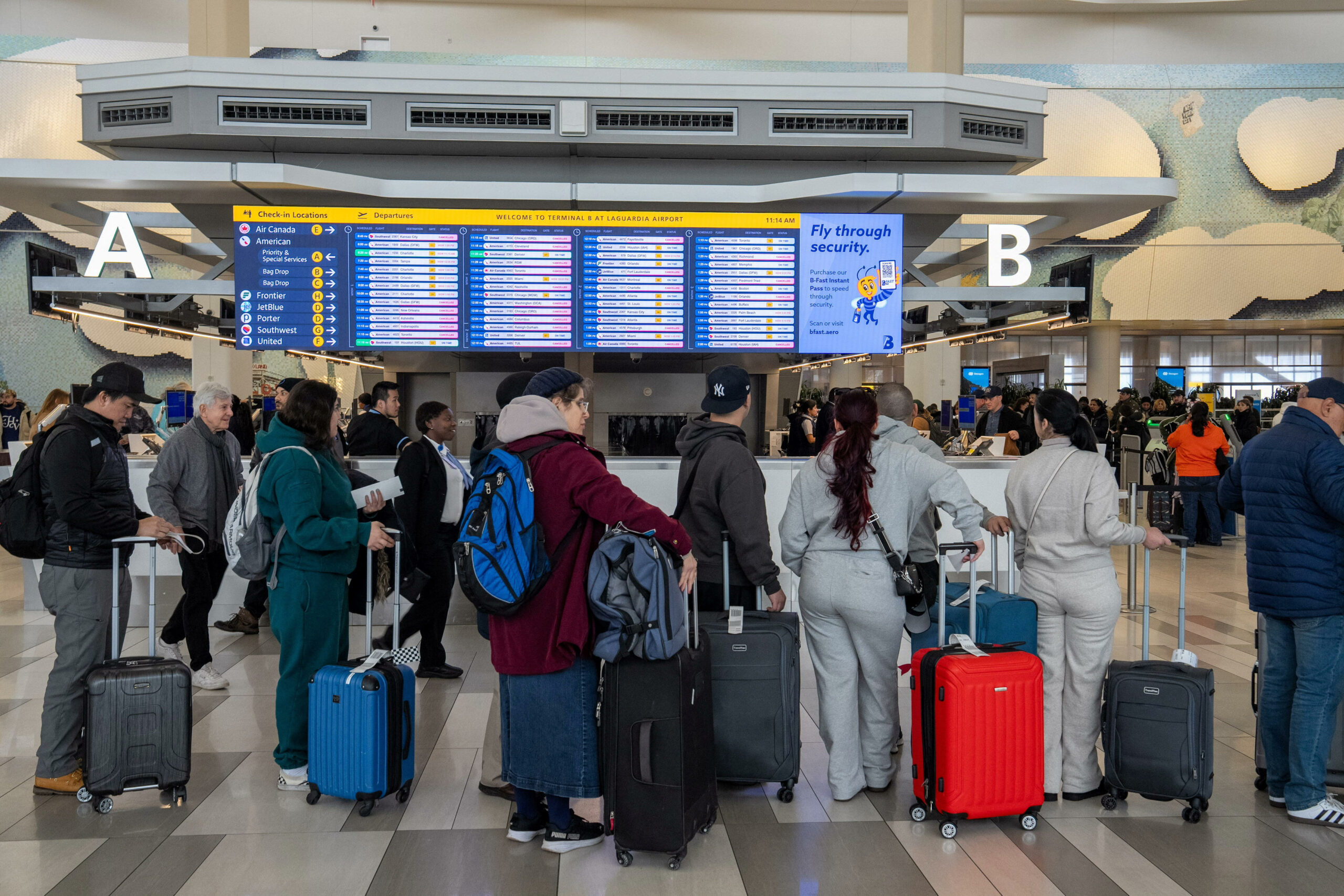
Numerous airlines offer updates such as gate changes and additional details in a visual format through their mobile application. However, during significant disruptions, such as extreme weather conditions, information is frequently communicated verbally by airport staff at the gate prior to the app being updated. This can result in travelers who depend solely on visual updates missing the latest information in real time.
Understand that this poses a safety issue
Scoggins pointed out that although it can be annoying to miss an in-flight movie without captions, the more significant and urgent issue regarding accessibility during air travel for Deaf passengers is safety.
In a setting where timing and safety are essential, inaccessible communication is more than just annoying — it can be hazardous,” she wrote. “Important accommodations such as captions for pilot announcements or visual emergency alerts are frequently missing or unreliable.
Tips for Deaf travelers
For supporters such as Scoggins, the perfect scenario would involve airports being constructed and airlines being organized with accessibility as the standard, although she recognized that progress in this field is unlikely to occur universally overnight.
“Technology is available for real-time captions and visual notifications. The issue isn’t whether it’s possible – it’s about what’s considered important,” she wrote.
In the meantime, Deaf individuals can take initiative to make sure their requirements are addressed during their travels.
Here’s what Scoggins recommends:
- Request for special arrangements ahead of time and verify them prior to your trip.
- Get there early to give yourself enough time to handle any communication requirements.
- Use airline applications for visual updates when they are available.
- Tell the gate agents in person that you require visual alerts for announcements.
- Understand your rights according to federal disability laws.
Nevertheless, she wrote, even when having to take those actions can be annoying. “The responsibility should not fall entirely on Deaf travelers to guarantee their own accessibility. Equal access is a civil right, not a courtesy.”
Zach Wichter works as a travel journalist and contributes the Cruising Altitude column to USA TODAY. He is located in New York and can be contacted at [email protected].
This piece first was published on USA TODAY:Travelers who are deaf claim that airline announcements pose a safety hazard.