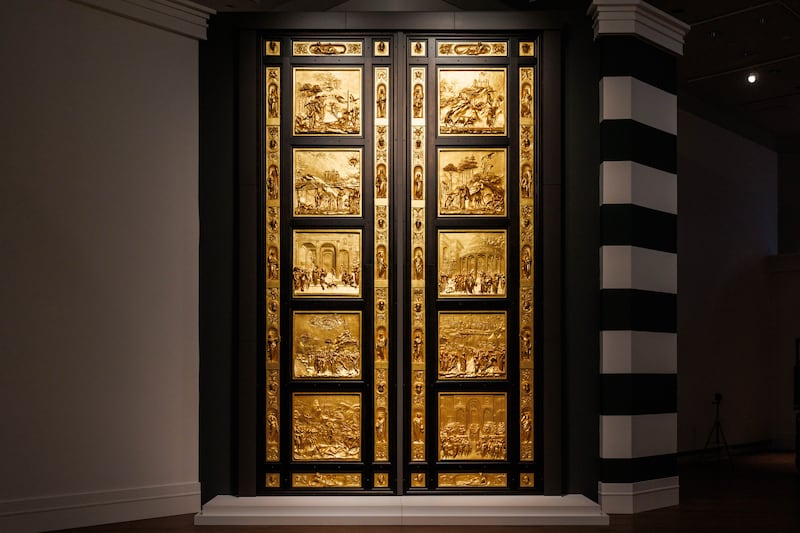
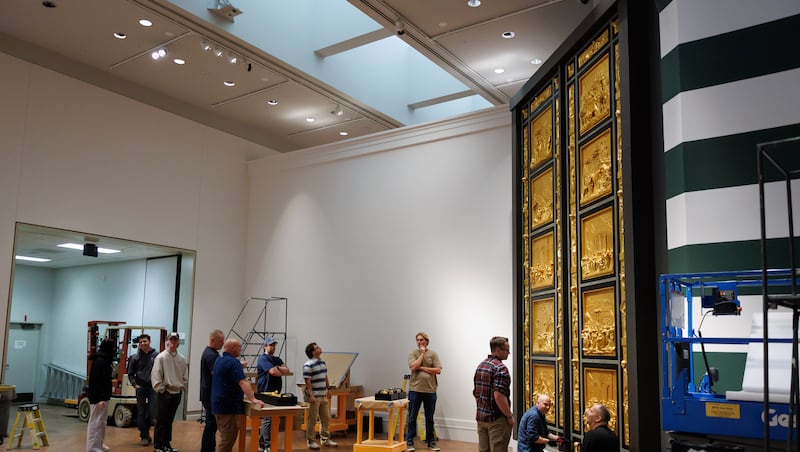
After years of being stored away and nearly a decade of careful restoration, the BYU Museum of Art has revealed restored gypsum cast panels that represent Lorenzo Ghiberti’s famous Gates of Paradise from the 1400s. The exhibition opened on February 20 and attracted over 3,000 visitors throughout the evening. These panels will remain on display until October, after which they will be moved to the museum’s atrium as part of its permanent collection.
What to Expect When Visiting the Gates of Paradise
According to Y Magazine, the exhibit includes 3D-printed scans of some of the panels that visitors can touch, offering a unique tactile experience. Additionally, there is a telescope located on the mezzanine level of the museum that allows for a closer look at the gilded armature. Riley Lewis, the marketing manager of the Museum of Art, shared that visitors are immediately struck by the grandeur and scale of Ghiberti’s work. He emphasized how the brightness and intricacy of the piece draw people in, highlighting the technical skill behind every detail.
Lewis also noted the precision and craftsmanship evident in each square millimeter of the panels, showcasing Ghiberti’s mastery. “He wasted absolutely no space with this piece, and his ability is on full display,” Lewis said.
The Origin Story
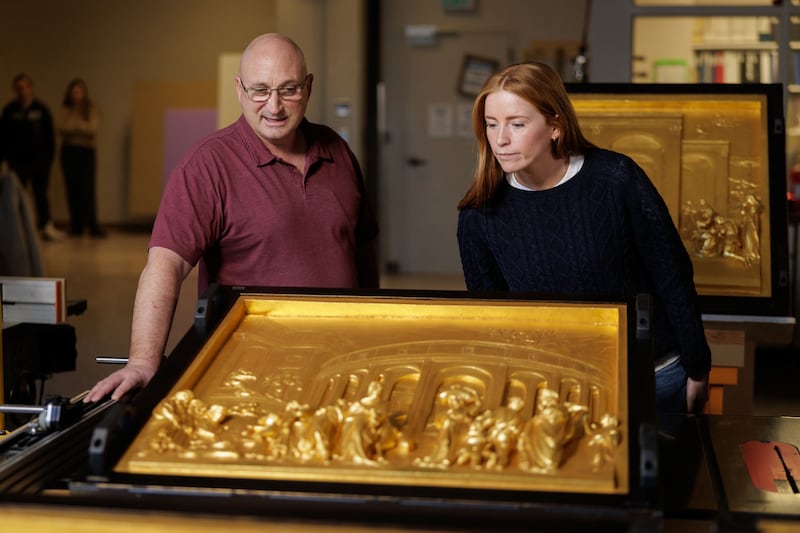
Janalee Emmer, director of the BYU Museum of Art, explained that Michelangelo was the one who first referred to the doors as the “Gates of Paradise.” Originally, these 17-foot-tall and 10-foot-wide doors were part of the Florence baptistery. They were removed during World War II for protection, and several plaster casts and molds were made afterward, which led to the creation of BYU’s replica.
The replicas were originally acquired by BYU-Hawaii in 1984 and stored in crates for 32 years before being rediscovered by former BYU art professor Sharon Gray. Gray described her surprise upon finding the “hidden treasure” in a storage room on campus. The panels were later transferred to Provo 10 years ago.
“It is a profound honor to be entrusted with this plaster cast of Ghiberti’s Gates of Paradise. We have accepted this responsibility with humility,” Emmer said. According to the university release, there are fewer than a dozen of these replicas still intact, making BYU’s acquisition particularly significant.
Biblical Themes
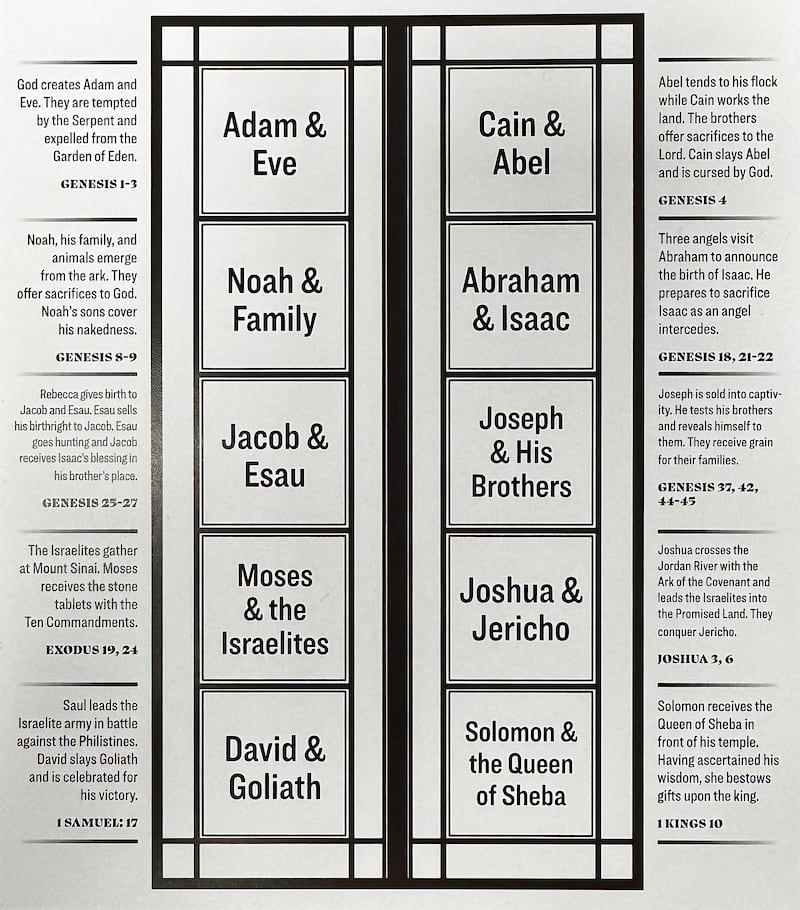
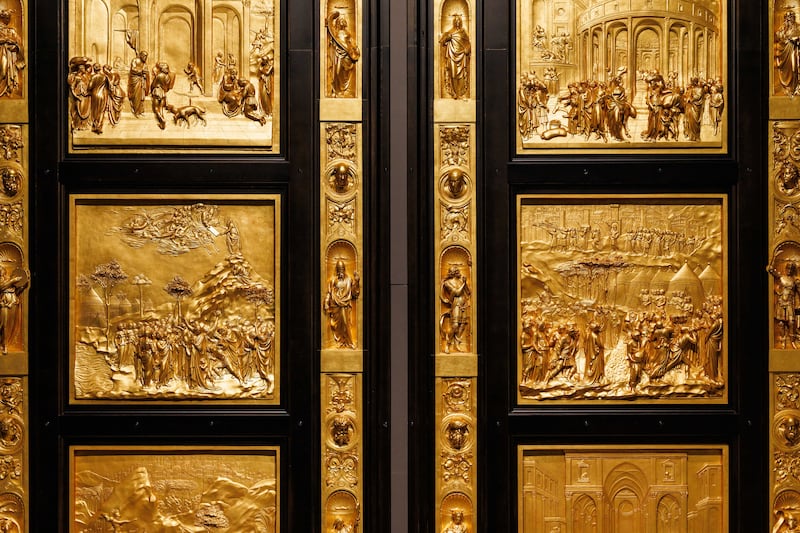
The panels feature 10 Old Testament stories, bringing the scriptures to life during the early Renaissance when many people were not literate or had limited access to the Bible. Emmer explained that this was the way people learned about the scriptures at the time. She hopes that Ghiberti’s portrayal of familiar biblical characters and stories will resonate with today’s viewers.
In addition to the 10 large panels, there are also 24 narrow panels and eight small square ones depicting biblical prophets and historical figures. The addition of these panels to the BYU Museum of Art aligns with the current “Come, Follow Me” curriculum, which focuses on the Old Testament.
Worldwide Religious Leaders Visit Provo

Lewis, the marketing manager for the museum, mentioned that one of his favorite aspects of opening a new exhibition is observing what people are drawn to. Unlike other exhibits, where there is usually a clear highlight, the Gates of Paradise have captivated visitors in different ways.
For instance, during the exhibition’s opening, Jewish leader Maeera Schreiber, Muslim leader Imam Ahmad Salah, and Catholic leader Monsignor Timothy Verdon participated in an interfaith panel discussing the biblical scenes depicted on the Gates. Each leader chose a different story as their favorite, highlighting the depth and variety of Ghiberti’s work.
“Every panel has different features. Ghiberti was well-known for going into the weeds of these stories and drawing out elements that sometimes got missed and putting his own interpretation into things,” Lewis said. This unique approach has resonated with many visitors.
Creation and Preservation
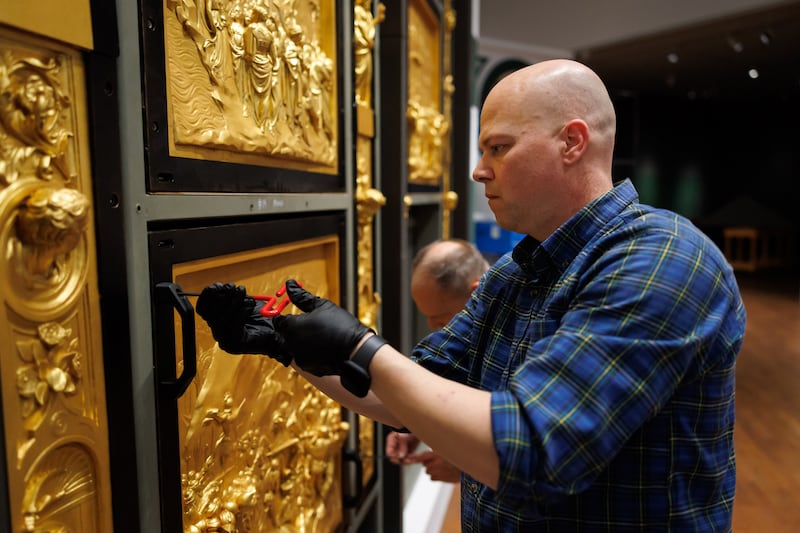
Despite being a replica, John Adams, manager of exhibition production at the museum, feels as though he is working on an original piece. He noted that the nearly 10-year restoration project was challenging, as the team aimed to preserve as much of Ghiberti’s original work as possible.
Many of the panels were damaged and had missing pieces. Upon inspection, the final condition report for the panels spanned more than 300 pages. Extensive efforts were made to repair damage, restore lost details, and apply 23-karat gold leaf—a common practice in historical restoration.
While it pales in comparison to the 27-year process Ghiberti undertook in the 1400s, the museum’s restoration mimicked the long process to some extent. Adams estimated that 13,000 student hours were spent on the project.
Student Involvement
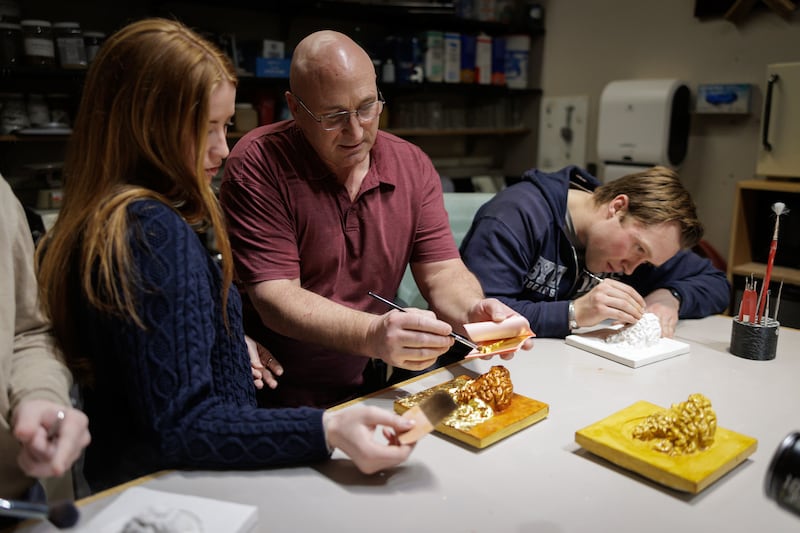
Many students expressed appreciation for the opportunity to work on the project. According to the university release, Rachel Maughan enjoyed focusing on precise details rather than rushing through class assignments. “It’s really nice to focus on growing those skills and treating it like Ghiberti would,” she said.
Another student assistant, Rhys Price, highlighted the cultural significance of the project, noting that it was also a work of dedication to God. Hannah Moss, another art student, summed it up well: “You don’t have to go to Italy to see these; you can see them right here in Provo.”