
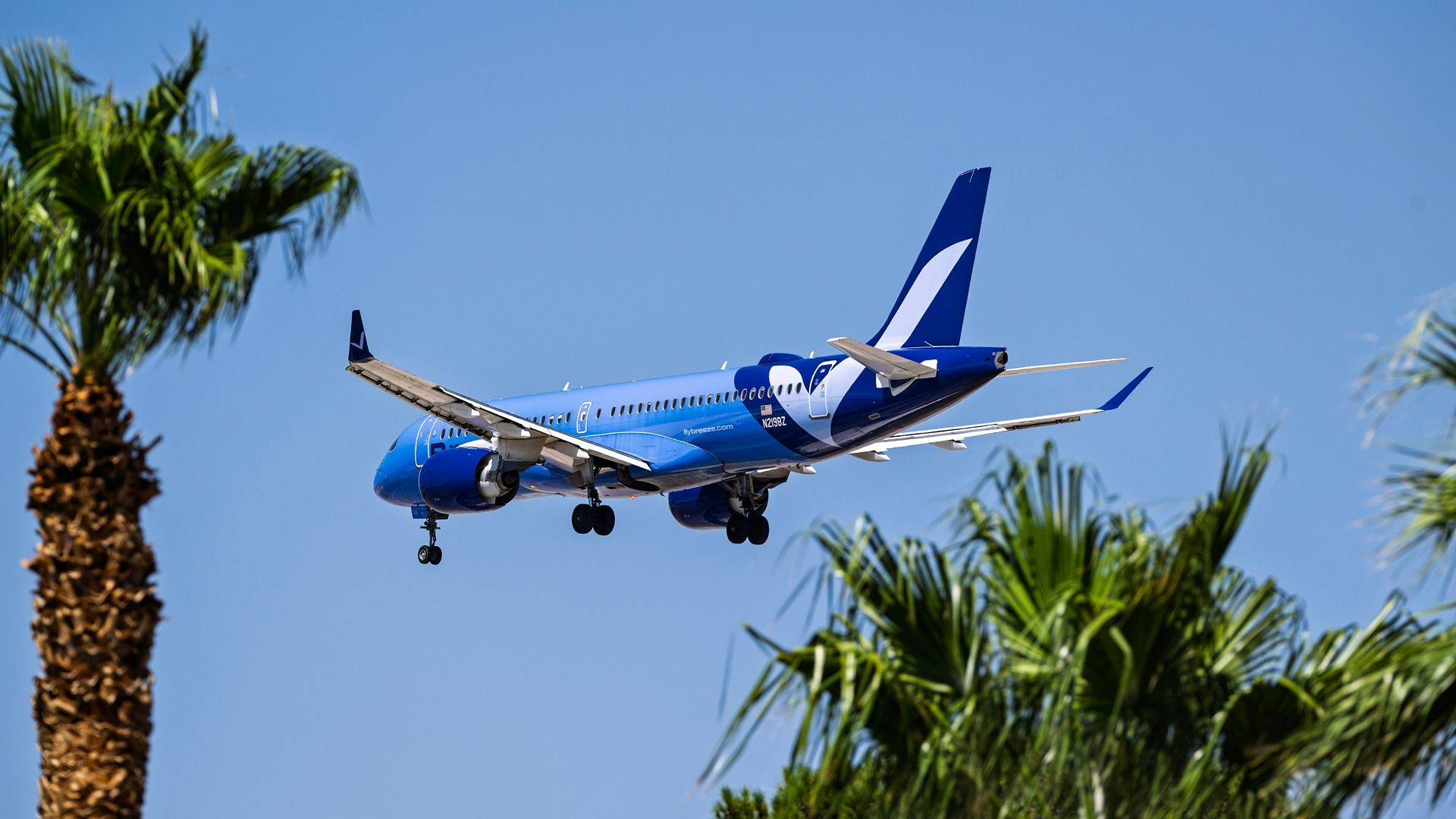
Breeze Airways Expands Fleet with Three New Airbus A220-300 Aircraft
Breeze Airways, a low-cost carrier based in Utah, recently added three new Airbus A220-300 aircraft to its fleet. These aircraft were delivered under a lease agreement with TrueNoord, a regional aircraft lessor. The deal is part of a long-term sale and leaseback agreement between the airline and the Dutch lessor.
The three A220s, delivered in February, mark the first Airbus aircraft to join TrueNoord’s fleet. This milestone is significant because the lessor’s current fleet primarily consists of aircraft from ATR, Embraer, and De Havilland Canada. TrueNoord has offices in Amsterdam, Dublin, London, and Singapore, and it manages more than 100 aircraft leased to over 30 carriers globally.
Enhancing Breeze’s Network with the A220
The A220 plays a crucial role in Breeze Airways’ operations. With its ability to serve Tier 2 and Tier 3 cities, the aircraft allows the airline to offer flights that other larger aircraft have struggled to sustain profitably. The A220 provides sufficient seat capacity while keeping operating costs lower compared to larger planes.
With the addition of these three aircraft, Breeze’s total operating fleet now stands at 49 (as per ch-aviation). This supports the airline’s nearly 300 year-round routes across the United States, Mexico, and the Caribbean. For TrueNoord, the arrival of its first A220 was a celebratory event. According to Anne Bart Tieleman, CEO of TrueNoord:
“The A220 complements TrueNoord’s existing Embraer E2 order book and highlights our appetite for new generation 100-150 seat class aircraft. This important announcement sets the tone for the months ahead as we continue on our strong upward growth path into 2026 and beyond.”
Expanding Affordable Air Service to 86 Cities
Since its first flight in May 2021, Breeze Airways has grown to serve 300 routes across 86 cities in the U.S., Mexico, and the Caribbean. In the U.S. alone, the airline operates in 76 cities, offering convenient low-cost flights to more than 34 states in the contiguous U.S.
Passengers benefit from no change or cancellation fees and customizable booking options. Onboard, travelers can enjoy fast WiFi and free family seating. A variety of meal and drink options are available for purchase using most major credit cards.
Breeze maintains operating bases in several key locations, including Akron/Canton, Charleston (SC), Fort Myers, Hartford, New Orleans, Norfolk, Orlando, Providence, Provo, Raleigh/Durham, Tampa, and Vero Beach.
A Growing Fleet of Regional Aircraft
Breeze’s fleet currently includes the following aircraft types:
- Boeing 737-800
- Embraer E190
- Airbus A220-300
The airline was originally founded as Moxy Airways in 2018 and launched operations as Breeze Airways in May 2021 with its inaugural flight from Tampa (TPA) to Charleston (CHS). It was founded by David Neeleman, who is also known for establishing other successful airlines such as WestJet, JetBlue, and Azul Linhas Aereas.
About TrueNoord
TrueNoord holds a diverse portfolio of 120 owned or committed aircraft across ten different types. Its average fleet age is around ten years. The company has a portfolio value exceeding $1.4 billion, according to its website.
TrueNoord is supported by several investment partners, including BlackRock, Flexstone Partners, Flandrin Coinvest, and Capital Dynamics. Its debt financing is secured through major banks such as Airbus Bank, BNP Paribas, Bayern LB, Société Générale, Deutsche Bank, Cathay United Bank, and MUFG (note: this list is not exhaustive).
The lessor works with a wide range of airlines worldwide, offering flexible, durable, and interchangeable regional aircraft. Key airline partners include Philippine Airlines, Air Canada, Wideroe, IndiGo, Ethiopian Airlines, LOT Polish Airlines, Emerald Airlines, Helvetic Airways, BA Cityflyer, Porter Airlines, AirSerbia, Wings Air, and SKYHigh.
For airlines, leasing aircraft provides financial flexibility and helps conserve capital for operations rather than asset ownership. This approach avoids high upfront costs and ensures access to newer, more fuel-efficient, and faster airplanes. It also reduces risk by allowing airlines to adjust fleet sizes based on market demand.