A New Approach to Water Scarcity in the Western U.S.
Mar. 7—For regions like Colorado and the broader western United States, where drought and water shortages have become increasingly common, a potential solution may be found in the clouds above. While this idea has been around for decades, recent efforts are showing promise in addressing the growing water crisis through a technique known as cloud seeding.
Cloud seeding involves introducing specific materials into clouds to encourage more precipitation. This practice is currently being tested in the St. Vrain and Left Hand Creek basins in Boulder County, with the goal of increasing winter snowpack. The project is especially relevant as Boulder experiences an unusually warm winter, with wildfires spreading across the region and snowpack levels remaining below average.
Understanding Cloud Seeding
Cloud seeding works by adding substances such as silver iodide into clouds, which act as nuclei for water droplets to form ice crystals. These ice crystals then fall from the cloud as precipitation, either snow or rain. The process relies on supercooled water—liquid water that remains in a liquid state even below freezing temperatures.
According to Kaitlyn Suski, head of research at Rainmaker Technologies, a cloud-seeding company based in California, the technique is essentially enhancing a natural process. “What cloud seeding does is it makes that process happen at higher temperatures and facilitates that process,” she explained.
Scott Griebling, water resources manager for the St. Vrain and Left Hand Water Conservancy District, added that naturally occurring particles, such as dust or pollution, also serve as points for water molecules to adhere to. “Cloud seeding just adds more particles so that water can adhere to them,” he said.
Current Projects and Challenges
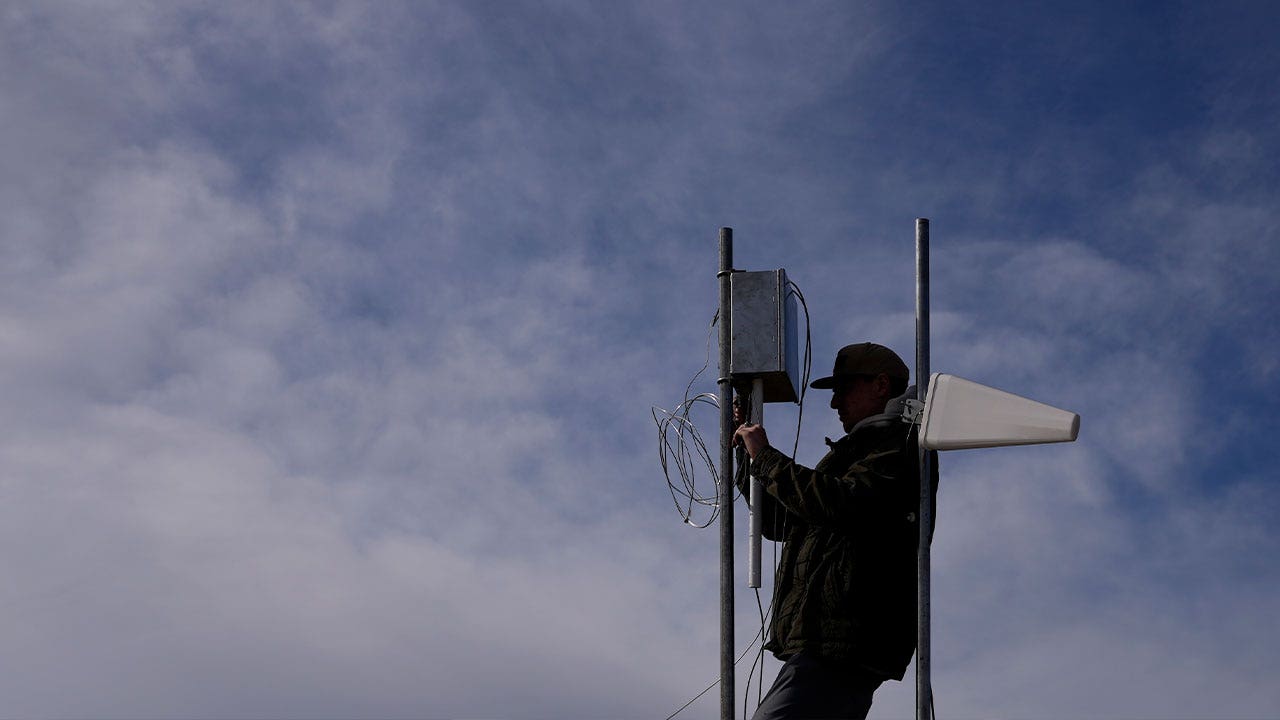
The St. Vrain and Left Hand Water Conservancy District has partnered with North American Water Consultants on a local cloud-seeding initiative. The project uses three ground-based generators located in rural areas of Boulder County. However, due to the unusually warm and dry conditions this winter, the project was unable to seed any clouds in January and only managed to seed some in February.
Cloud seeding has a long history, dating back to 1946. Initially, it was considered a lab experiment, but field studies eventually proved its effectiveness. Today, there are two main methods: airborne seeding, where materials are dropped into clouds via planes or drones, and ground-based seeding, which relies on updrafts to carry the materials into the clouds.
Limitations and Concerns
Despite its potential, cloud seeding is not a panacea. Researchers estimate that it increases snowfall by between 5 and 10% per storm. “It’s not like you’re taking a winter storm and squeezing all of the liquid out of it and turning it into snow,” Griebling noted. “In any given storm that comes through, only about 10% of the liquid content of that cloud actually falls as precipitation. So, we’re only taking a little bit more out of the cloud.”
Environmental concerns have also been raised, particularly regarding the use of silver iodide. However, no significant negative impacts have been documented. Some critics argue that cloud seeding is akin to “playing God,” questioning whether humans should interfere with natural processes.
The Future of Cloud Seeding
Despite these challenges, researchers and companies continue to explore ways to improve cloud seeding technology. Rainmaker Technologies, for example, is wrapping up a project in northeastern Utah and is developing drones capable of operating in harsh weather conditions.
Academic institutions, such as the University of Colorado Boulder, play a crucial role in advancing cloud-seeding research. Their collaboration with federal labs and organizations like NCAR (National Center for Atmospheric Research) has been instrumental in validating the effectiveness of the technique.
However, the future of cloud seeding depends on continued research and funding. In January, the National Science Foundation announced plans to consider new private or public ownership models for NCAR’s Mesa Lab in Boulder. If these labs face financial or structural challenges, it could hinder the progress of cloud-seeding research.
Conclusion
As climate change continues to exacerbate water scarcity in the West, cloud seeding offers a promising tool in the fight against drought. While it is not a silver bullet, it represents one part of a broader strategy to conserve and manage water resources effectively. With ongoing research and technological advancements, cloud seeding may play an increasingly important role in ensuring a sustainable water supply for the future.