The Evolution of Narrowbody Aircraft
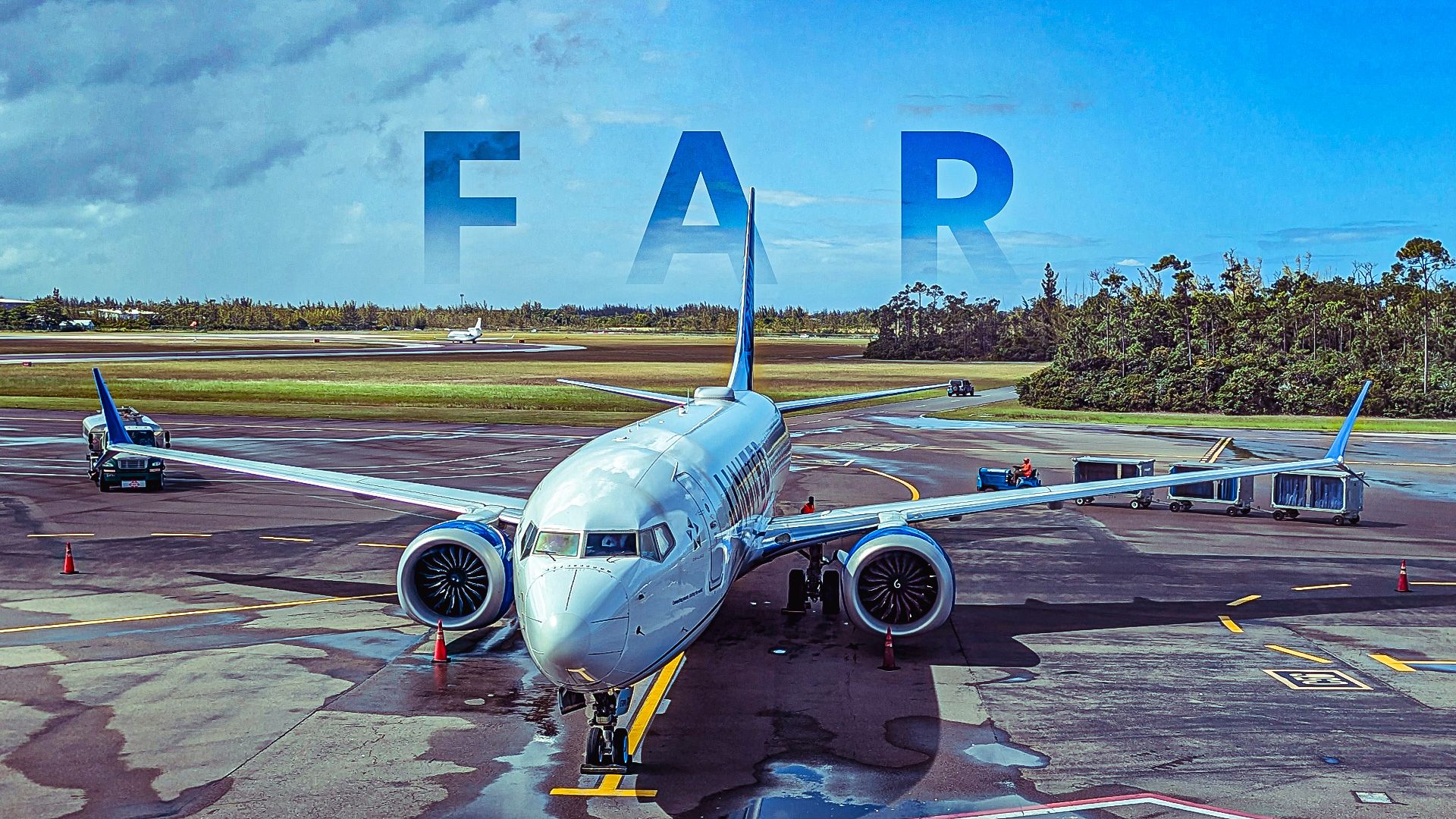
For decades, narrowbody aircraft were largely confined to short domestic hops and medium-haul routes of three to five hours. However, improvements in aircraft and engine technology have steadily pushed single-aisle jets to undertake longer and longer missions. In 2026, it is not uncommon to see a narrowbody crossing the Atlantic or operating flights blocked for over eight hours. While most immediately jump to the Airbus A321XLR when discussing narrowbody aircraft with impressive range, the Boeing 737 MAX 8 deserves some attention as well.
So how many hours can the 737 MAX 8 actually fly without refueling? While Boeing advertises a maximum range of around 3,500 nautical miles (6,482 km), translating that distance into flight time depends on several factors. But as the MAX 8’s longest scheduled routes this month show, the aircraft is more than capable of flights exceeding seven hours, and sometimes ones that stretch eight hours or more.
The Boeing 737 MAX Family
The Boeing 737 MAX program represents the latest generation of Boeing’s 737 lineup, building upon the aircraft’s 60+ year history. Launched in August 2011, just 11 months after Airbus announced the Airbus A320neo family, the MAX family introduced a suite of improvements to bring the 737 into the 2010s and beyond. With larger, more efficient CFM International LEAP-1B engines, advanced aircraft systems, and updated aerodynamics, the MAX family offers airlines a modern narrowbody workhorse.
The MAX family consists of four variants: the MAX 7, MAX 8, MAX 9, and MAX 10. Of these, only the MAX 8 and MAX 9 are currently in commercial service, with the MAX 7 expected to be certified later this year, with the MAX 10 following sometime after. Between the MAX 8 and MAX 9, the smaller 737 MAX 8 has quickly emerged as the best-selling and most versatile model. Typically, seating 162 to 178 passengers in a two-class configuration, although high-density layouts can fit upwards of 200 seats, the MAX 8 offers airlines the most versatility across markets of all types.
Additionally, at the heart of the 737’s redesign are the LEAP-1B engines, which deliver approximately 14% better fuel efficiency compared to the CFM56 engines on the 737NG. In terms of changes to the fuselage, Boeing introduced advanced technology winglets, distinctive split-tip devices that help to improve aerodynamic efficiency by reducing induced drag along the wing.
737 MAX 8’s Range By The Numbers
From a technical standpoint, the MAX 8’s headline figure is its maximum range of approximately 3,500 nautical miles (6,480 km), according to Boeing’s performance data. While this range is based on near-ideal flight conditions, it highlights the MAX 8’s sizable range for a narrowbody aircraft, especially given its capacity of up to 200 passengers. In fact, compared to the Boeing 737-800, the predecessor to the MAX 8, Boeing increased the range of its most popular 737 variant by nearly 20%, adding 565 NM (1,050 km) to the 737-800’s 2,935 NM (5,440 km) range.
In practice, this means the 737 MAX 8 can relatively easily serve cities like Reykjavík and Panama City from Boeing’s 737 final assembly line in Renton, Washington. The 737 MAX 8’s maximum range could even be enough to fly nonstop between New York and Paris, a distance of 3,160 NM (5,850 km), although strong headwinds and other factors would likely mean no airline would connect the two cities with a MAX 8.
Comparing the MAX 8 to its main rival, the Airbus A320neo, the MAX 8 outperforms the A320neo in terms of range. With the A32neo having a maximum flying range of 3,400 nautical miles (6,300 km), the MAX 8 offers airlines around 100 NM more range than the Airbus. While not dramatic, it highlights the 737 MAX’s versatility for airlines.
737 MAX 8 Fuel Capacity And Performance
In terms of fuel capacity, the 737 MAX 8 carries approximately 6,875 gallons of fuel, equivalent to around 26,000 liters. In weight, that translates to roughly 45,800 pounds (20,800 kilograms) of usable fuel. On the MAX 8, fuel is stored in wing tanks and a center tank, allowing the aircraft to maximize range without requiring additional auxiliary tanks, as some longer-range narrowbody competitors do.
Fuel burn varies throughout the different phases of flight. During takeoff and initial climb, the engines operate at higher thrust settings, resulting in significantly higher fuel consumption. Once established in cruise, however, the MAX 8 typically burns between 5,300 to 5,700 pounds of fuel per hour (2,400 to 2,600 kg/hr), depending on the aircraft’s weight and altitude. As the aircraft becomes lighter throughout the flight, pilots can increase the cruise altitude, where thinner air reduces drag and improves overall fuel efficiency.
To translate the MAX 8’s performance into flight time, cruise speed is a crucial factor. The MAX 8 typically cruises at Mach 0.79, which equates to roughly 450 to 460 knots (approximately 515-530 mph), depending on atmospheric conditions. At an average cruise speed of 455 knots, covering the MAX 8’s maximum range of 3,500 nautical miles, it would take about 7.7 hours in cruise. However, this figure is often extended further, given lower fuel burn during taxi and landing, with the longest MAX 8 routes having flight times approaching eight hours.
March 2026’s Longest 737 MAX 8 Routes
In March 2026, the 737 MAX 8 is increasingly being utilized on long-haul routes, ones where the flight time exceeds six hours. According to data from aviation analytics firm Cirium, the title for the world’s longest 737 MAX 8 flight this month goes to Brazilian airline GOL Linhas Aéreas Inteligentes. The airline’s once-daily roundtrip operation between Brasília, Brazil (BSB) and Orlando (MCO) covers 3,283 nautical miles (6,080 km), with the outbound flight blocked at a whopping eight hours and 15 minutes. The route is operated by one of GOL’s 58 Boeing 737 MAX 8s, configured with 20 extra legroom seats and 156 standard economy seats, with economy featuring just 30 inches of legroom for the eight-hour flight.
Outside GOL’s 3,778-mile marathon MAX 8 flight, fellow Latin American airline Arajet, the flag carrier of the Dominican Republic, utilizes one of its 13 MAX 8s to connect Santo Domingo (SDQ) with Buenos Aries, Argentina (EZE). This flight is blocked at eight hours and eight minutes, covering 3,245 nautical miles (6,915 km). In fact, all four of the top-longest 737 MAX 8 routes this month are operated by GOL or Arajet, with 15 total MAX 8 flights over 3,400 miles this month.
Besides routes in the Caribbean and South America, Icelandair utilizes the MAX 8 extensively on routes between Iceland and the West Coast. The carrier’s longest route with the 737 is from Reykjavík to Seattle, a distance of 3,147 NM. Additionally, Icelandair connects Reykjavík with Denver, Vancouver, and even Orlando. In fact, all of these flights, excluding the Vancouver service, are blocked at over eight hours, despite the slightly shorter distance they cover compared to GOL and Arajet’s marathon flights.
How The 737 MAX 8 Compares To Other MAX Variants
Within the MAX family, the 737 MAX 8 occupies a unique middle ground between seating capacity and range. The slightly larger Boeing 737 MAX 9 offers a slight increase in seating, typically around 15 to 25 additional seats, thanks to its stretched fuselage. However, the additional size of the MAX 9 comes with a modest reduction in maximum range compared to the MAX 8, a decrease from 3,500 NM (6,482 km) to 3,300 NM (6,112 km). For airlines, this difference means the MAX 9 is better utilized on dense medium-haul routes, whereas the MAX 8 can fill either routes with lower load factors or high-demand intercontinental services.
Meanwhile, the smallest member of the family, the Boeing 737 MAX 7, is designed for lower-capacity markets while retaining strong range capability. Although not yet certified by the FAA, the MAX 7 is expected to offer performance similar to or slightly better than the MAX 8 due to its lighter weight, with a range of 3,800 NM (7,040 km). On the other end of the spectrum, the Boeing 737 MAX 10 is optimized for the largest seating capacity on Boeing’s 737 family. With a range limited to 3,100 NM (5,740 km), the MAX 10 will be better suited for high-density routes rather than ultra-long narrowbody missions.
In terms of flight time, the MAX 7 can fly the longest, given its impressive range. In theory, the MAX 7’s range of almost 4,000 NM means it could theoretically fly for nine to ten hours without refueling. Meanwhile, the MAX 10 would likely stay below seven hours in flight time in most practical cases.
How Long Can The MAX 8 Fly Without Refueling?
On paper, the answer is relatively straightforward. With a maximum range of around 3,500 nautical miles and a typical cruise speed of around 450 knots, the Boeing 737 MAX 8 could remain airborne for eight or more hours. In reality, however, airlines must account for climb fuel, air traffic control constraints, weather deviations, and mandatory fuel reserves. Additionally, winds in particular can dramatically alter flight times. Strong headwinds, especially on westbound routes, can prolong the time spent in the air.
That said, real-world flight data shows the aircraft is capable of pushing close to and sometimes exceeding eight hours of blocked flight time. Routes like those operated by GOL, Arajet, and Icelandair demonstrate the MAX 8’s impressive endurance. Ultimately, while the MAX 8 was not designed for ultra-long-haul missions, it is more than capable of flying for nearly eight hours without refueling, an impressive achievement for an aircraft whose history dates back nearly 60 years.