
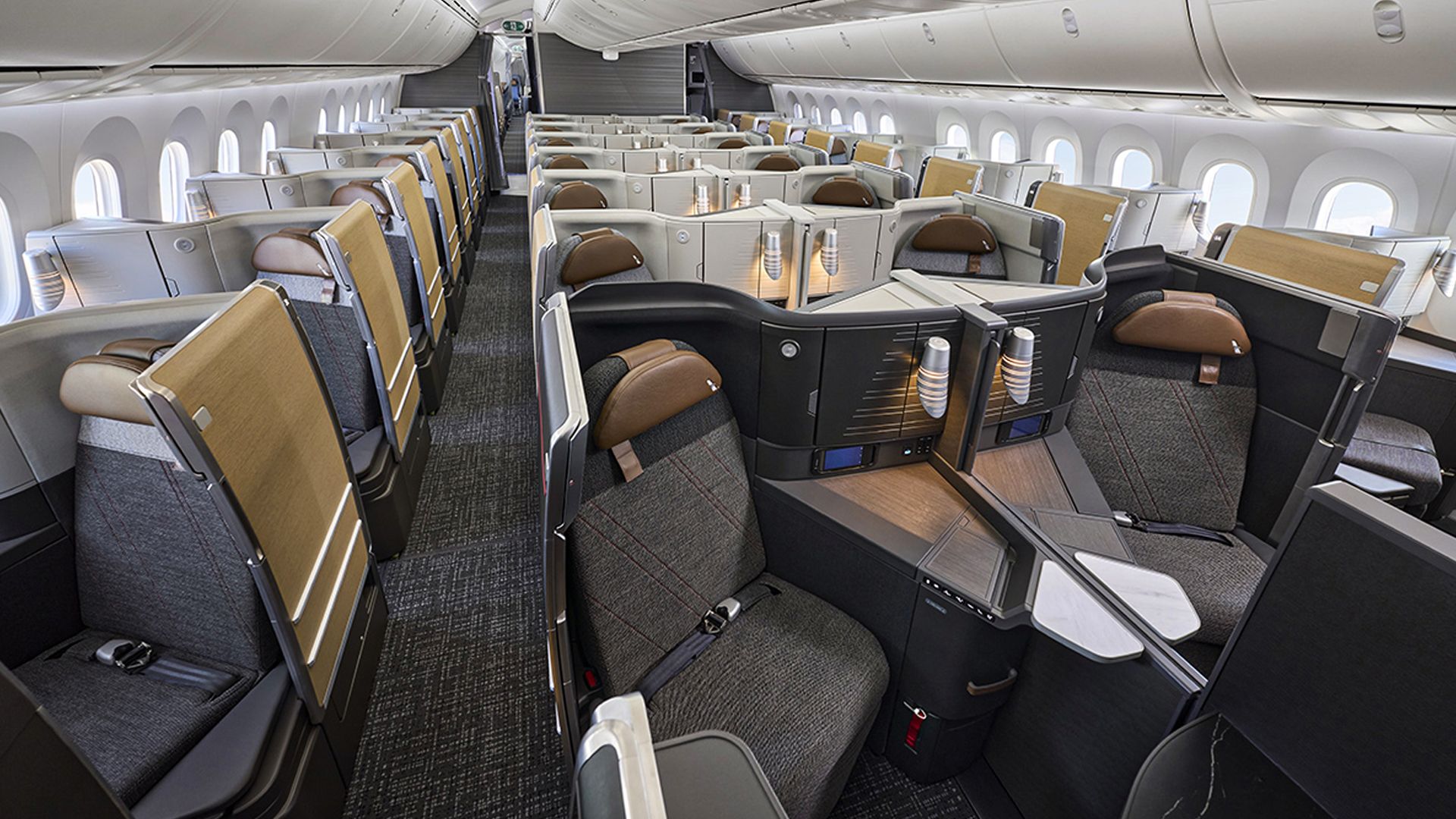
Choosing the Right Seat on American Airlines’ Boeing 787 Dreamliners
Selecting the ideal seat on a long-haul flight is no longer a minor detail. With various options available, the right choice can significantly impact your comfort and overall experience. For travelers flying from the United States to London or heading across the Pacific to Tokyo or Sydney, knowing where to sit on American Airlines’ flagship Boeing 787 Dreamliners can make all the difference.
American Airlines operates two variants of the Boeing 787: the 787-8 and the 787-9. Each has distinct cabin configurations, which influence seat selection. By analyzing detailed layouts from the Simple Flying seat maps portal, we can explore the best seats in each class—Flagship Business, Premium Economy, Main Cabin Extra, and Main Cabin. The goal is not just to find seats with more legroom but to understand how factors like privacy, traffic flow, galley placement, and bassinet positions affect your journey.
How To Choose The Best Seat?
The best seats on American’s 787 fleet are those that combine privacy, distance from high-traffic areas, and structural advantages such as bulkheads or exit-row pitch. On the 787-8 (20J/28W/186M), mid-cabin true window seats in Flagship Business, particularly Rows 3 and 4 A/L, offer a strong balance of privacy and quiet. In Premium Economy, Row 9 bulkhead seats provide unmatched legroom, though standard rows may be quieter. In Main Cabin, exit rows such as Row 16 (on most 787-8 layouts) offer significant pitch advantages, while select main cabin extra rows provide comfort without exit row restrictions.
On the 787-9 Version 1 (30J/21W/234M), Business Class remains intimate, and Rows 4A and 4L stand out for their distance from lavatories and galleys. Meanwhile, on the 787-9 Version 2 (51J/32W/161M), the expanded premium-heavy layout means choosing carefully within the much larger business cabin is critical; forward mini-cabin seats provide a more boutique experience compared to mid-cabin rows closer to galley traffic.
Across all variants, American’s Dreamliners feature Wi-Fi, seatback entertainment, and in-seat power throughout the aircraft. However, pitch, width, and cabin density vary, making seat selection a more nuanced process than many travelers expect.
Factors Influencing The Right Choice
American Airlines emphasizes fully lie-flat Business Class seats with direct aisle access, seat widths of around 21 inches on many aircraft, high-speed Wi-Fi connectivity, seatback entertainment screens, and universal AC power outlets available throughout the cabin. However, the reality of onboard comfort is often influenced by far more than seat width or pitch alone. Row placement, galley proximity, lavatory traffic, and bassinet positions can all shape the inflight experience.
For example, on the 787-8 in its 20J/28W/186M configuration, Row 1 in Business Class sits closest to the forward galley. While this offers quick access for service, it can also mean exposure to light and activity during meal preparation, particularly on overnight flights when breakfast service begins early. By contrast, Row 3 frequently represents a sweet spot. It is far enough from the galley to reduce disturbance, yet not so far back that lavatory traffic from behind becomes noticeable.
Seat selection on American’s 787 fleet is therefore less straightforward than simply choosing a cabin class. Privacy, noise exposure, bassinet locations, galley positioning, lavatory proximity, and even sunlight entering through the 787’s large electrochromic windows can influence overall comfort. According to American Airlines’ guidance on traveling with children, bassinets are installed at select bulkhead positions to accommodate infants on long-haul flights. These bulkhead seats, while offering excellent legroom, are typically prioritized for families. If an infant is assigned to that location, nearby passengers may experience occasional noise or movement, particularly on red-eye services when sleep is a priority.
Premium Economy and Main Cabin Considerations
Premium Economy on the 787-8 is arranged in a 2-3-2 configuration, with a seat pitch of approximately 38 inches across the fleet. The bulkhead Row 9 stands out for its generous legroom, often feeling noticeably more spacious than standard rows. However, the tradeoff is twofold: first, the potential presence of bassinets at that bulkhead; and second, the lack of underseat storage during taxi, takeoff, and landing. This means personal items must be stowed in overhead bins, which can be inconvenient on shorter sectors or when accessing essentials mid-flight.
In the Main Cabin, typically arranged in a 3-3-3 layout with a 31-inch pitch, Main Cabin Extra seats extend that to approximately 34–35 inches, depending on the aircraft. Exit-row seats, such as Row 16 on many 787-8 layouts, provide additional legroom and are highly sought after by taller travelers. However, these seats can come with restrictions: some may have limited recline, fixed armrests, or reduced underseat storage. As a result, even in the economy, the “best” seat depends on balancing space against convenience.
Passenger Experiences and Real-World Insights
Passengers and industry reviewers paint a nuanced picture of the Boeing 787 Dreamliner experience, especially regarding seating. While American promotes modern features and comfort, accounts from frequent flyers and independent reviewers add layers of real-world context that often contrast the marketing with lived experience.
From an airline perspective, American highlights lie-flat seats with direct aisle access in Flagship Business, wider and more reclined chairs in Premium Economy, and a range of legroom options in Main Cabin and Main Cabin Extra. The engineering of the 787 also allows for a quieter cabin and larger windows with electronic dimming, which American markets as enhancing passenger comfort during long-haul flights.
However, independent reviewers and passengers often describe slightly different realities. Take Business Class seating, for example: industry reviews consistently remark on the unique alternating configuration of forward- and rear-facing seats on many American 787s. While this pattern gives all passengers direct aisle access, it creates unconventional interactions between adjacent passengers.
Passengers on Reddit have offered interesting observations. In a discussion about Business Class rear-facing seats, several commenters noted that while rear-facing positions initially feel odd, they quickly become a non-issue once airborne, and some even prefer them. One frequent flyer said rear-facing seats actually felt comfortable once acclimated, with few differences in comfort compared to forward-facing seats during flight. Other passengers, however, expressed personal preferences for forward-facing seats and acknowledged that seat direction matters more for some than others.
Comparisons to Other Airlines
When comparing American Airlines’ 787 cabins to those of other major US operators like United Airlines and Alaska Airlines, the differences become more nuanced. United Airlines operates the Boeing 787-8, 787-9, and 787-10, featuring its Polaris Business Class. Polaris seats are arranged in a 1-2-1 configuration with alternating forward- and rear-facing seats, offering direct aisle access and enhanced privacy partitions. Unlike American’s relatively consistent design across its 787 fleet, United’s Polaris cabin offers higher-density premium layouts on the 787-10, with up to 44 Polaris seats.
Alaska Airlines, meanwhile, operates six brand-new Boeing 787-9 aircraft. These aircraft feature lie-flat Business seats in a 1-2-1 configuration and a spacious Premium Cabin. However, Alaska’s international Dreamliner product remains smaller in scale compared to American’s premium-heavy 51-seat 787-9 Version 2 configuration. American’s Version 2 787-9 stands out for its sheer premium density. This makes seat selection even more important, as the larger business cabin can feel less exclusive if seated near high-traffic areas.
Exceptions and Final Tips
Despite clear “best seat” recommendations, exceptions always exist. Bulkhead Premium Economy seats offer nice legroom but place passengers near bassinets. Families with infants often occupy these positions on transatlantic routes. In Business Class, seats in Row 1 on both 787-8 and 787-9 variants sit closest to galleys. Light sleepers may find meal prep noise disruptive. Meanwhile, the last row of Main Cabin on most variants has limited recline due to proximity to rear bulkheads.
Aircraft swaps also remain a risk. A carefully selected 787-9 Version 2 seat could become a Version 1 assignment. Frequent monitoring of seat maps through booking management is strongly recommended.
Overall Takeaway
The best seats on American Airlines’ Boeing 787 Dreamliners depend heavily on the exact aircraft version operating your flight. On the 787-8, mid-cabin Business window seats and Row 9 Premium Economy bulkheads stand out. On the 787-9 Version 1, Row 4 window seats offer the strongest balance. On the premium-heavy Version 2, forward mini-cabin Business seats provide the most exclusivity.
Across all variants, American’s consistent inclusion of Wi-Fi, seatback entertainment, and in-seat power ensures a baseline level of comfort. But the nuances of galley placement, lavatory traffic, and pitch differences make seat map literacy essential for maximizing comfort.
The Dreamliner remains central to American’s long-haul strategy. And for savvy travelers in 2026, knowing exactly where to sit is one of the simplest and most powerful travel hacks available.











![[IMAGE: Best Travel Apps for Stress-Free Adventures United States]](https://www.mathhotels.com/wp-content/uploads/2025/09/608_Best_Travel_Apps_Stress_Free_Vacation_Hero.jpg)