Understanding the Best Seats on Delta’s Boeing 737 Fleet in 2026
For travelers flying with Delta Air Lines, selecting the right seat on a Boeing 737 can significantly impact the overall experience of a domestic flight. As the backbone of Delta’s U.S. network, the 737-800 and 737-900ER models handle everything from short regional flights to long transcontinental journeys. Choosing the best seat—whether in first class, Delta Comfort+, or the main cabin—can make the difference between a comfortable trip and a stressful one.
Over the years, Delta has updated its narrowbody fleet, moving away from older variants to focus on the 737-800 and the stretched 737-900ER. These aircraft now feature various cabin configurations, ranging from the standard 16-seat first class on the 737-800 to more premium-heavy layouts on the 737-900ER. This guide will help you navigate the available seat maps for 2026, highlighting the best rows for legroom, seats to avoid due to misaligned windows or restricted recline, and how to secure the most comfortable ride across the entire fleet.
The Best Choice Is Always Further Forward
For the best experience on a Delta Boeing 737, the bulkhead seats in first class and the exit rows in the main cabin are prime targets. In first class, row one offers the advantage of no passengers reclining into your personal space, which is especially valuable on longer flights. Meanwhile, main cabin passengers should look for over-wing exit rows, such as rows 20 and 21 on the 737-900ER, which provide ample legroom that often rivals premium cabins.
Securing these spots requires understanding the specific layout of your assigned aircraft. For example, Delta Comfort+ offers up to 34 inches of pitch, an upgrade from the standard 30 to 31 inches found in the main cabin. However, the first row of Comfort+ may lack under-seat storage, meaning all carry-on items must be placed in overhead bins during takeoff and landing.
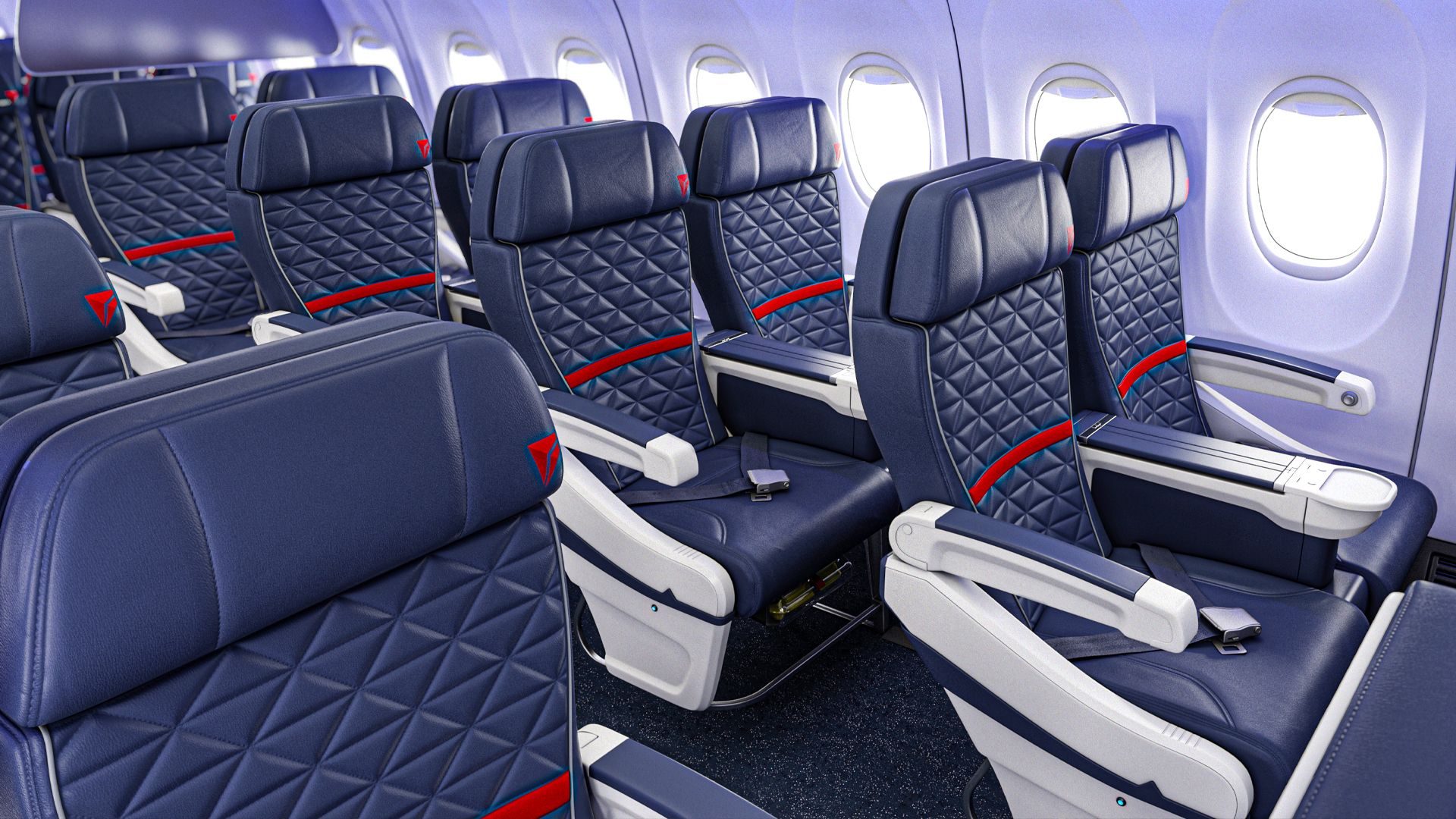
Delta’s 737s have undergone interior refreshes, evolving from padded recliners of the early 2010s to modern, space-saving slimline designs. While these newer seats maximize cabin density, they can feel firmer on longer routes. Therefore, choosing a seat with maximum pitch or a strategically placed window becomes even more important for comfort.
A Mix Of Layouts
The primary factor influencing seat selection is the specific aircraft variant and its unique cabin configuration. Delta operates the 737-800 in a relatively uniform layout, consisting of 16 first class seats and 144 main and Comfort+ seats. However, the 737-900ER fleet is notably fragmented, with different seating arrangements depending on the route and tail number.
This fragmentation means that what constitutes a prime seat on one 737-900ER might differ or even be absent on another. For instance, some 737-900ERs have only 12 first class seats and as few as six Comfort+ seats, shifting the location of bulkhead or exit row seats accordingly. If you’re booked on a high-density layout with only six Comfort+ seats, securing an extra-legroom spot becomes highly competitive, as only a single row is available.
Before selecting your seat, it’s crucial to verify the exact seat map in the Delta app to understand the version of the aircraft you’ll be boarding and where the exit rows are located.
Travelers Always Have A Plan
Frequent flyers on Delta’s 737 fleet often emphasize that while the best seat is subjective, certain rows provide a mathematically superior experience. On the 737-800, seasoned travelers often aim for row one in first class or the exit rows 19 and 20 in the main cabin. However, a common tip is to avoid row 15 on the left side of many 737-800 and -900ER aircraft, as these seats may lack a window entirely due to air conditioning risers.
Delta’s refreshed cabins feature 11-inch seatback screens in first class and nine-inch screens in the main cabin, along with power outlets at every seat. While the technology is an upgrade, some argue that the newer slimline seats can feel quite firm after several hours. To mitigate this, choosing a seat with maximum pitch, like the 37 to 39 inches found in first class, becomes essential for transcontinental routes.
For those connecting internationally, getting the right amount of space is even more important. A traveler flying from Atlanta to Seattle before a ten-plus hour flight to Tokyo or Seoul will find that row 21 on a standard 737-900ER is the best option available, offering vast legroom that allows you to exit the window seat without disturbing others.
Wildly Different Experiences
When comparing the Delta 737 experience to other aircraft in the fleet, such as the Airbus A321neo, the 737 holds its own primarily through its first class pitch on specific variants. While the A321neo offers privacy wings on its first class seats, it cannot match the sheer legroom found on Delta’s ex-Lion Air 737-900ERs, which feature a massive 45 inches of pitch in the first class cabin.
However, the comparison becomes less favorable when looking at the rest of these second-hand aircraft. These planes are often referred to as the bare-bones variant because many still lack seatback screens and power outlets, which can be a significant drawback compared to the consistently high-tech 737-800 fleet. This inconsistency can lead to a forgettable experience on some 737-900ERs.
If your priority is entertainment and staying charged for a connection to a long-haul flight, the standard 737-800 remains a more reliable choice than the gamble of an unrefreshed 737-900ER. These aircraft have not been rushed into the fleet like the inferior 737-900s, providing a far more consistent product with less chance of disappointment.
What To Avoid
Delta operates so many different versions of the 737-900ER that it’s easy to spend weeks eyeing the perfect exit row on a standard layout, only to have the aircraft swapped to a high-density 73J or 73R variant shortly before departure. This can lead to a seating shuffle where your carefully selected spot is replaced by a standard middle seat. To avoid this, travelers should keep their Delta app notifications active to monitor for any seat change alerts.
Other than the swap risk, there are specific seats within the 737 fleet that come with built-in drawbacks. On the -900ER, row 20 is often considered a danger zone because it sits directly in front of an exit path, meaning the seats typically do not recline. Close by, the mid-cabin exit door near row 21 can be significantly colder than the rest of the aircraft due to the door seal, which is something to consider for overnight or long transcontinental flights.
For the less consistent version of the -900s, it’s natural to be wary of the 73R’s lack of power. If you’re flying 5 hours from the East Coast to Seattle, arriving with a dead laptop or phone before a 10-plus hour transpacific flight can be a major setback. For these specific routes, the 737-800 remains the safer bet for a consistent, powered experience.
A Seat Lottery
Delta’s Boeing 737 fleet is a bit of a seat lottery that requires closely checking what the Delta app is showing. The standard 737-800 is the most reliable of the bunch, offering consistent power and screens at every seat, which is essential for passengers connecting to long-haul flights. In contrast, the 737-900ER fleet is fragmented, with the 73J variant offering a massive 45-inch first class pitch and the 73R version often lacking seatback entertainment and power outlets entirely.
For those in the main cabin, the clear best option is row 21 on the standard -900ER, which offers huge legroom due to the mid-cabin exit door. However, travelers must remain vigilant to avoid danger zones like row 15, which is missing a window on the left side, and Row 20, where seats often do not recline. If you are flying a 5-hour transcontinental leg to a West Coast hub like Seattle, these small details determine whether you arrive rested or drained before a 10-plus hour transpacific journey.
Ultimately, the best strategy in 2026 is to prioritize the -800 for consistency or hunt for the 73J for pure legroom. As Delta continues to harmonize these second-hand cabins with high-speed Wi-Fi and updated Delta Sync technology throughout the year, the experience will stabilize. Until then, a 5-minute check of your tail number remains the only way to guarantee you aren’t stuck staring at a plastic wall with a dead phone battery.