You might have grown fond of Oaxacan cuisine in Los Angeles, featuring its tlayudas and wide range of moles.
Yet within this lies another culinary tradition, unique to the Oaxacan highlands in southern Mexico: Zapotec. It is one of the oldest indigenous cultures in Mesoamerica, featuring a distinct language and cuisine that existed before Spanish colonization. However, like many other Indigenous groups, it is frequently overlooked, often overshadowed by the broader terms “Latino” or “Mexican.”
Nevertheless, outside the public eye, the culture remains very much vibrant.
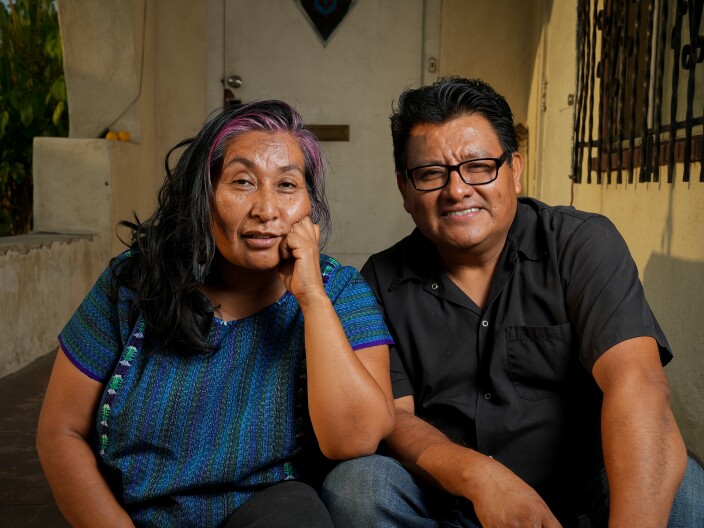
The Zapotec culture is flourishing in this area. There’s a lot going on within indigenous communities across Los Angeles, in backyards, kitchens, and neighborhoods that most locals don’t get to see,” said Odilia Romero, who leadsCIELO, an indigenous-focused nonprofit.
That’s why the tradition is being honored on March 4, whenLugya’h(pronounced LOOG-yah) will present its inaugural group meal from 6:30 to 8:30 p.m. The Oaxacan eatery, situated insideMaydan MarketIn West Adams, there is a collaborative effort between Romero and Alfonso “Poncho” Martínez, a chef recognized by James Beard. What started as a popular backyard pop-up has now found a permanent location in the market, where Martínez collaborates with chef de cuisine Evelyn Gregorio.
Martínez, who spent his childhood tilling land and sowing corn in Sierra Norte, is among a small number of indigenous Zapotec chefs operating in Los Angeles.
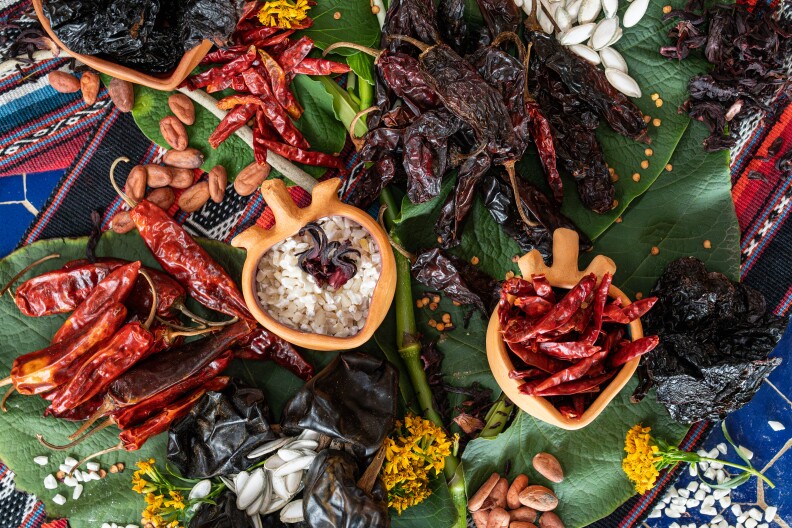
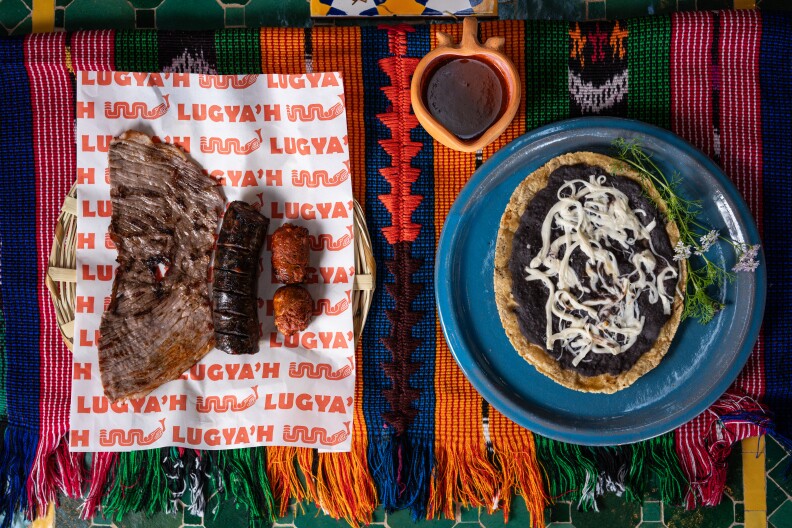
Lugya’h — which means “the face and hearth of the plaza” in Zapotec — typically serves a menu featuring tlayudas and moronga. However, the communal dinner represents a conscious shift, showcasing the wider range of Sierra Norte Zapotec cuisine, such as aged tasajó (cured beef), wild cebollina (a wild green onion that thrives in the mountains), and heirloom maíz.
It aims to spark a dialogue about Zapotec identity and recognition, highlighting the reality that indigenous individuals across California contribute to its food sector, from the fields to the kitchen, yet are often merged into the broader Latino identity.
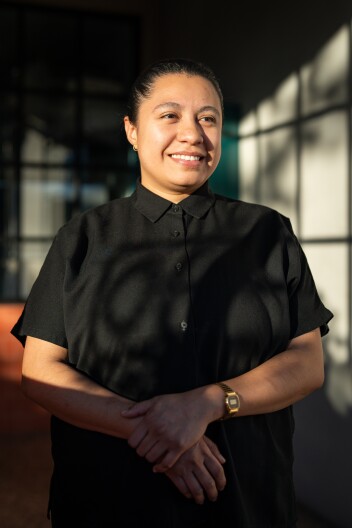
“From planting to serving your meal, they are native people — but they are never referred to in that manner,” Romero stated.
A 2024 study conducted by USC’s Equity Research Institute and CIELO revealed that one out of every five indigenous migrant workers in L.A. County are employed in the restaurant industry — a rate more than double that of Latinx immigrants as a whole. However, these individuals often go unnoticed, typically categorized simply as “Latino” in data and policy discussions. More than two-thirds of those who use CIELO’s services identify as Zapotec, one of the county’s biggest yet least recognized indigenous groups.
It’s a conflict Martínez understands personally — a local museum once requested his recipe for an event, but then decided not to have him present to share the story behind it.
“They were interested in Oaxacan cuisine, but not in the Oaxacan people,” he said.
The menu
A four-course, home-style meal priced at $119 per person begins with tartare de tasajó — flank steak that is aged and seasoned in-house, then presented rare — a unique dish that is difficult to find anywhere else on the planet.
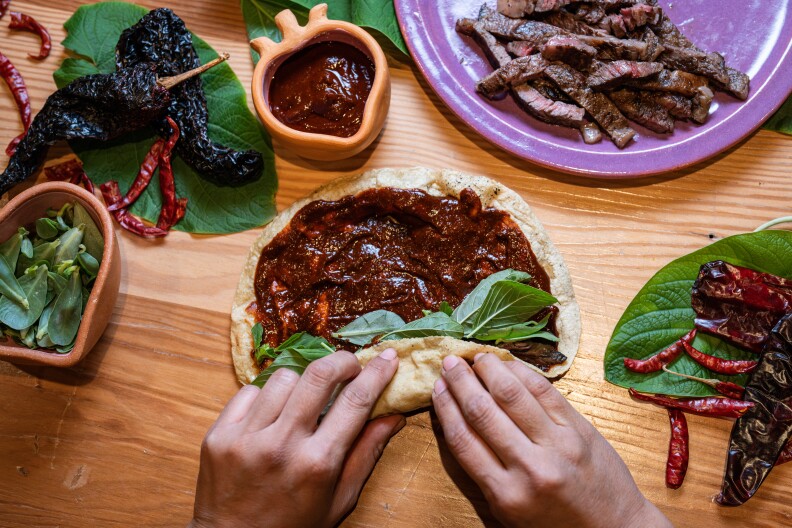
It is followed by an anchovy tostada on Lugya’h’s homemade heirloom non-GMO corn, inspired by topotillo and charales, small preserved fish commonly found in Oaxacan markets, served with avocado and guaje puree — a subtle reference to coastal Zapotec cuisine that seldom appears on L.A. menus. A farmers market salad featuring California citrus and tomatoes, along with grilled skirt steak, in-house made heirloom corn tortillas, and a selection of Oaxacan-inspired salsas complete the savory courses. Chef Evelyn concludes the meal with a guava mousse — evoking the pink guava water available in Oaxacan markets, sweetened with molasses.
Moving ahead, Martínez and Romero plan to organize two community dinners each month, featuring a new menu every month. For Martínez, these dinners represent a form of resistance through continued effort.
“We’ll keep moving forward so that it becomes something powerful,” he stated.
Details
Date:Wednesday, March 4th, between 6:30 and 8:30 PM
Address:Maydan Market, 4301 West Jefferson Boulevard, Los Angeles
Tickets:$119/person and available via their website.