The Concept of a Warp Drive in Modern Physics
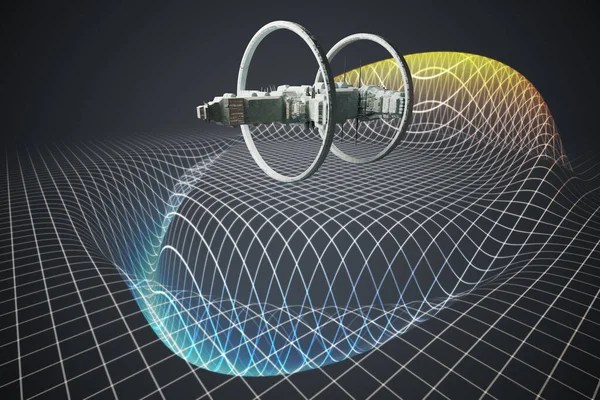
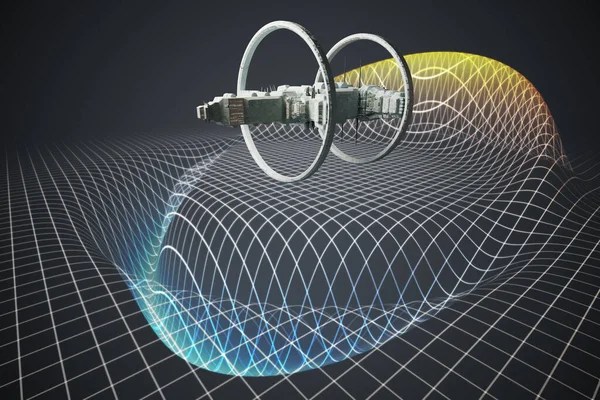
The idea of a warp drive has long been a topic of fascination and debate within the scientific community. While it is theoretically possible to fit a warp drive into the equations of Einstein’s general relativity, it remains practically unattainable. For over three decades, the concept of a warp drive has existed in a kind of limbo—physically impossible but theoretically possible. In 1994, physicist Miguel Alcubierre proposed a spacetime geometry that would allow a spaceship to travel faster than light without violating the laws of physics. This was achieved by creating a “warp bubble” that compresses space in front of the ship and expands it behind, effectively moving the ship through space without it experiencing the usual acceleration.
The challenge with this concept lies in the requirement for negative energy or negative mass, often referred to as “exotic” materials. These conditions conflict with established physics and are even more problematic when quantum effects are considered. Although quantum field theory allows for tiny patches of negative energy, scaling these microscopic pieces into a macroscopic propulsion system is a completely different set of challenges. A single calculation highlighted the difficulty: the amount of negative energy required for a warp bubble large enough to contain a ship could be orders of magnitude greater than any feasible engineering solution.
New Approaches to Warp Drive Research
This dead end has led to new research that seeks to retain the appealing geometry of the warp drive while eliminating the need for exotic matter. A team led by researcher Jared Fuchs from the University of Alabama, Huntsville, has proposed a model where exotic negative energy is replaced by positive-energy matter. This approach involves constructing a stable shell of matter around the ship and using a specific “shift vector” to govern the evolution of spacetime slices. According to Fuchs, this work changes the conversation about warp drives. Co-author Christopher Helmerich noted that even this more practical formulation still requires a substantial amount of energy, but it shows that warp effects are possible without exotic matter.
In real-world applications, this research redefines what progress means in the context of warp drive development. Instead of focusing on how to produce large-scale negative energy, the question now shifts to whether familiar forms of mass-energy can be arranged into a stable, controllable spacetime structure without causing instabilities at the bubble boundary. It is crucial to understand these edge effects because warp metrics induce extreme gradients, which is precisely the scenario where quantum fields behave unpredictably. Some analyses have found that activating a bubble can lead to divergences at its rim, while others suggest that the rate at which the configuration is built and the shape of the bubble also play a role. The new positive-energy approach does not ignore these questions; it simply moves them further along the path of exploration.
Computational Tools and Future Implications
An exploration of the spacetime metrics suggested by the model was conducted using a computational tool called Warp Factory. This tool highlights a growing trend in theoretical propulsion research, where numerical experimentation is used to search through the vast space of possible geometries. However, even with such advanced tools, the proposal remains based on an untested distribution of matter and energy. The accuracy and control required to maintain this distribution are far beyond current spacecraft capabilities.
What remains is a clear distinction between physics and engineering. While a starship era is not yet on the horizon, this work represents a significant step forward in reducing the reasons why the concept might not work. As Gianni Martire noted, the longest-lasting consequence of this research could be that warp-drive studies gradually become a laboratory for investigating how general relativity, quantum fields, and energy conditions interact with each other, one spacetime bubble at a time.