
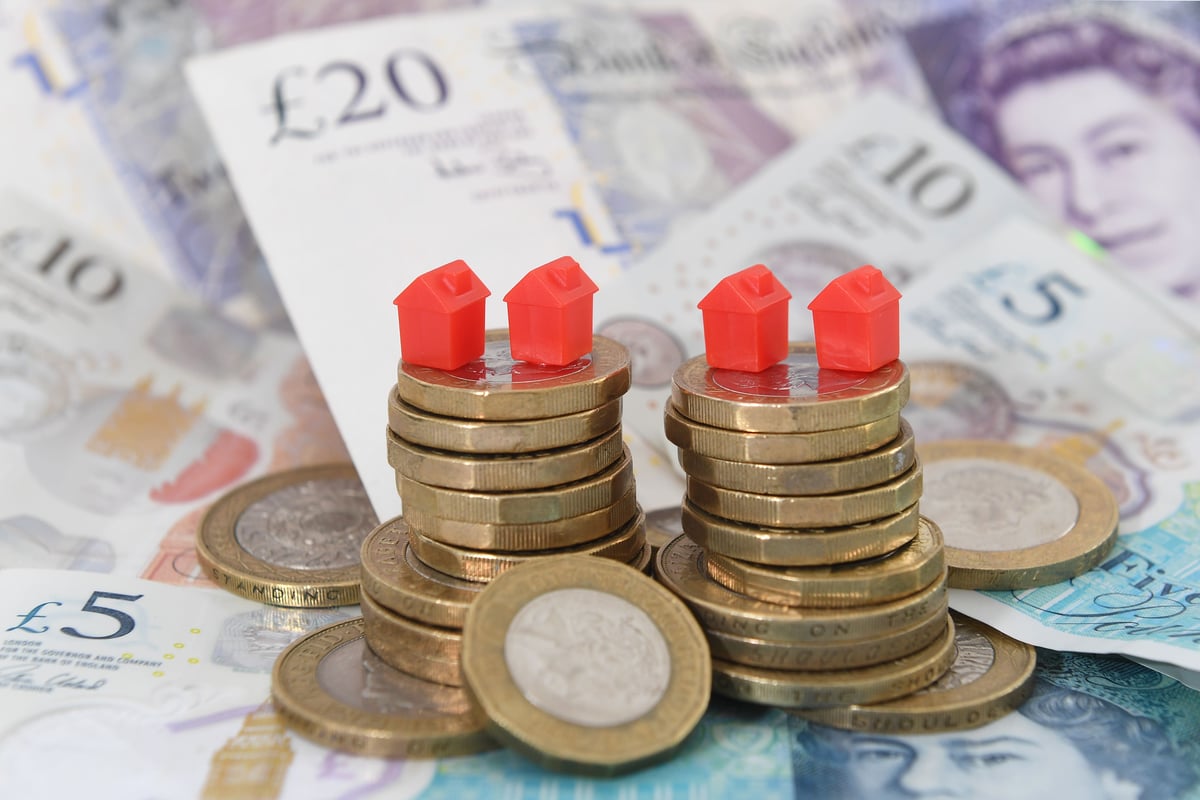
A financial opportunity exceeding £900 million inEnglandis being “missed” due to property deals collapsing, according to calculations by Rightmove.
The computation takes into account the number of property deals that collapse and do not re-enter the market within a year, considering standard stamp duty and real estate agency fees.
Rightmove calculated that approximately £392 million in possible estate agency income and £515 million in potential stamp duty were lost during the previous year due to deals that collapsed and did not return to the market.
In addition, it projected that there is a nearly £7 million economic opportunity forScotlandand an opportunity of approximately £23 million in Wales through reduced lost sales.
The individual calculations take into account the reduced rate of falls in Scotland, as well as the varying land taxes in Scotland and Wales.
Last year, the average time required to buy a house was five months acrossBritainto go through the completion process, Rightmove stated.
According to Rightmove’s data, 6% of property deals fail and remain off the market for more than a year, while approximately one in five (23%) transactions initially face setbacks but eventually go through.
Johan Svanstrom, Rightmove’s CEO, said: “Our study emphasizes the potential economic benefit if the rate of dropouts can be lowered.
Over one in five transactions are impacted by dropouts, resulting in agents losing or experiencing delays in fees and causing some home buyers to incur thousands in additional expenses.
Rightmove utilized HM Revenue and Customs (HMRC) data on property sales and its average transaction price information to calculate the estimated amount of money being lost. It also considered transactions where first-time buyers might have received stamp duty relief.
Craig Webster, the managing director of Tiger Estates in Blackpool, stated: “The actual expense of those failed deals extends well beyond just a single missed commission.”
If a sale does not go through, the agent has already spent significant time and resources in obtaining the listing, promoting the property, screening and handling potential buyers, and moving the sale forward past the offer stage.
Anything that enhances the efficiency of transactions—especially in property transfers and data exchanges among involved parties—will lower the likelihood of deals falling through.
Enhanced and more transparent communication among agents, lenders, solicitors, and buyers fosters trust across the process and reduces the risk of delays escalating into deal cancellations.
Simultaneously, precise pricing and early legal preparation for sellers are actionable measures that agents can implement to more effectively control their own risks and provide buyers with clearer information from the beginning.
Mary-Lou Press, president of Propertymark under the National Association of Estate Agents (NAEA), stated: “Although fall throughs cannot be completely eradicated, many can be avoided through enhanced initial information, better communication among all parties involved, and a more efficient and digitalized transaction process.”
Our affiliated agents diligently strive to maintain cohesion among networks and assist customers through what can frequently be a complicated and anxiety-inducing procedure.
She stated, “We endorse initiatives that encourage increased digital transformation, earlier access to relevant information, and enhanced cooperation throughout the industry.”
Nevertheless, reform needs to benefit both consumers and professionals, making sure the system is effective and reliable.
Aneisha Beveridge, who serves as the research director for Hamptons and Connells Group, stated: “Certain kinds of sales are especially vulnerable in this current climate.”
Flats are more likely to experience delays, typically due to problems found in leasehold documents or building records that require additional time to address.
Sales that rely on a chain are also more vulnerable, as a single failure can impact numerous connected transactions.
Eventually, the later a deal falls apart, the higher the financial and emotional expenses.
A representative from the Ministry of Housing, Communities and Local Government (MHCLG) stated: “Purchasing a home is, for many individuals, the most significant financial decision they will make, yet the existing system is not functioning effectively.”
That’s why we are dedicated to changing the way homes are bought and sold throughout this parliamentary term.
We have discussed ways to enhance the system and will outline the following steps at a later time.
To get the top stories delivered to your email daily, clickhereto sign up for one or more newsletters provided by The Standard.