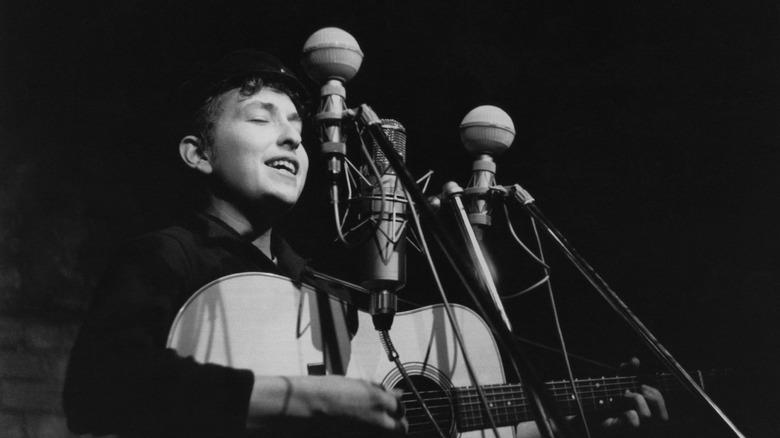
New York City moves quickly, but in some parts of downtown, you can picture it as 1961, and you’re sharing the same space with a fresh-faced Bob Dylan. NYC inspired Dylan and changed him. It became the focus of many songs, yet it was also where Dylan’s musical style developed. It was during his time in NYC in the 1960s that he adopted the name “Bob Dylan.” “New York City, the city that would come to define my future,” Dylan wrote in his memoir “Chronicles Vol. 1” (excerpted inForbes).
Most of Dylan’s time in New York City was spent inThe Village, one of New York’s most vibrant and artistic areas. Dick Weissman, a musician and writer of “Bob Dylan’s New York: A Historic Guide,” referred to Dylan as “a creature of the Village” in an interview withThe New York City History Center in Gotham. Another Dylan expert, Sean Wilentz, shared with Forbes, “Dylan had a significant impact on the Greenwich Village scene, but the scene also had a major influence on him.” The Village is where Dylan resided, where he landed his first big performance, and where he could often be seen writing song lyrics in the dim lighting of underground bars.
Although the city has inevitably evolved, many of Dylan’s original spots remain. Their historical significance and connection to the folk singer are recorded by organizations such as The Gotham Center and the Greenwich Village Society for Historic Preservation (GVSHP), which has its ownBob Dylan-themed mapof the Village. By utilizing these records and information regarding Dylan’s life provided by his biographers, we have identified five locations within the city that are still accessible today and are worth visiting for any enthusiast of music.
Read more: 5 Nations That Welcome Tourists and Offer Incentives to Relocate
Cafe Wha?
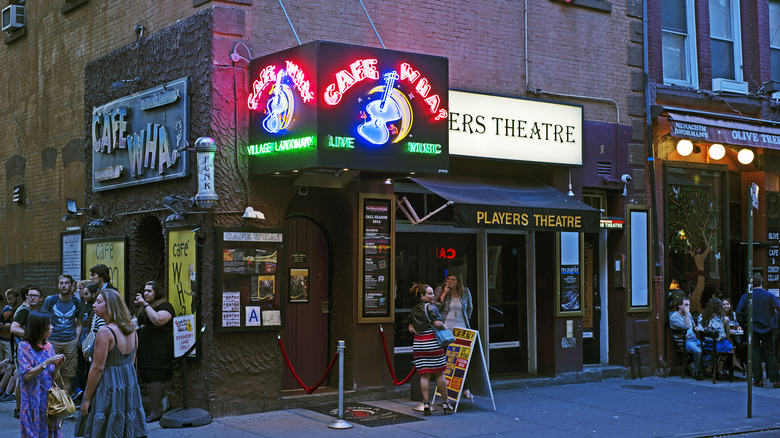
Dylan’s beginning in Greenwich Village (and New York City as a whole) was thanks to the comfortable basement venue on MacDougal Street known as Cafe Wha? On the first day of his arrival, Dylan persuaded the coffeehouse’s event coordinator, Fred Neil, to grant him a spot on the Village stage, according toThe New York Times. In one rendition of the tale,recountedOriginally owned by Cafe Wha? owner Manny Roth, Dylan told the owner he had no place to sleep; Roth requested assistance from the audience, and someone offered him a place to stay.
Dylan’s opening performance featured covers of Woody Guthrie songs — appropriate, as Guthrie was the reason Dylan initially moved to New York City, according to Weissman’s account to The Gotham Center. Following his first set, Dylan secured a jobplaying backing harmonicaAt the location, “which paid him $1 per night and a free hamburger,” Weissman mentioned. The coffeehouse served as a creative hub in the 1960s, where Dylan collaborated with individuals like Mary Travers, who would later join Peter, Paul & Mary. After only three performances, however, Roth dismissed Dylan due to consistent lateness.
Cafe Wha? is still thriving, even though it has relocated one door down from its original location, according toNYC Tourism. It is a two-minute walk from the West 4th Street subway station. In recent years, the place has moved away from its coffeehouse roots and now focuses more on its musical identity. It features live music performances.every Wednesday through Sundayin the evenings, and it’s recommended to book a reservation online in advance, as nights often fill up quickly. The area is quite small, but as oneGoogle reviewerput it, “It’s a basement venue, so just think of it as part of the experience.”
Caffe Reggio
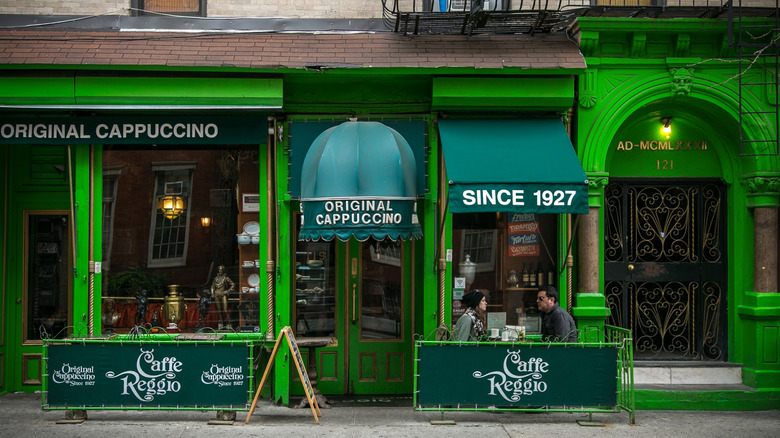
After his time at Cafe Wha? ended, Dylan looked for other places along MacDougal Street to fuel his love for music. One of the places he played during his early days in New York City, asUrban Archivedocuments, was Caffe Reggio. Dylan referred to Reggio and the other parts of MacDougal Street he visited as “loud and noisy and aimed at satisfying tourists who filled the streets at night,” as quoted in The New York Times.
Caffe Reggio boasts a rich history intertwined with the creatives who have made Greenwich Village famous. The café is almost a hundred years old, having opened in 1927, and throughout its many years, it has hosted notable musicians such as Jimi Hendrix and David Bowie, along with other prominent figures like Sophia Loren, as reported.The Saturday Evening Post.
But its collection of famous guests isn’t the only reason Caffe Reggio stands out as one of thetop coffee shops in Manhattan. It’s also a glimpse into history, featuring items that might astonish you are not enclosed in glass. At the rear of the café, glowing softly above its surrounding tables, is what’salleged to beThe first espresso machine introduced to America was brought over by the original cafe owner from Italy in 1902. There is an authentic painting from the Caravaggio school displayed on the wall, along with a bench from the Medici family. Although the cafe no longer features live music, you might still meet a writing songwriter during the late hours of the night. Reggio captures the essence of New York City’s 24/7 spirit, operating from 9 a.m. until 4:30 a.m. on Fridays and Saturdays (until 3 a.m. on other days). Its Italian-style green exterior can be found at the corner of West 3rd Street and MacDougal, just a two-minute walk from the West 4th Street station.
Theatre de Lys (Lucille Lortel Theatre)
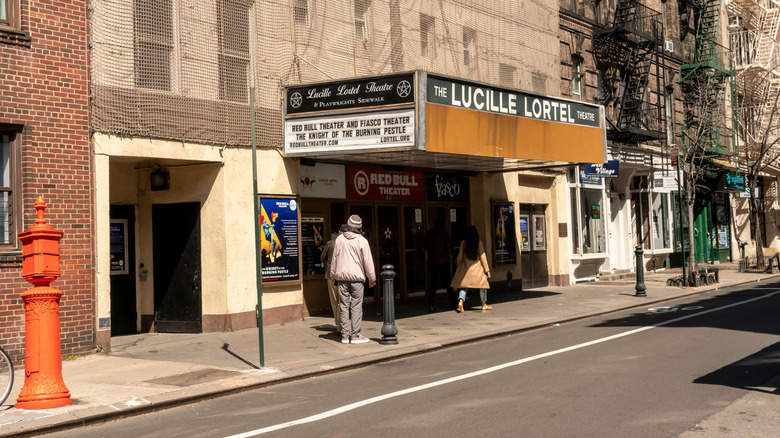
The 1960s Greenwich Village was a mix of various artistic expressions that significantly influenced Dylan’s musical style. AsWilentz said in Forbes,”It wasn’t only the music — there was dance, theater, and comedy … All of it was important to [Dylan].” Within the theater world, there may have been no place more significant for him than the Theatre de Lys, now called the Lucille Lortel Theatre, located on Christopher Street.
It was at the Theatre de Lys where Dylan witnessed a production of “The Threepenny Opera” by Bertolt Brecht, as noted by the GVSHP. The music from the play influenced some of Dylan’s most well-known songs, such as “It’s Alright Ma (I’m Only Bleeding)” and “Mr. Tambourine Man.” Dylan mentioned in his “Chronicles” (excerpted inGothamist), “If I hadn’t visited the Theatre de Lys and listened to the song ‘Pirate Jenny,’ I might not have realized that such songs could be composed.”
“The Threepenny Opera” set recordswith its extended presence in the mid-20th century on Broadway. Now, the Lucille Lortel Theatre remains a key venue for actors. The structure is historic, hosting off-Broadway shows.since 1955, and several of its productions have moved to Broadway, including “Oh, Mary!” from 2024. The theater has only one stage, and you can check what’s currently showing and what’s coming up on itswebsite. It’s only a three-minute walk from the Christopher Street-Stonewall subway station. You could also reach it in six minutes on foot from dinner atSip & Guzzle, a unique NYC eatery known for its exceptional burger.
The Bitter End
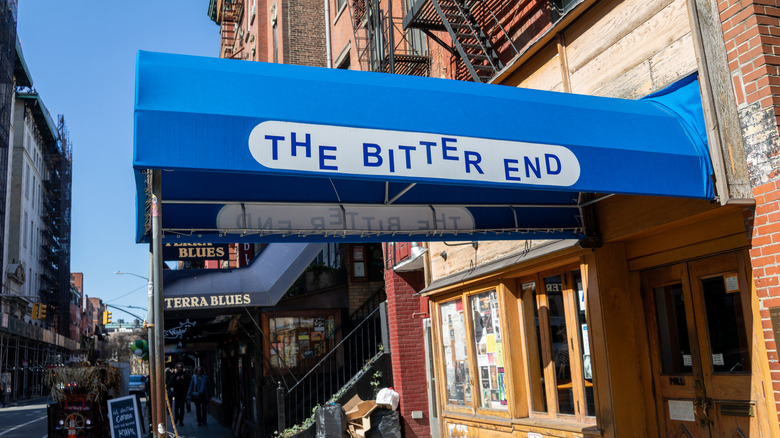
The Bitter End, a venue located on Bleecker Street,arrived in NYCthe same year as Dylan, 1961. It was one of the first places where Dylan performed in the city during his initial years there, as theNew York Postreported, but The Bitter End took on new importance in Dylan’s life years later. After leaving New York City with his wife and moving upstate for several years, Dylan came back to the city in 1969,as reported by The New York Times.This time, he arrived in Greenwich Village not as an obscure individual with no place to stay, but as a unique musician with a strong fan base. Dylan found some comfort at his old places, particularly The Bitter End.
The Times portrays Dylan as spending more time at The Bitter End playing pool or observing other performances rather than performing himself. At The Bitter End, “people like me and Bob Dylan didn’t just perform, we came to hang out,” remarked musician Kris Kristofferson in a different context.Times piece. It’s also where Dylan encountered his long-time friend Patti Smith, going to look for her behind the stage after her band’s performance.
Incredibly, The Bitter End has kept its original appearance since Dylan visited it. Archivalphotosphotos of the club’s interior from the 1960s and 1970s reveal the small stage, visible brick wall, and seats near the stage that are still present today. The Bitter End features live music performances spanning multiple genres (not only folk), with different lineups every night. You canbuy tickets onlineor by the entrance, although tickets are often cheaper if purchased online ahead of time. The club is approximately a six-minute walk from the Bleecker Street subway station.
Washington Square Park
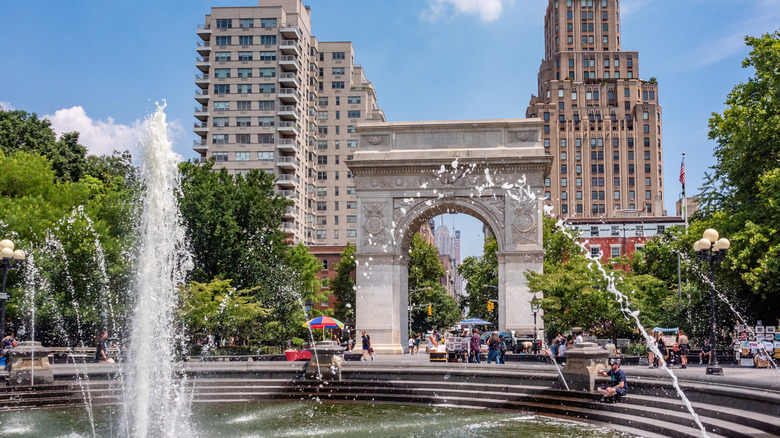
It might be claimed that Washington Square Park was the heart of New York City’s cultural life in the mid-1900s. It was where theBeat poets congregated, where Lorraine Hansberry delivered speecheson racial equality, and where Dylan wouldplay his guitarnear the central fountain. “Washington Square was a place where people you knew or encountered gathered every Sunday and it felt like a world filled with music,” Dylan mentioned in a Playboy interview, as cited inFar Out Magazine.
In 1961, the park chose to eliminate the musicians and street performers from its area, as theGVSHPrelated, and a commotion began. Thousands of demonstrators gathered in the park and intentionally played music as a response to the regulation — Dylan was among them. The demonstration ultimately reversed the ban, which is why live performers are still present there today.
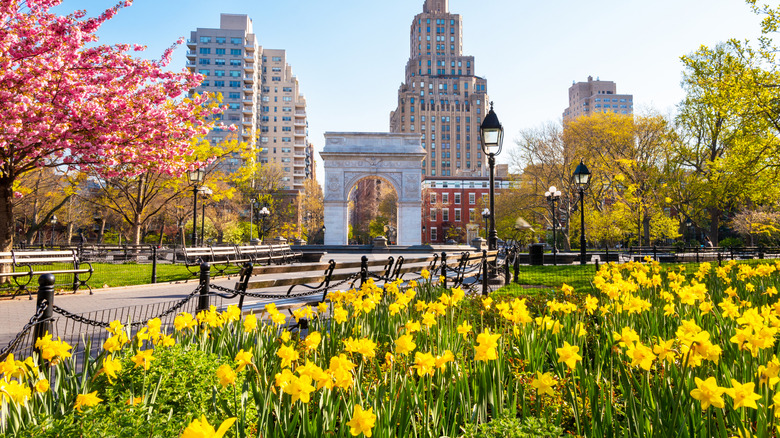
Dylan portrayed the park during a Playboy interview as a location featuring “[b]ongo drums, conga drums, saxophone players, xylophone players, drummers from various countries and backgrounds. Poets who would shout and express themselves from the statues.” Although The Village has evolved, the park’s ambiance still retains that mix of creativity and excitement. It’s typical to witness jazz musicians, spontaneous breakdancing performances, and gatherings around the park’s central area, even though it’s especially lovely in the warmer seasons when the fountain is active and framed by the Washington Square Arch. The park is accessible from 6 a.m. until midnight and is just a two-minute walk from the West 4th Street station.
Methodology
Bob Dylan has connections to numerous locations throughout New York City, especially in Greenwich Village, where he resided. These links are thoroughly recorded by historical groups such as the Greenwich Village Society for Historic Preservation, The Gotham Center for New York City History, and Urban Archive, along with historical pieces featured in publications like The New York Times and Forbes.
We referred to these sources to locate the spots that Dylan enjoyed, and then we narrowed the list to those that can still be visited today. Only locations that remain largely unchanged from when Dylan visited were included, and we also restricted our list to places that offer some form of creativity, such as live performances or serving as a gathering spot for artists. Because of this, Dylan’s homes—visible but not accessible—were not included.
Eager to uncover more secret treasures and professional travel advice?Sign up for our free email newsletter and Add us as a preferred search providerfor entry into the world’s most closely guarded travel insights.
Read the original article on Islands.