Hidden Handrails
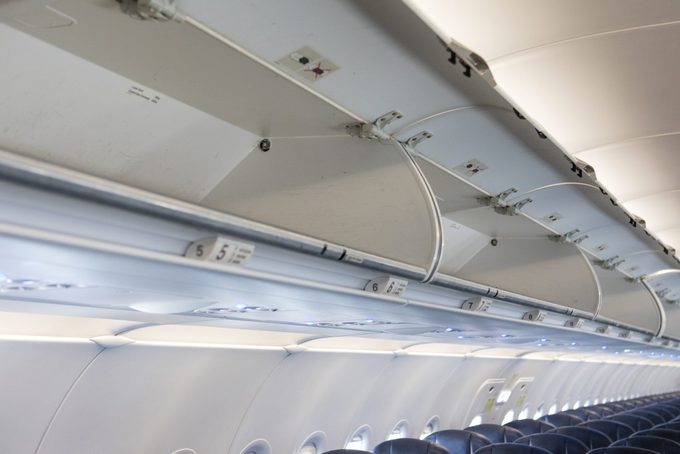
When you’re trying to return to your seat during turbulence, you might find yourself gripping the headrests for support. But did you know there’s another option? Take a look under the overhead bin. If you see a rail on the bottom, it’s exactly what it looks like. Cabin crew use these handrails to help themselves maneuver up and down the aisles, and passengers can do the same, especially if you’re up and suddenly it gets bumpy.
Morello notes that although the handrails are not standard on every aircraft, they have been in use since the early 2000s and are common on newer planes. This feature is often overlooked but can be incredibly useful during unexpected turbulence or when moving through the cabin.
Secret Sleeping Quarters
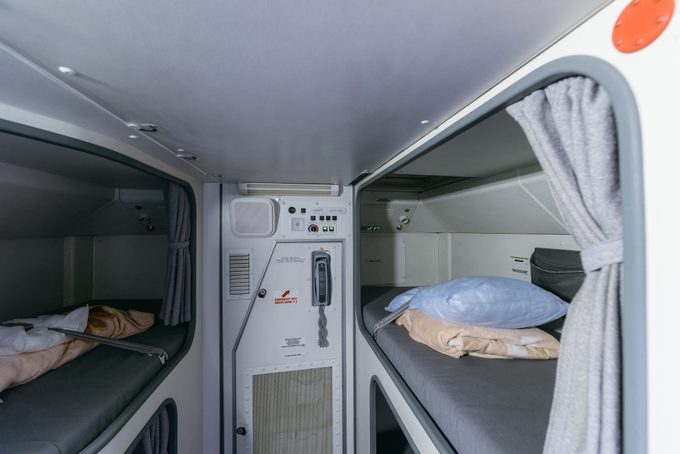
Long-haul flights can leave you feeling exhausted, and the same goes for flight attendants and pilots. Fortunately, most newer, wide-body aircraft have sleeping quarters for the crew called crew rest compartments. These areas are designed to be hidden from passengers and accessed by a discrete locked door. The size and location vary by aircraft and configuration, but they usually include bunk beds, temperature, light and communication controls, and a changing area.
On older aircraft that lack these features, the pilot might sleep in a not-so-secret place, such as a cordoned-off seat in business class. However, they haven’t abandoned their post. Transoceanic flights carry augmented crews that work in shifts, ensuring there’s always a minimum of two pilots in the cockpit.
Hidden Armrest Buttons
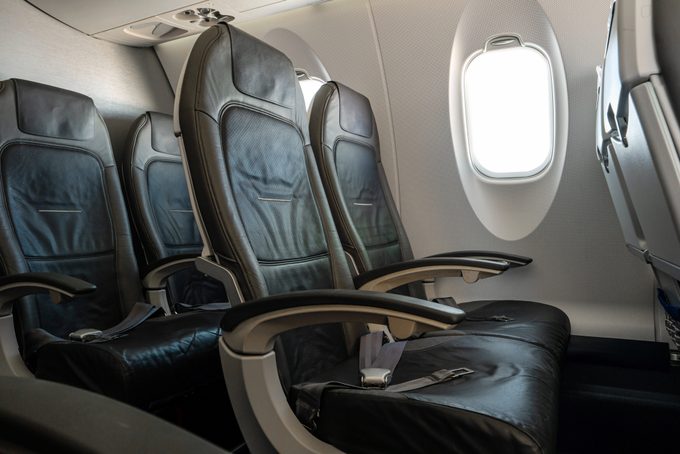
If you prefer an aisle seat, you’re not alone. But did you know some aisle seats offer additional flexibility? There’s a hidden button near the hinge underneath the armrest of some aisle economy seats that allows the passenger to lift the armrest. This feature is primarily there for accessibility, making it easier to enter or exit those tight economy rows.
The aisle armrest must generally remain down during takeoff and landing, and if it’s up, the passenger is more likely to stick out into the aisle and get hit by a cart or another passenger. However, if you find yourself in an empty row with that hidden button and movable armrest on the middle seat, you might score a chance to snooze horizontally.
Holes in the Windows
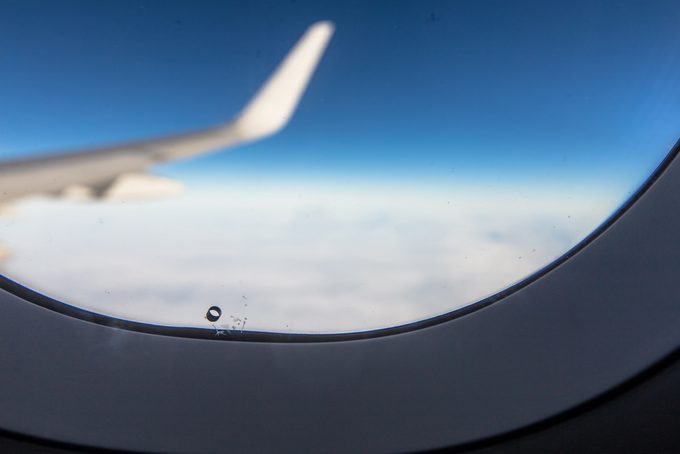
A hole in an airplane window seems like a bad idea, but the tiny hole at the bottom of the window was put there on purpose. Airplane windows have three panes, and the hole occurs in the middle layer to equalize the pressure between the strong outer window and the interior window pane. This is necessary due to the pressure differential between the cabin interior and exterior.
As a plane ascends and descends, the cabin is designed to stay at a comfortable pressure even as the outside pressure changes. The outside window takes on most of that pressure, so the hole in the middle pane helps balance it out. The inner window pane is simply a protective, cosmetic pane.
Hooks on the Wings
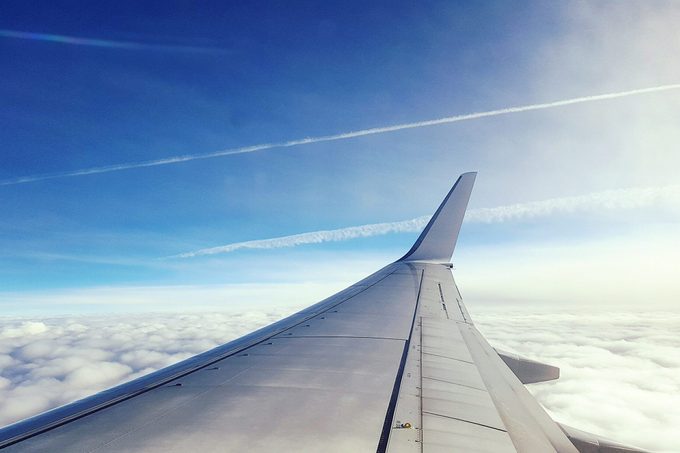
Ever noticed yellow hooks on the otherwise smooth, white surface of some aircraft’s wings? These hooks are used to attach ropes, called lifelines, to assist passengers with wing exits in the event of a “ditching,” which is an emergency water landing. During a water landing, the emergency inflatable slides should automatically deploy, but passengers may need to evacuate over the wing, which will likely be slippery.
Cabin crew can attach lifelines to the hooks for safer passage. Even if the event isn’t a water exit, the wing may still be slippery, and the ropes give passengers stability and help them stay safely on the wings.
Triangles Above the Windows
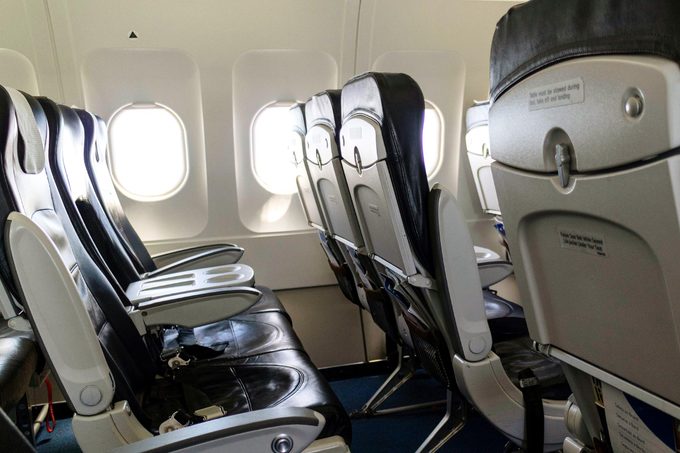
Have you seen those little black triangles above some windows of the plane? These are used by the crew to rapidly identify where the wing is located. Their placement has a purposeful design because they help the crew identify and inspect the leading or trailing edges of the wing to look for problems.
They are deliberately placed such that the marks only line up correctly to the specific part of the wing when viewed from a specific angle.
Hidden Handcuffs
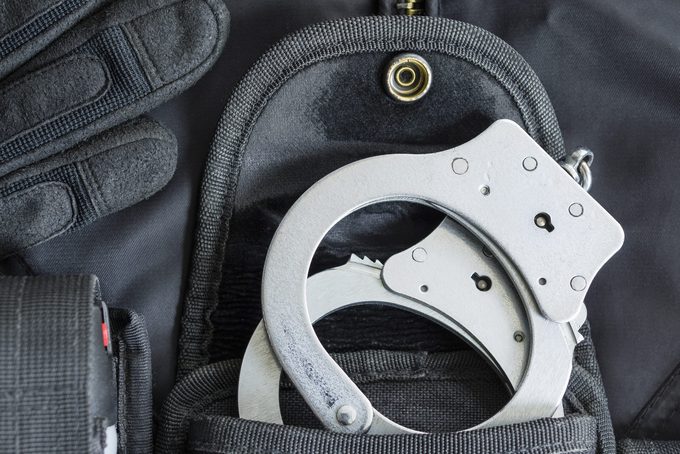
Every day we hear new stories of passengers behaving badly, from harassing flight attendants and shouting drunken threats to physically assaulting seatmates and wielding skateboards. The FAA reported more than 2,100 unruly passenger incidents in 2024, and just under 1,000 in the first half of 2025. After a spike in unruly passenger incidents back in 2021, the FAA implemented a zero-tolerance policy.
The preferred method to deal with a problem passenger is through de-escalation, but if that doesn’t work, the crew might reach for a restraint kit. Restraining options vary by airline and are used only as a last resort, ranging from duct tape to plastic zip ties to handcuffs.
Ashtrays
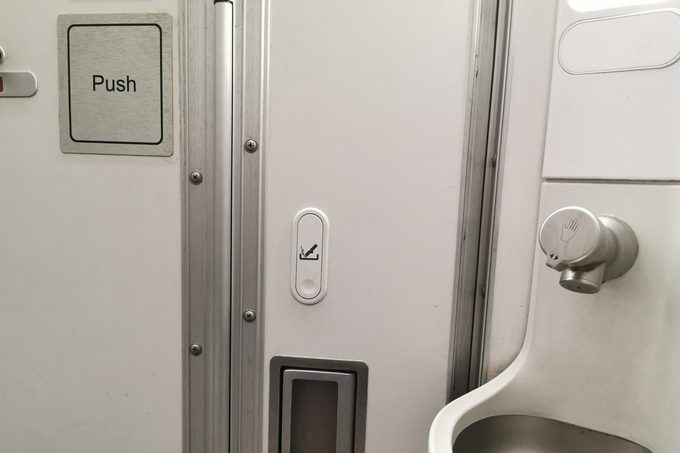
These aren’t hidden airplane features, since they’re right there in plain sight. But given that smoking has been prohibited on airplanes for more than 30 years, there’s still plenty of mystery surrounding them. Why bother with ashtrays when no one can smoke?
Ashtrays are found in lavatories, even on newer aircraft, for safety reasons mandated by the FAA. On the off chance a rogue passenger smokes in the cabin, they will have a place to put out the cigarette safely rather than disposing of it in the bin and possibly starting a fire.
Hidden Lavatory Locks
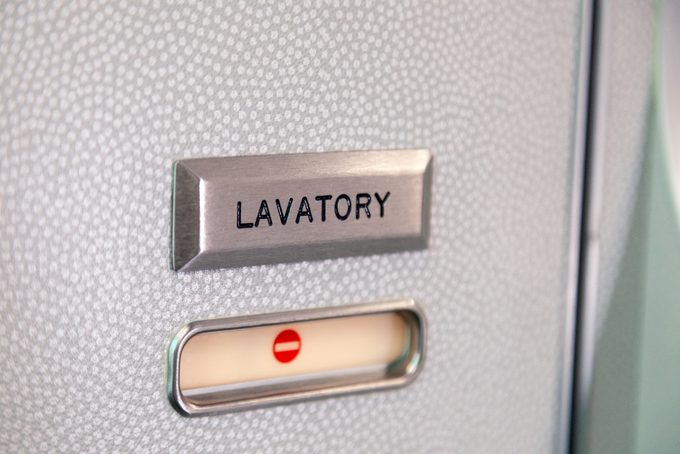
Even though you lock the lavatory door from the inside, there is another latch that’s accessible from the outside. The external lock on the bathroom allows for cabin crew to open the lavatory door in case of an emergency. It also keeps passengers out when necessary.
Cabin crew can use the exterior locks to prevent access to the bathroom doors for safety during take off and landing, and also to restrict access if the lavatory becomes inoperable for some reason. If it’s you with the emergency, look for the lavatory call button. This button, typically with the image of a person on it, can be found near the sink or somewhere in the lower half of the lavatory within reach of a passenger seated on the toilet.
Life-Saving Medical Equipment
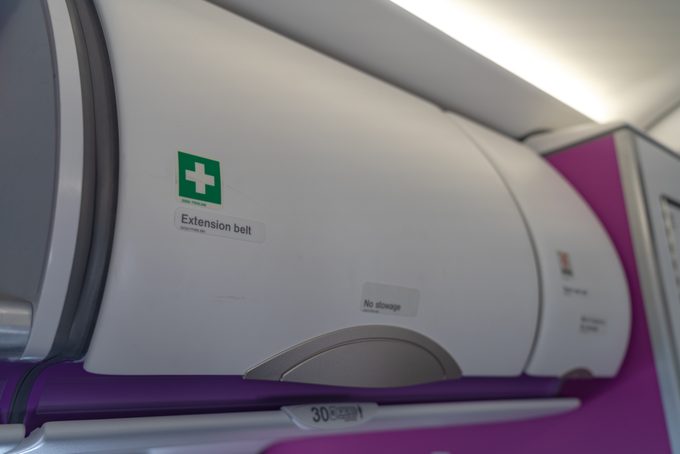
Although it’s not mandated for all aircraft, Morello says automated external defibrillators (AEDs) are required on certain-size planes in the U.S., and many airlines around the world also carry them to help in a medical emergency. They are usually tucked away in the galley or an overhead bin, but sometimes they’re kept in a locked medical kit.
Fortified Door
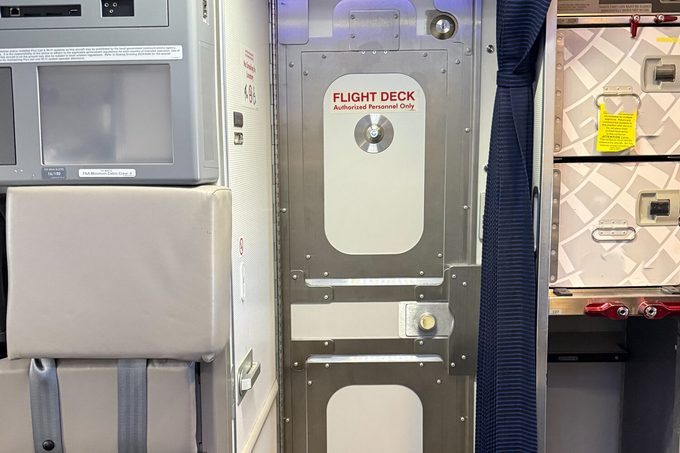
A successful flight requires a safe cockpit. So one of the most important airplane features is the cockpit door—and not just any old door will do! Following the hijacking of commercial planes on Sept. 11, 2001, reinforced cockpit doors became mandatory for certain types of aircraft. The requirement is based on the number of seats, weight, and usage, for example scheduled flights versus charter.
You probably won’t notice anything remarkable about the door when you briefly pass by it during boarding, but rest assured, on many planes, it is made of sturdy, bulletproof materials to protect from intrusion.